Mike Leigh’s enduring tragicomedy of suburban manners, Abigail’s Party, has officially landed in London’s West End. Playing at the Harold Pinter Theatre through September 19, 2026, this high-stakes revival—directed with acute sociological precision by Nadia Fall—proves that the excruciating awkwardness of 1970s middle-class striving remains as biting, relevant, and hysterically funny as ever.
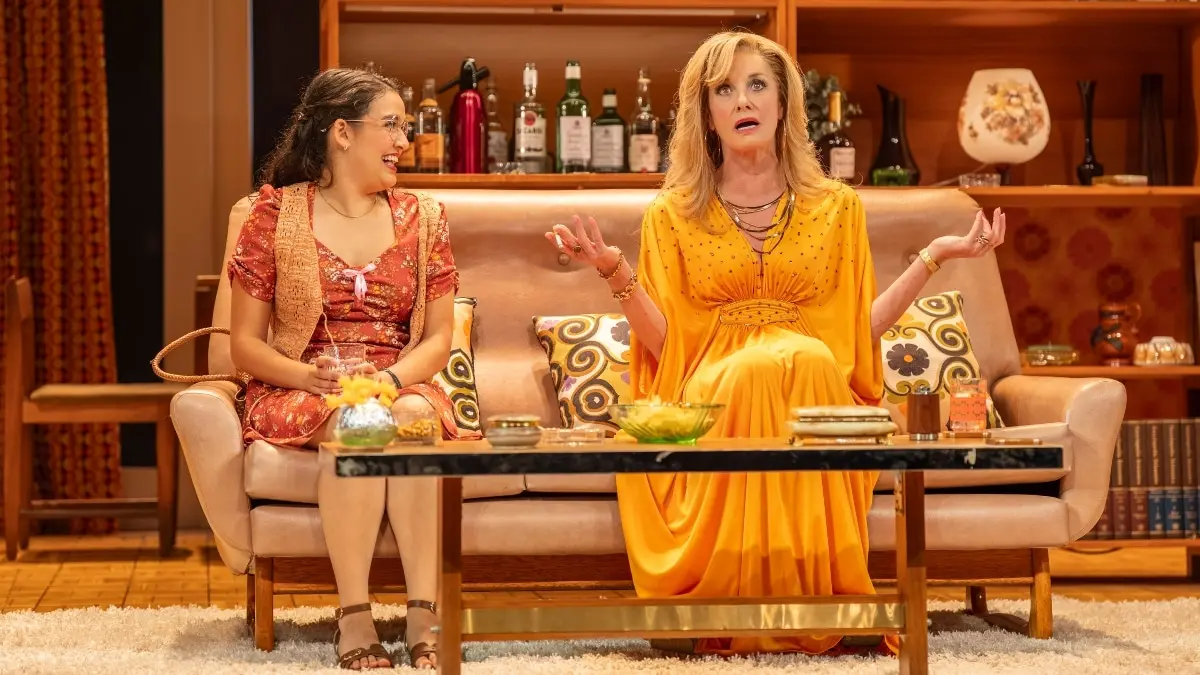
Stepping into the theatrical footprint left by Alison Steadman’s legendary 1977 creation of Beverly is no small feat. Yet, under Fall’s direction, star Tamzin Outhwaite does not merely imitate the past; she reinvents it. Outhwaite transforms Beverly from a dated caricature into a calculating, Machiavellian social climber whose psychological grip on her living room places her uncomfortably—and hilariously—in the lineage of classical tragic figures like Clytemnestra and Lady Macbeth.
Supported by an ensemble cast that includes Kevin Bishop, Lauren Patel, Omar Malik, and Pandora Colin, this production captures the claustrophobia, quiet desperation, and explosive petty malice of a British housing development at the tail end of the seventies. As the production runs toward its late-summer closing date, theatre critics and audiences alike are grappling with why Leigh’s suburban nightmare continues to hold a mirror up to our most cringeworthy social anxieties.
Detailed Chronology: A Disastrous Evening Unfolds
The Setup: 1977 and the Trap of Aspirations
The premise of Abigail’s Party is deceptively simple, serving as a slow-burning fuse for social catastrophe. The year is 1977. The setting is a neat, aggressively modernizing middle-class housing development in suburban Britain.
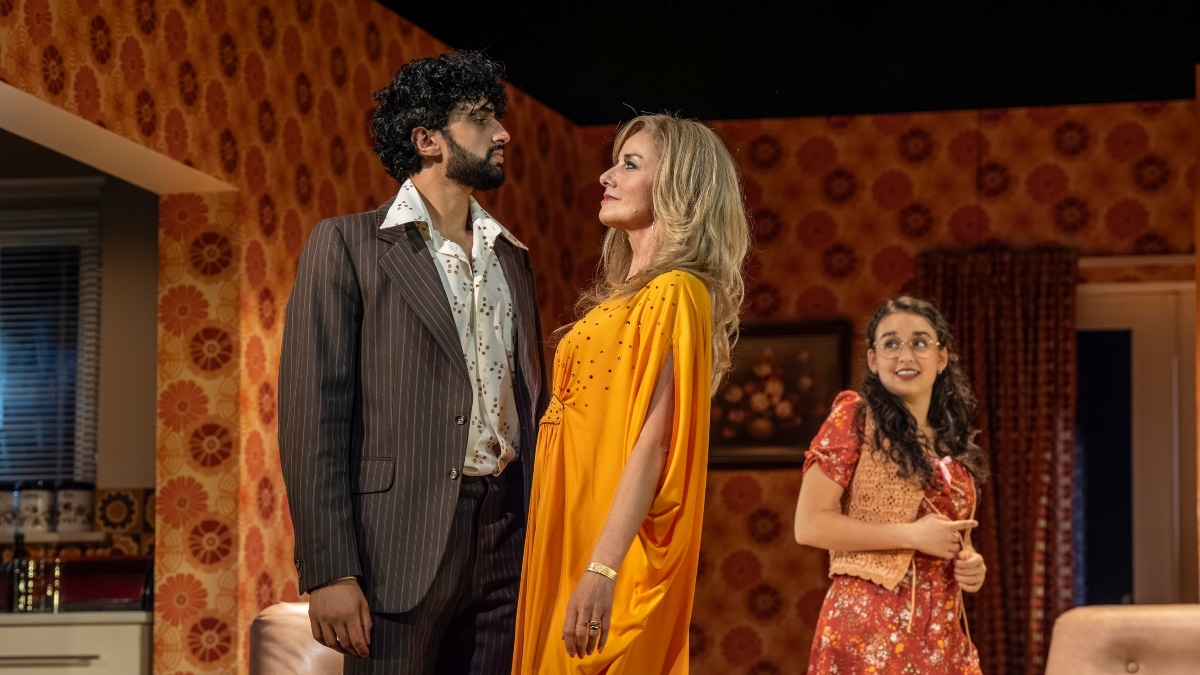
Beverly and her long-suffering, status-obsessed husband, Laurence (played with pathetic, fragile pomposity by Kevin Bishop), are hosting a gathering for their new neighbors. The evening’s guest list includes recent arrivals Angela (Lauren Patel) and her reticent husband, Tony (Omar Malik). Rounding out the quintet is Sue (Pandora Colin), a nervous divorcee who has strategically fled her own home to escape her fifteen-year-old daughter Abigail’s teenage house party next door.
From the moment the curtain rises on Peter McKintosh’s meticulously curated set—complete with clashing psychedelic wallpaper, Lowry prints awkwardly juxtaposed with Van Goghs, and Beverly’s pride-and-joy fibreglass lamp—the audience is trapped. There is no escape from the suffocating pressure cooker of Beverly’s hospitality.
Escalation: The Dance of Dominance
As the evening progresses, Beverly’s true agenda becomes painfully clear. Craving absolute validation and control, she sets out to be the center of attention, openly flirting with Tony while treating Angela like a captive audience member in a high school clique. Beverly dominates the room, aggressively pushing warm wine, cigarettes, and her signature offering: the foil-wrapped ball of cheese and pineapple sticks pushed onto wooden toothpicks.
Over the deep-pile shaggy carpet, Outhwaite’s Beverly dances to Demis Roussos records, weaponizing her sexuality and domestic domain to publicly undermine Laurence. Laurence, meanwhile, masks his deep professional and personal insecurities behind forced pretensions of cultural refinement, his temper fraying as the cheap plonk flows and Beverly’s dominance over the room becomes absolute.
The Climax: When the Facade Crumbles
Throughout the evening, the rhythmic, muffled thumping of bass from Abigail’s party next door serves as an ironic Greek chorus. The audience—and the characters on stage—are constantly reminded that a genuine, youthful, chaotic celebration is happening just out of reach. While Abigail’s teenage guests are presumably free, messy, and alive, the adults in Beverly’s living room are embalmed in their own polite horrors.
As the small talk devolves into passive-aggressive warfare, the veneer of middle-class civility completely disintegrates. Secrets slip out, personal boundaries are obliterated, and a sudden, shocking medical emergency brings the evening to a devastating, abrupt halt. The comedy of manners curdles into pitch-black tragedy, leaving the characters blinking in the harsh light of their own revealed emptiness.
Supporting Context & Metrics: The Production and Its Cast
The Creative Team and Tour Lineage
Before making its highly anticipated West End transfer to the Harold Pinter Theatre, this iteration of Abigail’s Party underwent rigorous development and regional testing. Production photos captured as early as June 16, 2026, at the Malvern Theatre in Great Malvern showcased the stark, period-accurate aesthetic that would eventually define the London run.
Director Nadia Fall has previously earned acclaim for her incisive eye regarding social class and institutional dynamics, and her collaboration with designer Peter McKintosh is a masterclass in environmental storytelling. Every prop—from the glowing fibreglass lamp to the heavy blue eyeshadow worn by Outhwaite—acts as a visual signifier of a nation caught between post-war austerity and the hyper-materialistic dawn of the Thatcher era.
Character Breakdown and Performances
Tamzin Outhwaite (Beverly): Outhwaite delivers a tour-de-force performance. Her Beverly is sharp-clawed and hyper-vigilant, weaponizing hospitality like a tactical maneuver. She makes the audience laugh while simultaneously inducing cold sweats.
Kevin Bishop (Laurence): Bishop captures Laurence’s hollow intellectualism and simmering rage with remarkable nuance. His character arc exposes the fragile male ego of the late 1970s corporate climber, making his eventual unraveling both pathetic and compelling.
Lauren Patel (Angela): Patel brings a vacuous, eager-to-please charm to Angela. Easily led and perpetually out of her depth, Angela serves as the perfect foil to Beverly’s psychological bullying.
Omar Malik (Tony): Malik navigates the difficult task of playing Tony—a man who speaks in monosyllables and treats his wife with icy indifference—eliciting a complex mix of intense dislike and sudden pity.
Pandora Colin (Sue): Colin portrays Sue with a desperate, white-knuckled grip on her remaining dignity. Her silent suffering as Beverly systematically picks apart her nerves provides some of the production’s most wincing, relatable moments.
Official Statements and Critical Reception
The West End transfer has drawn significant critical acclaim, cementing Nadia Fall’s revival as one of the theatrical highlights of the 2026 summer season.
In her review for Discover Ticketmaster, theatre critic Caitlin Devlin noted:
"Tamzin Outhwaite turns Beverly from expert caricature to a conniving, controlling social climber, whose unsettling presence on stage puts her in step with Clytemnestra and Lady Macbeth. In the funniest way possible."
Devlin further elaborated on the psychological undercurrents of the play:
"The joke of the piece is, of course, that the invisible Abigail is having a far better time than anyone onstage, and that we the audience are just as desperate for a peek through the windows as any of Beverly’s guests. Inane, insufferable and totally transparent these people may be, but they’re irrationally fun to spend time with all the same."
Early audience reactions across social media platforms and West End ticketing forums have praised the production’s pacing, its pitch-perfect 1970s design aesthetic, and the palpable chemistry among the ensemble cast. Industry analysts point to strong advance ticket sales as proof that Mike Leigh’s kitchen-sink masterpieces retain robust commercial viability alongside their critical prestige.
Future Outlook: The Legacy of Abigail’s Party
As Abigail’s Party heads toward its final West End performance on September 19, 2026, its success raises interesting questions about the future of classic British revivals. Mike Leigh, who originally created the piece in 1977 through collaborative improvisation with the original cast (led by Alison Steadman, Tim Stern, Janine Duvitski, John Salthouse, and Thelma Whiteley), pioneered a distinct methodology of unearthing uncomfortable social truths from the mundane fabric of everyday life.
Nadia Fall’s revival proves that Leigh’s improvisational blueprints are timeless. While the blue eyeshadow, wide-collared shirts, and Demis Roussos vinyl records firmly anchor the play in the late 1970s, the human behaviors on display—keeping up appearances, marital resentment, social anxiety, and the desperate need to feel superior to those around us—are entirely contemporary.
For theatregoers looking to experience a masterclass in acting, design, and comedic timing before the autumn season takes over London, securing a ticket to this limited run at the Harold Pinter Theatre is essential. Just be prepared to look at your own dinner parties—and your cheese-and-pineapple sticks—with a fresh, lingering sense of paranoia.