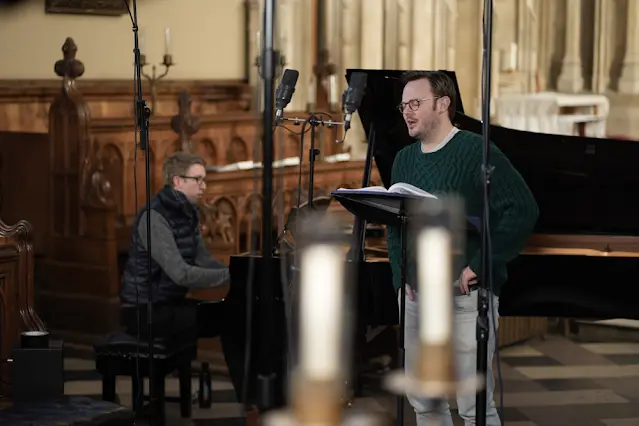
As the classical music world approaches the double anniversary of British composer Gerald Finzi—marking his birth in 1901 and his untimely death in 1956—the centenary milestones are inspiring profound retrospectives. Among the most anticipated contributions to this commemorative period is a new album from the acclaimed musical partnership of tenor Nick Pritchard and pianist Ian Tindale. Entitled Gerald Finzi: The Dance Continued and slated for release on Signum Records on September 25, 2026, the recording represents the culmination of a lifelong artistic affinity between the two performers.
The album features three masterworks of the English song repertoire: the ten-part Thomas Hardy cycle A Young Man’s Exhortation, Op. 14; the seven-song Hardy collection Till Earth Outwears, Op. 19a; and the diverse, multi-poet set Oh Fair to See, Op. 13b. Crucially, Pritchard and Tindale have elevated the project beyond a standard retrospective by securing permission to examine and record a selection of Finzi’s rare, unpublished early manuscripts housed in the Bodleian Library. This journalistic and musicological deep dive illuminates the developmental trajectory of a composer celebrated for his exquisite word-setting, deep-seated passion for English poetry, and enduring ties to early music traditions. Supported by a series of high-profile live performances—including an album launch at St Clement Danes Church, a showcase at the Shipston Song Festival, and upcoming appearances at the Three Choirs Festival—this release cements Finzi’s legacy as a vital, uniquely communicative voice in 20th-century British song.
Detailed Chronology: From College Collaboration to Bodleian Discovery
The genesis of Gerald Finzi: The Dance Continued traces back to the formative college years of Nick Pritchard and Ian Tindale, where the tenor and pianist first met and established a creative duo. From the earliest days of their partnership, Finzi’s music occupied a central position in their performance programs. However, it was while preparing their critically praised 2025 Signum Records release, Little Wanderer—which paired Benjamin Britten’s Winter Words (another cycle of Thomas Hardy settings) with works by Imogen Holst and Daniel Kidane—that the duo’s thoughts crystallized around Finzi’s upcoming 2026 double anniversary.
Recognizing the rich landscape of existing recordings, such as the seminal Linn Records account by James Gilchrist and Anna Tilbrook (which served as Pritchard’s teenage introduction to Finzi), the duo sought a way to distinguish their contribution. Initially contemplating companion pieces by contemporary or historical composers, their vision shifted inward toward Finzi’s own lesser-known output. Mentions in musicological literature of early, unreleased compositions led them to the Bodleian Library. There, operating with special permission, the duo studied Finzi manuscripts that had languished in obscurity. According to Tindale, these early scores, though unpublished, bear unmistakable premonitory hints of the mature melodic and harmonic voice that would later define the composer’s signature style.
The meticulous recording sessions captured the synergy of a duo that has spent over a decade performing together. While Tindale had long championed O Fair to See, and Pritchard had absorbed Finzi’s idiom since secondary school—where a perceptive head of music handed him the Gilchrist recording—the pair approached A Young Man’s Exhortation with fresh scholarly and expressive rigor, custom-tailoring the interpretations for their specific vocal-pianistic dynamic.
Supporting Context & Metrics: The Architecture of Finzi’s Songsmithing
To understand the weight of Pritchard and Tindale’s new album, one must examine the structural integrity of Finzi’s approach to the vocal medium. Unlike many of his contemporaries who scattered individual art songs across various opuses, Finzi was notoriously protective of his creations. He operated on the conviction that standalone songs risked being marginalized or overlooked by critics and the public. Consequently, he routinely practiced a policy of strategic deferral, withholding individual songs until he had accumulated a cohesive group of ten related settings.
The architectural breakdown of the works featured on Gerald Finzi: The Dance Continued reveals this deliberate methodology:
A Young Man’s Exhortation, Op. 14: Composed between 1926 and 1929, this stands as Finzi’s only true, expansive song cycle. Setting ten texts by Thomas Hardy, it explores the poignant philosophies, rustic observations, and existential reflections of youth and aging.
Till Earth Outwears, Op. 19a: Assembled from songs written across disparate periods (1927, 1929, and 1936), this seven-part collection continues Finzi’s profound dialogue with the poetry of Thomas Hardy, capturing a mature, earthier introspection.
Oh Fair to See, Op. 13b: Serving as both the title of the set and its second track, this compilation bridges a remarkable chronological span. Composed between 1921 and 1956, it draws upon the words of six distinct poets—Thomas Hardy, Christina Rossetti, Edward Shanks, Ivor Gurney, Edmund Blunden, and Robert Bridges. Significantly, the setting of Robert Bridges’ "Since We Loved" stands as the absolute final composition Finzi completed before his death.
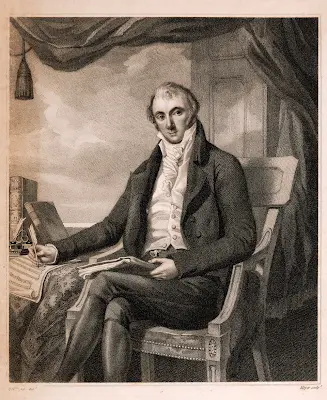
Beyond his relationship with poetry, Finzi’s compositional DNA was deeply intertwined with early music. Nick Pritchard, who frequently performs in the Early Music sphere, notes a profound structural affinity between practitioners of early polyphony and Finzi’s writing. Finzi was an avid musicologist, transcribing significant amounts of music by William Boyce—including editing a benchmark volume of Boyce’s work for Musica Britannica—and harboring a lifelong reverence for Renaissance and Baroque counterpoint. This historical literacy translated into an unparalleled sensitivity to linguistic rhythm, making Finzi, in Pritchard’s estimation, an inherently "vocal writer" whose melodic lines mirror the natural cadence of the English language.
Official Statements & Artistic Perspectives
Reflecting on the psychological and geographical landscape of the composer, Pritchard and Tindale discovered unexpected personal and historical intersections during the research and recording process. Finzi’s social circle within the British music establishment presents a fascinating study in contrasts. While he maintained a close, enduring friendship with Ralph Vaughan Williams, representing a bridge to the older guard of English pastoralism, he noticeably operated outside the circles of younger vanguard figures such as Benjamin Britten and Michael Tippett.
Ian Tindale characterizes Finzi as a naturally private, secluded individual whose passions extended far beyond his own writing desk. His tireless advocacy for the troubled poet and composer Ivor Gurney—working exhaustively to ensure Gurney’s music achieved publication—demonstrates a profound communal dedication. This impulse also manifested in 1940 with the founding of the Newbury String Players, an ensemble Finzi established specifically to champion the neglected instrumental works of 18th-century masters like Boyce alongside contemporary compositions.
Addressing Finzi’s reception in the modern concert hall, Nick Pritchard acknowledges the composer’s polarizing nature within contemporary classical circles, describing him candidly as a "Marmite composer." While some listeners find his pastoral idiom overly nostalgic, he commands fierce loyalty from those attuned to his emotional depth.
"He might not win over every single listener instantly," Pritchard notes regarding the composer’s unique aesthetic, "but he holds an irreplaceable place in the hearts of those who understand his musical language, and his harmonic vernacular has spoken directly to our duo from the very beginning."
Future Outlook & Performance Itineraries
The release of Gerald Finzi: The Dance Continued on Signum Records (SIGCD1011) marks the opening salvo of a busy promotional and performance schedule designed to bring these masterworks—and their newly unearthed manuscript companions—to live audiences across the United Kingdom.
The live campaign kicks off with a specialized recital at the Shipston Song Festival on September 18, 2026, curated under Ian Tindale’s artistic umbrella. This performance will feature the vast majority of the album’s repertoire, judiciously paired with complementary songs by Herbert Howells and Ivor Gurney to contextualize Finzi within his immediate creative milieu.
This will be followed immediately by the official album launch event on September 25, 2026, hosted at the historic St Clement Danes Church in London. Looking further ahead into the 2027 season, the duo is slated to bring the programme to the prestigious Three Choirs Festival—a venue carrying deep historical resonance for Finzi, who frequently composed with its choral and orchestral traditions in mind.
Complete Album Tracklisting
Till Earth Outwears (Op. 19a)
Days Too Short
A Cradle Song
The Terrible Robber Men
Rondel
English Hills
A Young Man’s Exhortation (Op. 14)
Oh Fair to See (Op. 13b)
Performers: Nick Pritchard (tenor), Ian Tindale (piano)