Executive Overview
For decades, lazy consensus within electronic music circles has often pigeonholed ambient music as a monolith of passive, texture-driven soundscapes. However, the staggering, kaleidoscopic back catalogue of Japanese composer Susumu Yokota stands as a permanent, brilliant refutation of that generalization. Comprising roughly 30 original albums released over a prolific career, Yokota’s discography defies easy categorization. Each record is a distinct meditative exploration, driven by unique musical objectives, eclectic sampling choices, and shifting compositional frameworks.
Though predominantly instrumental—save for sporadic spoken-word interventions and high-profile guest vocal collaborations—Yokota’s works maintain an unmistakable artistic signature. His touch was that of a master craftsman, weaving intricate musical jewels that sparkled with emotional resonance, conceptual depth, and startling individuality.
Today, this multifaceted legacy is receiving the long-overdue institutional appraisal it deserves. Led by the independent imprint Lo Recordings, an extensive reissue campaign is currently underway, introducing a new generation of listeners to the vast sonic architecture of the late artist. Centered around major archival projects—most notably the upcoming 2026 release of the Skintone Volume Two box set, which brings previously unavailable gems like Laputa back into international circulation—this reassessment underscores Yokota’s monumental status. Far from being a relic of 1990s chill-out culture, Yokota’s music emerges as a timeless, forward-facing body of work that continues to inspire reverence among contemporary avant-garde artists, producers, and listeners alike.
Detailed Chronology: From Joy Division Disciple to Underground Polymath
To understand the breadth of Susumu Yokota’s musical universe, one must trace a trajectory that was as circuitous as it was unorthodox. Born in Toyama City, Japan, in 1960, Yokota did not follow the traditional prodigy pipeline into the upper echelons of electronic music production.
Formative Years and the Graphic Arts
In his youth during the early 1980s, Yokota was a guitar-obsessed devotee of post-punk pioneers Joy Division. Initially steering away from the arts for his formal education, he majored in economics at university. Yet, the gravitational pull of creative expression soon redirected his path toward graphic design.
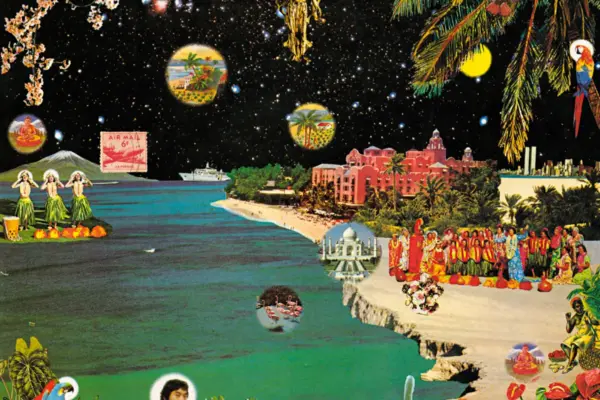
This pivot proved fortuitous. His background in visual arts directly informed his burgeoning interest in house music and Tokyo’s nascent underground dance scene. When Yokota began DJing in the capital’s clubs, he designed his own flyers—a self-reliant ethos that eventually extended to the striking visual presentation of his album sleeves. His visual aesthetic became inseparable from his sonic output, creating an immersive, multi-sensory brand long before modern multimedia integration became standard practice.
The 1990s: Prolific Explorations Across Aliases
Yokota’s entry into commercial music production took place under a dizzying array of underground monikers. Throughout the early 1990s, he operated through various aliases including Tenshin, Ringo, Stevia, and Ebi. Under the name Tenshin, he dropped the ferocious, club-ready Brainthump EP in 1992 via the German label No Respect—a release that remains a sought-after collector’s item among techno historians.
In 1993, working under his own name, Yokota delivered his debut full-length album, The Frankfurt-Tokyo Connection, released through Heinz Roth and Sven Väth’s influential Harthouse label. Yet, his pivotal artistic breakthrough occurred a year later in 1994 with the landmark album Acid Mt. Fuji, issued via Sublime. Reconciling the organic serenity of birdsong with the hypnotic pulse of atmospheric techno, the album signaled a conceptual leap forward.
What followed was an astonishingly relentless period of productivity. Between 1994 and 1998, Yokota maintained a staggering output of approximately three albums per year, continually exploring new territory without ever settling into a comfortable stylistic holding pattern.
International Reach and Ambient Masterpieces
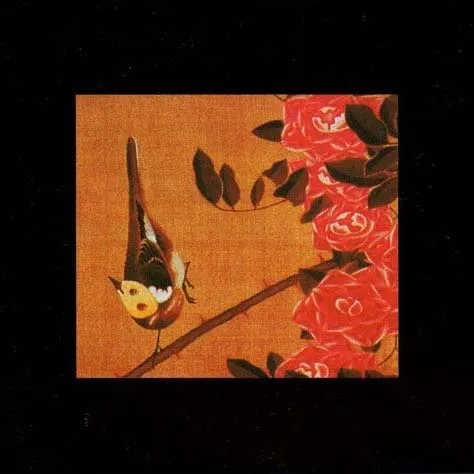
While Japanese imprints championed his early works, international recognition soon followed. Yorkshire’s Leaf Label stepped in to issue several of his most definitive records in the UK, beginning with the influential 1998 compilation Image: 1983–1998, followed by the universally acclaimed masterpieces Sakura (1999) and Grinning Cat (2001).
During this era, Yokota proved unafraid to engage with the sacred cows of minimalism, borrowing liberally from the structural philosophies of Harold Budd and Steve Reich. His engagement with avant-garde luminaries reached a notable milestone when minimalist pioneer Steve Reich encountered Yokota’s track "Lapis Lazuli"—which sampled Reich’s iconic composition Different Trains. Presented with the track during an interview for the esoteric music publication The Wire, Reich offered his explicit blessing, validating Yokota’s reverent yet adventurous approach to sampling.
Later Works and Quiet Departure
As the new millennium progressed, Yokota largely retreated from the bustling, neon-lit nightlife of Tokyo. Eschewing the traditional promotional circuit, he preferred wandering through city parks, observing and conversing with stray cats. This quiet, contemplative lifestyle mirrored his creative output, which grew increasingly immersive, poetic, and divorced from commercial trends. He occasionally returned to dance music, but his focus remained rooted in profound ambient and sampladelic experiments.
This prolific chapter came to an abrupt, tragic halt in 2012 with the release of his album Dreamer. Three years later, in 2015, his family released a brief public statement announcing his death following "a long period of medical treatment."
Supporting Context & Metrics: Analyzing the Output
To contextualize the sheer volume and operational scale of Susumu Yokota’s career, several quantitative and qualitative metrics stand out:
- Catalog Scale: Approximately 30 original studio albums released between 1993 and 2012, alongside numerous EPs and 12-inch singles under various monikers.
- Peak Productivity Metric: An average of three full-length albums released per calendar year between 1994 and 1998.
- Geographical Label Distribution: A hybrid release strategy encompassing Japanese incubators (Sublime) and prominent European tastemakers (Harthouse in Germany, Lo Recordings in the UK, and The Leaf Label in the UK).
- Sampling Architecture: Seamlessly bridging disparate worlds—contrasting classical minimalism (Steve Reich, Harold Budd) with natural field recordings, vocal snippets, and club culture tropes.
Peer Perspectives: What Contemporary Artists Say
Yokota’s music has left an indelible mark on musicians across multiple genres, who remember him not just as a pioneer, but as an endlessly curious sonic architect.
Casper Clausen (Efterklang):
Reflecting on collaborating with Yokota on a playful cover of David Bowie’s "Golden Years" alongside fellow Leaf Label acts, Clausen recalls how Yokota’s music resonated years later:
"I remember listening to… Sakura in particular, but honestly it wasn’t til way later – like five years ago, during the pandemic – that we finally aligned and the music really hit me. A friend of mine put on Acid Mt. Fuji on a sunny spring day in Copenhagen, and I had that album spinning non-stop for the following weeks."
Hannah Peel:
The Ivor Novello-winning Northern Irish electronic composer was initially drawn to Yokota through his striking visual presentation:
"I knew just by the colours I was going to love this record. That connection to music and nature that he so vibrantly melds together, delicate and peaceful yet full of movement… there’s something really special about music that can paint pictures in your mind while listening, even more so when it’s 20 years on from the first discovery."
Cate Le Bon:
The acclaimed singer-songwriter found profound creative relief in Yokota’s ever-evolving discography:
"I was initially hooked by the playful, off-grid Eno-esque compilation Image 1983–1999. It was a relief to find that Yokota is prolific in his output and rarely repeats himself. Curious, mercurial and always forward-facing, each album feels like a skin shed."
Official Statements and Archival Mission
The monumental task of unearthing, cataloging, and reissuing Yokota’s expansive discography has fallen to the champions at Lo Recordings. Upon the news of his passing in 2015, the label released an official statement that captured the essence of his artistry:
"Yokota’s music was always completely individual, always esoteric yet never wilfully indulgent. His touch was that of a master craftsman, creating intricate musical jewels that sparkled like no others. There’s no doubt that if he had been in a position to play live concerts, his reputation would far exceed many of his contemporaries."
This sentiment forms the operational mandate behind their ongoing reissue campaigns. Navigating international copyright law, sample clearance hurdles, and licensing agreements across multiple global territories has proven to be a massive undertaking. Yet, Lo Recordings has methodically worked to bring long-out-of-print titles back into physical and digital circulation.
Future Outlook: The Skintone Volume Two Campaign
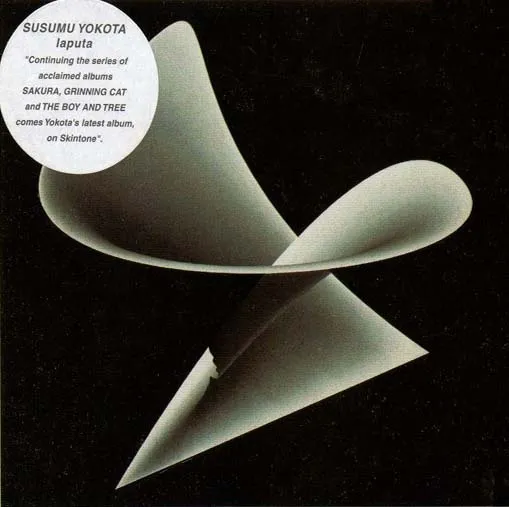
The ongoing preservation of Yokota’s legacy enters an exciting new phase with the release of the Skintone Volume Two box set via Lo Recordings. Serving as a follow-up to previous archival efforts, this comprehensive collection packages eight additional reissued albums, offering collectors and new listeners a deeper look into his mid-career evolutions.
Chief among these reissued treasures is the album Laputa, which saw its wide release in March. Named after the mythical flying island from Jonathan Swift’s satirical 18th-century novel Gulliver’s Travels, the album stands as a masterclass in collage composition. It is a work that feels simultaneously dreamlike and nightmarish, skillfully evoking complex psychological states of wonder and paranoia.
Crucially, Laputa and its companion releases challenge the historical reductionism that has often plagued ambient music. While the genre has occasionally suffered from lingering, unfair associations with superficial New Age tropes or background wallpaper, Yokota’s catalog actively dismantles these assumptions. His compositions are multi-textured, narratively rich, and structurally demanding.
Though Susumu Yokota is no longer here to defend or curate his own discography—and in an era oversaturated with disposable ambient tracks—his body of work stands firm. It is a monument to uncompromising curiosity and meticulous craftsmanship, ensuring that his sonic universe will continue to captivate, challenge, and comfort listeners for decades to come.