Executive Overview
For decades, the standard 33 1/3 rpm 12-inch long-playing vinyl record has served as the ultimate canvas for musical storytelling. Since Columbia Records first popularized the format in the late 1940s—phasing out heavy, brittle 10-inch 78s in favor of microgroove vinyl—artists have wrestled with the spatial and artistic limitations of the album. While the medium eventually evolved from a mere collection of hit singles padded with filler into a sophisticated modern art form, it also quietly birthed one of pop culture’s most enduring, yet rarely discussed, phenomena: the "duff track."
Far from being a mere production error or a momentary lapse in judgment, the substandard, baffling, or outright skip-worthy track is a structural necessity in the history of recorded music. Whether it is George Harrison’s sitor-heavy excursions on Sgt. Pepper’s Lonely Hearts Club Band, David Bowie dropping a jarring cover at the end of a side on The Rise and Fall of Ziggy Stardust and the Spiders from Mars, or Lou Reed’s penchant for avant-garde curveballs, flawed songs are essential to the listening experience.
This deep dive investigates the historical evolution of the album format, the strategic deployment of musical misfires by rock royalty, and why absolute perfection—if such a thing even exists—would ultimately ruin the joy of record collecting.
Detailed Chronology: From the Microgroove Revolution to the Modern Misstep
The 1940s–1950s: The Birth of the Long-Player
The modern album format was born out of technological necessity and consumer desire. When Columbia Records introduced the 12-inch 33 1/3 rpm vinyl record in 1948, it revolutionized audio consumption by allowing roughly 20 to 22 minutes of music per side. Initially utilized primarily for classical compositions and sprawling jazz arrangements, the format eventually trickled down to pop and rock and roll in the mid-to-late 1950s.
In its infancy, the pop album was rarely a cohesive artistic statement. Instead, record companies routinely packaged two or three chart-topping singles alongside eight hastily recorded filler tracks designed to maximize retail profits. The concept of the "album track" as an equal partner to the single did not yet exist.
The 1960s: The Beatles and the Elevation of the LP
Everything changed in the 1960s, largely due to the cultural monolith that was The Beatles. Transforming the industry standard, the Fab Four systematically elevated the long-player from a delivery vehicle for singles into a high-art medium.
- Rubber Soul (1965): Demonstrated that an entire tracklist could share a singular thematic and sonic mood.
- Revolver (1966): Pushed studio experimentation into uncharted territory, blending avant-garde tape loops with traditional instrumentation.
- Sgt. Pepper’s Lonely Hearts Club Band (1967): Cemented itself as the "Big Daddy" of the concept album, establishing a high-water mark for pop culture ambition.
Yet, even as The Beatles perfected the album format, they inadvertently codified another enduring tradition: the divisive outlier track. On Sgt. Pepper, that burden famously fell to George Harrison’s "Within You Without You." While contemporary musicologists and modern listeners celebrate the track’s Indian classical instrumentation and philosophical depth, for years it was viewed by mainstream audiences as a jarring blemish on an otherwise flawless masterpiece. It broke the theatrical illusion of the fictional band’s concert, proving that even the greatest artists could court alienation.
The 1970s–1980s: Glam Rock, Art-Punk, and Strategic Dissonance
As the album format matured through the 1970s, legendary songwriters weaponized the duff track with varying degrees of intent.
David Bowie, a master of stylistic reinvention, frequently peppered his canonical releases with idiosyncratic musical speed bumps. While Hunky Dory (1971) is universally lauded as a masterpiece, tracks like "Eight-line Poem" or the vaudevillian cover "Fill Your Heart" often polarized listeners. More famously, Bowie placed the plodding cover of Ron Davies’ "It Ain’t Easy" directly at the tail end of side one on The Rise and Fall of Ziggy Stardust and the Spiders from Mars (1972). While apologists argue it served a narrative pacing function, the track often felt like a frustrating comedown from the high-octane glam anthems surrounding it.
Similarly, Lou Reed made a career out of challenging his audience’s patience. Whether through the wandering arrangements of "Wagon Wheel" on Transformer (1972), the spoken-word eccentricities of "A Gift" on Coney Island Baby (1975), or the abrasive sonic experiments of The Velvet Underground’s White Light/White Heat (1968), Reed understood that comfort was the enemy of great art.
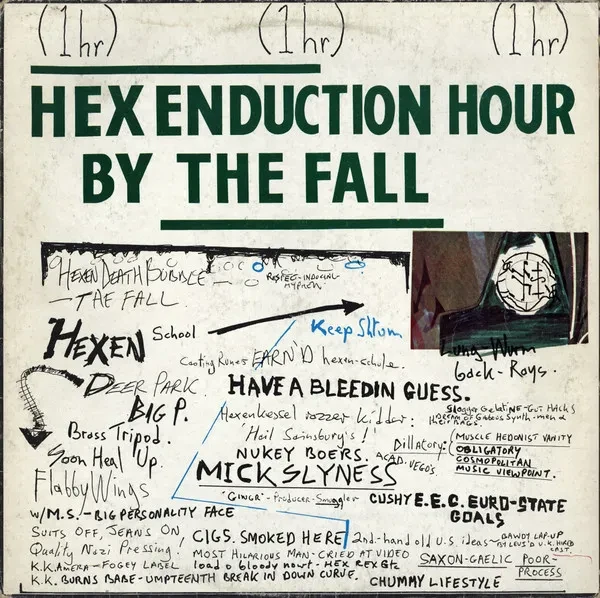
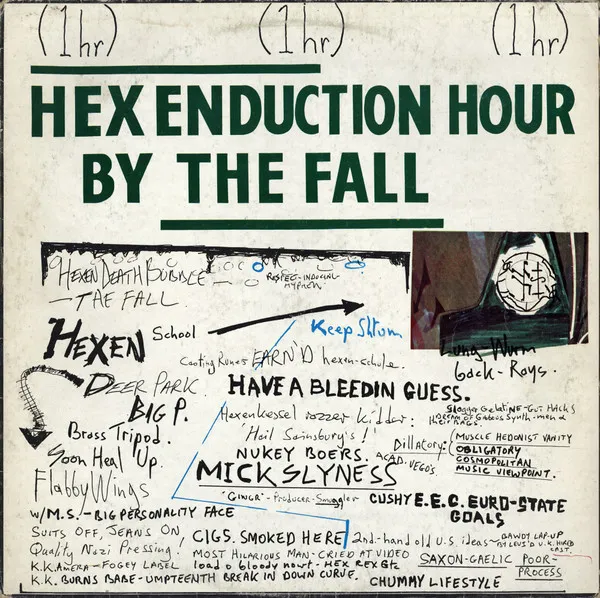
In the post-punk era, Mark E. Smith and The Fall elevated the intentionally difficult track to an art form. Songs like "WMC Blob 59" from Grotesque (After the Gramme) (1980) or the droning, monotonous marathon "And This Day" from Hex Enduction Hour (1982) actively dared the listener to turn off the turntable, serving as ideological middle fingers to commercial accessibility.
Supporting Context & Metrics: The Psychology of the "Duff Track"
Why do listeners hold such strong opinions about the worst song on their favorite records? Musicologists and cultural theorists suggest that the duff track serves vital psychological and social functions in the ecosystem of music fandom.
1. The Dynamic Contrast Principle
Without shadows, there is no light. An album consisting entirely of five-star, stadium-filling anthems can quickly lead to listener fatigue. A slower, weirder, or less polished track acts as a sonic palette cleanser. It provides emotional and acoustic relief, allowing the high points of the record to hit with maximum impact.
2. The Social Currency of Debate
In the pre-internet era—and continuing today in record shops, online forums, and social media platforms—the duff track is the ultimate conversation starter.
- Which track ruins The White Album?
- Is Lou Reed’s "Lonesome Cowboy Bill" from Loaded a stroke of narrative brilliance or a throwaway filler?
These debates foster community. Music fandom is built as much on shared grievances and critical nitpicking as it is on collective adoration.
3. The Objectivity vs. Subjectivity Paradox
Interestingly, what constitutes a duff track is entirely fluid. A song dismissed as an unlistenable misstep by one generation can be re-evaluated as an ahead-of-its-time masterpiece by the next. For instance, George Harrison’s "Within You Without You" transitioned from being considered a mood-killing drag on Sgt. Pepper to a revered high-water mark of raga-rock integration. Conversely, personal biases—such as parental disdain for Harrison’s nasal vocal delivery on tracks like "Something"—highlight how subjective listening habits shape our enduring relationships with recorded art.
Official Perspectives & Industry Counter-Theories
While record collectors and critics largely embrace the flawed album track as a quirky charm of physical media, extreme purists have occasionally attempted to engineer it out of existence.
The Steve Albini Hypothesis
Long before the advent of digital playlists and algorithmic streaming allowed users to permanently delete unwanted tracks from their queues, legendary producer and recording engineer Steve Albini mused on a radical thought experiment. Addressing the conceptual flaws of the traditional album structure, Albini famously pondered: Instead of producing an LP with ten great songs and one duff track, why not simply press a single magnificent track onto a 12-inch vinyl and repeat it 14 times?
While intellectually pure, this approach strips away the narrative arc and the emotional journey of the album-listening experience. Music critics and audiophiles argue that an album of repetitive perfection lacks the human element. As cultural commentators frequently note, even if you could fill a record with twelve variations of your favorite song—be it David Bowie’s "Starman" or The Velvet Underground’s "Sweet Jane"—the presence of a slightly off-kilter, abrasive, or confusing track is precisely what makes the journey worthwhile. It reminds the listener that real human beings created the work, complete with all their eccentricities, fatigue, and creative misfires.
Future Outlook: The Death and Rebirth of the Album Side
As the music industry continues its unpredictable trajectory through the streaming era, the role of the album—and by extension, the duff track—is undergoing a profound transformation.
- The Playlist Era: Streaming platforms have effectively dismantled the traditional album structure, allowing users to cherry-pick individual tracks and bypass the artist’s intended sequence entirely. In this hyper-curated environment, the traditional album side is dying, and with it, the captive audience required to sit through a challenging duff track.
- The Vinyl Renaissance: Conversely, the ongoing global resurgence of vinyl record sales suggests that physical media consumers actively crave the constraints and rituals of the traditional LP. Turning over a piece of heavy black wax, accepting the tracklisting as immutable law, and wrestling with the difficult or strange songs on side two remains a ritual unique to physical music consumption.
Ultimately, the duff track is a monument to artistic ambition. It proves that an artist swung for the fences and missed—or, more importantly, that they prioritized creative exploration over commercial safety. As long as artists continue to compile physical and digital collections of recorded sound, the glorious, flawed, fiercely debated misfire will remain an indispensable part of the musical canon.