Executive Overview
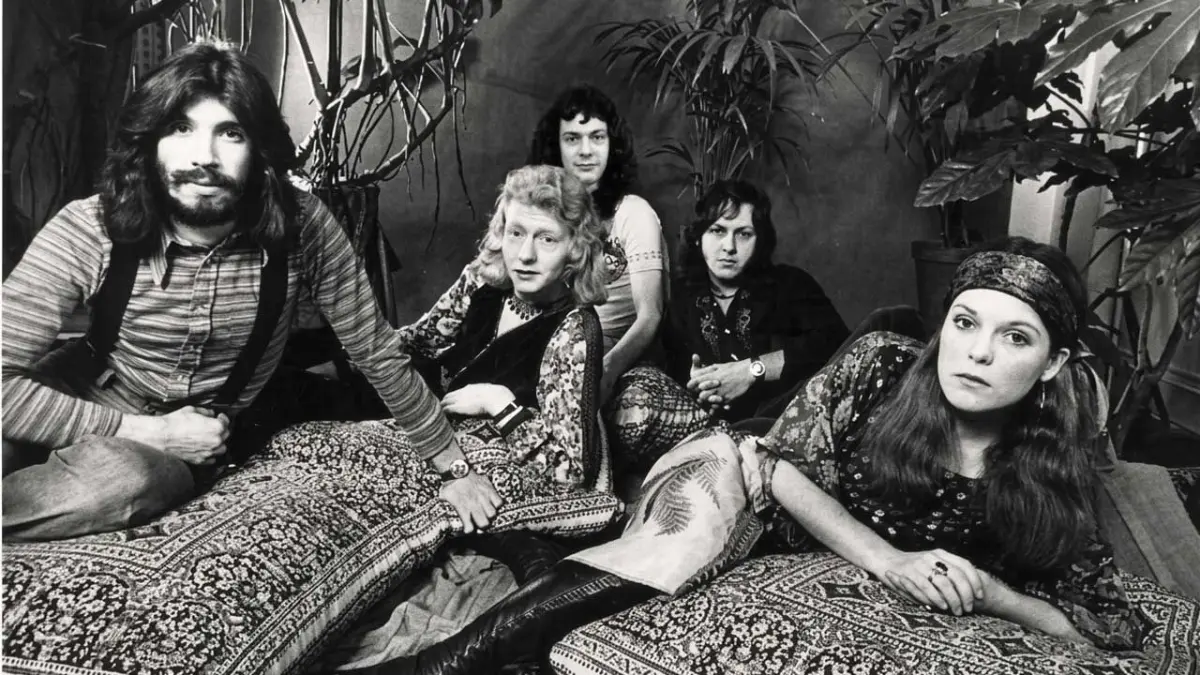
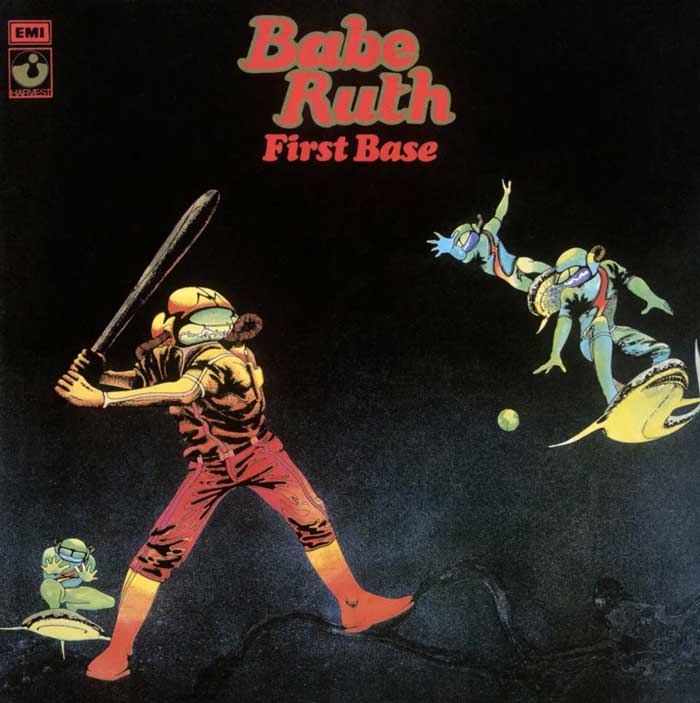
In November 1972, a young, genre-defying five-piece band from Hertfordshire, England, released a debut album that would inadvertently cross sonic boundaries and bridge disparate musical cultures across two continents. Named after the legendary American baseball icon, Babe Ruth arrived on the scene with First Base, an ambitious six-track LP released via Harvest/EMI that fused hard rock, progressive symphonia, jazz-fusion, and Latin-tinged funk.
Led by multi-instrumentalist and songwriter Alan Shacklock and fronted by an explosive 18-year-old vocalist named Janita "Jenny" Haan, Babe Ruth produced a sound that was simultaneously grand and gritty. While domestic British audiences initially struggled to categorize their eclectic output, First Base found an eager audience in North America—most notably in Canada—and sparked a completely unforeseen second life within the nascent hip-hop and breakdancing movements of late-1970s and early-1980s New York City.
More than five decades after its initial pressing, First Base remains a fascinating case study in classic rock history: a record that defies easy classification, boasting a critical legacy that stretches from progressive rock archives to the top of the Billboard dance charts.
Detailed Chronology: From Hertfordshire to the Bronx
+-----------------------------------------------------------------------------------+
|                               TIMELINE OF EVENTS                                  |
+-----------------------------------------------------------------------------------+
| 1971        | Babe Ruth forms in Hertfordshire, England, led by Alan Shacklock.   |
| Nov 1972    | Debut album 'First Base' is recorded and released via Harvest/EMI.  |
| 1973–1974   | Band tours North America; album achieves Gold status in Canada.     |
| 1975        | Bassist Dave Hewitt experiences "The Mexican" in a Montreal disco.  |
| Late 1970s  | NYC DJs (Grandmaster Flash, Afrika Bambaataa) adopt "The Mexican".  |
| 1984        | John "Jellybean" Benitez covers "The Mexican," reaching #1 on Dance. |
| Modern Era  | Retrospective evaluation by music historians and listener groups.   |
+-----------------------------------------------------------------------------------+
Formation and Early Vision (1971–1972)
Babe Ruth was conceived by guitarist and composer Alan Shacklock in 1971. Seeking a sound that could balance heavy, blues-based riffing with classical sophistication and Latin rhythms, Shacklock recruited bassist Dave Hewitt, keyboardist/saxophonist Dave Punshon, and drummer Dick Powell. The final piece of the puzzle arrived with lead vocalist Janita "Jenny" Haan. Despite being only 18 years old at the time of recording, Haan brought a fiercely aggressive, wide-ranging vocal style that drew immediate comparisons to Janis Joplin, Grace Slick, and Robert Plant.
In 1972, the group signed with EMI’s progressive imprint, Harvest Records, and entered London’s Abbey Road Studios to record their debut. The first composition ever tracked by the band was a track written by Shacklock titled "The Mexican."
Release and Transatlantic Dichotomy (1972–1975)
Upon its release in November 1972, First Base received mixed reactions from the UK music press, which found the band’s stylistic shifts difficult to pin down. In North America, however, FM radio programmers embraced the record’s dynamic range. The album achieved Gold certification in Canada, establishing a dedicated fanbase in cities like Montreal and Toronto.
While the band toured North America as a hard-rock/progressive outfit, an entirely different phenomenon was unfolding in urban club environments. Unbeknownst to the band members, the infectious, driving rhythm section of "The Mexican" had been discovered by early hip-hop pioneers in New York City.
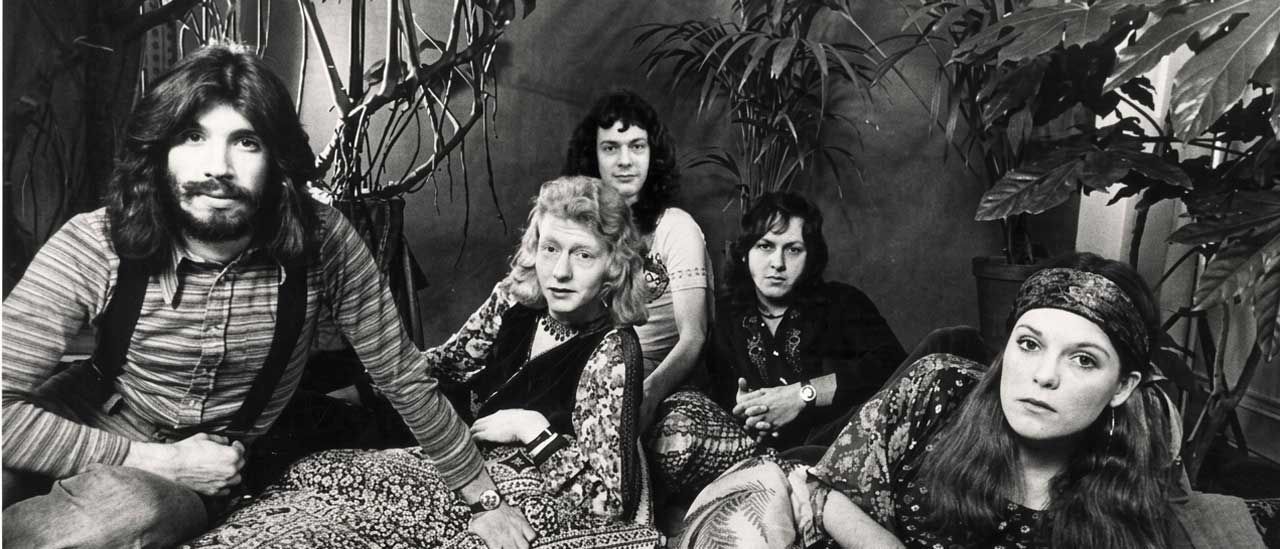
Reflecting on a 1975 tour stop, bassist Dave Hewitt recalled the moment he realized the track had taken on a life of its own:
"The only awareness I ever had that anything was going on was on tour in Montreal, in 1975," Hewitt noted in an interview with Classic Rock. "A girl invited me to this nightclub, where they were playing ‘The Mexican.’ It was mind-boggling, because we saw ourselves as this progressive rock band, and they’re playing the heck out of ‘The Mexican’ like we’re disco stars."
Cross-Genre Afterlife (1978–Present)
By the late 1970s, DJs like Kool Herc, Grandmaster Flash, and Afrika Bambaataa were regularly playing the instrumental breakbeats of "The Mexican" at Bronx block parties and at legendary venues like The Roxy. The song’s unique blend of a driving percussion line, funky bass, and spaghetti-western brass arrangements made it an essential anthem for early breakdancing crews.
In 1984, producer John "Jellybean" Benitez recorded a electro-dance cover of "The Mexican" featuring vocals by Janita Haan. The cover reached Number 1 on the US Billboard Dance Club Play chart, cementing a rock-to-hip-hop crossover that remains one of the most remarkable stylistic transformations in modern music history.
Comprehensive Track-by-Track Musical Analysis
First Base comprises six distinct tracks, each highlighting a different facet of the band’s technical capabilities and stylistic influences.
+------------------------------------------------------------------------------------+
|                               'FIRST BASE' TRACKLIST                               |
+------------------------------------------------------------------------------------+
| Side A:                                                                            |
|   1. Wells Fargo (6:14)          - Hard Rock / Brass Rock                          |
|   2. The Runaways (7:12)         - Orchestral Folk / Progressive Ballad            |
|   3. King Kong (6:40)            - Jazz-Fusion / Prog Instrumental (Zappa cover)   |
| Side B:                                                                            |
|   4. Black Dog (8:03)            - Blues Rock / Melancholic Rock                   |
|   5. The Mexican (5:45)          - Latin Funk / Rock / Ennio Morricone Interpolation|
|   6. Joker (5:85)                - Psychedelic Hard Rock / Vocal Duet              |
+------------------------------------------------------------------------------------+
1. "Wells Fargo"
Serving as the album’s explosive opening statement, "Wells Fargo" opens with a driving bassline and sharp guitar licks before breaking into a hard-rock groove. Haan’s vocals are raw and uninhibited, pushing her vocal range to its limits. The track features prominent saxophone stabs, lending a brass-rock edge reminiscent of early 1970s heavy blues outfits.
2. "The Runaways"
A radical departure from the opener, "The Runaways" is a seven-minute symphonic ballad built upon acoustic piano, violins, cellos, and oboe arrangements. The song demonstrates Shacklock’s formal compositional skills, building slowly to a dramatic, piano-led crescendo. Haan adopts a subdued, emotive delivery that proves her versatility beyond heavy rock shouting.
3. "King Kong"
A ambitious cover of Frank Zappa’s instrumental piece (originally featured on The Mothers of Invention’s Uncle Meat), Babe Ruth recorded their version live in the studio in a single take. The rendition highlights Dave Punshon’s jazz-influenced electric piano work and Alan Shacklock’s fluid guitar solos, framing the group as formidable instrumentalists within the progressive rock and jazz-fusion landscape.
4. "Black Dog"
Not to be confused with the Led Zeppelin song released the previous year, Babe Ruth’s "Black Dog" is an eight-minute, slow-burning blues-rock epic. Driven by twin-guitar harmonies and delicate piano accompaniment, the track mirrors the atmospheric work of contemporary acts such as Wishbone Ash, balancing melancholy verses with soaring guitar passages.
5. "The Mexican"
The crown jewel of the album, "The Mexican" tells the historical story of the Battle of the Alamo from the Mexican perspective. Built upon a propulsive, funk-driven beat and a famous bassline, the track incorporates a dramatic melodic interpolation of Ennio Morricone’s theme from the 1965 Sergio Leone Spaghetti Western For a Few Dollars More. The combination of Latin percussion, rock instrumentation, cinematic brass, and Haan’s fiery vocals created a unique blueprint that transcended genres.
6. "Joker"
The album closes with "Joker," a return to hard-rocking, psychedelic blues territory. The track is notable for its vocal trade-offs between Haan and Shacklock, backed by swirling keyboards and gritty guitar riffs. It serves as a energetic, jamming bookend to an eclectic LP.
Supporting Context & Critical Metrics
Historical Reception and Critical Perspectives
Music critics over the decades have debated how to classify First Base, reflecting its polarization between hard rock enthusiasts, progressive rock archivists, and dance historians.
- AllMusic: "With its long songs (six to eight minutes) and lush arrangements, First Base seduced both the hard rock and the progressive rock crowds… Highlights include the powerful rock number ‘Wells Fargo,’ the sweet-and-sour ‘Black Dog,’ and a surprising rendition of Frank Zappa’s ‘King Kong.’"
- Robert Christgau: The veteran American critic took a more cynical view upon its US release, writing: "This team socks pretty hard for the art-rock league, but since they’re English I’d better tell them what I mean by calling them a fungo outfit. That means they’ll find it a lot harder to get a hit in a real game."
- Prog Archives: "Babe Ruth are often dismissed as pseudo-prog… but the first two albums are a brilliant and tasteful amalgam of symphonics and good old-fashioned heavy blues. This debut from ’72 is intelligent, clear-headed, direct and incredibly good."
Modern Community Metrics: The "Album of the Week Club" Evaluation
In a modern re-assessment conducted by the Classic Rock / Louder Sound "Album of the Week Club"—a global community of rock enthusiasts and music archivists—First Base was subjected to a detailed review and voting process.
+------------------------------------------------------------------------------------+
|                         COMMUNITY EVALUATION METRICS                               |
+------------------------------------------------------------------------------------+
| Total Votes Cast    : 30                                                           |
| Cumulative Score    : 209 Points                                                   |
| Final Rating        : 6.96 / 10                                                    |
| Primary Strengths   : Vocal Power (Haan), Musicianship, "The Mexican" Breakbeat   |
| Primary Critiques   : Genre Inconsistency, Vocal Over-exertion, Pacing Shifts      |
+------------------------------------------------------------------------------------+
Key Takeaways from Community Reviewers:
- Stylistic Diversity: Listeners routinely noted the wide gulf between heavy rock tracks ("Wells Fargo") and orchestral ballads ("The Runaways"), with some praising the variety and others finding the sequencing jarring.
- Vocal Dynamics: Janita Haan’s vocal performance was widely recognized as a force of nature, though several reviewers noted that her aggressive style on tracks like "Wells Fargo" benefited from careful equalizer adjustments on modern audio equipment.
- Production & Instrumentation: Listeners singled out the unexpected instruments—flutes, oboes, Mellotrons, cellos, and flugelhorns—as proof that Babe Ruth was far more sophisticated than a standard hard-rock bar band.
Official Statements & Historical Reflections
Reflecting on the band’s output and legacy, music historians and group members have often noted the unique combination of raw talent and strategic missteps that defined Babe Ruth’s career.

Philip Qvist (Music Historian & Club Member):
"Babe Ruth was one of those bands that I found difficult to categorise. Were they prog rock, hard rock, soft rock or folk rock? I suspect that is why they became one of those ‘What If’ bands—one that, with a bit more finesse, a more stable lineup, and better management, could have been much bigger than what they were."Robby Jackson (Audio Analyst & Reviewer):
"Janita Haan is a powerhouse—her vocals have an aggressive, piercing energy that reminds me of Grace Slick. Once you let the instruments breathe, the album sounds incredible… ‘The Mexican’ lays down an incredible driving funk groove right under heavy rock, serving as a foundational beat for early breakdancing."Mike Canoe (Music Journalist & Club Member):
"Discovery of ‘The Mexican’ was the lost classic I hoped it would be. Haan is a real firecracker, and the clever inclusion of an Ennio Morricone melody really makes the song shine… My ears are always open to lost albums from the early ’70s and female-fronted rock groups. Cool to have both on the same record."
Future Outlook & Enduring Impact
While Babe Ruth released four subsequent albums before disbanding in the late 1970s (Amar Caballero, Babe Ruth, Stealin’ Home, and Kid’s Stuff), First Base remains their definitive artistic statement.
+------------------------------------------------------------------------------------+
|                             BABE RUTH DISCOGRAPHY (1972–1976)                      |
+------------------------------------------------------------------------------------+
| 1972 | First Base       - Debut LP; Gold status in Canada; Historic Breakbeat Peak |
| 1973 | Amar Caballero   - Expanded Latin/Symphonic experimentations               |
| 1975 | Babe Ruth        - Peak commercial charting LP in North America             |
| 1975 | Stealin' Home    - Lineup changes; transition toward mainstream rock        |
| 1976 | Kid's Stuff      - Final original studio release                            |
+------------------------------------------------------------------------------------+
In the decades following its release, the cultural footprint of First Base has grown rather than diminished. The album occupies a rare space in popular music history:
- A Sampling Holy Grail: The drum break and bassline from "The Mexican" continue to be sampled, remixed, and referenced by hip-hop producers, electronic musicians, and breakdancers globally.
- A Benchmark for 70s Female-Fronted Rock: Janita Haan’s vocal work stands as a vital precursor to the hard-rock heroines who followed later in the decade, such as Ann and Nancy Wilson of Heart.
- A Cult Classic for Prog Collectors: The inclusion of complex classical arrangements, Frank Zappa covers, and unconventional instrumentation guarantees the album a permanent place in progressive rock retrospectives.
Ultimately, First Base stands as a vibrant testament to the open-minded musical experimentation of the early 1970s. It is an album that refused to stay within traditional boundaries—starting in a British studio, conquering Canadian concert halls, and ultimately providing the soundtrack for the street dancers of New York City.