Executive Overview
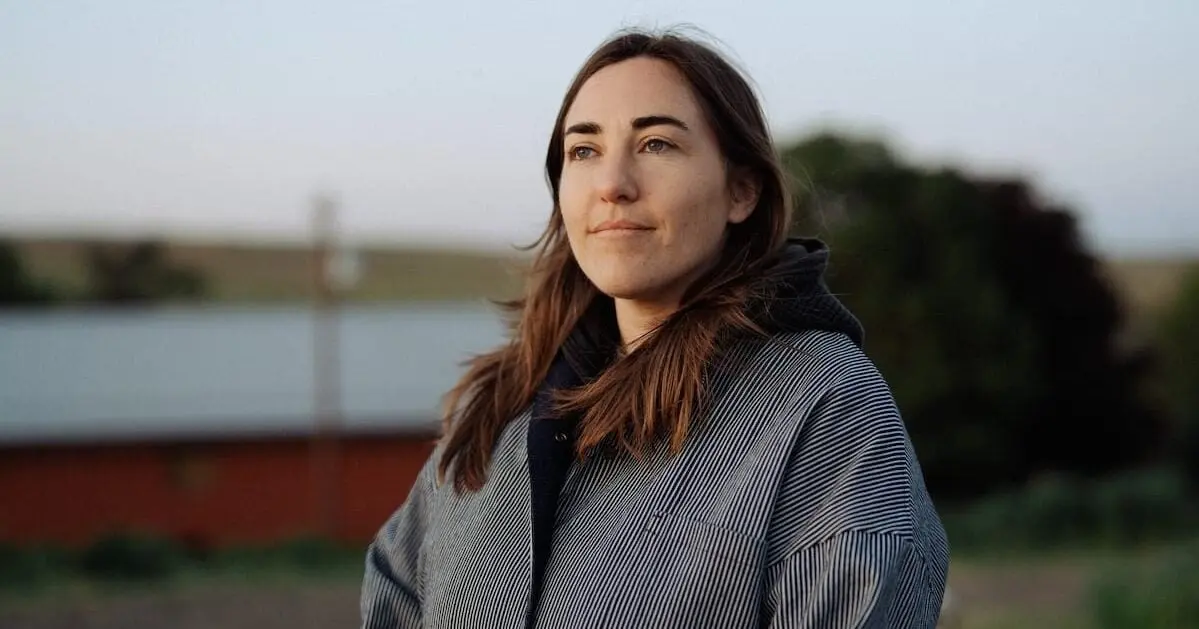
Hailed by Bandcamp Daily as "the future Lucinda Williams of the West," Margo Cilker has long possessed a rare gift for translating the vast, rugged landscapes of the American frontier into raw, emotionally resonant Americana. However, with the release of her third studio album, Little White Cross, Cilker refuses to be confined by comparisons to her forebears. Dropping on October 9, 2026, via her newly established label, Fossil Records, Little White Cross is a masterclass in modern roots music that boldly steps out from under the shadow of its critical reception.
Rooted in a profound creative autonomy, this latest project finds Cilker at her most vulnerable and unsparing. Eschewing the polished sheen of major-label Nashville machinery, the album confronts the darker, more turbulent facets of contemporary life. Cilker herself describes the conceptual core of the record as emerging from a season of heavy shadows—a perspective that views life as "nasty, brutish, and short," defined by the looming specters of gun violence, ecological catastrophe in the form of wildfires, and interpersonal abuse. Yet, for all its bleak realism, Little White Cross is far from a nihilistic exercise. Instead, it operates as a desperate, beautiful search for glimmers of light, capturing the quiet resilience required simply to make it through to the next day.
Musically, the album is a triumph of texture and tone. Produced by the venerable Bruce Robison, Little White Cross balances acute songwriting with a stellar backing band comprising some of the finest instrumentalists working in roots and country music today. From Geoff Queen and Eric Heywood weaving intricate tapestries on guitars and pedal steel, to the rhythm section of bassist Scott Davis and drummer Lisa Pankratz, the record breathes with a timeless, old-school country warmth. Interspersed with carefully curated covers alongside her own incisive originals, Cilker has crafted a definitive artistic statement—one that proves she is not just a promising voice of the future, but a towering, magnificent force in the here and now.
Detailed Chronology and Track-by-Track Breakdown
To truly understand the emotional arc of Little White Cross, one must traverse its tracklist like a journey through a desolate yet breathtaking landscape. Cilker structures the album to pull the listener immediately into her worldview, balancing brisk, traditional country shuffles with devastating narrative folk songs.
The Opening Salvio: Setting the Scene
The record kicks off with the title track, penned by Christy Hays. Propelled by a briskly shuffling, brushed-snare cadence in a classic country style, the song immediately establishes a traditional sonic foundation. The title itself serves as a haunting metaphor: while directly referring to the roadside plastic crosses that mark the tragic sites of fatal accidents, the song’s thematic resonance extends outward to encompass all of life’s sudden, catastrophic car crashes—both literal and emotional.
This momentum shifts gracefully into Ladybug, written by Sera Cahoone. Adorned with weeping fiddle lines and Eric Heywood’s signature pedal steel, the steady-strummed number is colored by atmospheric band brushes. It spins a tragic, heartbreaking tale of departure, loss, and the cruel hindsight of tragedy: "All the signs were right there, we just couldn’t see… You were so young, so beautiful, you’ll always be."
Small-Town Tragedies and Southern Grooves
One of the undisputed masterworks of the collection is Cilker’s own Molly And Me. Anchored by an upright bass and weeping pedal steel, this original composition stands as an emotional core of the album. Written from the perspective of a best friend, the song tells the agonizing story of a teenage sister whose volatile brother carried out a mass shooting. With stark, unflinching lyricism ("It’s true that we sincerely miss him / It’s just a shame they had to die when he did"), Cilker masterfully conjures the claustrophobic, dead-end prospects of modern small-town life.
From the dark depths of tragedy, the album pivots toward impulsive rebellion with State Line. Featuring Forrest VanTuyl on organ, this track boasts a steady walking guitar rhythm and a driving Southern bar groove. It is an exploration of reckless love in the Bible belt and the desperate urge to break free from generational and regional chains: "A maneuver of the heart that I regret… You weren’t gonna stop til the state line / But some people wanna tell you what your heart’s like."
Mid-Album Reverberations: Petty, Pauline, and Pangs of Nostalgia
The record’s furnace explodes to life with a Spectorized salvo of drums that introduces a full-blooded, electrifying cover of Tom Petty’s Walls. Cilker takes Petty’s classic and unequivocally makes it her own, stripping away any derivative tendencies through sheer vocal authority.
Immediately following this adrenaline surge, Cilker brings things down a notch with the acoustic, backwoods-toned slow-waltz Pauline. Returning to her own songwriting, she introduces another character for whom the cards never fell right. Capturing the tragic trajectory of a life cut short at 42, Cilker sings: "You never had it easy… The last time I saw you… You were high as a kite ’neath the grocery store lights… Just 42, I know you didn’t mean to do it, Pauline / The Spirit in the Sky came to take you on a ride."
The exploration of memory and transience continues through two consecutive covers. First comes a piano- and pedal steel-led waltzing trip down Ian Tyson’s nostalgically poignant Road To Las Cruces. This is followed by Kevin Carducci’s The Money, featuring guest vocals from producer Bruce Robison. Evoking a sun-dappled Southern California chill-out, the track captures a specific ethos: "There’s a certain kind of freedom comes from living off the land / And a simple satisfaction getting by without a plan."
The Final Stretch: Geography, Agriculture, and Grace
As the album nears its conclusion, Cilker presents her final original composition: Maryhill Peaches, Goodnoe Pears. Co-written with Forrest VanTuyl, this slow-swaying, droning love letter serves as a geographical and emotional anchor. Focusing on two landmarks along the Columbia River Gorge—the fruit-producing community of Maryhill and the neighboring Goodnoe Hills—Cilker uses local imagery (spawning salmon, ranching, and community dances) as mirrors for human connection. The song’s tender thesis is crystallized in lines of profound communal empathy: "The rain falls on your land like it falls down on mine… If you need a neighbor you know I’ll be there."
The album reaches its benediction with a final cover: Stephanie Davis’s Wolves. Augmented by pedal steel, piano, percussive handclaps, and a strummed acoustic guitar, Cilker navigates the bitter themes of agricultural financial distress, winter foreclosures, and an existential questioning of divine grace. The song’s haunting refrain—"I don’t mean to be complaining, Lord you’ve always pulled me through / But tonight outside my window there’s that lonesome, mournful sound / And I can’t keep from thinking / About the ones the wolves pulled down"—culminates in a quiet, spine-chilling prayer: "Lord keep me from being the one the wolves pull down."
Supporting Context and Metrics: The Making of Little White Cross
To contextualize the magnitude of Little White Cross, one must examine the collaborative ecosystem that brought it to life. Operating under Fossil Records—her newly minted independent imprint—Cilker has asserted total creative control, a rare and empowering move for an artist of her relative youth in the Americana sphere.
| Production & Instrumentation Element | Contributing Artist / Personnel |
|---|---|
| Production & Mixing Desk | Bruce Robison |
| Guitars | Geoff Queen |
| Bass & Rhythm Section | Scott Davis (The Band of Heathens) |
| Drums & Percussion | Lisa Pankratz |
| Piano & Keyboards | Emily Gimble |
| Fiddle | Beth Chrisman |
| Pedal Steel | Eric Heywood |
| Guest Vocals & Organ | Sarah Cilker (Backing Vocals), Forrest VanTuyl (Organ, Co-writing) |
The collective pedigree of this backing band reads like a roll call of modern roots royalty. By bringing in veterans who have cut their teeth with acts like The Band of Heathens and seasoned session legends, producer Bruce Robison was able to construct a sonic environment that sounds remarkably lived-in. The instrumentation avoids the sterile digital perfection plaguing much of modern music, favoring instead the warm analog imperfections of room bleed, tape hiss, and the organic interplay of musicians listening closely to one another in real-time.
Furthermore, the decision to intersperse self-penned originals with carefully curated covers (originating from writers as diverse as Tom Petty, Ian Tyson, and Christy Hays) highlights Cilker’s deep reverence for the lineage of American songwriting. She does not view her own work as existing in a vacuum; rather, she places her contemporary narratives of mass shootings, rural decay, and economic anxiety alongside timeless meditations on human frailty, creating a rich dialogue across generations of songwriters.
Official Statements and Artistic Philosophy
The thematic darkness of Little White Cross is not accidental; it is a deliberate artistic choice forged in an era of unprecedented societal anxiety. In promotional statements surrounding the album’s rollout, Cilker has been transparent about the psychological landscape that birthed these songs.
"This record comes from a place of darkness," Cilker notes, reflecting on the heavy atmosphere of the writing sessions. In her view, contemporary existence can frequently feel "nasty, brutish, and short," a phrase evoking Thomas Hobbes’s famous description of the state of nature. Cilker observes a world increasingly fractured by forces outside individual control—ranging from the terrifying normalization of gun violence and the climate-driven devastation of regional wildfires, to systemic cycles of interpersonal abuse.
Yet, the artist is quick to emphasize that recognizing the darkness is merely the first step toward seeking illumination. The "little white cross" of the album’s title acts as a dual emblem: it marks the physical site of a tragedy, but it also symbolizes the fragile, improvised markers humans erect to process grief and find meaning in the wake of sudden loss. By singing about these heavy themes, Cilker attempts to forge a communal space of shared vulnerability.
Producer Bruce Robison echoed these sentiments during the mixing phases, praising Cilker’s uncompromising vision. "Margo doesn’t write down to her audience, and she doesn’t try to sugarcoat the realities of the West," Robison remarked. "When you get into the studio with someone who has that level of absolute conviction, your job as a producer simply becomes getting out of the way and letting the truth hit tape."
Future Outlook: Redefining the Americana Landscape
As the October 9, 2026, release date approaches, anticipation within the roots music community has reached a fever pitch. Little White Cross arrives at a pivotal juncture in Margo Cilker’s career. Having established herself internationally with her previous critical darlings, this third full-length album represents a mature artistic coming-of-age.
By launching Fossil Records, Cilker has signaled that she is not merely a participant in the modern music industry, but an architect of her own destiny. This autonomy guarantees that her uncompromising perspective will remain entirely undiluted by corporate trends or commercial pressures. In an industry that often rushes to pigeonhole rising female singer-songwriters into recycled narratives—such as the perennial "next Lucinda Williams" tag—Cilker’s Little White Cross shatters those lazy frameworks entirely.
The future outlook for Cilker is exceptionally bright precisely because she is willing to stare unblinkingly into the dark. As audiences grapple with the complexities of the modern world, records like Little White Cross will serve as essential emotional maps. Forget any future comparisons; Margo Cilker has firmly established her own artistic coordinates. The music is here, it is urgent, and it is magnificent.