Executive Overview
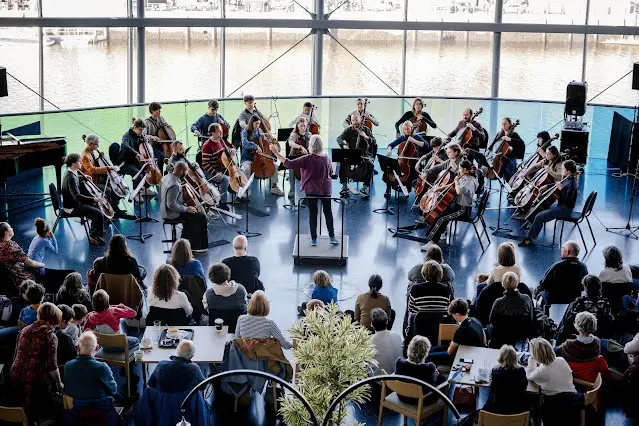
In the world of classical music, rare moments transcend the conventional concert hall experience to create a profound cultural impact. Such an event unfolded recently at The Glasshouse International Centre for Music, where world-renowned cellist Sheku Kanneh-Mason rounded off a critically acclaimed regional tour with the Royal Northern Sinfonia by joining forces with 23 aspiring young musicians. This extraordinary gathering culminated in a massed 24-cello ensemble performance on the venue’s bustling public concourse, treating weekend visitors to an unforgettable musical spectacle.
The collaboration was not merely a spontaneous jam session; it was the vibrant culmination of a multi-day artistic residency and tour that saw Kanneh-Mason perform Camille Saint-Saëns’s Cello Concerto No. 1 across Middlesbrough, Kendal, and Gateshead alongside conductor Dinis Sousa. Following these major orchestral engagements, the virtuoso dedicated his time to nurturing the grass-roots musical community. Working closely with students from The Glasshouse’s Young Sinfonia and Centre for Advanced Training (CAT) programmes, alongside dedicated tutors, professional orchestra players, and educational alumni, Kanneh-Mason placed himself shoulder-to-shoulder with the next generation of string players.
Set against the backdrop of The Glasshouse’s broader "Make Music Young People" initiative, the event underscored the institution’s ongoing commitment to democratizing classical music and making world-class artistic mentorship accessible to youth from all backgrounds. The repertoire for the pop-up concourse performance was as diverse as the ensemble itself, featuring a sweeping movement from Heitor Villa-Lobos’s Bachianas Brasileiras No. 1, alongside timeless arrangements of works by George Gershwin and Scott Joplin.
For the audiences who gathered on the sunlit concourse, the performance offered a masterclass in community engagement. For the young cellists—ranging from dedicated students to advanced pre-conservatory scholars—sharing the stage with an international icon served as an invaluable catalyst for their artistic journeys. This comprehensive report explores the chronology of the residency, the institutional frameworks driving youth music education at The Glasshouse, direct reflections from the artists involved, and the broader implications of such high-profile mentorship models within the modern classical landscape.
Detailed Chronology: From Orchestral Masterpieces to Concourse Collaboration
The sequence of events that brought Sheku Kanneh-Mason and the region’s top youth talent together was meticulously planned to bridge the gap between elite professional performance and community-based music education.
The Regional Orchestral Tour
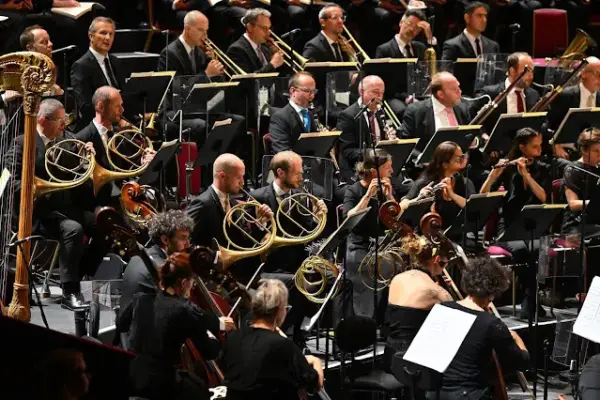
The week began with a rigorous touring schedule that saw Kanneh-Mason team up with the Royal Northern Sinfonia (RNS), one of the UK’s most celebrated chamber orchestras, under the astute baton of conductor Dinis Sousa. The tour kicked off in Middlesbrough, offering regional audiences a masterclass in interpretation as Kanneh-Mason tackled the demanding emotional landscape of Saint-Saëns’s Cello Concerto No. 1 in A minor, Op. 33.
From Middlesbrough, the convoy of musicians traveled to Kendal, drawing capacity crowds and rave reviews for a performance that highlighted Kanneh-Mason’s signature blend of lyrical intensity and technical precision. The orchestral leg of the residency culminated at The Glasshouse in Gateshead, where the grandeur of the venue’s acoustics provided a fitting stage for the soloist’s profound musicality.
The Rehearsal Room: Inside the Northern Rock Foundation Hall
While the evening concerts captured public headlines, the educational engine of the week revved to life behind closed doors in The Glasshouse’s state-of-the-art Northern Rock Foundation Hall. Here, 23 young cellists—drawn from the institution’s elite Centre for Advanced Training (CAT) and the Young Sinfonia—gathered for an intensive masterclass and rehearsal session.
The atmosphere in the room was a blend of intense focus and palpable excitement. The ensemble was uniquely stratified, featuring seasoned professional players from the Royal Northern Sinfonia, dedicated music tutors, alumni who had walked these exact educational corridors years prior, and teenagers holding their instruments with a mixture of awe and determination.
Rather than adopting a distant, masterclass-only approach, Kanneh-Mason immersed himself completely in the rehearsal process. He offered technical pointers on bow distribution, intonation blending in a large cello choir, and finding the emotional core of the syncopated rhythms in Joplin and Gershwin arrangements. The young musicians were encouraged to voice their interpretations, transforming what could have been a strict pedagogical exercise into a collaborative chamber music dialogue.
The Sunday Concourse Performance
The culmination of the residency occurred on Sunday morning, shifting the music out of traditional auditoriums and into the beating heart of The Glasshouse: the open, glass-fronted public concourse.

Part of the venue’s popular "Lunchtime Concerts" series—designed to showcase the fruits of its educational programs to the general public—the pop-up performance drew scores of casual weekend visitors, families, and dedicated classical music enthusiasts. As the 24 cellos took their positions, the rich, resonant timbre of the instruments filled the cavernous, light-flooded architectural marvel.
The ensemble launched into Villa-Lobos’s Bachianas Brasileiras No. 1, a masterpiece specifically written for an orchestra of cellos that utilizes the instrument’s entire register to mimic the lush sounds of a Brazilian orchestra mixed with Bachian counterpoint. The rich, multi-layered harmonies resonated flawlessly across the concourse.
The mood swiftly transitioned with swinging, buoyant renditions of Gershwin and Joplin tunes. The sight of a globally celebrated soloist sitting side-by-side with teenagers, tapping their feet and swaying to the syncopated rhythms, provided a powerful visual and auditory testament to the unifying power of music. The performance concluded to thunderous applause from a captivated audience, many of whom had stumbled upon the concert while visiting the venue for a Sunday stroll.
Supporting Context & Metrics: The Architecture of Youth Music Education
To fully appreciate the significance of Kanneh-Mason’s collaboration at The Glasshouse, one must examine the institutional ecosystem that made it possible. The Glasshouse International Centre for Music (formerly Sage Gateshead) has long punched above its weight as a beacon of cultural enrichment in the North East of England, operating on the philosophy that music is for everyone, regardless of background or financial means.
The Make Music Young People Programme
The overarching framework for Sunday’s performance is The Glasshouse’s Make Music Young People initiative. This comprehensive program is engineered to provide clear, sustained pathways for children and teenagers to engage with music, moving from early-years exploratory sessions all the way to pre-professional training.
Key pillars of the initiative include:
- Inclusive Weekend Schools: Offering non-auditioned ensembles, bands, and choirs designed to foster a lifelong love of music-making without the barrier of entry exams.
- Open Enrollment: Allowing young people of all ages and abilities to apply and join programmes year-round, dismantling traditional elitist gatekeeping in classical music.
- Community Outreach: Bringing professional artists directly into contact with students, demystifying the lifestyle of a professional musician and showing local youth that high-level artistry is within their reach.
The Centre for Advanced Training (CAT)
At the apex of the instrumental training pathway sits the Centre for Advanced Training (CAT). Funded by the Department for Education’s Music and Dance Scheme, the CAT programme at The Glasshouse identifies exceptionally talented young musicians aged 11 to 18 and provides them with world-class tuition, mentoring, and performance opportunities.
The metrics surrounding the impact of these programmes are profound:
- Hundreds of Annual Participants: The weekend schools and specialized ensembles engage hundreds of young people from across the North East every week.
- Geographic Reach: Students travel from rural Northumberland, urban Tyneside, and former industrial towns, finding a centralized hub of excellence that rivals London-conservatory preparatory departments.
- Pathway to Conservatories: A significant percentage of CAT alumni go on to study at top-tier conservatories across the UK and Europe, eventually feeding back into professional bodies like the Royal Northern Sinfonia.
By embedding young cellists from these exact programmes into a performance alongside Sheku Kanneh-Mason, The Glasshouse demonstrated a profound commitment to experiential learning. It bridged the gap between classroom study and the global concert stage.
Official Statements and Artistic Perspectives
The resonance of the collaboration echoed far beyond the immediate applause on the concourse, capturing the philosophical alignment between an international soloist and the institutions championing grassroots arts education.
Sheku Kanneh-Mason on the Next Generation
Reflecting on the experience, Sheku Kanneh-Mason articulated a deep-seated belief in the importance of mentorship and community engagement. Speaking after the Sunday performance, he noted:

"After my concerts in Middlesbrough, Kendal, and then here at The Glasshouse this week, it was a really special conclusion to hear the young cellists play in the rehearsal and then to join them out on the Concourse, on Sunday morning. The next generation of musicians matters so much, and I loved seeing all the enthusiasm and hearing the talent."
Kanneh-Mason, who famously shot to global prominence after performing at the wedding of Prince Harry and Meghan Markle in 2018, has consistently used his platform to advocate for music education. Coming from a famously musical family where all seven siblings play instruments, he understands intimately how early encouragement, inclusive environments, and access to instruments can alter the trajectory of a young person’s life. His willingness to sit among students rather than standing above them as a solitary virtuoso reinforced his reputation not just as a master musician, but as a cultural ambassador for accessibility.
The Institutional Vision of The Glasshouse
Spokespersons for The Glasshouse emphasized that moments like the 24-cello concourse performance are central to the venue’s identity. By integrating high-art touring soloists with community education initiatives, the centre challenges the outdated perception of classical music as an exclusive, intimidating art form.
The "Lunchtime Concerts" series, which provided the public platform for the ensemble, is specifically engineered to break down these barriers. By hosting free, informal performances in open public spaces like the concourse, the venue invites accidental audiences—shoppers, families enjoying a day out, and cultural tourists—to experience high-caliber musicianship without the financial or psychological hurdles of a traditional ticketed auditorium event.
Future Outlook: Sustaining the Momentum of Grassroots Classical Outreach
As the classical music industry navigates post-pandemic funding challenges, shifting audience demographics, and debates over the relevance of traditional orchestral models, initiatives like the one seen at The Glasshouse offer a clear blueprint for the future.
The Changing Face of Classical Mentorship
The traditional masterclass model—where a master musician sits on a stage critiqued by a silent room of fearful students—is increasingly giving way to collaborative, side-by-side performance models. As demonstrated by Kanneh-Mason and the young cellists of The Glasshouse, young musicians learn far more from the kinetic energy of playing with a professional than they do from passive observation.
This model fosters:
- Peer-to-Peer Empathy: Advanced students mentor younger ones, while professionals validate the efforts of both.
- Confidence Building: Performing in unconventional public spaces (like a glass concourse) strips away the intimidating aura of the formal concert hall, teaching musicians how to project their art directly into the community.
- Audience Development: When young people perform, their families, friends, and peers flood into cultural spaces, building a diverse, multigenerational audience base that sustains the arts ecosystem for decades to come.
Looking Ahead for The Glasshouse and RNS
Following the success of this residency, The Glasshouse is set to expand its "Make Music Young People" offerings throughout the upcoming concert season. Plans are already underway to invite other visiting international soloists to participate in similar educational crossovers, ensuring that regional youth do not just consume culture from afar, but actively participate in its creation.
For the 23 young cellists who packed the concourse on that Sunday morning, the memory of bowing alongside Sheku Kanneh-Mason will undoubtedly serve as a lifelong touchstone. Whether they ultimately pursue careers as professional soloists, orchestral players, music teachers, or passionate amateur enthusiasts, they carry forward the undeniable proof that music belongs to those who make it together.
In an era where arts funding is frequently scrutinized, this collaboration stands as an authoritative reminder: investing in the musical education of the young is not merely an auxiliary outreach activity—it is the very lifeblood of the future of classical music.