Executive Overview
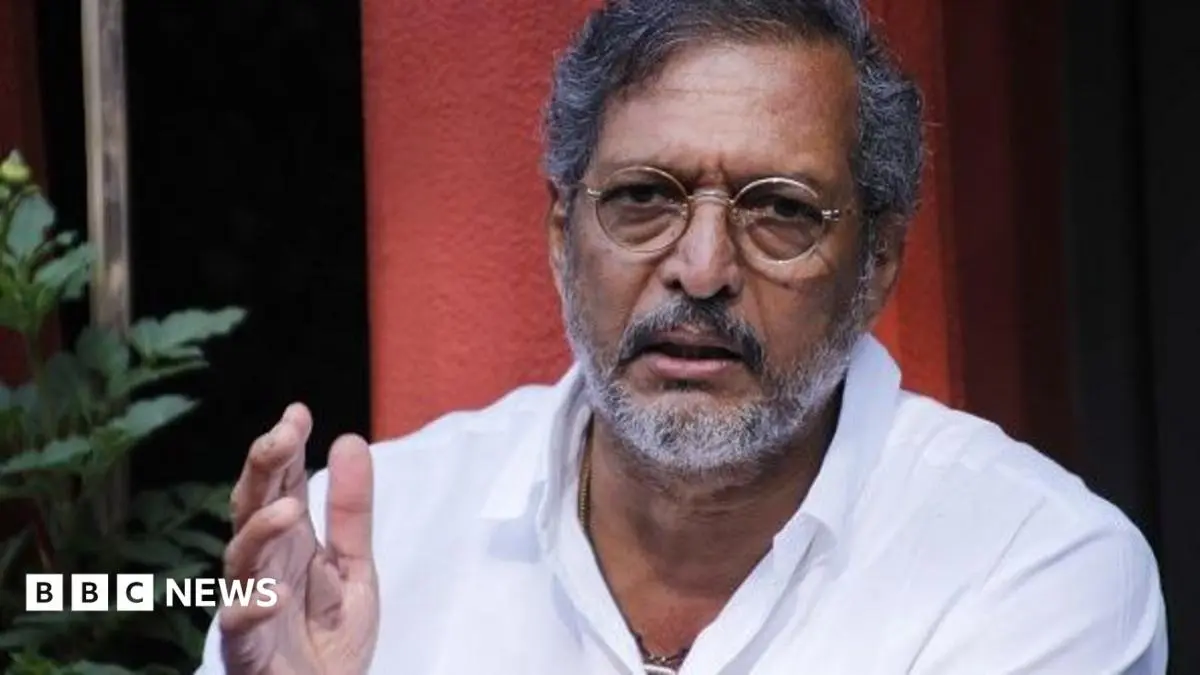
The Indian entertainment industry is in deep mourning following the passing of Vishwanath "Nana" Patekar, one of the most formidable, idiosyncratic, and enduring talents in the history of Indian cinema. Patekar passed away at the age of 75 in Goa, following a sudden medical emergency at his residence. According to medical professionals and family members, the veteran actor was rushed to Manipal Hospital in the early hours of Thursday after being found unconscious, but despite aggressive resuscitation efforts, he could not be revived.
Patekar’s career spanned over four decades, marking an indelible chapter in both Hindi (Bollywood) and Marathi-language cinema, as well as on the legitimate stage. Renowned for his distinct, staccato dialogue delivery, blazing intensity, and fearless portrayal of complex, morally ambiguous anti-heroes, Patekar defied the conventional tropes of the traditional Indian leading man. He was a three-time National Film Award winner whose artistic identity was forged as much by his rigorous theatrical background as by his cinematic triumphs.
His sudden departure has created an irrepressible void in the cultural landscape of South Asia. Across the political spectrum, from Prime Minister Narendra Modi to major luminaries of the Indian film fraternity, tributes poured in to honor a man who was as uncompromising in his personal life as he was magnetic on screen. This comprehensive report examines the life, career trajectory, cultural footprint, and lasting legacy of a true cinematic titan, chronicling his journey from humble beginnings to his status as an undisputed icon of Indian arts.
Detailed Chronology: From the Stage to the Silver Screen
Early Life and Theatrical Foundations
Born on January 1, 1951, in Murud-Janjira, Maharashtra, Vishwanath Patekar experienced financial hardship early in life, a reality that instilled in him a lifelong empathy for the working class and an unpolished, authentic worldview. Before finding his footing in cinema, Patekar immersed himself in commercial and experimental Marathi theatre. The stage became his crucible. It was here that he honed his physical command over space, his razor-sharp timing, and the intense psychological excavation of characters that would later become his trademark on celluloid.
The Slow Ascent and Cinematic Breakthrough
Patekar made his cinematic debut in 1978 with Muzaffar Ali’s critically acclaimed drama Gaman. For much of the late 1970s and early 1980s, he operated on the periphery of commercial Hindi cinema, taking on minor character roles that rarely tapped into his full potential. However, the sheer amperage of his screen presence could not be perpetually ignored.
The turning point arrived in 1989 with Vidhu Vinod Chopra’s seminal crime drama Parinda. In the film, Patekar played Anna Seth, a psychotic, asthmatic, and deeply unsettling underworld don. Unlike the stylized, theatrical villains of previous decades, Patekar’s Anna was terrifyingly visceral, unpredictable, and anchored in a chilling realism. The role transformed Patekar into a national household name overnight. For his masterclass in menace, he secured his first National Film Award (Best Supporting Actor) alongside the prestigious Filmfare Award, permanently altering the archetype of the Bollywood antagonist.
Defining Roles of the 1990s and Directorial Ventures
The 1990s established Patekar as a cinematic powerhouse capable of commanding a film entirely on the strength of his name. He seamlessly oscillated between intense action dramas, social commentaries, and multi-starrer entertainers:
- Prahaar: The Final Attack (1991): Marking his directorial debut, Patekar played Major Jaidev Chauhan, a decorated, uncompromising army officer struggling to reintegrate into a corrupt civilian society. To prepare for the role, Patekar underwent rigorous commando training with the Indian Army, a testament to his obsessive dedication to his craft.
- Tirangaa (1993): Starring alongside Rajkumar, Patekar played the fiery, patriotic police officer Inspector Kumar Mukhtar, cementing his image as an aggressive defender of justice and national pride.
- Krantiveer (1994): In Mehul Kumar’s socio-political drama, Patekar delivered one of the most defining performances of his career as Pratap Narayan Tilak. His climactic monologue in the courtroom—blistering, articulate, and fiercely critical of systemic political apathy—remains a defining cultural touchstone of 1990s Indian cinema. The role earned him his second National Film Award, this time for Best Actor.
- Khamoshi: The Musical (1996): Proving his detractors wrong—those who pigeonholed him as an actor reliant on loud, aggressive energy—Patekar delivered a deeply tender, profoundly moving performance as Joseph, a hearing-impaired father. Communicating primarily through Indian Sign Language and expressive facial nuances, Patekar showcased a vulnerability that broke the hearts of audiences nationwide.
Later Career and Final Years
In the new millennium, Patekar continued to challenge himself, successfully transitioning into character-driven roles and commercial comedies. His portrayal of the lovable, short-tempered underworld don Uday Shetty in Anees Bazmee’s comedy blockbuster Welcome (2007) showcased his immaculate comic timing, proving that his artistic range was as expansive as it was deep.
In his later years, Patekar balanced his film commitments with extensive philanthropic work, particularly through the NAAM Foundation, an organization he co-founded to support distressed farmers in drought-stricken regions of Maharashtra. His final years were marked by a quiet dignity, continuing to select scripts that resonated with his social consciousness and artistic integrity.
Supporting Context & Metrics
To fully appreciate the cultural weight of Nana Patekar’s career, one must examine the quantitative and qualitative metrics of his artistic output across his four-decade tenure.
Award Accolades and Recognition
Patekar’s critical reception places him in an elite echelon of Indian actors who successfully bridged the gap between parallel (art-house) cinema and mainstream commercial success.
| Award / Honor | Category | Film / Work | Year |
|---|---|---|---|
| National Film Award | Best Supporting Actor | Parinda | 1989 |
| Filmfare Award | Best Supporting Actor | Parinda | 1990 |
| National Film Award | Best Actor | Krantiveer | 1994 |
| Filmfare Award | Best Actor | Krantiveer | 1995 |
| National Film Award | Best Supporting Actor | Agni Sakshi | 1996 |
| Padma Shri | Civilian Honor (Arts) | Contribution to Cinema | 2013 |
Filmography Statistics and Genre Versatility
- Total Film Credits: Over 80 feature films spanning Hindi, Marathi, Kannada, and English languages.
- Directorial Ventures: 1 feature film (Prahaar: The Final Attack), which remains a cult classic within the military-drama genre in India.
- Theatrical Productions: More than 25 major stage plays in Marathi and Hindi, establishing his foundational ethos as an actor who prioritized text and audience connection above box-office metrics.
Official Statements and Tributes
The passing of Nana Patekar triggered an unprecedented wave of grief, with public figures, political leaders, and cinematic peers offering heartfelt remembrances.
Prime Minister Narendra Modi
Prime Minister Narendra Modi took to the social media platform X (formerly Twitter) to lead the nation’s tributes, writing:
"The passing of Nana Patekar leaves a vast void in the artistic world. He was a versatile genius whose intensity, dialogue delivery, and outspoken personality commanded respect. He portrayed characters that will remain etched in the memory of generations. My thoughts are with his family, friends, and countless admirers. Om Shanti."
Bollywood Industry Peers
Akshay Kumar, who shared immense on-screen chemistry with Patekar in the comedy franchise Welcome, expressed deep sorrow:
"We have lost a rare performer whose voice, intensity, and honesty could command an entire audience’s attention without uttering a single forced word. Working alongside him was a masterclass in acting. Rest in peace, Nana ji."
Dr. Shekhar Salkar of Manipal Hospital in Goa provided official details regarding the actor’s final moments to the ANI news agency:
"He was brought into the facility during the early hours of Thursday after being found unconscious at his Goa residence. Despite 45 minutes of continuous, advanced cardiopulmonary resuscitation (CPR) administered by our medical team, he could not be revived due to profound cardiac arrest."
Future Outlook and Lasting Legacy
The departure of Nana Patekar signals the fading twilight of an era defined by raw, unvarnished artistic conviction in Indian cinema. As contemporary filmmaking increasingly tilts toward algorithmic safety, high-concept visual effects, and sanitized mainstream packaging, Patekar’s career stands as a monument to what can be achieved through sheer psychological depth, emotional authenticity, and uncompromising personal integrity.
His legacy will endure on multiple fronts:
- Cinematic Masterclasses: Films such as Parinda, Krantiveer, and Khamoshi will continue to serve as pedagogical texts for aspiring actors studying the nuances of character transformation and emotional restraint.
- Philanthropic Impact: Through the NAAM Foundation, Patekar’s footprint extends far beyond the silver screen. His grassroots work with rural agrarian communities in Maharashtra cemented his status not merely as a cinematic icon, but as a deeply compassionate citizen attuned to the socio-economic struggles of ordinary Indians.
- Theatrical Heritage: His dedication to the Marathi stage ensures that his artistic lineage remains rooted in the soil of regional storytelling, inspiring generations of regional theatre artists to break boundaries.
Ultimately, Nana Patekar leaves behind a legacy defined by his own famous cinematic cadence—bold, unapologetic, unforgettable, and deeply human. The curtains have closed on a legendary career, but the echoes of his voice will resonate through the halls of Indian cinematic history for generations to come.