Executive Overview
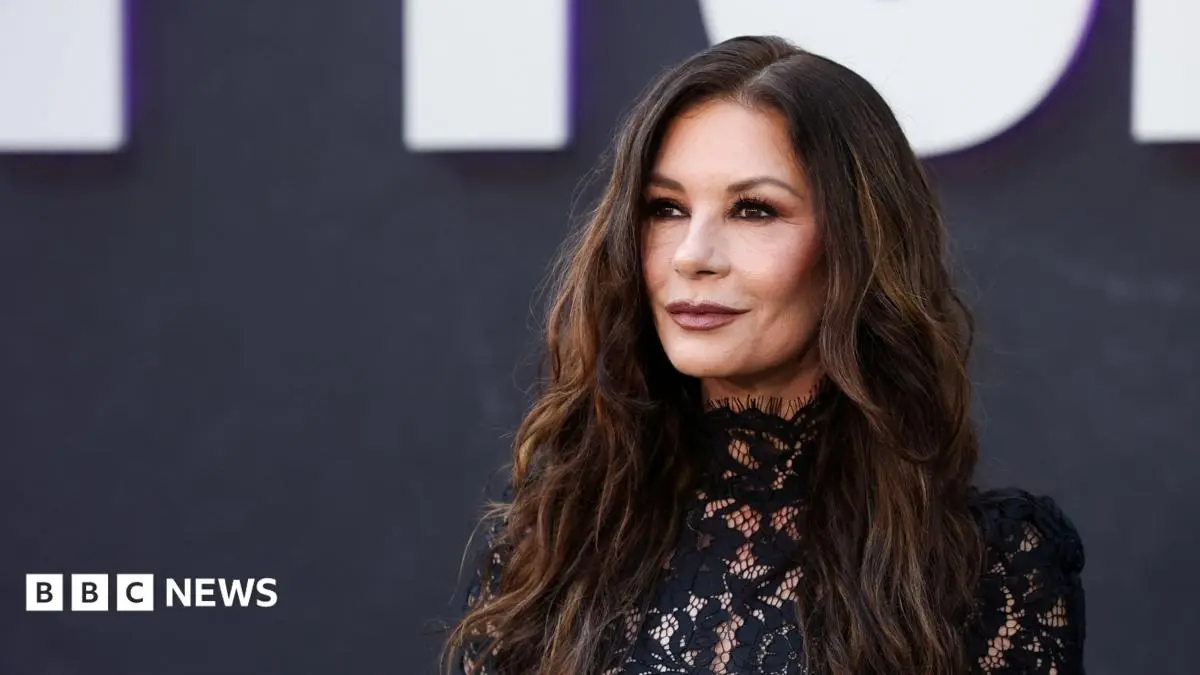
The debate surrounding industry nepotism in the entertainment sector has intensified following impassioned remarks from Academy Award-winning actress Catherine Zeta-Jones. In a candid and expansive interview with The Sunday Times, the 56-year-old Welsh star launched a fierce defense of her two children—Dylan, 24, and Carys, 21—both of whom are pursuing careers in the competitive realm of show business. Zeta-Jones, who shares her children with her husband, Hollywood icon Michael Douglas, branded the ubiquitous cultural moniker "nepo baby" as "horrific" and inherently unfair to the rising generation of artists born into fame.
The term "nepo baby"—shorthand for nepotism baby—has dominated pop culture discourse over the past several years, serving as a critical lens through which audiences and industry observers examine the offspring of celebrities who secure prominent roles in film, television, modeling, and music. Critics argue that these individuals benefit from systemic advantages, immense wealth, established industry networks, and instantaneous name recognition that bypass the grueling traditional paths navigated by working-class actors.
However, Zeta-Jones’ intervention reframes the conversation, highlighting the emotional toll that public scrutiny and blanket generalizations take on young people attempting to carve out authentic artistic identities. According to the veteran actress, her children did not choose their lineage; rather, they are simply following genuine creative passions, working diligently behind the scenes, and enduring the same trials of rejection familiar to any aspiring performer.
This controversy arrives at a fascinating cultural juncture where the tension between meritocracy and inherited privilege is under unprecedented public examination. By drawing upon her own working-class origins in Swansea, Wales, and contrasting them with the high-pressure environment her children navigate as the grandchildren of legendary screen icon Kirk Douglas, Zeta-Jones offers a nuanced, highly personal perspective on the evolving dynamics of Hollywood succession, class mobility, and the true cost of celebrity lineage.
Detailed Chronology: From Working-Class Swansea to Hollywood Royalty
To fully contextualize Catherine Zeta-Jones’ fierce defense of her children, it is essential to trace the remarkable trajectory of her own life and career, as well as the generational legacy of the Douglas dynasty into which her family is embedded.
The Early Years in Wales (1969–1986)
Born in Swansea, Wales, on September 25, 1969, Catherine Zeta-Jones grew up far removed from the glitz and glamour of Hollywood. Her father, Dai Jones, worked as a confectionery factory owner, while her mother, Patricia Fair, was a seamstress. Showing an early affinity for the performing arts, Zeta-Jones was a regular fixture in local dance and musical theatre productions, finding solace and purpose on the stage.
Reflecting on her formative years, the actress has often noted how alien conventional academic paths felt to her burgeoning creative spirit. "I had a sniff of the joy of being in the theatre so young," she remarked, recalling her adolescence. "I went, ‘I want to do this. I can’t imagine going through school and A-Levels in Swansea.’"
The West End Breakthrough and British Television Stardom (1987–1995)
Zeta-Jones’ professional career commenced in earnest when she secured a coveted role in the West End production of the musical 42nd Street in 1987. Demonstrating resilience, her big break famously arrived when the production’s lead actress and her understudy both fell ill simultaneously, allowing the teenage Zeta-Jones to step into the starring role overnight and command the stage with poise well beyond her years.
Her transition to mainstream television cemented her status as a household name across the United Kingdom. In 1991, she captivated British audiences as Mariette Larkin in the hit ITV comedy-drama series The Darling Buds Of May, starring alongside veteran British actor David Jason. The series was a runaway rating success, instantly transforming Zeta-Jones into a ubiquitous media figure and establishing her as one of Britain’s most promising young talents.
The Hollywood Migration and Global Stardom (1996–2005)
Seeking broader horizons, Zeta-Jones made the pivotal leap across the Atlantic to the United States. Her striking beauty and commanding screen presence caught the attention of director Martin Campbell and executive producer Steven Spielberg, who cast her as Elena Montero in the swashbuckling adventure film The Mask of Zorro (1998) alongside Antonio Banderas. The film was a global blockbuster, instantly elevating her to international superstardom.
Her momentum continued unabated throughout the late 1990s and 2000s. She starred opposite Sean Connery in the heist thriller Entrapment (1999), featured in Steven Soderbergh’s critically acclaimed ensemble drama Traffic (2000), and delivered an iconic, Academy Award-winning turn as Velma Kelly in Rob Marshall’s cinematic adaptation of the musical Chicago (2002).
The Douglas Dynasty and Family Life (1998–Present)
Zeta-Jones’ personal life took a momentous turn in August 1998 when she attended the Deauville Film Festival in France. There, she was introduced to fellow actor Michael Douglas, the son of silver-screen titan Kirk Douglas. Despite a notable 25-year age gap, a powerful romance blossomed. The couple became engaged a year later and exchanged vows in a high-profile, star-studded ceremony at The Plaza Hotel in New York City in November 2000.
The union firmly embedded Zeta-Jones into one of Hollywood’s most prominent and enduring cinematic dynasties. The couple welcomed their son, Dylan, in August 2000, followed by their daughter, Carys, in April 2003. As Dylan and Carys grew, they absorbed the realities of life in the spotlight, eventually choosing to pursue their own paths in the entertainment industry—Dylan gravitating toward acting and Carys exhibiting a profound passion for directing.
Supporting Context & Metrics: The "Nepo Baby" Phenomenon Exploded
The cultural lexicon is continuously reshaped by viral internet terminology, but few portmanteaus have demonstrated the staying power or cultural resonance of "nepo baby." To understand the weight of Catherine Zeta-Jones’ recent statements, one must examine the origins, societal mechanics, and quantitative impact of this modern discourse.
The Genesis of a Cultural Catchphrase
While the phenomenon of generational succession in Hollywood—dating back to the silent film era—is as old as the medium itself, the specific term "nepo baby" gained explosive traction in late 2022 following a viral investigative feature published by New York Magazine. The article mapped out the extensive familial trees of young actors, models, and filmmakers dominating contemporary media, utilizing interactive charts to illustrate how proximity to fame influences career trajectories.
The phrase quickly saturated social media platforms like TikTok, X (formerly Twitter), and Instagram, transforming into a catch-all critique of structural inequality within creative industries. Supporters of the term argue that in an era marked by economic anxiety, housing crises, and shrinking opportunities for working-class creatives, the seamless upward mobility of celebrity offspring highlights an exclusionary, out-of-touch Hollywood ecosystem.
The Balancing Act: Privilege vs. Performance
Industry analysts and sociologists note that the "nepo baby" debate sits at the intersection of two competing cultural narratives:
- The Meritocracy Myth: Modern audiences increasingly demand transparency and authenticity. When high-profile casting decisions seemingly favor bloodlines over raw auditions, it triggers widespread cynicism regarding the fairness of creative markets.
- The Reality of Artistic Inheritance: Conversely, proponents of industry families point out that creative households naturally foster artistic immersion. Growing up surrounded by scripts, sets, directors, and seasoned professionals provides an organic education that money alone cannot buy.
Furthermore, psychological studies on high-achieving children of famous parents—often termed "second-generation pressure"—indicate that these individuals face intense scrutiny. Every success is frequently minimized as the result of nepotism, while every failure is magnified under an unforgiving public microscope.
Where Dylan and Carys Douglas Fit
In her interview with The Sunday Times, Zeta-Jones addressed this exact dichotomy. Emphasizing that her children are not handed guaranteed franchises or overnight stardom, she noted that they are actively "plugging away" in the foundational trenches of the industry.
Dylan, pursuing acting, and Carys, focusing on the rigorous discipline of directing, are operating in a radically different media landscape than the one their parents entered decades ago. Today’s digital-first environment means that every step of their artistic development is subjected to immediate public commentary, making resilience a mandatory prerequisite for survival in the arts.
Official Statements and Industry Reactions
Catherine Zeta-Jones’ uncompromising defense of her children has generated widespread discussion across entertainment circles, prompting commentary from industry peers, cultural critics, and fans alike.
Key Excerpts from Zeta-Jones’ Sunday Times Interview
The depth of Zeta-Jones’ protective maternal instincts was laid bare in her remarks to the publication. Articulating her frustration with the cultural shorthand used to dismiss young talent, she stated:
"This horrific phrase ‘nepo baby’ is horrible because these kids didn’t ask to be born into this, they’re finding their own way in life. But they love it, and they’re good. Otherwise, Michael and I would be the first to go, ‘you know what? Maybe law school looks really good’."
The actress underscored that artistic integrity remains the ultimate arbiter of whether her children will endure in the profession. According to Zeta-Jones, neither she nor Michael Douglas—two veterans intimately acquainted with the ruthless nature of box-office metrics and critical reception—would ever shield ineptitude or encourage their children to pursue paths for which they are fundamentally unsuited.
"You have to go with your dreams, your passion," Zeta-Jones explained. "It’s hard for them to forge a way forward on their own."
Industry Counter-Perspectives
Zeta-Jones is not the first high-profile figure to push back against the "nepo baby" label. Over the past two years, numerous celebrated actors with famous parents—including Jamie Lee Curtis, Lily-Rose Depp, Maya Hawke, and Allison Williams—have weighed in on the discourse.
While some acknowledge the undeniable baseline privileges afforded by their backgrounds, many echo Zeta-Jones’ sentiment regarding the emotional toll of having their life’s work reduced to a simple genetic transaction. Industry veterans frequently argue that while a famous surname may secure an initial meeting or an audition, sustaining a viable, respected career over decades requires undeniable talent, professional discipline, and public connection—elements that cannot be manufactured by lineage alone.
Future Outlook: The Next Generation of the Douglas Legacy
As the entertainment industry continues to grapple with questions of access, representation, and equity, the trajectory of Dylan and Carys Douglas offers a fascinating case study in how modern celebrity offspring navigate their entry into the public sphere.
Navigating the Digital Age of Scrutiny
For Dylan and Carys, the road ahead involves balancing the immense legacy of their parents and grandfather—Kirk Douglas remains one of the most revered figures in cinematic history—with the imperative to establish distinct, independent artistic voices.
While Dylan continues to hone his craft in acting, engaging with theatrical and cinematic training, Carys is exploring the structural and creative intricacies of directing. Behind the camera, directors are often subjected to a different kind of scrutiny, where technical proficiency, leadership, and vision quickly expose any lack of substantive capability.
The Evolution of Hollywood’s Hiring Practices
Looking forward, the intense public conversation surrounding nepotism is unlikely to vanish. Casting directors, studio executives, and streaming platforms are increasingly sensitive to optics, occasionally pushing for wider casting calls and blind auditions to ensure a diverse array of talent enters the pipeline.
However, as Catherine Zeta-Jones so passionately argued, the human element of parenting remains unchanged. Mothers and fathers want to see their children happy, fulfilled, and resilient in the face of adversity. Whether Dylan and Carys Douglas ultimately achieve the global longevity of their parents and grandfather will not be decided by internet monikers or familial status, but by the timeless crucible of audience reception, artistic dedication, and creative execution.
Ultimately, Zeta-Jones’ defense serves as a reminder that behind every viral cultural debate are real families attempting to navigate the complexities of ambition, identity, and the heavy burden of expectation in the modern age.