Executive Overview
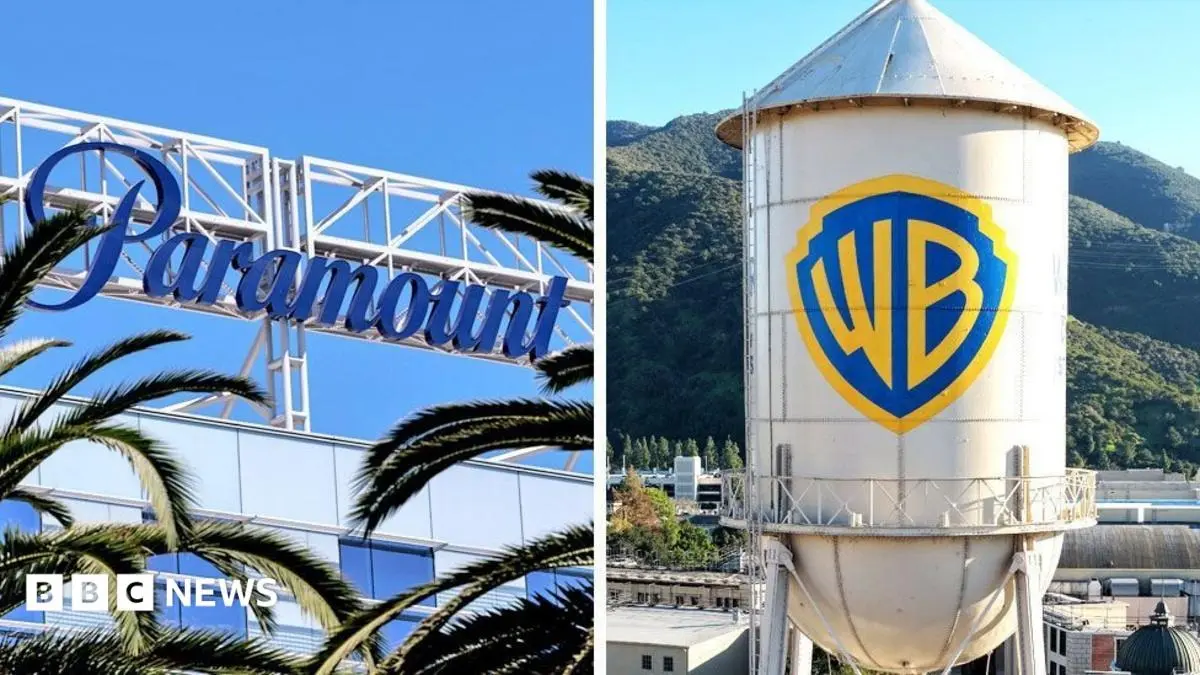
In a seismic transaction that will permanently alter the architecture of global entertainment, Paramount Skydance has officially completed its staggering $110 billion acquisition of Warner Bros. Discovery. This historic consolidation brings together two of Los Angeles’s most legendary film studios, creating an unprecedented entertainment and media behemoth. The deal fuses a combined century of cinematic history, uniting historic studio lots, vast intellectual property portfolios, and formidable television and streaming networks under a single corporate banner.
The newly minted corporate entity will operate globally under the name Skydance Corporation, reflecting the vision of David Ellison, the founder of Skydance who orchestrated the takeover of both Paramount and Warner Bros. Discovery. This mega-merger fundamentally reshapes the Hollywood studio system, upends the economics of global streaming, and consolidates an extraordinary array of household brands, prestige television networks, and iconic cinematic franchises.
Among the massive cache of assets changing hands are HBO, CBS, Nickelodeon, Showtime, Comedy Central, DC Studios, and the Food Network. Furthermore, the transaction consolidates ownership over some of the most culturally dominant and financially lucrative intellectual properties in modern history, including Harry Potter, Game of Thrones, The Lord of the Rings, and the Mission: Impossible franchise.
Yet, the path to this historic consolidation was fraught with fierce regulatory battles, intense anti-trust scrutiny, bitter bidding wars, and profound questions regarding the future of journalistic integrity and consumer pricing. As Hollywood digests the implications of this $110 billion union, the media world stands at a critical crossroads, watching to see how the architects of this new corporate giant will balance blockbuster ambition against the realities of cost-cutting, streaming dominance, and regulatory oversight.
Detailed Chronology: From Bidding War to Antitrust Settlement
The road to the largest media merger of the 21st century was neither smooth nor certain. The transaction followed months of high-stakes corporate maneuvering, aggressive legal challenges, and widespread public criticism from industry unions, consumer advocacy groups, and rival media companies.
The Bidding War and the Exit of Netflix
The modern chapter of this corporate consolidation began when Warner Bros. Discovery initially entered into preliminary discussions to divest portions of its vast media empire. Early in the process, streaming titan Netflix emerged as a frontrunner, securing a partial acquisition deal designed to absorb select assets of Warner Bros. Discovery.
However, the landscape shifted dramatically when Paramount Skydance entered the fray with an aggressive, all-encompassing counter-offer. Leveraging deep financial backing and a bold vision for total vertical integration, Paramount Skydance launched a hostile bidding war that completely disrupted Netflix’s plans. Facing intense financial competition and potential regulatory road-blocks of its own, Netflix ultimately walked away from the negotiating table, clearing the path for Paramount Skydance to pursue its all-cash and stock takeover of the entire Warner Bros. Discovery enterprise.
State-Led Antitrust Lawsuits and Legal Resistance
As news of the impending $110 billion mega-merger leaked, alarm bells sounded across the United States. Antitrust lawyers and attorneys general in approximately a dozen states—spearheaded by California Attorney General Rob Bonta—unleashed a coordinated wave of lawsuits aimed at blocking the transaction.
The legal challenges argued that the merger would create an anti-competitive monopoly, severely stifling market competition, driving up subscription and ticket prices for consumers, and inflicting "substantial" and irreversible harm upon traditional movie theaters, independent cable distributors, and audiences nationwide. Critics pointed out that combining two of the "Big Five" Hollywood studios would lead to massive workforce reductions, reduced creative output, and a homogenization of cultural storytelling.
The Settlement and Regulatory Guardrails
To salvage the deal and secure the necessary green light from competition authorities across the globe, Paramount Skydance engaged in intense negotiations with state regulators. Last month, a crucial breakthrough was achieved when US states announced a comprehensive settlement with Paramount and David Ellison, paving the way for the merger to finally go ahead.
Crucially, the settlement did not merely wave the deal through; it established strict operational guardrails and regulatory mandates designed to protect domestic film production, preserve employment, and prevent the corporate entity from hollowing out its creative output.
- The Production Quota: Under the terms of the legal settlement, Skydance Corporation is legally mandated to release a minimum of 30 feature films theatrically each year.
- The Miramax Contingency: If the studio fails to meet this annual production quota, it faces a punitive measure: it will be forced to immediately divest and sell off its valuable 49% equity stake in Miramax, the historic independent film company originally founded by Harvey and Bob Weinstein.
- Domestic Production Requirements: To ensure that the economic benefits of the merger trickle down to American workers, the settlement dictates that at least 20% of all studio film production must take place within the United States for the first two years post-merger. This requirement scales upward, rising to more than 30% through the subsequent three years.
- AI Guardrails: Addressing profound anxieties within Hollywood unions regarding the displacement of human labor by artificial intelligence, the settlement includes explicit restrictions against "AI-generated" films. These guardrails prevent the studio from fulfilling its annual 30-film quota with low-budget, automated, or generative AI content, ensuring that capital is directed toward human artists, writers, and technicians.
Supporting Context & Metrics: A Century of Cinema and News Under One Roof
The sheer scale of the Skydance Corporation is difficult to overstate. By marrying Paramount Pictures—founded in 1912—with Warner Bros., which boasts a 103-year history, the new entity holds the keys to the most storied film libraries in the history of motion pictures.
Cinematic Legacies and Award Pedigrees
Both studios possess glittering histories defined by critical acclaim and commercial dominance, though their recent fortunes at the Academy Awards have diverged sharply:
- Warner Bros.: Over its century-long existence, Warner Bros. has captured well over 100 Academy Awards. The studio experienced a dominant run at the Oscars, anchored by a record-tying 11 Academy Award nominations and wins for critical and commercial darlings such as One Battle After Another, Sinners, and Weapons.
- Paramount Pictures: Tracing its roots back to the genesis of Hollywood in 1912, Paramount also boasts a century of cinematic mastery, having distributed timeless masterpieces spanning from The Godfather to Titanic. However, the studio has experienced a relative dry spell in recent years regarding top-tier Academy honors. Paramount failed to secure a single Best Picture or major project nomination from the Academy in the preceding year, with its most recent major Oscar triumph coming via Top Gun: Maverick in 2022.
The Journalistic Empire: CNN, CBS, and Editorial Independence
Beyond entertainment, the merger creates profound questions regarding the future of the American news media. The transaction brings one of the nation’s premier journalistic outlets—CNN—alongside CBS News, into a period of transition and heightened public scrutiny.
Because media consolidation inevitably concentrates journalistic power, the settlement with US states required the establishment of a specialized "news editorial independence board." This board is charged with safeguarding independent, objective, and fact-based reporting across both CNN and CBS News.
Questions regarding political influence and editorial independence have lingered over CBS since the network was absorbed in 2025 as part of an earlier, separate corporate merger between Skydance Media and Paramount. Chief Executive David Ellison—who notably hosted a private dinner for President Donald Trump earlier this year—has repeatedly sought to reassure journalists, lawmakers, and the public that absolute editorial independence will be rigorously maintained across all newsrooms under his purview.
Official Statements and Leadership Structure
With the ink dry on the $110 billion transaction, David Ellison has wasted no time installing a high-powered executive leadership team designed to manage the sprawling conglomerate.
David Ellison on the "Historic" Vision
Announcing the completion of the transaction, David Ellison, chairman and chief executive of Skydance Corporation, characterized the moment as a watershed milestone for the global entertainment industry.
"From the start, our ambition was to bring these two storied studios together and create a stronger competitor, with the talent, resources, and reach to tell great stories in every genre, on every platform, for audiences everywhere. Now that ambition is a reality," Ellison declared.
The Executive Suite: Kreiz, Thompson, Weiss, and Bloys
To manage the monumental task of operational integration, Ellison has structured a leadership team combining veteran operational minds with established creative powerhouses:
- Ynon Kreiz: Appointed last week as co-chief executive alongside Ellison, the outgoing CEO of Mattel will spearhead the day-to-day operations of Skydance Corporation. Kreiz’s immediate mandate is overseeing the complex logistical integration of the newly combined business units. Meanwhile, Ellison will retain primary oversight over long-term corporate strategy and advanced technology investments.
- Mark Thompson: The former Director General of the BBC will remain firmly in place, continuing his crucial leadership role as chairman and editor-in-chief of CNN Worldwide.
- Bari Weiss: Will continue her tenure as editor-in-chief of CBS News, maintaining continuity at the historic broadcast news division.
- Casey Bloys: The architect behind the modern prestige era of HBO and Max Content has been elevated to the dual role of co-chair and chief content officer for direct-to-consumer content.
According to Mike Proulx, research director at Forrester Research, Bloys’ promotion signals a massive shift in streaming strategy.
"That change essentially means the HBO leadership team is now in charge of Skydance’s combined streaming operation," Proulx noted.
"While that bodes well for the HBO brand, make no mistake, Bloys will be pressured to find and deliver cost efficiencies that could affect content quality."
Future Outlook: The Streaming Wars and the New Hollywood
As the dust settles on Wall Street and in the boardrooms of Los Angeles, the immediate future of Skydance Corporation will be defined by three distinct operational imperatives: streaming consolidation, cost-efficiency mandates, and regulatory compliance.
The Streaming Reckoning
For millions of consumers, the most visible impact of this merger will be felt in the living room. The integration of Warner Bros. Discovery’s streaming architecture (Max/Discovery+) with Paramount’s streaming infrastructure (Paramount+) creates an undeniable superpower in the direct-to-consumer space.
Under Casey Bloys’ content leadership, the newly combined streaming apparatus will attempt to challenge Netflix and Disney+ on an unprecedented scale. However, this unification will inevitably spark consumer anxiety regarding subscription bundling, price increases, and potential app consolidation. Analysts widely expect that the company will look to merge its streaming applications into a single, comprehensive super-app to reduce overhead and maximize subscriber retention.
Balancing Prestige with Profitability
As Forrester Research’s Mike Proulx pointed out, the corporate mandate handed to the executive suite is dual-edged. While consumers expect the prestige and high production values traditionally associated with the HBO brand, Wall Street and David Ellison will demand immediate and substantial cost efficiencies to service the massive debt incurred during an $110 billion acquisition.
The central tension of the post-merger era will lie in whether Skydance Corporation can successfully cut corporate fat and eliminate redundant departments without compromising the creative risk-taking that defined the golden age of both Paramount and Warner Bros.
A New Era of Oversight
Finally, Skydance Corporation enters this new era under an unyielding microscope. Bound by strict state-level legal settlements, mandatory domestic film quotas, absolute bans on unscripted AI feature output, and strict journalistic independence boards overseeing CNN and CBS, Ellison’s media empire will be held to a uniquely high standard of accountability.
As Hollywood watches from the sidelines, one reality is indisputable: the studio system has entered an entirely new epoch. Whether Skydance Corporation can successfully wield its $110 billion dominion to enrich global culture—or whether it will succumb to the perils of hyper-consolidation—will define the entertainment industry for decades to come.