Executive Overview
The intersection of celebrity and public devotion has long been characterized by a paradox: while fandom is often dismissed as a modern, hyper-digital phenomenon fueled by social media algorithms and parasocial intimacy, its roots run deep into the history of high culture. From the pop-up subcultures of contemporary music titans to the hushed, reverent corridors of 20th-century classical halls, human beings have consistently channeled their admiration into intense, sometimes eccentric expressions of loyalty.
Recent headlines are dominated by the visceral antics of contemporary fandoms. Musicians like Taylor Swift receive painted turtle shells; Harry Potter star Emma Watson is bombarded with shipments of Bibles; and pop icon Harry Styles once opened a piece of fan mail containing a sanitary pad inscribed with his own name. These jarring anecdotes reinforce the prevailing cultural narrative that modern fandom is inherently one-sided, boundary-crossing, and borderline obsessive.
However, a historical lens reveals that this behavior is neither new nor exclusive to pop music’s youth demographic. Archival research into the fan mail of legendary composer and conductor Leonard Bernstein unearths startlingly similar acts of intimate, unconventional gift-giving from classical music enthusiasts—a demographic that traditionally prides itself on highbrow sophistication and emotional restraint.
Ultimately, fandom transcends the specific genre of the art it celebrates. Whether manifest in the exchange of handmade friendship bracelets at a stadium tour or strict adherence to concert-hall etiquette, fandom functions as a primal mechanism for identity formation and community building. By examining the parallels between historical high-art devotion and modern pop culture, this investigation explores why human beings consistently seek to bridge the gap between themselves and the untouchable icons they adore, proving that our obsessions—however bizarre they may appear to outsiders—are a fundamental expression of our shared humanity.
Detailed Chronology: A History of Intimate Fan Interaction
To understand the evolution of the fan-celebrity dynamic, it is necessary to trace how expressions of devotion have shifted across eras, mediums, and cultural strata. While the delivery methods have evolved from handwritten postal correspondence to instant digital messaging, the underlying psychological impulse to connect with the idol remains remarkably constant.
The Mid-20th Century: The Classical Era of Correspondence
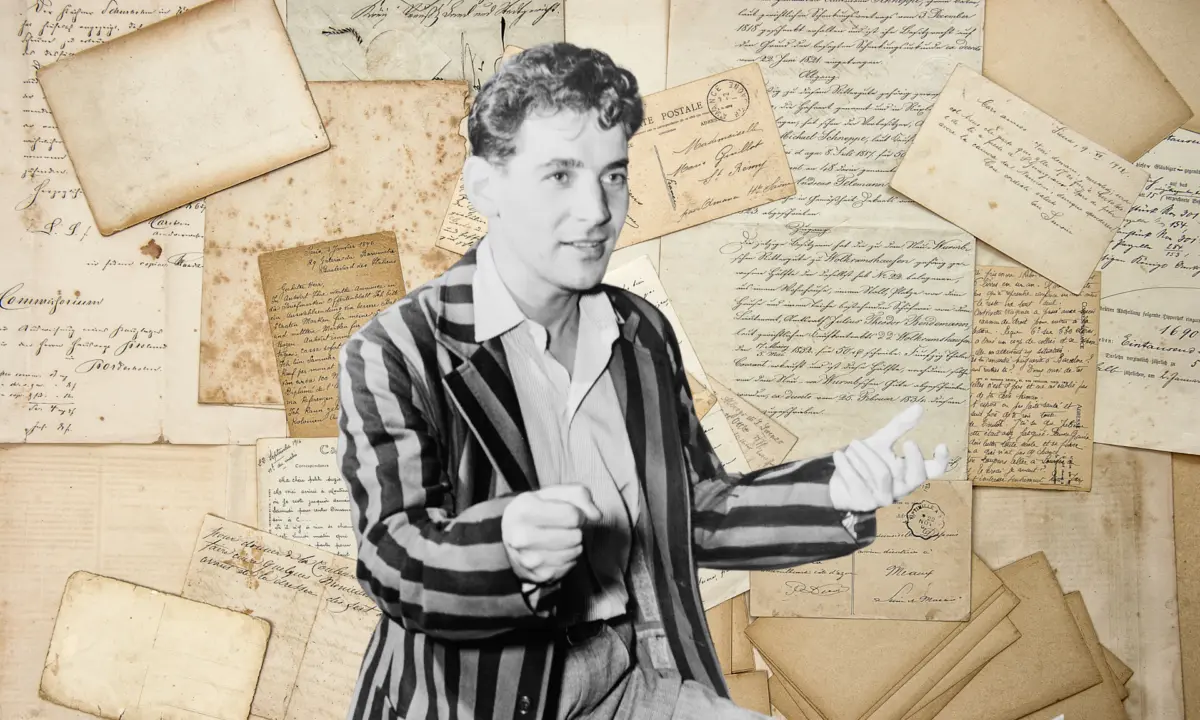
Long before the advent of Twitter, Instagram, or TikTok, the relationship between a celebrated artist and their audience was mediated through the postal service, autograph books, and stage-door encounters. During the 1950s, Leonard Bernstein—famed composer of West Side Story, television personality, and music director of the New York Philharmonic—became the focal point of an extraordinary wave of public adoration.
An examination of Bernstein’s extensive archival papers housed at the University of Bristol reveals a treasure trove of missives that challenge the stereotype of the detached, intellectual classical music enthusiast.
- March 4, 1951: A woman from California wrote to Bernstein following a San Francisco concert, expressing a profound compulsion to return a personal favor. Enclosed within her letter was a freshly laundered handkerchief, specifically designed to help the conductor manage his physical exertion on stage. Her explicit hope was that he would use it, thereby forging a tangible, sensory link between them.
- The Deodorant Recommendation: Another female admirer penned a letter urging Bernstein to apply "Harriet Hubbard Ayer Cream deodorant" directly to his face prior to taking the stage, blending maternal care with obsessive devotion.
- The Self-Published Poet: An elderly male admirer bypassed traditional publishing houses entirely, choosing to compose, typeset, print, and staple his own inspirational poetry into bespoke booklets specifically mailed to Bernstein’s dressing room.
- The Handcrafted Table Setting: Demonstrating the communal nature of this devotion, a group of Catholic nuns mailed photographic evidence of a meticulous, Bernstein-themed table setting they had engineered within their convent.
- The China Cup Request: In a striking display of entitlement mixed with intimacy, a blind couple wrote directly to the maestro demanding that he ship them a genuine china tea cup and saucer from his personal collection.
The Turn of the Millennium: The Tabloid and Early Internet Age
As mass media accelerated in the late 20th and early 21st centuries, the barrier between celebrity and consumer began to thin, giving rise to tabloid culture and early internet fan forums. This era birthed a new brand of invasive fandom characterized by physical boundary violations.
- Emma Watson and the Bibles (2010–2012): Following her explosive global success as Hermione Granger in the Harry Potter film franchise, British actor Emma Watson found herself the recipient of a steady stream of religious texts, receiving dozens of Bibles delivered directly to her sets and promotional events.
- Harry Styles and Unorthodox Mail (2012): During the height of One Direction’s global boy-band phenomenon, member Harry Styles publicly recounted receiving deeply personal and unsettling items through the post, including a sanitary pad emblazoned with his own name.
The Hyper-Connected Digital Present: Stadiums and Subcultures
Today, the digital age has democratized access to celebrities while simultaneously codifying fan behavior into elaborate, ritualistic subcultures.
- Taylor Swift and the Turtle Shell: Pop megastar Taylor Swift has amassed an archive of bizarre gifts, highlighted by a fan who mailed her a turtle shell bearing a painted portrait of her face.
- The Codification of Swiftie Culture: Contemporary fandoms no longer rely solely on mailing physical objects to their idols; instead, they project their devotion inward, building massive, self-sustaining communities. Swifties trade handmade friendship bracelets—a nod to a lyric in her song "You’re Not Sorry" or the Midnights track "You’re On Your Own, Kid"—and orchestrate synchronized stadium rituals, such as shouting "one, two, three, let’s go bitch!" before the opening verse of Delicate, or illuminating concert venues with phone flashlights during performances of Marjorie.
Supporting Context & Metrics: The Psychology of the Parasocial
To dismiss these behaviors as mere aberrations is to misunderstand the psychological architecture of modern media consumption. Psychologists and sociologists utilize the term parasocial interaction (originally coined by Horton and Wohl in 1956) to describe the one-sided psychological relationships that media users establish with media personalities, including musicians, actors, and classical conductors.
The Mechanics of the One-Sided Bond
In a parasocial relationship, the fan expends significant emotional energy, time, and financial resources investing in a celebrity who remains entirely unaware of their individual existence. While clinical psychologists often pathologize this as an unhealthy detachment from reality, cultural theorists argue that it serves a vital evolutionary and social function.
| Dimension | Traditional Social Relationship | Parasocial Relationship |
|---|---|---|
| Reciprocity | Mutual exchange of communication, validation, and emotional labor. | Strictly one-directional; the celebrity broadcasts, the fan consumes. |
| Boundaries | Negotiated through direct social feedback and physical proximity. | Imposed unilaterally; the fan often navigates physical boundaries via mail or digital pursuit. |
| Community Function | Localized to immediate family, friends, and peer groups. | Expanded to global, networked "tribes" unified by shared media consumption. |
Cultural Hierarchies: Swifties vs. The Classical Connoisseur
A fascinating sociological dynamic emerges when comparing how different fandoms are perceived by the broader public based on cultural capital and class signaling.
- The Highbrow Illusion: Classical music lovers have historically cultivated an image of intellectual superiority and sophisticated emotional restraint. Many refuse to identify with the pejorative label of "fan," preferring terms like "music appreciator" or "classical connoisseur." This terminology allows them to mask their own intense, borderline obsessive behaviors—such as memorizing every recorded iteration of a Beethoven symphony or analyzing Leonard Bernstein’s personal correspondence—under the guise of high-culture education.
- The Lowbrow Stigma: Conversely, pop music fandoms—particularly those dominated by young women, such as Swifties or directioners—are routinely pathologized as hysterical, irrational, and culturally vapid. Society readily accepts that teenage girls will scream at a pop concert, yet views their emotional intensity with patriarchal condescension.
Yet, as the Bernstein archives prove, the underlying psychology is identical. Whether a listener is sitting in Boston Symphony Hall refusing to unwrap a piece of hard candy during a quiet adagio movement, or standing in a rain-soaked NFL stadium trading beaded bracelets, they are engaging in the exact same tribal ritual: seeking belonging, order, and meaning within an increasingly chaotic world.
Official Statements & Expert Perspectives
Sociologists, archivists, and cultural historians have increasingly turned their attention toward fan archives to decode what these intense manifestations of devotion reveal about human psychology.
Dr. Hannah-Marie Chidwick, a researcher specializing in the Leonard Bernstein archives at the University of Bristol, notes the striking continuity between mid-century classical audiences and contemporary pop stans:
"There is a profound human desire to bridge the gap between ourselves and the art that moves us. When a woman in 1951 sends Leonard Bernstein a handkerchief soaked in her desire to provide comfort, or when a modern teenager trades friendship bracelets at a Taylor Swift concert, they are executing the exact same impulse. They are trying to make an intangible, monolithic icon tangible and personal."
Cultural theorist and media studies professor Dr. Sandra Meyer emphasizes that the anxiety surrounding modern fandom is often rooted in class and gender biases rather than genuine concern over boundary violations:
"We tolerate the eccentricities of the classical music elite because their rituals align with historical notions of high culture. We sneer at pop fans because their rituals are loud, youthful, and explicitly emotional. But strip away the socioeconomic veneer, and you find the same fundamental human need: the search for a tribe, a shared language, and a way to externalize internal joy."
Future Outlook: The Evolution of Fandom in the Digital Horizon
As we look toward the future, the landscape of fan-celebrity relations is poised for radical transformation driven by emerging technologies, artificial intelligence, and shifting media ecosystems.
1. The Rise of Algorithmic Parasociality
With the integration of generative AI and synthetic media, the boundary of the parasocial relationship is destined to blur even further. Fans may soon interact with AI-generated avatars of their favorite musicians, actors, and historical figures, creating customized, responsive digital companions that simulate genuine reciprocity. This technological leap threatens to exacerbate the psychological vulnerabilities of isolation, raising urgent ethical questions regarding the commodification of human affection.
2. The Professionalization of Fandom
Fan communities are no longer decentralized, chaotic gatherings; they are increasingly organized, corporate-adjacent entities. Major entertainment conglomerates actively court, monitor, and occasionally weaponize fan tribes to drive algorithmic engagement, ticket sales, and streaming metrics. As fan clubs evolve into sophisticated marketing arms, the authentic grassroots impulse that birthed movements like Bernstein’s letter-writing campaigns or modern stadium chants risks being corporatized.
3. Redefining Boundaries in a Hyper-Visible World
As privacy laws and digital surveillance evolve, the physical delivery of bizarre gifts—such as turtle shells, Bibles, or bodily fluids—is facing stricter legal and security crackdowns. Celebrities are increasingly insulated by private security fortresses and digital firewalls. Consequently, future expressions of fandom will likely migrate further into hyper-immersive virtual spaces, where devotion is measured not by what is mailed to a dressing room door, but by digital dominion over virtual worlds.
Ultimately, whether expressed through a linen handkerchief in 1951 or a viral TikTok trend today, fandom remains a mirror reflecting our deepest vulnerabilities. We are creatures desperate for connection, eager to project our humanity onto the icons we worship, and perpetually searching for a community brave enough to share in our beautiful, complicated weirdness.