Executive Overview
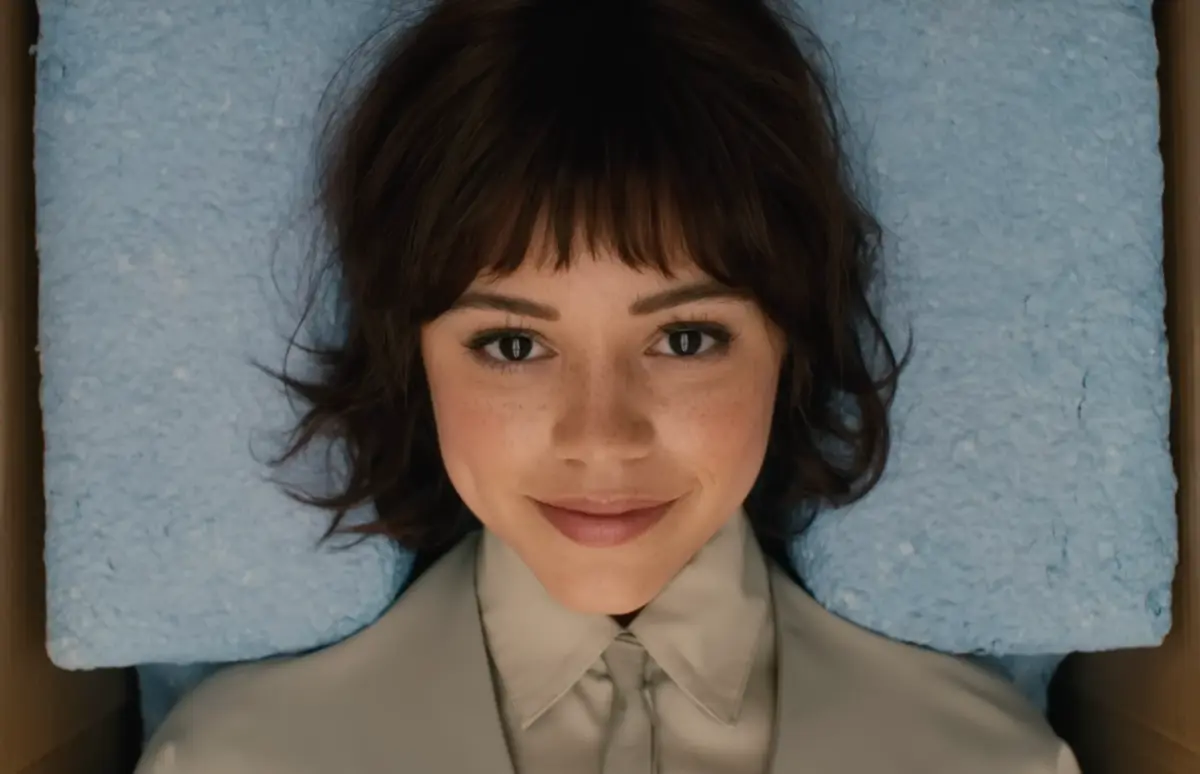
The cinematic translation of literary works by Nobel Prize laureates is a high-stakes gamble. When the source material is Kazuo Ishiguro’s Klara and the Sun—a novel defined by its quiet, meditative pacing, existential subtext, and detached yet deeply empathetic narrative voice—the difficulty multiplies exponentially. Directed by Taika Waititi and co-written with Dahvi Waller, the 2026 feature film adaptation attempts to ground this fragile speculative dystopia in the director’s trademark brand of eccentric, high-concept visual storytelling. Starring Jenna Ortega as the titular Artificial Friend (AF) Klara and Amy Adams as the anxious mother of a chronically ill teenager, the film arrives in cinemas with formidable expectations.
However, the adaptation struggles to reconcile Waititi’s tonal maximalism with Ishiguro’s minimalist prose. Where the novel invites readers to dwell in the silent spaces between sentences, pondering the ethical ramifications of artificial intelligence, genetic engineering, and systemic class division, the cinematic iteration rushes to state its thematic thesis explicitly. By swapping Ishiguro’s haunting ambiguity for frantic tonal shifts, broad physical comedy, and conventional Hollywood emotional cues, Klara and the Sun ultimately dilutes the piercing sociological and philosophical observations that made the original text a landmark of contemporary speculative fiction.
This comprehensive review examines the structural, tonal, and thematic choices that define Waititi’s adaptation, assessing how the film reinterprets the complex retrofuturistic universe crafted by Ishiguro and measuring its successes and failures against both literary and cinematic precedents.
Detailed Chronology: From Page to Screen
The Source Material and the Burden of Fidelity
When Taika Waititi helmed Jojo Rabbit in 2019, he demonstrated a rare, iconoclastic confidence. Taking Christine Leunens’s dark novel Caging Skies, Waititi fashioned it into a Mel Brooks-approved, darkly satirical farce about fascist indoctrination that won an Academy Award for Best Adapted Screenplay. That success proved that a director could wrench a bleak source text into a radically different register and emerge triumphant.
With Klara and the Sun, the inverse dynamic occurs. Ironically, the film suffers not because it deviates wildly from Ishiguro’s novel, but because it attempts a strange, half-hearted fidelity that betrays the spirit of the text while failing to commit fully to its director’s auteurist impulses. The result is neither a pure translation of Ishiguro’s contemplative universe nor a compelling piece of pre-Marvel Waititi-esque cinema, occupying an uncomfortable middle ground reminiscent of his early, idiosyncratic triumphs like Boy (2010) and Hunt for the Wilderpeople (2016).
Those earlier New Zealand-born works thrived on a specific, dry, absurdist wit. They were populated by broken people attempting to laugh off their collective trauma, balancing hilarity and profound melancholy on a knife-edge. Klara and the Sun, conversely, operates like a faulty circuit board. Its comedic beats and tragic moments refuse to blend; instead, watching the film feels like repeatedly flicking a light switch on and off, with tonal whiplash replacing narrative cohesion.
The Setup: Klara’s World and the House of Artificial Friends
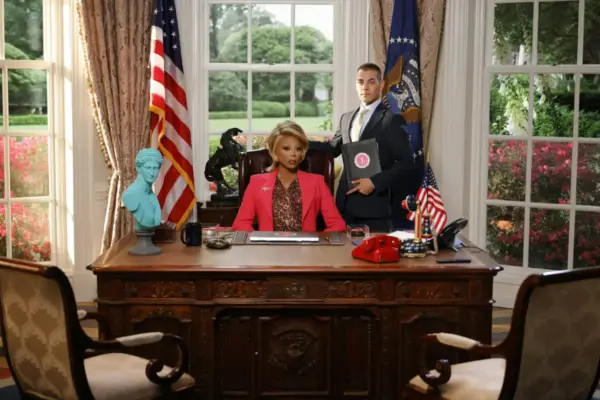
The narrative follows Klara (Jenna Ortega), an advanced Artificial Friend possessed of exceptional observational faculties. In the controlled environment of her retail showroom, under the watchful eye of the store manager (Natasha Lyonne), Klara studies human behavior with anthropological detachment. She becomes fascinated by what motivates people to act, mistakenly concluding that human vitality is fueled by the same cosmic force that recharges her solar-powered frame: the sun.
Klara’s sequestered existence ends when she is purchased by a frantic mother (Amy Adams) on behalf of her teenage daughter, Josie (Mia Tharia), who is suffering from a debilitating, unnamed illness. Entering the domestic sphere, Klara is thrust into a retrofuturistic dystopia scarred by the aftermath of a devastating third World War. In this altered reality, the internet has been permanently confiscated by unknown powers, leaving society stratified along stark technological and biological lines.
The Cinematic Execution: Satire, Slapstick, and Sentimentality
As Klara integrates into Josie’s household, the film begins to deviate sharply from the atmospheric restraint of the novel. Ishiguro’s narrative leaves expansive room for readers to contemplate the erosion of human identity in an age of synthetic consciousness, the obsolescence of human labor, and the eugenicist implications of modern gene editing.
Waititi and Waller condense these weighty themes into perfunctory early exposition. Gone is the enigmatic, slow-burn unease that marked Mark Romanek’s 2011 cinematic adaptation of Ishiguro’s Never Let Me Go. In its place, the spaces between the book’s sentences are stuffed with an array of jarring comedic elements.
Klara is reframed as a mechanical oddity given to broad physical comedy. She stands on one leg like a flamingo and deploys eccentric, almost cartoonish phrasing—such as "super duper nourishing nourishment" and "crappy pile of crap." Her innocent bewilderment is mined incessantly for laughs, frequently met with sarcastic rebukes from the family’s cynical housekeeper, Melania (Rachel House).
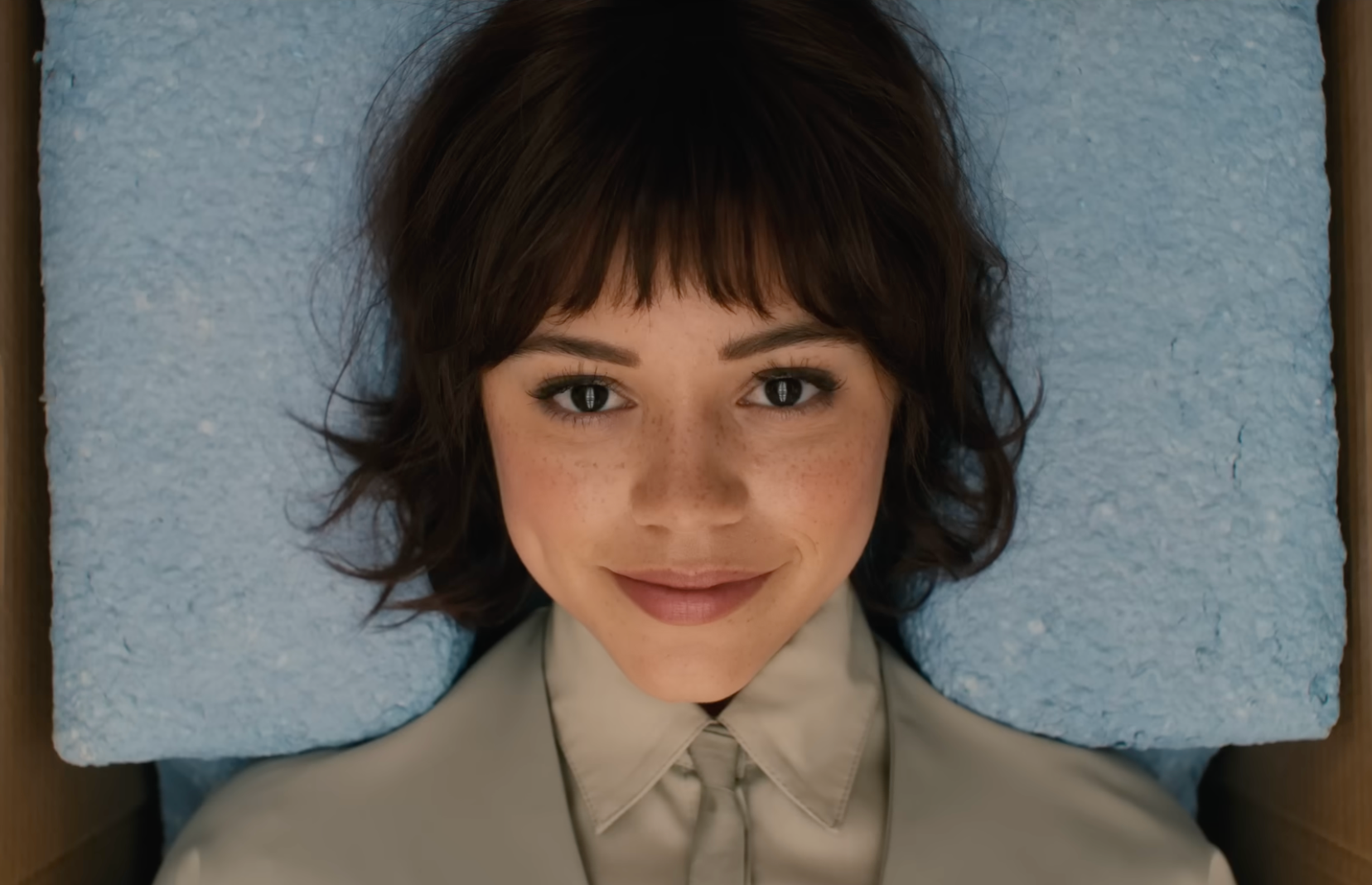
While Jenna Ortega is evidently eager to stretch her physical performance muscles—moving far beyond the deadpan stillness of her Netflix breakout Wednesday—the film trades the subtle uncanny valley of robotic imitation (the "more human than human" sincerity immortalized in Blade Runner) for exaggerated, bouncy cartoonishness. Similarly, Amy Adams is left stranded as the emotional anchor of the piece. Stripped of deep character development, Adams is routinely pushed into frame simply to weep on cue, her grief amplified by the heavy, schmaltzy swell of Michael Giacchino’s musical score.
Supporting Context & Metrics
To fully understand the artistic and commercial positioning of Klara and the Sun, it is useful to examine the production metrics, talent roster, and the lineage of Ishiguro adaptations in contemporary cinema.
| Metric / Parameter | Detail |
|---|---|
| Director | Taika Waititi |
| Writers | Dahvi Waller, based on the novel by Kazuo Ishiguro |
| Key Cast | Jenna Ortega (Klara), Amy Adams (The Mother), Mia Tharia (Josie), Aran Murphy (Rick), Steve Buscemi, Natasha Lyonne |
| Studio / Distributor | Sony Pictures |
| Run Time | 116 minutes |
| MPA / BBFC Rating | 12A |
| Theatrical Release Date | October 23, 2026 |
| Preceding Ishiguro Film Adaptations | The Remains of the Day (1993), Never Let Me Go (2011) |
The Societal Backdrop: Retrofuturism and Class Divides
The world of Klara and the Sun is visually and conceptually bifurcated. The social elite—those who can afford the sophisticated gene-editing technologies that enhance mental and physical faculties—prance around dressed like eccentric extras from Zoolander, casually abusing their Artificial Friends with physical blows. Conversely, the disenfranchised working class is personified by Josie’s neighbor, Rick. Played by Aran Murphy (son of acclaimed actor Cillian Murphy), Rick embodies his father’s trademark gentle nonchalance, representing the human cost of a society obsessed with biological optimization.
The tonal pastiche evokes an improbable fusion of Steven Spielberg’s solemn, philosophical A.I. Artificial Intelligence and the chaotic, whimsical imagination of Robert Zemeckis. Yet, by stripping Ishiguro’s narrative of its analytical, observational detachment, the film keeps its eyes glued to the floor of its own constructed universe. Where the novel functioned as a prescient mirror reflecting contemporary anxieties about automation, consciousness, and human value, the film reduces these grand inquiries into a conventional, feel-good fable about the enduring power of love and friendship.
Official Statements and Industry Reception
As the release date approaches, industry analysts and early festival critics have weighed in on the challenges of adapting literary masterworks for modern cinematic audiences.
Industry insiders note that the production faced immense pressure to balance Waititi’s global commercial appeal—cemented by his work within the Marvel Cinematic Universe and Jojo Rabbit—with the delicate, intellectual prestige associated with a Nobel laureate.
In promotional interviews surrounding the project, producers emphasized the collaborative effort required to translate a heavily internal narrative to the screen. However, early critical consensus highlights the inherent friction in the creative partnership:
"When you adapt an author who writes in whispers, shouting the subtext through a megaphone fundamentally alters the DNA of the story. Klara and the Sun attempts to marry blockbuster accessibility with high-concept existentialism, resulting in a film that undercuts its own philosophical gravity." — Film Industry Insider & Lead Critic Review Excerpt
Critics have universally praised the individual commitments of Jenna Ortega and Amy Adams, noting that both actors navigate challenging material with professional polish. However, the prevailing sentiment remains that the stylistic choices imposed upon them—particularly the heavy reliance on broad physical comedy for the AI protagonist and melodramatic musical cues for the maternal trauma—prevent the performances from gelling into a unified whole.
Future Outlook
The commercial performance and cultural legacy of Klara and the Sun will serve as a crucial bellwether for future adaptations of contemporary literary fiction in an era dominated by intellectual property management and algorithm-driven greenlights.
- Box Office Projections: Opening in late October 2026, the film will test whether the combined star power of Jenna Ortega and Amy Adams, paired with Taika Waititi’s name recognition, can draw general audiences to a complex, philosophical sci-fi drama. Early tracking suggests solid opening weekend numbers driven by Ortega’s dedicated fan base, though long-term legs will depend heavily on word-of-mouth regarding its polarizing tonal shifts.
- Critical Legacy: For fans of Kazuo Ishiguro, the film will likely be viewed as a cautionary tale about the perils of over-commercializing quiet literary masterpieces. It joins the ranks of adaptations that prioritize accessibility over atmosphere, demonstrating the difficulty of capturing internal, phenomenological experiences on film.
- Implications for Waititi’s Career: Coming off a period of scrutiny regarding his transition from idiosyncratic indie auteur to mainstream blockbuster director, Klara and the Sun represents a critical crossroads. Whether the film is embraced as a daring stylistic experiment or dismissed as a miscalculated misfire, it underscores the urgent need for Waititi to return to the grounded, bittersweet character studies that first earned him international acclaim.
Ultimately, Klara and the Sun captures a fascinating moment in modern filmmaking: a collision between a literary titan who examines what it means to be human in a rapidly mechanizing world, and a cinematic stylist who often prefers to keep his audience laughing through the void. By choosing the latter approach, the film settles for a comforting downgrade, trading eternal questions for temporary spectacle.