Executive Overview
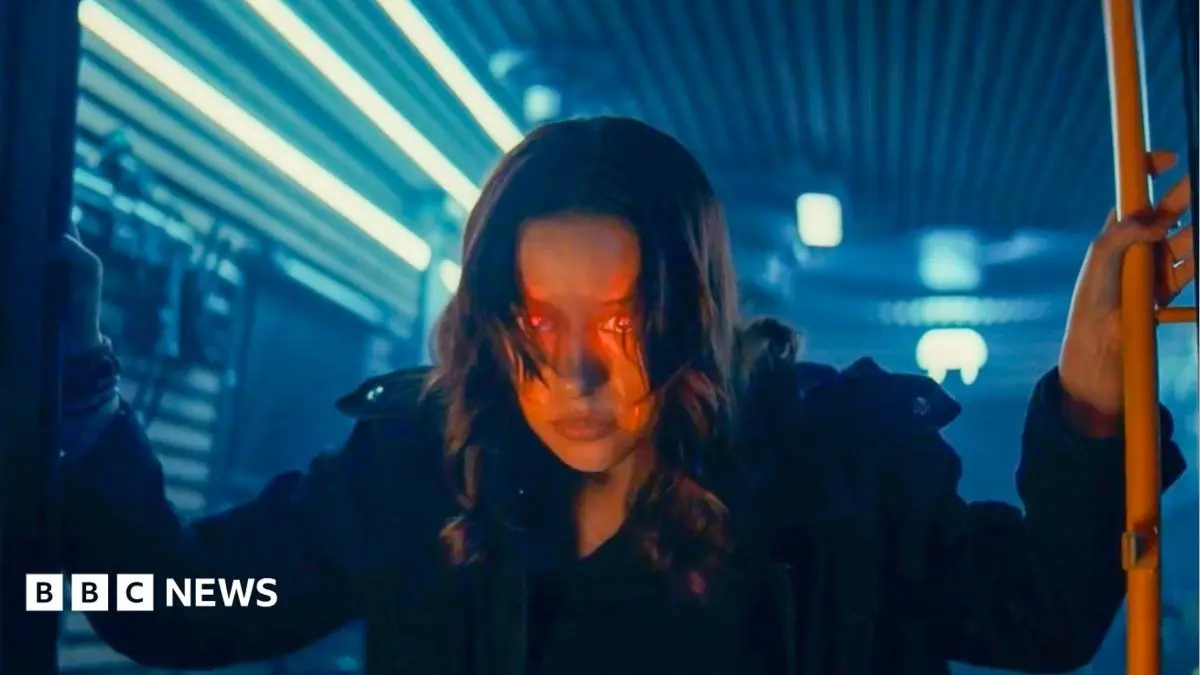
The sprawling machinery of the Marvel Cinematic Universe (MCU) has officially embraced a distinctly Welsh inflection. In an unprecedented casting coup that bridges the gap between grassroots working-class perseverance and elite Hollywood blockbuster production, Cardiff native Lauren Morais has secured a pivotal role in the highly anticipated Disney+ series VisionQuest. Morais is set to portray Lisa Molinari—a reimagined iteration of the comic book villain famously known as "Coat of Arms"—bringing not only a formidable antagonistic presence to the screen but also her authentic, unmistakable Cardiff accent.
This high-stakes television event, operating as a direct narrative continuation and thematic expansion of the critically acclaimed miniseries WandaVision, explores profound philosophical territories: the precarious coexistence of artificial intelligence, synthetic consciousness, and vulnerable humanity. The series boasts heavyweight industry talent, welcoming back Paul Bettany to reprise his iconic role as the synthezoid Vision, alongside the legendary James Spader, who returns to voice and embody the malevolent technological terror, Ultron.
Yet, amidst the astronomical budgets, heavy CGI infrastructure, and towering expectations of a global fan base numbering in the hundreds of millions, the headline-grabbing element of Morais’s casting remains deeply personal. It is a triumph of local representation. For the first time in the multi-billion-dollar history of the MCU, a prominent villain will speak with the cadence of the Welsh capital.
In interviews detailing her meteoric rise, Morais has described the experience as a surreal "pinch-me" reality. However, her journey to the soundstages of Pinewood Studios was anything but an overnight fairy tale. It was defined by the quintessential actor’s dichotomy: juggling high-pressure callbacks for a global entertainment conglomerate while simultaneously stressing over who would cover her operational shifts at a West End cinema in London.
This comprehensive report examines the trajectory of Morais’s casting, the creative liberties taken in adapting Lisa Molinari from page to screen, the demanding technical challenges of acting alongside invisible machinery and CGI constraints, and the broader cultural implications of injecting localized British dialects into the corporate-standardized landscape of modern superhero franchises.
Detailed Chronology: From the Audition Room to the MCU
The pathway to securing a role within the meticulously guarded architecture of Marvel Studios is notoriously labyrinthian, often involving months of encrypted self-tapes, non-disclosure agreements, and multi-tiered callback processes. For Lauren Morais, the journey began far away from the glitz of Los Angeles or London’s West End, rooted instead in the standard repertoire of regional British dialect testing.
The Audition Odyssey
When the initial casting briefs for VisionQuest began circulating among talent agencies, the character of Lisa Molinari was not immediately bound to any specific geographical marker. Consequently, Morais’s early audition strategy required rapid adaptability. Speaking candidly to Lucy Owen on BBC Radio Wales, Morais revealed that her first-round audition relied heavily on an Essex accent—a standard staple for gritty, grounded characters in contemporary British drama.
As the audition process deepened, however, the casting directors began probing the actor’s vocal versatility. By the fourth round of rigorous callbacks, Morais was asked to pivot dynamically between different sonic landscapes, testing both a northern English dialect and a standard American accent. At this stage, the character’s final ethnic and regional identity remained fluid, subject to the creative whims of the showrunners and the evolving character bible.
It was during a pivotal reading, standing in front of the creative team without any definitive confirmation of what the production desired, that Morais made a bold, career-defining gamble. Rather than forcing herself to conform to the standard Americanized or neutral British accents typically demanded by major Hollywood IPs, she decided to advocate for her own roots.
"I said, ‘Can she be from Cardiff?’ and they were like, ‘Of course.’ So she’s from Cardiff now," Morais recounted.
This spontaneous intervention fundamentally reshaped the character’s profile. By embedding her native accent into the audition script, Morais bypassed the traditional homogenized speech patterns of cinematic villains, introducing a gritty, lived-in authenticity that resonated with the creative team.
The Dual Realities of Working-Class Acting
While Morais was navigating high-level meetings at the prestigious Pinewood Studios—the historic home of British blockbuster filmmaking—her day-to-day existence remained firmly anchored in the economic realities shared by thousands of aspiring actors across the United Kingdom.
Throughout the intense multi-week audition process, Morais had to delicately balance her professional commitments, requesting time off from her job at a central London cinema without being permitted to disclose the true nature or scale of the projects she was auditioning for. The secrecy required by Marvel Studios meant she could offer no concrete justifications to her floor managers beyond vague statements regarding personal appointments.
This tension culminated on the day of her final, high-stakes audition at Pinewood. Reflecting on the bizarre psychological whiplash of her situation, Morais described feeling like "a rabbit in the headlights" while surrounded by industry elites and high-end production infrastructure. Yet, even as she walked out of the audition room—having potentially secured a life-altering role in a global franchise—her immediate post-audition anxiety remained entirely grounded.
"I went to my final Pinewood audition and then went back to the cinema in the West End to finish my shift," Morais shared. "It’s such a dichotomy of worlds, and that’s what it is as an actor. You’re always grafting, and then it happens, and you’re like, ‘What is life?’"
This narrative underscores the invisible economic labor sustaining the creative arts. Long before red carpets, global press tours, and Wikipedia profile updates, actors frequently navigate precarious service-sector employment to survive the protracted waiting periods inherent to the entertainment industry.
Supporting Context & Metrics: Adapting "Coat of Arms" for VisionQuest
To fully appreciate the significance of Morais’s casting, one must examine the source material underpinning her character and the strategic creative choices made by the writers of VisionQuest.
From Marvel Comics to Disney+: The Evolution of Lisa Molinari
In the pages of Marvel Comics, the character Lisa Molinari is better known by her supervillain alias, Coat of Arms. First introduced in the pages of Avengers Academy, Coat of Arms is characterized by her distinct visual profile and mystical capabilities. In the original print iterations, her powers are derived from a magical coat that grants her the ability to manifest multiple extra arms and an arsenal of concealed weaponry, positioning her as a traditional comic-book brawler with supernatural underpinnings.
However, the transition from page to screen within the Marvel Cinematic Universe often demands narrative modernization and thematic grounding to fit the more technologically focused continuity of the franchise. In VisionQuest, the mystical coat has been discarded in favor of a hard-science, high-tech aesthetic.
- The High-Tech Backpack: In the television series, Molinari’s lethal capabilities are anchored to an advanced, mechanical backpack equipped with sophisticated robotic arms.
- Thematic Alignment: This shift aligns neatly with the overarching narrative thesis of VisionQuest, which investigates the collision course between artificial intelligence, human engineering, and technological dependency. By grounding a traditionally mystical villain in physical, robotic hardware, the series maintains a cohesive sci-fi tone reminiscent of WandaVision and its sister series Agatha All Along.
Physicality and the Art of Imaginary Choreography
Portraying a character whose primary operational tools are massive, mechanical appendages introduced a unique set of production challenges for Morais. Because the robotic arms attached to her character’s backpack would largely be rendered post-production via Computer-Generated Imagery (CGI), Morais was forced to rely heavily on spatial awareness, physical pantomime, and sheer imagination during principal photography.
Discussing the comedic and demanding nature of the fight choreography, Morais explained the directions given to her by the stunt and fight coordinators:
"I’d be with the fight director who was like, ‘You just need to imagine that a huge arm is coming out of your right side and just absolutely go for it, and imagine where it’s hitting.’ So I used a lot of imagination on that job."
Acting opposite invisible CGI elements is a notorious hurdle for performers entering big-budget franchise filmmaking for the first time. The physical disconnect—punching empty air, reacting to non-existent shockwaves, and coordinating complex martial arts maneuvers around a heavy, static prop harness—can easily lead to self-consciousness on set.
Fortunately, Morais received invaluable mentorship from her seasoned co-star, Paul Bettany. Having spent over a decade inhabiting the MCU as both J.A.R.V.I.S. and the physical synthezoid Vision, Bettany is intimately familiar with the psychological barriers of green-screen acting.
Offering words of encouragement, Bettany provided sage advice that helped ground Morais’s performance:
"He said, ‘You’re going to feel very silly while you’re doing these scenes, but if you commit to it, it’s going to look really sick.’ And I can confirm, he was right."
Official Statements & Industry Insights
The inclusion of regional British dialects within major American franchise properties represents an ongoing shift in Hollywood casting dynamics. For decades, British actors breaking into American blockbusters were heavily encouraged—if not outright mandated—to adopt a standardized American accent or a neutralized "Mid-Atlantic" RP (Received Pronunciation) English accent to maximize international marketability.
However, recent television and film trends indicate a growing appetite for linguistic authenticity. Shows like Andor, The Lord of the Rings: The Rings of Power, and various corners of the Star Wars universe have successfully utilized regional British, Scottish, Welsh, and Irish accents to establish class divides, geographic origins, and cultural diversity within fictional societies.
The Significance of Regional Representation in Wales
The cultural impact of Morais’s casting cannot be overstated within the context of Welsh media representation. While Wales has a proud, historic tradition of producing world-class theatrical and cinematic talent—from Sir Anthony Hopkins and Michael Sheen to Luke Evans and Catherine Zeta-Jones—welcoming an explicitly Cardiff-accented villain into the highest-grossing film franchise in human history marks a distinct milestone.
Media analysts and cultural commentators have long pointed out that regional accents in mainstream media often fall into rigid tropes: Cockney or Essex accents frequently signify working-class street smarts or criminality, Northern accents are often deployed to signal industrial grit or down-to-earth authenticity, while Received Pronunciation is historically reserved for authority, villainy, or aristocracy.
By introducing a Cardiff accent through the framework of a complex, high-tech antagonist, VisionQuest avoids lazy linguistic stereotyping while simultaneously offering Welsh audiences a rare, hyper-localized point of identification on a global stage. Viewers tuning into Disney+ will no longer hear a generalized "British" baddie; they will hear the distinct cadence of South Wales.
Future Outlook: VisionQuest and the Expanding MCU TV Landscape
As VisionQuest moves through its production and post-production lifecycles toward its eventual premiere on Disney+, anticipation is reaching a fever pitch. The series occupies a crucial strategic space in the broader "Multiverse Saga" and subsequent narrative phases of the MCU.
Where VisionQuest Fits in the Marvel Continuum
- The Evolution of the Synthezoid: Following the events of WandaVision—where the original Vision was dismantled, reconstructed as "White Vision" by S.W.O.R.D., and subsequently restored with his memories intact—VisionQuest will explore White Vision’s philosophical quest to reclaim his humanity and forge an independent identity.
- The Return of Ultron: The inclusion of James Spader as Ultron raises massive narrative questions. Given that the homicidal AI was ostensibly destroyed during the climax of Avengers: Age of Ultron, his return in a series centered around Vision suggests deep psychological dives, flashback mechanics, or a resurrection facilitated by modern digital networks.
- The Underworld of Tech Villains: Characters like Lisa Molinari (Coat of Arms) and her high-tech mercenary apparatus indicate that the series will not solely focus on existential philosophical debates between synthetic beings. Instead, it will feature grounded, gritty criminal elements attempting to exploit advanced technology for personal or geopolitical gain.
The Road Ahead for Lauren Morais
For Lauren Morais, the premiere of VisionQuest marks the definitive end of one chapter and the exhilarating commencement of another. While she may have spent her audition days worrying about covering cinema shifts in the West End, her professional trajectory has fundamentally shifted.
As major studios continue to scour drama schools, regional theaters, and local casting pools for fresh talent, Morais’s journey serves as both an inspiring blueprint for aspiring actors and a testament to the power of holding fast to one’s identity. By refusing to sand down the edges of her Cardiff accent in front of Marvel’s gatekeepers, she didn’t just win a role—she permanently expanded the linguistic map of the Marvel Cinematic Universe.
When VisionQuest finally hits Disney+, millions of viewers worldwide will witness the clash between synthezoids, rogue AIs, and advanced tech-mercenaries. But for audiences in the Welsh capital and beyond, the real victory will sound like home.