Executive Overview
In the rapidly shifting landscape of modern European jazz, few arrivals have been heralded with as much quiet astonishment as the emergence of Polish composer, pianist, and electronic artist Hania Derej. At just 21 years of age, Derej has already cultivated a compositional breadth that defies her years—spanning intricate jazz frameworks, classical chamber arrangements, cinematic soundscapes, and forward-thinking electronic music. Her latest artistic statement, the expansive double-vinyl set Don’t Look Behind, Always Forward, released via ZenneZ Records, cements her status not merely as a prodigy to watch, but as an established architectural force in contemporary improvised music.
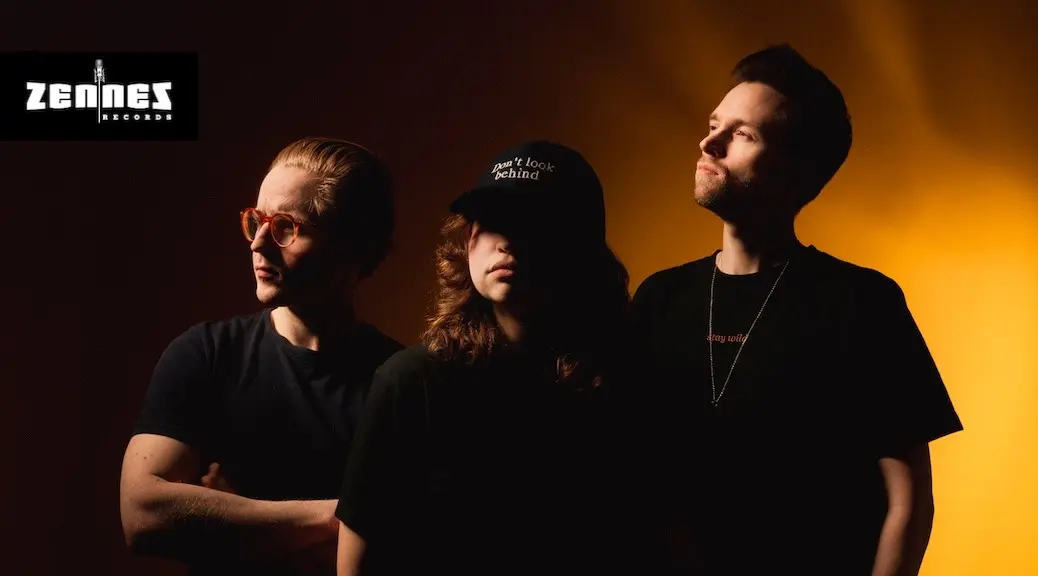
Captured primarily within the pristine acoustics of Cavatina Hall Studio in Bielsko-Biała by engineer Szymon Herbuś, and polished through the expert mixing and mastering hands of Envee, this ambitious double LP serves as a masterclass in sequencing, texture, and structural cohesion. Formed following a serendipitous encounter at the Kraków Film Festival, the Hania Derej Trio—comprising Derej on piano and synthesizers, Mateusz Szewczyk on double and electric bass, and Gniewomir Tomczyk on drums—performs with a telepathic synergy that usually requires decades of shared history to achieve.
Spanning four vinyl sides, the album operates as a dynamic journey. It begins with the sun-drenched, meditative warmth of "Always Forward" and culminates in the ferocious, fuzz-laden explosion of the title track, "Don’t Look Behind." Along the way, the core trio expands into a formidable quartet, inviting a rotating cast of esteemed international saxophonists—Walter Smith III, Abel Sánchez Abarca, and Krzysztof Kuśmierek—to add distinct emotional and sonic hues to Derej’s meticulously drafted blueprints. The result is a monumental debut that bridges acoustic tradition with the electric pulse of the twenty-first century, capturing the adventurous spirit of the vibrant contemporary Polish jazz scene.
Detailed Chronology & Track-by-Track Analysis
The conceptual architecture of Don’t Look Behind, Always Forward is immediately apparent in its sequencing. By splitting the title across the bookends of the record—opening with "Always Forward" on Side A and closing with "Don’t Look Behind" on Side D—Derej establishes a deliberate narrative arc. The listener is urged to look ahead, immerse themselves in the unfolding sonic journey, and only glance backward when the final grooves of Side D spin their last notes. Furthermore, the strategic deployment of guest artists ensures that the sonic palette widens organically as the double album progresses, beginning with the naked interplay of the foundational trio before gradually opening its doors to external voices.
Side A: The Trio Unmasked
Side A belongs exclusively to the core trio, establishing their foundational language without external intervention. The opening track, "Always Forward," unfurls with a tranquil, holiday-like serenity, evoking sunlit horizons and gentle coastal waves. Wisely holding back its primary thematic reveal until the halfway mark, the piece rewards patience with a spine-tingling crescendo. Here, Derej’s integration of synthesizers with her acoustic piano work is seamless, creating a warm, hybrid texture reminiscent of the sophisticated fusion experiments of the 1980s, such as Belgian outfit Special Occasion’s "Flyin’ To Santa Barbara."
Following this atmospheric overture is the album’s lead single, "Hope." Here, the trio glides effortlessly, with Derej’s piano stating the primary theme atop a rhythm section that swings with deceptive maturity. The level of interplay and emotional resonance on "Hope" makes it difficult to fathom that this is a debut recording from a newly formed ensemble.
Side B: Expanding the Horizon with Walter Smith III
As the record flips to Side B, the trio opens its ranks to welcome acclaimed American saxophonist Walter Smith III on the composition "The Closer the Further." A brooding synthesizer intro slowly yields to a driving alliance of bass, drums, and saxophone. The composition undergoes dramatic shifts, abruptly cutting out to spotlight delicate piano passages before Smith navigates a labyrinth of intricate changes. The band tips momentarily into high-octane jazz fusion before gently settling back into a state of contemporary, playful exploration.
The side concludes with "Lost in Berlin," which returns the spotlight to the core trio. Serving as a headstrong, club-adjacent tune, it captures the kinetic, nocturnal energy pulsing through Poland’s modern jazz underground. While Derej’s synthesizer work gleams with metropolitan gloss, Mateusz Szewczyk’s electric bass anchors the melodic narrative with ironclad precision.
Side C: Intricacy and Character with Abel Sánchez Abarca
Side C introduces Mexican multi-reed player Abel Sánchez Abarca on "Life Upside Down." The track is an exercise in quirky, jumpy counterpoint, with Abarca’s saxophone weaving playfully around percussive accents before the piano slips into the mix, expanding the piece’s spatial dimensions.
The tempo subsequently shifts downward on "September," where a hypnotic walking drum pattern paces beneath cascading keys, eventually building into a display of quiet bravado. However, the emotional centerpiece of Side C—and arguably the entire album—is "Falling in the Same Place." A breathtaking showcase for Derej’s compositional sensitivity, the track features Szewczyk playing bowed double bass with staggering character, elevating a gorgeous piano-led meditation into an unforgettable sonic vignette.
Side D: The Final Surge with Krzysztof Kuśmierek
The concluding side belongs entirely to Polish saxophonist Krzysztof Kuśmierek, an artist who shares deep road-tested history with the trio, having previously joined them for notable performances at Budapest’s Opus Jazz Club and during their showcase at the Manchester Jazz Festival.
"Rush" erupts from the speakers with the synthetic sheen of modern synth-pop before mutating into a feral, untamed beast. This is territory where contemporary Polish jazz acts excel, utilizing biting electronics and aggressive acoustic styling to craft a deep, rewarding composition that feels tailor-made for radio play. The album reaches its explosive climax with the title track, "Don’t Look Behind." Fuzz-laden, blistering, and rhythmically relentless, the track showcases the absolute peak of the power-trio-plus-one format, leaving the listener breathless as the final notes fade.

Supporting Context & Metrics
The Architect: Hania Derej’s Rapid Ascent
To fully appreciate the weight of Don’t Look Behind, Always Forward, one must examine the extraordinary trajectory of its creator. Born into a musical milieu, Hania Derej has packed multiple lifetimes of achievement into her 21 years:
- Academic Pedigree: A graduate in conducting from the prestigious Academy of Music in Kraków, Derej is currently refining her craft through advanced studies in film composition at the Conservatorium van Amsterdam.
- Prolific Output: Despite her youth, she has penned well over one hundred original compositions spanning disparate disciplines, including large-scale jazz arrangements, chamber music, cinematic scores, and electronic sound design.
- The Evacuation Precedent: Demonstrating her relentless work ethic, Derej composed the material for her acclaimed 2024 quintet debut for ZenneZ Records, Evacuation, while still completing her high school education.
- International Footprint: The trio itself was forged organically out of creative cross-pollination at the Kraków Film Festival, bringing together Derej (piano/electronics), Mateusz Szewczyk (double/electric bass), and Gniewomir Tomczyk (drums).
Production and Engineering Metrics
The sonic fidelity of the double LP is a direct result of world-class collaboration behind the glass:
- Primary Recording Facility: Cavatina Hall Studio (Bielsko-Biała, Poland), celebrated for its cutting-edge acoustic design and state-of-the-art analogue-digital hybrid signal paths.
- Engineering and Post-Production: Captured cleanly by recording engineer Szymon Herbuś and subsequently steered through the meticulous mixing and mastering suites by veteran producer Envee.
- Physical Distribution: Issued as a premium, heavy-weight double vinyl set via the progressive Dutch imprint ZenneZ Records, ensuring optimal dynamic range for both the delicate acoustic passages and the abrasive electronic climaxes.
Official Statements & Critical Reception
The critical consensus surrounding Don’t Look Behind, Always Forward highlights a generational shift in how young European artists perceive genre boundaries. Industry veterans and live reviewers alike have marveled at the effortless synthesis of acoustic mastery and electronic innovation present throughout the double album.
Reflecting on the missed opportunity to catch the trio previewing this material at Matt & Phred’s during the Manchester Jazz Festival, esteemed jazz critic Steve Williams noted the profound impact of the record:
"I love this entire album. It’s something to behold how a 21-year-old can produce music this good. Enamoured. Enlightened. Enriched."
Williams further praised the meticulous sequencing of the physical release, observing how the album’s structural framework mirrors its thematic philosophy:
"The title is split across the running order. ‘Always Forward’ opens the album and ‘Don’t Look Behind’ closes it, so the glance over the shoulder waits for the final groove of Side D. That’s smart sequencing. The guests are placed with the same care: Side A belongs to the trio alone, then each turn of the record brings in a new saxophonist, so the album widens as it goes."
ZenneZ Records has similarly emphasized the release as a cornerstone of their contemporary catalogue, positioning Derej as a vanguard artist who bridges the gap between traditional European jazz conservatory rigor and the untamed experimentation of modern club and electronic subcultures.
Future Outlook
As Don’t Look Behind, Always Forward establishes a formidable benchmark for contemporary releases, the Hania Derej Trio is wasting no time translating their recorded triumphs onto the international stage.
The Autumn 2026 International Tour
To support the double-vinyl release, the trio has embarked on an extensive multi-nation tour throughout the autumn season. The itinerary spans prominent jazz clubs and festivals across:
- Poland (homecoming performances showcasing their burgeoning domestic following)
- Romania
- Germany
- The Netherlands
- Spain
While the current routing notably bypasses the United Kingdom—making intimate prior showcases like their Manchester Jazz Festival preview and performances at venues like Matt & Phred’s all the more treasured by British jazz aficionados—demand for the ensemble’s live presentation continues to surge across mainland Europe.
Artistic Horizon
Looking ahead, Derej’s dual pursuits in Amsterdam (film composition) and Kraków hint at an increasingly cinematic evolution in her upcoming works. With more than a hundred unrecorded compositions sitting within her personal archives, the release of Don’t Look Behind, Always Forward is not the culmination of a prodigy’s journey, but merely the opening movement. As she continues to dissolve the artificial barriers separating jazz, electronic textures, and film orchestration, Hania Derej stands poised to shape the sonic vocabulary of European music for decades to come.