Executive Overview
In the contemporary landscape of improvised music, few pianists approach the instrument with the deeply philosophical and kinetic mindset of Malcolm Braff. Rather than viewing the piano as a vehicle for individual virtuosity, Braff regards it as a familiar extension of the physical body—a tool to facilitate collective action. His latest release, the concise yet deeply disruptive album Outside, encapsulates decades of rigorous academic research, cross-cultural immersion, and sonic experimentation.
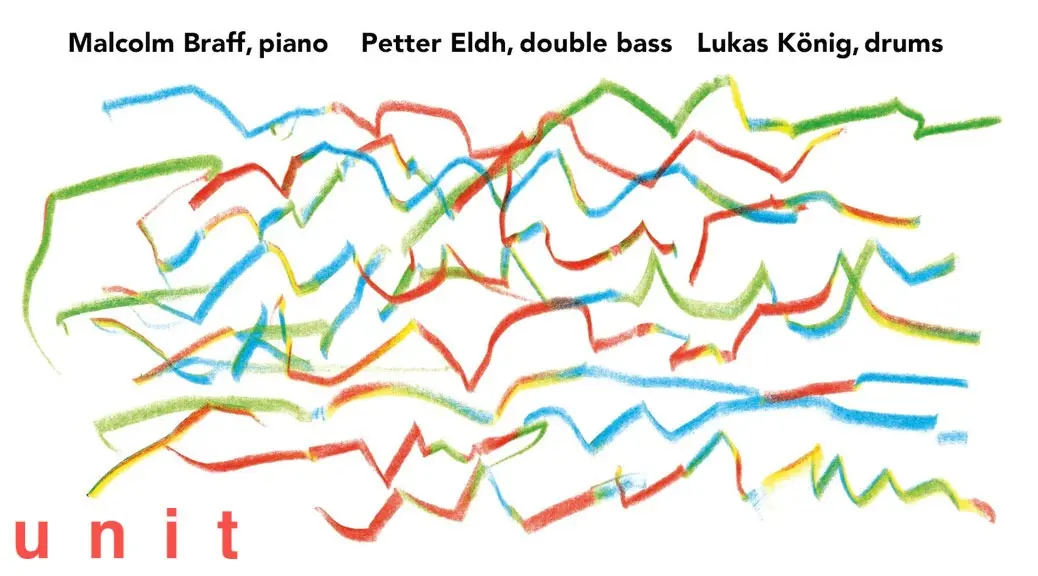
Joined by the relentlessly curious Swedish bassist Petter Eldh and the stylistically explosive Austrian drummer Lukas König, Braff delivers an expansive listening experience that defies conventional expectations of jazz rhythm and structure. Though brief in duration—hovering closer to an Extended Play (EP) than a traditional Long Play (LP)—Outside packs a monumental theoretical and emotional punch. It serves as both a practical demonstration of Braff’s boundary-pushing "Generalized Theory of Swing" and a masterclass in modern trio interplay, where the ensemble functions not as three distinct voices, but as a single, breathing organism.
This review and feature article explores the foundational philosophies driving Braff’s artistry, the cross-continental biography that shaped his unique sonic palate, and the structural brilliance of Outside. By examining tracks like "Viennese Gröt à la Berlinaise" and "3TOES," we unpack how Braff, Eldh, and König manage to stretch, distort, and ultimately reinvent our perception of musical time.
Detailed Chronology & Background: A Life in Transit
From Rio to Senegal: A Nomadic Upbringing
To understand Malcolm Braff’s borderless approach to music, one must look at his formative years. While Braff does not necessarily identify as a traditional "citizen of the world"—preferring to view himself simply as an artist shaped by circumstance—his life reads like a geopolitical odyssey. Born in Rio de Janeiro, Brazil, to a missionary father, Braff spent his childhood navigating vastly different cultures.
His upbringing took him from the vibrant rhythmic traditions of South America to the shores of Cape Verde and Senegal, before he ultimately settled in Switzerland. This nomadic lifestyle ingrained in him an intuitive understanding of diverse rhythmic frameworks long before he began formal academic or professional pursuits. Rather than locking himself into a singular regional style of jazz, Braff absorbed the ambient polyrhythms, spiritual resonance, and communal vibrations of the African and South American diasporas, laying the groundwork for a truly global musical consciousness.
The Yaya Ouattara Connection
A pivotal milestone in Braff’s career was his decade-long collaboration with percussionist Yaya Ouattara, hailing from Burkina Faso. Braff has frequently described Ouattara as "more than a brother," citing the percussionist as his central musical inspiration. In a bold departure from traditional Western jazz configurations, Ouattara’s djembe frequently took the place of a standard drum kit in Braff’s early trios.
This partnership culminated in the critically acclaimed 2006 live album Yele, released via Unit Records. The project showcased a seamless fusion of European harmonic concepts with West African rhythmic sensibilities, proving that Braff’s creative compass was permanently calibrated toward cross-cultural dialogue and percussive intensity.
The Academic Pursuit: Decoding the Mechanics of Swing
While Braff’s early career was defined by raw, visceral cross-cultural collaborations, his later decades saw him turn a deeply analytical eye toward the foundational elements of jazz. For over twenty years, Braff has researched what he terms the "mechanics of swing."
This exhaustive research eventually found a home at Jazzcampus Basel, where Braff integrated his findings into his curriculum. The culmination of this academic and artistic labor is his witty yet deeply ambitious "Generalized Theory of Swing." Through this theory, Braff investigates the intentional distortion of time as perceived by the listener. It provides the intellectual framework necessary to comprehend Outside, decoding why the record feels simultaneously disorientating, destabilizing, and intensely exhilarating.
Supporting Context & Metrics: The Anatomy of Outside
The Tripartite Organism: Braff, Eldh, and König
For his latest venture, Braff assembled a rhythm section capable of matching his intellectual depth and explosive physical energy. Petter Eldh, a Swedish bassist renowned for his relentless curiosity and forward-thinking harmonic palette, provides a thrumming, vibrating anchor for the trio. Opposite him is Lukas König, an Austrian drummer whose whiplash styling and percussive volatility introduce an element of controlled chaos.
Braff approaches this trio not as a traditional leader-and-accompanists format, but as a singular, unified instrument. In performance, Braff purposefully attempts to "get out of the way" of the music. He does not listen to his own playing in real-time; instead, he monitors the ripple effect of his actions on Eldh and König, constantly asking himself: "What power am I having on the music?"

For Braff, the act of playing is primarily a bodily action—a physical engagement with time and space. Consequently, his collaborators are granted total parity. Every member of the trio carries equal weight, allowing for sharp, telepathic dialogue across complex metric intervals.
Challenging Linear Time
Central to Outside is Braff’s interpretation of time. Rejecting the notion of time as a strictly linear, metronomic progression, Braff treats time as a series of overlapping waves. This conceptual shift transforms Outside from a standard collection of jazz tunes into an immersive sonic experiment.
Though the record’s runtime is brief—bordering on EP length—it proves the old adage that time is relative. The brevity of the album works to its advantage, leaving no room for filler. Every track is dense with structural subversion, inviting the listener to abandon their internal clock and submit entirely to the trio’s fluid temporal manipulation.
Track-by-Track Analysis & Official Musical Statements
"Viennese Gröt à la Berlinaise"
The album opens with a strikingly arresting culinary-themed composition, "Viennese Gröt à la Berlinaise." The track serves as a microcosm of the trio’s dynamic interplay.
Lukas König’s percussive attack cuts through the mix with the startling clarity of a gunshot, directly contrasting with the warm, viscous gloopiness of Petter Eldh’s resonant bass tones. Amidst this tension, Malcolm Braff’s piano provides a bouncy, elastic glue that holds the disparate sonic elements together. The result is a piece that feels both heavy and agile, immediately drawing the listener into Braff’s distorted temporal universe.
"3TOES"
Appearing second on the record, "3TOES" is where Braff’s "Generalized Theory of Swing" is fully laid bare. On this track, traditional swing feels completely dismantled, turned inside out, and reassembled under a new gravitational pull.
König’s frenetic rim clicks and Eldh’s throbbing low-end vibrations are given ample space to converse, separated and connected by Braff’s exuberant, expectation-defying piano intervals. The track defies cognitive prediction; just as the listener’s brain attempts to anchor itself to a familiar rhythm, the trio shifts the tectonic plates beneath them, making for a wild, intellectually stimulating ride.
Future Outlook: The Ongoing Evolution of Malcolm Braff
As Outside makes its way into the ears of critics and contemporary jazz enthusiasts worldwide, it marks a significant milestone in Malcolm Braff’s artistic trajectory. By successfully bridging the gap between rigorous academic theory and visceral, soulful improvisation, Braff has solidified his status as one of the most innovative pianists operating today.
Looking forward, the ripple effects of Braff’s "Generalized Theory of Swing" are expected to reverberate further through European jazz education and performance circles. Through his work at Jazzcampus Basel and his ongoing collaborations with restless sonic voyagers like Petter Eldh and Lukas König, Braff continues to push the boundaries of what a piano trio can achieve.
Outside is not merely a record to be passively consumed; it is an invitation to unlearn our preconceived notions of rhythm, time, and space. For listeners willing to step outside their comfort zones, Braff, Eldh, and König offer a masterclass in musical liberation—proving that when you finally get out of the way of the music, true art can take root.