Executive Overview
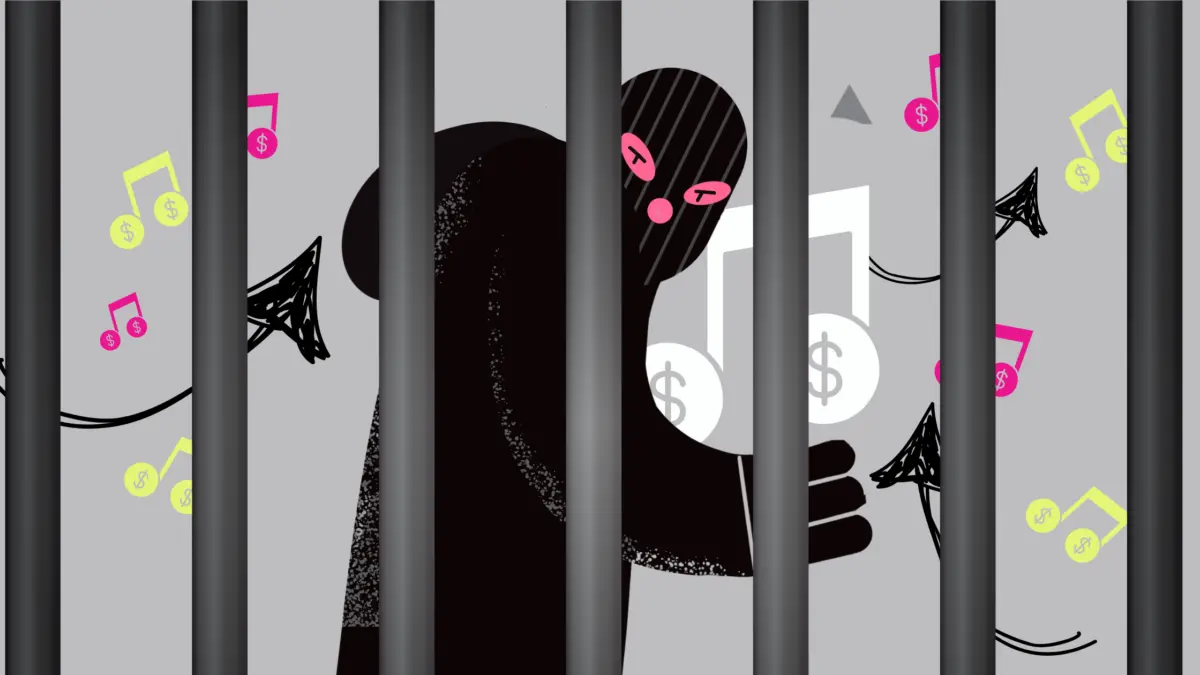
In what legal and industry experts are calling a watershed moment for the global music business, Michael Smith—a North Carolina-based musician turned architect of an elaborate automated fraud ring—was sentenced yesterday to 18 months in federal prison. Handed down by Judge John G. Koeltl in the U.S. District Court for the Southern District of New York, the sentence marks a historic milestone: the first-ever criminal conviction and custodial sentence for streaming fraud in the United States, and only the second globally, following a precedent-setting case in Denmark.
Over a seven-year span from 2017 to 2024, Smith masterminded a sophisticated technological scheme. Leveraging artificial intelligence to mass-produce tracks and deploying automated bot farms, he siphoned an estimated $8 million in royalty payments out of the global digital music ecosystem. While prosecutors pushed for a stiffer four-year custodial sentence to reflect the staggering scale of the theft, the court’s decision to incarcerate Smith delivers an unmistakable message to digital bad actors: the era of zero legal risk for streaming manipulation is officially over.
The fallout from the case extends far beyond a single courtroom. It exposes profound structural vulnerabilities in how major digital service providers (DSPs) allocate revenue, igniting a fierce debate over platform accountability, the ethical boundaries of generative artificial intelligence, and the desperate need for aggressive criminal deterrence. Music industry heavyweights, unified under coalitions like the Music Fights Fraud Alliance (MFFA) and the Recording Industry Association of America (RIAA), have rallied behind the prosecution. They argue that streaming fraud is not a victimless technical exploit, but a sophisticated form of grand larceny that directly deprives human songwriters, session musicians, independent labels, and legacy artists of their rightful livelihoods.
Detailed Chronology: The Anatomy of an $8 Million Deception
The dismantling of Michael Smith’s criminal enterprise represents a masterclass in modern digital forensics, federal prosecution, and cross-platform cooperation. To understand the gravity of his 18-month sentence, one must trace the evolution of the scam from its modest beginnings in 2017 to its sprawling culmination in 2024.
Phase One: Inception and the AI Pivot (2017–2019)
Long before generative AI became a mainstream cultural phenomenon, Smith recognized the immense financial potential hidden within the architecture of modern streaming payout models. Operating on a revenue-share model, major platforms aggregate subscription and advertising revenue into a single massive pool, distributing it monthly based on a track’s total share of overall listening time.
Initially, Smith attempted traditional manipulation tactics, but manual streaming quickly proved inefficient and capital-intensive. The turning point arrived when he caught the early wave of generative audio technology. Partnering with the unnamed CEO of an artificial intelligence music company and a digital distribution promoter, Smith realized he could bypass human creative labor entirely. Using rudimentary AI engines, his operation began generating hundreds of thousands of short, low-fidelity tracks with zero artistic merit.
Phase Two: Scaling the Bot Farm (2020–2022)
Armed with an endless supply of AI-generated audio, Smith needed an infrastructure capable of generating billions of artificial streams without triggering platform security protocols. He built a massive bot farm—a decentralized network of thousands of automated virtual machines configured to stream his catalog continuously, 24 hours a day, across multiple major digital service providers simultaneously.
To avoid detection by algorithmic anomaly detectors, Smith dispersed the traffic. The bot farm utilized rotating proxy IP addresses, simulated human listening patterns, and randomized playback orders. By controlling thousands of active accounts on platforms like Spotify, Apple Music, Amazon Music, and YouTube Music, Smith’s automated scripts drove billions of streams to his catalog of fake tracks.
By 2022, the operation was generating millions of micro-payouts every month. Because the royalties were distributed from the centralized revenue pool, every dollar funneled into Smith’s bank accounts represented a direct reduction in the payouts received by legitimate creators whose music was actually being consumed by real human fans.
Phase Three: Detection, Scrutiny, and Deception (2023)
As the sheer volume of unnatural streaming traffic accumulated, digital service providers began to notice statistical anomalies. Several major platforms flagged Smith’s accounts for suspicious activity, noting impossibly high retention rates, uniform listening durations, and zero organic social media footprint or fan engagement accompanying millions of streams.
When DSP compliance teams reached out to question his conduct, Smith did not back down. Instead, as Assistant U.S. Attorney Nicholas Chiuchiolo detailed in court, Smith systematically lied. He fabricated elaborate backstories about sudden, viral social media trends, overseas fandoms, and aggressive digital marketing campaigns. He provided falsified documentation to appease compliance officers, successfully keeping the revenue taps open for months longer than they should have been.
Phase Four: The Federal Indictment and Guilty Plea (2024)
The walls finally closed in when the office of the U.S. Attorney for the Southern District of New York, spearheaded by civil and criminal fraud divisions, launched a comprehensive federal investigation. Investigators pieced together financial records, server logs, communication trails between Smith and his co-conspirators, and cryptocurrency transfers used to launder the proceeds.
Faced with overwhelming forensic evidence, Smith was formally charged and ultimately pleaded guilty to one count of wire fraud conspiracy. As part of his plea agreement, he consented to forfeit the full $8 million he had illicitly harvested over the seven-year period. However, the legal battle shifted dramatically during the sentencing phase, where his defense team fought aggressively to keep him out of prison entirely.
Supporting Context & Metrics: The Economics of Platform Manipulation
To fully grasp why the music industry viewed the Smith trial as a make-or-break moment, one must examine the mechanics of digital royalty distribution and the staggering macroeconomic impact of streaming fraud.
The Zero-Sum Math of the Streaming Economy
Unlike traditional retail models where a consumer’s purchase of a CD or vinyl record directly rewards the artist who created that specific item, modern streaming operates on a pro-rata or user-centric revenue-share model. In a standard pro-rata system, a platform pools all subscription fees and ad revenues, deducts operational costs and licensing margins, and divides the remainder by the total number of streams across the entire platform.
[Total Platform Revenue Pool]
       │
       ├──> Deductions (Operating Costs, Licensing Margins)
       │
       └──> Net Distributable Pool ──> Divided by [Total Global Streams] = Value Per Stream
                                            │
                                            ├──> Legitimate Streams (Artists, Songwriters, Labels)
                                            └──> Bot-Driven Streams (Fraudsters like Michael Smith)
Every single time a bot plays a track for 30 seconds (the historical threshold required to register a qualifying stream on most platforms), it claims a fractional slice of that month’s net pool. When multiplied by billions of automated plays across thousands of AI-generated tracks, the diversion of capital becomes astronomical.
Industry analysts estimate that streaming fraud costs the global music ecosystem hundreds of millions of dollars annually. For independent artists, session musicians, and struggling songwriters living gig-to-gig, the loss of even a few hundred dollars a month due to dilution can mean the difference between sustaining a career and abandoning music altogether.
The Regulatory and Technological Arms Race
Combatting streaming fraud has long felt like a game of Whac-A-Mole. The defense mechanisms deployed by the industry span three distinct layers:
- Platform-Level Safeguards: Digital service providers continuously upgrade their machine-learning algorithms to detect unnatural listening patterns, abrupt spikes in velocity, and automated account creation. DSPs also utilize "Know Your Customer" (KYC) verification protocols to ensure that distributors and high-volume uploaders can be positively identified.
- Distributor Vetting: Independent aggregators and distributors—the middlemen who upload music from independent creators to DSPs—have faced mounting pressure to vet their clients rigorously. Many now employ automated fingerprinting and audio-quality analysis to catch low-effort, AI-generated spam before it ever hits the servers.
- Legal and Criminal Deterrence: Historically, streaming fraud was treated as a civil matter or a breach of platform terms of service, resulting merely in account bans and the withholding of unpaid royalties. The absence of criminal risk emboldened bad actors. The Michael Smith conviction—following a pioneering case in Denmark where a court increased a fraudster’s prison sentence on appeal—establishes a vital global precedent that stream manipulation is wire fraud punishable by hard time.
Official Statements and Courtroom Drama
The sentencing hearing in the Southern District of New York was charged with high emotion, featuring impassioned arguments from prosecutors, a stern warning from the bench, and a tearful confession from the defendant himself.
The Prosecution’s Stance
Assistant U.S. Attorney Nicholas Chiuchiolo painted a damning portrait of a calculated, unrepentant criminal who knowingly corrupted the digital marketplace. Addressing Judge Koeltl, Chiuchiolo emphasized that Smith’s actions were far from a momentary lapse in judgment:
"The defendant knew from the very beginning that what he was doing was wrong. This was a serious crime that lasted for many years. When streaming services caught wind and questioned his conduct, he lied to cover his tracks. He exploited super intelligence technology not to advance human culture, but to rob hardworking creators."
Echoing these sentiments, U.S. Attorney Jamie McDonald issued a blistering public statement following the verdict:
"Michael Smith exploited super intelligence technology to generate a fraud. By flooding music streaming platforms with automated bots in the place of consumers, and fake songs in the place of creativity, Smith robbed millions in royalty payments from genuine artists and their fans. This office is committed to ensuring the integrity of all markets and protecting the public from those who use super intelligence for fraud."
Industry Coalitions Speak Out
Music industry organizations wasted no time celebrating the outcome, while simultaneously warning that vigilance must remain high.
The Recording Industry Association of America (RIAA) released a strongly worded statement:
"Streaming fraud harms creators and deceives fans. We appreciate the court recognizing the significance of this harmful conduct and the ill-gotten gains that come from the pockets of real artists, songwriters, and their label partners. Yesterday’s sentencing sends an unmistakable message that manipulating the digital marketplace for financial gain is a serious federal crime."
The Music Fights Fraud Alliance (MFFA), which submitted an amicus curiae-style brief during the proceedings, pointed directly to the psychological shift the ruling provides. In their court submission, MFFA highlighted that the industry has long suffered from a "perceived lack of a legal risk" surrounding stream manipulation. By securing an 18-month federal prison sentence, the justice system has effectively shattered that perception.
The Defense and the Defendant’s Plea
Smith’s defense counsel argued strenuously against incarceration, submitting that his client’s scheme did not cause tangible harm to specific, identifiable artists, given the diffuse nature of the pro-rata pool. They further argued that the intense public media scrutiny surrounding his arrest and guilty plea had already served as an effective public deterrent to other aspiring scammers.
Both the prosecution and Judge Koeltl decisively rejected these arguments. When given the opportunity to address the court, a visibly shaken and tearful Smith offered no excuses:
"I broke the law, I lied, I cut corners, I did things the wrong way in every aspect. I am deeply sorry for what I did, and I accept whatever punishment the court imposes."
In a final appeal to the bench, Smith expressed a desire to work legitimately in audio production upon his eventual release from federal custody, stating that his primary goal moving forward is to find a way to earn the funds necessary to pay back the $8 million he stole from the system.
Judge Koeltl remained unmoved by the emotional plea when delivering his rationale, emphasizing the deliberate, long-term nature of the conspiracy:
"The defendant orchestrated an extremely serious scheme to steal millions of dollars of musical royalties over many years. General deterrence and punishment fitting the gravity of the offense require a custodial sentence."
Future Outlook: What the Landmark Ruling Means for the Music Industry
The imprisonment of Michael Smith serves as a seismic turning point, but industry insiders agree it is merely the opening salvo in a much larger, ongoing war for the soul of the digital music economy. As generative artificial intelligence tools become exponentially more powerful, accessible, and difficult to distinguish from human-made art, the threat landscape is evolving at a breakneck pace.
1. A New Standard for Federal Prosecutions
Legal analysts predict that the Southern District of New York’s successful prosecution of Smith will embolden federal prosecutors across the United States and internationally. Law enforcement agencies now possess a validated legal framework—grounded in wire fraud conspiracy and asset forfeiture—to pursue large-scale streaming manipulators. The precedent established here dismantles the defense that digital fraud is a victimless software exploit rather than theft of intellectual property and commercial revenue.
2. Pressure on Streaming Platforms to Innovate
While criminal prosecution is a vital deterrent, it is reactive. The music industry is intensifying its demands on digital service providers to implement proactive, systemic architectural reforms. Among the most widely discussed solutions is the transition toward user-centric royalty models (UCM).
Unlike the traditional pro-rata model, a user-centric model allocates an individual subscriber’s monthly fee exclusively to the specific artists that individual actually listens to. Under a UCM framework, bot farms lose their systemic leverage; artificially boosting streams of obscure AI tracks on automated loops would only drain the fraudster’s own subscription fee rather than diluting the entire global revenue pool. Major platforms are under mounting pressure from independent labels and trade associations to accelerate trials of user-centric payouts.
3. The Generative AI Reckoning
Beyond financial fraud, Smith’s case highlights the intersection of generative artificial intelligence and copyright law. As AI models ingest millions of copyrighted works without authorization to generate soundalike tracks, the music business is fighting battles on multiple fronts. Platforms are racing to implement cryptographic watermarking, metadata tagging, and provenance verification standards (such as those championed by the Coalition for Content Provenance and Authenticity, C2PA) to verify that uploaded audio was genuinely created by human artists.
4. Continued Vigilance by Coalitions
Coalitions like the Music Fights Fraud Alliance, alongside global bodies like IFPI and CISAC, are expanding their intelligence-sharing networks. By pooling data across independent distributors, major labels, and streaming services, the industry can identify suspicious streaming spikes in real-time, shutting down rogue accounts before they can accumulate millions of dollars in fraudulent payouts.
Conclusion
The 18-month federal prison sentence handed down to Michael Smith is more than just the conclusion of a singular criminal case; it is a foundational pillar for the future integrity of the digital music landscape. For years, bad actors operated in the shadows, emboldened by sluggish technological oversight and a glaring absence of criminal enforcement.
By proving that bot-driven, AI-generated stream manipulation is a prosecutable federal crime punishable by hard time, the U.S. judicial system has fundamentally altered the risk-reward calculus for digital fraudsters. As the music industry navigates the turbulent waters of the generative AI revolution, the message emanating from a New York courtroom is unequivocal: creativity must remain human, the digital marketplace must be defended, and those who choose to loot the pockets of real artists will face the full weight of the law.