Executive Overview
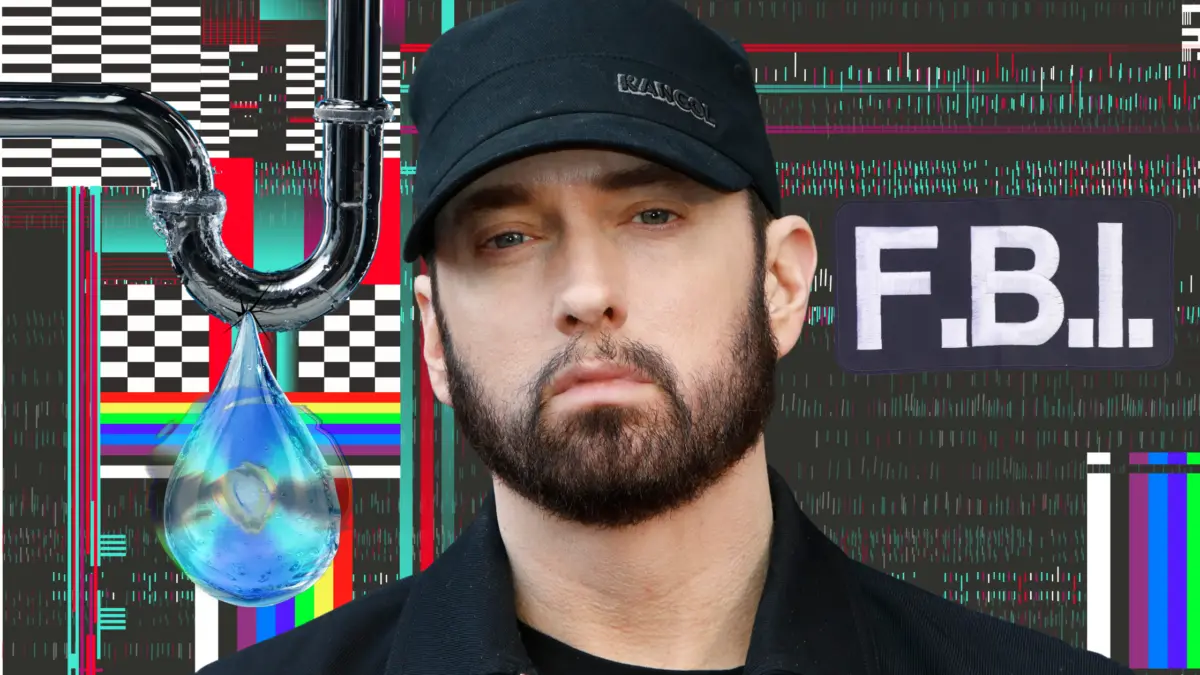
In the high-stakes ecosystem of modern commercial music, an artist’s unreleased vault is sacred territory. It represents the crucible of creation—an archive of experimentation, discarded concepts, polished potential, and future million-dollar releases. For global icon Marshall Mathers, better known as Eminem, that vault was recently compromised not by an elite cyber-criminal or a sophisticated international hacking ring, but by someone who held the keys to the kingdom: a trusted long-term employee.
Joseph Strange, who worked as a close associate and technician for the legendary Detroit rapper for fourteen years, has officially pleaded guilty in a U.S. federal court to criminal copyright infringement. Strange’s confession brings a dramatic close to a multi-agency federal investigation that exposed an audacious inside job. Over the course of his employment from 2007 to 2021, Strange helped build and maintain the digital infrastructure used by Eminem to archive his working sessions at a recording studio in Ferndale, Michigan.
Rather than safeguarding these artistic assets, Strange systematically harvested them. Operating in the shadows, he accumulated a massive stash of unreleased material—boasting to a prospective buyer at one point that he held over 300 unreleased tracks. By 2024, Strange began monetizing his betrayal, selling batches of stolen audio files to external parties. The operation ultimately netted him around $50,000, leaked at least 25 rare tracks into the public domain, and resulted in millions of digital streams across the internet.
Now, Strange faces a federal prison sentence of up to five years, with a formal sentencing hearing scheduled for January. While the U.S. Department of Justice (DoJ) and the Federal Bureau of Investigation (FBI) have hailed the guilty plea as a decisive victory for intellectual property rights, Strange’s defense counsel has pushed back, calling the government’s rhetoric "hyperbolic" and arguing that the situation is far more nuanced than a simple tale of theft. This comprehensive investigative report examines the timeline of the breach, the intersection of copyright law and federal enforcement, the staggering metrics of the digital leak, and the broader implications for cybersecurity in the music industry.
Detailed Chronology: From Trusted Technician to Federal Defendant
To understand how a cache of multi-platinum unreleased music was siphoned away, one must look back nearly two decades. The story of Joseph Strange’s betrayal is one of prolonged access curdling into entitlement and opportunistic crime.
The Foundation of Trust (2007–2021)
Between 2007 and 2021, Joseph Strange was embedded within Eminem’s inner operational circle. As an audio and systems technician, Strange was tasked with setting up, optimizing, and maintaining the proprietary computer networks and storage systems utilized by Mathers and his production team at a dedicated studio space in Ferndale, Michigan.
In this role, Strange enjoyed a high degree of clearance. He was trusted with administrative privileges, granting him backdoor access to vaults of raw vocals, alternate studio takes, unfinished hooks, and fully mastered tracks that the world had never heard. For over a decade, this professional relationship appeared standard. However, federal prosecutors argue that Strange began abusing this position of trust well before his official departure in 2021, quietly siphoning copies of unreleased material onto private drives.
The Vault Stash and the Sales Pitch (2021–2024)
Following the termination or conclusion of his direct employment in 2021, Strange retained access to—or copies of—the harvested digital archives. For a time, the material remained dormant on external hard drives. However, by 2024, Strange pivoted from collector to black-market vendor.
According to federal court filings, Strange began shopping the unreleased catalog to interested buyers in underground collector circles. At various points during his communications with prospective buyers, Strange bragged that his personal archive contained upward of 300 unreleased Eminem tracks—a goldmine for hardcore stans and illicit music traders alike. Ultimately, a buyer emerged who was willing to pay handsomely for a curated batch of files. Investigators later discovered that this buyer shelled out approximately $50,000 in exchange for 25 authentic, unreleased Eminem tracks.
The Leak and the Federal Raid (January 2025 – Present)
The conspiracy began to unravel in January 2025, when tracks from the illicit sale suddenly materialized on public-facing internet forums and video-sharing platforms. The sudden appearance of pristine, studio-quality unreleased Eminem material immediately triggered alarms within the rapper’s management and legal teams, who promptly alerted federal authorities.
The FBI’s Detroit field office launched a swift investigation. Digital forensics teams traced the origin of the leaks online, leading them directly to the buyer who admitted to paying Strange $50,000 for the 25 leaked songs. Armed with this intelligence, federal agents secured a search warrant for Strange’s residence. During the raid, agents seized multiple computer hard drives containing the stolen Eminem music, corroborating the buyer’s claims and uncovering the scale of the breach.
Faced with overwhelming forensic and financial evidence, Strange opted to enter a guilty plea to criminal copyright infringement, circumventing what would have been a high-profile trial. He now awaits sentencing in January.
Supporting Context & Metrics: The Anatomy of a Digital Leak
While copyright infringement is most frequently handled through civil litigation—where creators sue infringers for financial damages—this case crossed the threshold into federal criminal prosecution. Understanding why the U.S. government stepped in requires examining the industrial scale of the distribution and the financial parameters set by American intellectual property law.
The Legal Threshold: Civil vs. Criminal Infringement
Under U.S. copyright law, basic infringement can be resolved in civil courts. However, criminal liability under federal statutes is triggered when infringement occurs on an industrial scale and is explicitly undertaken for "purposes of commercial advantage or private financial gain." Strange’s actions checked every box: he systematically harvested proprietary audio files and transacted them for $50,000 in direct financial remuneration.
Staggering Digital Footprint
Prosecutors revealed eye-watering figures regarding the reach of Strange’s actions. While investigators noted that "no commercial release of the music or material" Strange had stolen was "imminent or even certain," representatives for the artist had taken preliminary steps to prepare select tracks for potential future commercial release, including professional studio mastering.
Once the files were disseminated online, however, the damage multiplied exponentially. By November 2025, federal prosecutors disclosed that the infringing audio files had been accessed more than 8 million times across various digital platforms. This massive exposure not only compromised the strategic rollout plans of Eminem’s camp but also diluted the commercial value of intellectual property that had taken years to craft.
Official Statements and Industry Reaction
The guilty plea has elicited strong reactions from federal law enforcement agencies, who are increasingly treating digital music theft as a serious white-collar crime rather than a mere internet nuisance.
The Department of Justice Speaks
Assistant Attorney General A. Tysen Duva issued a scathing rebuke of Strange’s actions, framing the case as a profound breach of professional ethics.
"Joseph Strange abused a position of trust to unlawfully copy and sell unreleased music belonging to Eminem, profiting from works that were not yet authorized for public distribution," Duva stated.
Duva emphasized that Strange’s conduct directly undermined Eminem’s "legal and artistic rights." He reinforced the DoJ’s hardline stance on intellectual property, adding:
"The criminal division of the U.S. Department of Justice remains committed to protecting intellectual property, holding accountable those who seek to profit from the theft of creative content, and working with our law enforcement partners to deter and disrupt these crimes."
The FBI’s Stance in Detroit
Echoing the DoJ’s sentiment, FBI agent Jennifer Runyan highlighted the cultural significance of the city where the crime originated.
"Detroit has always been a city where creativity thrives, and no one has the right to steal or profit from another artist’s work without their permission," Runyan said. "Today’s guilty plea reinforces a simple principle: accountability follows those who compromise the integrity of another person’s creative labor."
The Defense Strikes Back
In stark contrast to the triumphant tone of federal prosecutors, Strange’s legal representative, Wade Fink, sharply criticized the government’s public statements. Fink labeled the official DoJ and FBI press releases as "hyperbolic" and "self-congratulatory," arguing that the narrative presented to the public oversimplifies a complex human reality.
"This is a far more complicated and nuanced matter than a man just unabashedly stealing," Fink argued, emphasizing the personal toll of the legal battle. "Joe Strange is a good man whose children have suffered greatly in all of this."
Despite his critique of the authorities, Fink confirmed that his client is owning up to his actions.
"Nevertheless, my client has taken accountability for what he has done, has tremendous remorse for what has happened to his family, and has great faith, as do I, in the judges of our district to see this case for what it is."
Future Outlook: Implications for Artist Security and the Music Industry
The prosecution of Joseph Strange serves as a watershed moment for the music industry, sending a chilling message to insiders, technicians, producers, and managers who handle unreleased studio assets.
In an era where digital leaks can instantly derail multi-million-dollar marketing campaigns, artist management teams are re-evaluating their cybersecurity protocols. The vulnerability exposed in Ferndale—where a trusted systems administrator could quietly accumulate hundreds of unreleased tracks over a decade—highlights the urgent need for zero-trust network architectures within recording studios. Modern artists are increasingly implementing strict access controls, multi-factor authentication, biometric studio logs, and encrypted cloud-only storage to ensure that local hard drives cannot be easily duplicated by rogue personnel.
Furthermore, this case establishes a potent precedent for federal prosecution in matters of unreleased music theft. By successfully classifying the sale of leaked unreleased tracks as a major criminal enterprise resulting in federal prison time, the Department of Justice has signaled that it views intellectual property theft in the entertainment sector as a high-priority economic crime.
As Joseph Strange prepares to face U.S. District Court judges for his sentencing hearing this coming January—facing up to five years behind bars—the rap community and the wider music business will be watching closely. The verdict will not only determine the immediate fate of a disgraced audio technician but will also set a definitive legal benchmark for how severely the U.S. justice system penalizes those who shatter the vault doors of America’s most prized creators.