Executive Overview
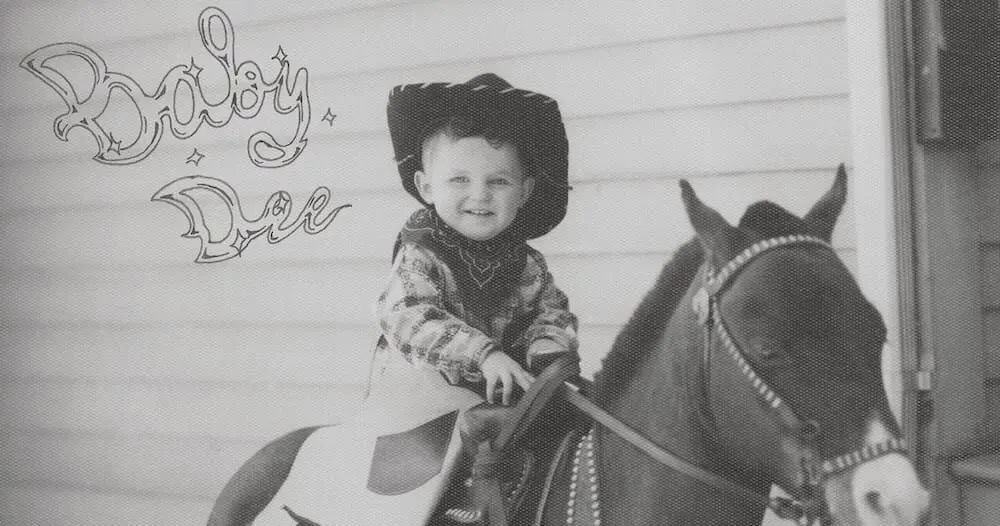
In an era dominated by hyper-curated aesthetics and algorithmic conformity, the true outlier remains a vanishingly rare breed. Yet, every so often, a singular force emerges from the cultural periphery to remind us of the boundless, untamable capacity of the human spirit. Enter Baby Dee—a visionary artist whose life reads like a picaresque epic stitched together from myth, marginalia, and sheer sonic muscle.
After an eleven-year hiatus from the recording studio, the Ohio-born, Netherlands-based polymath returns with Child of Joy, set for release via long-term collaborators Tin Angel Records. Eschewing the traditional promotional machinery of modern pop, Dee’s latest offering is not merely a collection of new recordings, but a profound act of transfiguration. Across twelve meticulously curated tracks, Dee revisits her extensive catalog—spanning from her 2001 debut, Tiny Windows, to 2015’s I Am A Stick—and strips them down to their rawest, most essential components, transposing them from their original billowing pianos and stately harps to the rich, breathing expanse of the accordion.
The result is an auditory paradox: music that feels simultaneously intensely intimate and impossibly vast. Far from a standard retrospective or lazy compilation, Child of Joy acts as a living monument to Dee’s singular artistry, bridging the gap between sacred Renaissance polyphony and raw, confessional vulnerability. As chronicled through her Homeric lyricism and labyrinthine arrangements, Dee proves once more that she is an indispensable voice in contemporary music—a carpenter of sound and a chronicler of everyday miracles who stubbornly refuses to be confined by the expectations of the modern world.
Detailed Chronology: The Many Lives of Baby Dee
To understand the breathtaking scope of Child of Joy, one must first comprehend the labyrinthine biography of its creator. To say that Baby Dee has lived multiple lives is not hyperbole; her personal and professional trajectory shatters conventional paradigms of artistic evolution.
Long before she was fêted by the upper echelons of the international avant-garde—counting luminaries such as Marc Almond, Bonnie “Prince” Billy, David Tibet, and Annie Lennox among her most vocal champions—Dee was traversing an eclectic subterranean landscape. Her résumé reads like a surrealist novel: she has worked as a professional tree surgeon, scaling the canopies of urban and rural landscapes; she has performed as a freak-show artist, captivating and unsettling audiences with her uncanny theatricality; she has taken to the streets as a bumblebee-themed street musician, transforming public thoroughfares into stages of whimsical disruption; and, perhaps most tellingly, she served as a church organist who genuinely believed she was possessed by the ghost of Renaissance master Giovanni Pierluigi da Palestrina.
This kaleidoscope of lived experience forms the bedrock of her musical output. Each incarnation—whether elevated high in the boughs of an oak tree or hunched over the manuals of a pipe organ—infused her artistic sensibilities with a rare texture. Eventually, the gravitational pull of the international underground drew her into the recording studio. Over the course of the 2000s and 2010s, albums like Tiny Windows (2001) and Safe Inside The Day (2008) cemented her reputation as a singular songwriting force, one capable of wedding the tragicomic weight of vaudeville to the devotional intensity of sacred choral music.
In recent years, Dee retreated from the relentless churn of the global touring circuit, settling into a quiet, rural existence in the Netherlands. There, she has cultivated the appearance of a respectable, retired citizen of show business. Yet, creative genius is an unruly tenant. Child of Joy marks her triumphant, albeit reluctant, emergence from this self-imposed reclusion, proving that the fires of her inspiration have only intensified beneath the quiet veneer of Dutch country life.
Supporting Context & Metrics: Deconstructing Child of Joy
Scheduled for release on September 25 via Tin Angel Records, Child of Joy represents a radical reinvention of material drawn from across a twenty-year recording career. The metric of its success lies not in commercial streaming charts or algorithmic saturation, but in the sheer sonic density and emotional resonance of its execution.
The Accordion as an Orchestral Universe
The structural linchpin of Child of Joy is its deliberate instrumental reduction. Where previous iterations of these songs relied on the cascading dynamics of a grand piano or the pristine elegance of a concert harp, Dee’s new arrangements place the accordion front and center. In lesser hands, the instrument might evoke coastal folk clichés or street-corner pastiche. In Dee’s hands, however, the accordion is transformed into a consort of viols straight out of Renaissance polyphony.
The instrument’s natural qualities—its wheezing bellows, its capacity for sustained, droning counterpoint, and its harmonic richness—imbue the tracks with a deeply romantic complexity. As captured in the opening bars of the album’s centerpiece, "My Heart’s Come Home To Me," a cyclical, breathing motif evolves from a deceptively simple three-note refrain into an elaborate, weeping ode to yearning. The symphonic grandeur matches the emotional architecture of Gustav Mahler, proving that monumental orchestral weight can be conjured from a single, handheld reed instrument.
Lyrical Virility and Homeric Scale
Lyrically, Dee operates in a register largely abandoned by contemporary songwriters. Her verses possess an ancient, Homeric quality, vibrating with a poetic virility that transcends historical epoch and physical environment. When she intones lines such as, “To make men seem as good as gods / that God himself smiled down to say / ‘My heart’s come home to me,’” she channels an oral tradition stretching back millennia, as if her voice were merely a vessel for generations of storytellers.
The thematic scope of the album is vast, shifting effortlessly from existential inquiry to hyper-specific trauma.
- The Search for Connection: Tracks like "Lilacs" and "A Compass Of The Light" map the fragile, persistent human instinct toward interpersonal bonding.
- The Shadows of Childhood: Conversely, songs like "So Bad" and "When I Get Home" telescope the listener directly into deeply unsettling childhood memories—conjuring startling surrealist tableaus of a young Dee imagining her mother being physically assaulted by Jesus within the confines of a church confessional box, alongside complicated, bruised reflections on paternal rage.
- Existential Dread: On "The Robin’s Tiny Throat," the music hangs suspended over the speakers, rattling the chains of mortality with a single, devastating question posed to the heavens: "I woke up this morning and asked the sky; How can you bear such emptiness?"
Official Statements & Critical Perspectives
While Baby Dee herself maintains the wry, self-effacing distance of the true recluse—content to play the part of the retired villager in the Dutch countryside—the artistic community surrounding her release has been vocal in its appraisal of her enduring relevance.
Tin Angel Records, which has championed Dee’s catalog through various iterations, views Child of Joy not merely as an archival exercise, but as a vital contemporary statement. In promotional materials accompanying the release, the label emphasizes the organic evolution of the material: "These are songs that have lived, breathed, and aged alongside their creator. By stripping them down to the elemental pulse of the accordion and the human voice, Dee has revealed their skeleton and their soul simultaneously."
Critical reception within avant-garde music circles has similarly focused on the uncanny synchronicity of Dee’s musical timing. Reviewers have consistently noted that Dee’s internal metronome appears tethered not to a digital grid or a conventional click-track, but to the erratic, galloping rhythm of an emotional heart.
Musicians tasked with accompanying her on these recordings have frequently spoken of the immense technical and emotional challenge involved. Dee’s phrasing defies standardized notation; it surges and recedes according to psychological necessity rather than meter. It is precisely this unyielding authenticity that elevates Child of Joy from an intellectually admirable project into a deeply lovable work of art. As one close collaborator noted, "You cannot fake Baby Dee’s timing because you cannot fake her life. Every note is anchored in a visceral, lived reality."
Future Outlook: The Antidote to the Modern World
As the cultural landscape grows increasingly saturated with frictionless, AI-generated soundscapes and disposable pop commodities, the arrival of Child of Joy feels less like a traditional album release and more like an act of spiritual resistance.
Baby Dee’s return forces us to confront what has been lost in the pursuit of modern polish. She stands as a rare architect of the sublime—an artist with the discerning eye of a classical poet and the calloused, practical hands of a carpenter. Her music offers a direct, unmediated confrontation with the full spectrum of human experience: our private triumphs, our crippling anxieties, and our persistent yearning for grace in an indifferent universe.
Looking ahead, whether Child of Joy represents a permanent reentry into the public eye or merely a singular, valedictory dispatch from her Dutch sanctuary remains entirely up to Dee. She refuses to play the industry game, and her reclusiveness only enhances the mythical aura surrounding her catalog.
What is certain, however, is that Child of Joy serves as the ultimate antidote to the frantic noise of contemporary life. It reminds us that true art is not manufactured to fit a format; it is lived, suffered, distilled, and ultimately offered up to the world like a gift that is perpetually bigger than the box it came in. And while it may be a cliché to remark that an artist "contains multitudes," in the case of Baby Dee, no other phrase quite suffices—even if one dares not utter it within earshot of the artist herself.