Executive Overview
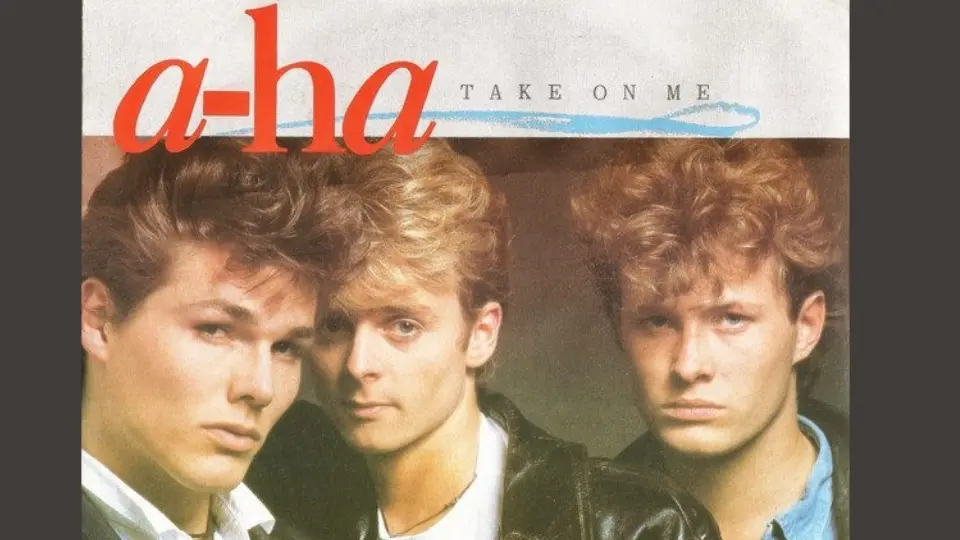
Few tracks from the 1980s encapsulate the intersection of technological innovation, musical craftsmanship, and cross-generational appeal quite like a-ha’s defining masterpiece, "Take On Me." Emerging from the vibrant, synth-driven pop landscape of mid-decade Europe, the Norwegian trio—comprising vocalist Morten Harket, guitarist Magne Furuholmen, and keyboardist Paul Waaktaar-Savoy—crafted a composition that continues to defy the temporal boundaries of its era. Driven by an instantly recognizable synthesizer hook, soaring vocal delivery, and an accompanying music video that revolutionized MTV culture through groundbreaking pencil-sketch animation, the song remains a towering achievement in modern pop history.
This retrospective analysis explores the anatomy of "Take On Me," examining its lyrical themes of romance, vulnerability, and urgency. It details the painstaking journey of its production, the triumphant sweep at the 1986 MTV Video Music Awards, and the enduring psychological resonance that keeps the track relevant in contemporary media, streaming platforms, and global consciousness.
Detailed Chronology: From Obscurity to Global Domination
The genesis of "Take On Me" was neither immediate nor straightforward. It represents a masterclass in artistic persistence, iterative production, and the serendipitous alignment of talent and timing.
1982–1984: The Evolution of a Melody
The core riff of "Take On Me" originated long before the band achieved international stardom. Paul Waaktaar-Savoy and Magne Furuholmen composed the catchy, driving synth motif while still teenagers in Norway, originally titling the embryonic track "Lesson One." At this stage, the song possessed the foundational bounce that would later captivate millions, but it lacked the structural cohesion and lyrical narrative required for global radio play.
When the trio relocated to London to secure a record deal, they worked alongside producer Tony Taverner to record an early version of the track. Released in 1984 through Warner Bros. Records, this initial rendition failed to make a significant commercial impact, charting poorly in the UK and stalling momentum. Recognizing the untapped potential within the composition, the label decided on an unprecedented move: they funded a complete re-recording and paired the track with a visionary new visual concept.
1985: The Definitive Recording and Commercial Breakthrough
Revisiting the studio with producer Alan Tarney, the band streamlined the arrangement, tightened the tempo, and allowed Morten Harket’s astonishing vocal range—particularly his effortless transition into a soaring falsetto during the chorus—to take center stage.
Released globally in 1985 as the lead single from their debut studio album, Hunting High and Low, the revamped "Take On Me" experienced a meteoric rise. Propelled by regular rotation on MTV, the single climbed charts worldwide, securing the number-one spot on the US Billboard Hot 100 in October 1985, as well as topping charts across Europe and Australia. It transformed a struggling Scandinavian act into international superstars practically overnight.
Supporting Context & Metrics: Lyrics, Accolades, and Cultural Impact
The enduring legacy of "Take On Me" is supported by lyrical depth, critical acclaim, and an unprecedented sweep of industry accolades.
Lyrical Analysis: Urgency, Vulnerability, and Hope
Beneath the glossy, upbeat synth-pop exterior lies a text rich with emotional complexity. The song captures the delicate tightrope walk between romantic aspiration and existential uncertainty.
We’re talking away
No, I don’t know what I’m to say
I’ll say it anyway
Today is another day to find you
Shyin’ away
I’ll be comin’ for your love, okay?
These opening lines immediately establish a tone of nervous excitement. The narrator faces the classic dilemma of wanting to connect with someone who remains distant or hesitant ("shyin’ away"). Rather than retreating, the protagonist leans into the vulnerability, acknowledging the awkwardness of the interaction while committing to pursue the connection regardless.
Take on me (Take on me)
Take me on (Take on me)
I’ll be gone
In a day or two
The iconic chorus introduces a fascinating juxtaposition: an invitation to "take me on" coupled with an acknowledgment of transience ("I’ll be gone in a day or two"). This creates an urgent emotional landscape. The narrator is living in the present moment, recognizing that opportunities for genuine connection are fleeting and fragile.
So, needless to say
I’m odds and ends
But I’ll be stumblin’ away
Slowly learnin’ that life is okay
Say after me
“It’s no better to be safe than sorry”
Verse 2 reveals personal insecurity—describing oneself as "odds and ends." Yet, it pivots toward resilience. The phrase "It’s no better to be safe than sorry" serves as the emotional thesis of the track. It encourages listeners to step out of their comfort zones, take emotional risks, and reject the safety of emotional detachment in favor of authentic lived experience.
Accolades and Industry Recognition
The cultural footprint of "Take On Me" was permanently cemented during the 1986 MTV Video Music Awards, held on September 5, 1986. Directed by Steve Barron, the music video—which seamlessly blended live-action footage with pencil-sketch animation known as rotoscoping—became a landmark achievement in visual media.
Out of eight nominations, a-ha walked away with six prestigious VMAs, establishing themselves as the undisputed kings of the evening:
- Won: Best New Artist in a Video
- Won: Best Concept Video
- Won: Most Experimental Video
- Won: Best Direction in a Video
- Won: Special Effects in a Video
- Won: Viewer’s Choice
- Nominated (Did Not Win): Best Group Video
- Nominated (Did Not Win): Video of the Year
Additionally, the track earned a nomination at the 1986 American Music Awards for Favorite Pop/Rock Video, ultimately bowing to Huey Lewis and the News’ cinematic anthem, "The Power of Love."
Official Statements and Retrospective Perspectives
Reflecting on the whirlwind success of the track, members of a-ha and industry insiders have frequently commented on the unique alchemy that birthed the song.
"We always knew ‘Lesson One’ had a special pulse to it," noted songwriter and guitarist Paul Waaktaar-Savoy in a retrospective interview. "When we finally found the right producer and let Morten push the vocal boundaries, everything clicked. But nobody can prepare you for a song taking over the entire world the way ‘Take On Me’ did."
Director Steve Barron recalled the grueling process behind the legendary music video: "Rotoscoping frame-by-frame was painstaking work—thousands of drawings meticulously traced over live-action footage. We wanted to create a portal between two worlds: the flat, paper-drawn comic book reality and the physical world. It was a massive gamble, but it gave the song a timeless visual identity."
Morten Harket emphasized the emotional core that anchors the technical wizardry: "People remember the high notes and the cartoon video, but at its heart, the song is about reaching out. It’s about human connection and the courage it takes to risk rejection. That’s why people still sing along today—it speaks to something universal."
Future Outlook: The Everlasting Resonance of 1980s Synth-Pop
As the music industry continues to evolve through streaming algorithms, digital production tools, and cyclical nostalgia waves, the blueprint established by a-ha remains remarkably influential.
The Streaming Era and Cross-Generational Discovery
Decades after its initial release, "Take On Me" achieved a historic milestone by surpassing one billion streams on Spotify, placing it in an elite tier of catalog tracks that continue to attract millions of monthly listeners. This ongoing relevance is driven by several factors:
- Sync Licensing: The track frequently appears in major motion pictures, television series (such as The Last of Us), and prominent commercial campaigns, introducing the melody to entirely new demographics.
- Acoustic Redefinition: a-ha’s stripped-down, acoustic performance of the song for MTV Unplugged in 2017 demonstrated the underlying compositional strength of the track, proving that the melody works just as well around a campfire as it does over a pumping synthesizer.
- Sonic Kinship: Contemporary synth-pop revival acts—drawing inspiration from artists like a-ha, Tears for Fears, Duran Duran, and Eurythmics—continually reference the pristine production values and emotional vocal performances pioneered in the 1980s.
Conclusion: A Masterpiece for the Ages
"Take On Me" is far more than a nostalgic artifact of the 1980s. It stands as a masterwork of pop architecture, uniting visionary songwriting, extraordinary vocal athleticism, and pioneering visual art into a single, cohesive cultural touchstone. As long as listeners seek out music that balances vulnerability with electrifying energy, a-ha’s defining anthem will continue to call out across the decades, inviting us all to take a chance and join the journey.