Executive Overview
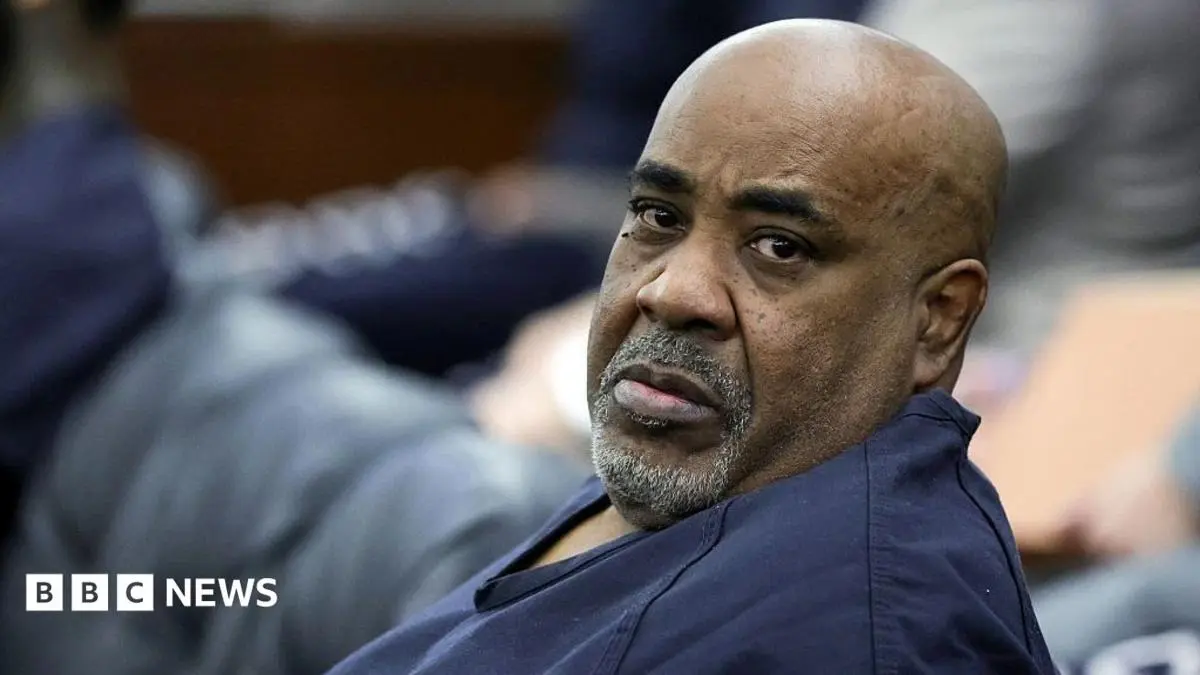
Nearly three decades after the global music community was rocked by the violent slaying of Tupac Shakur, the pursuit of accountability has finally reached a definitive legal milestone. In a tense courtroom proceeding presided over by Judge Carli Kierny, the long-standing shadow of impunity that hung over the 1996 drive-by shooting in Las Vegas was formally addressed. Duane "Keefe D" Davis, a former regional leader of the South Side Compton Crips, stood before the bench to face the consequences of a murder that transformed the landscape of American culture, law enforcement, and the rap industry.
While Davis did not pull the trigger himself, judicial authorities established that his orchestrating hand, his provision of the firearm, and his presence inside the white Cadillac from which the fatal shots were fired made him criminally culpable for extinguishing the life of a 25-year-old visionary. The sentencing brings a temporary sense of closure to a tragedy that crippled the Shakur family for generations, turning an open wound into a matter of historical and legal record.
For nearly thirty years, the murder of Tupac Shakur remained one of the most visible and heavily scrutinized cold cases in modern criminal history. It spawned countless conspiracy theories, amateur investigations, and pop-culture speculations. However, the path to justice was ultimately paved not by breakthrough forensic science or hidden eyewitnesses stepping forward decades later, but by the defendant’s own hubris. Davis’s relentless public boasting, media interviews, and admissions in a 2019 memoir systematically dismantled the legal shields that had protected him for years, providing prosecutors with the narrative and self-incriminating evidence necessary to secure a conviction.
This comprehensive report examines the courtroom proceedings, the emotional appeals delivered by Shakur’s surviving family members, the intricate chain of evidence that led to the verdict, and the broader cultural legacy of an artist whose voice continues to reverberate across the globe.
Detailed Chronology: From the Las Vegas Strip to the Courtroom
To understand the weight of the recent sentencing, one must trace a timeline spanning nearly three decades of shadow, speculation, and systematic police work.
September 1996: The Fatal Night in Sin City
The sequence of events leading to Shakur’s death began on the night of September 7, 1996, in Las Vegas, Nevada. Shakur had traveled to the city to attend a Mike Tyson boxing match at the MGM Grand casino. Following the bout, an altercation broke out in the casino lobby involving Shakur, members of his entourage, and Orlando Anderson, a reputed member of the South Side Compton Crips and the nephew of Duane Davis. Anderson was allegedly suspected of attempting to steal a chain from a member of Shakur’s entourage earlier that day.
Later that evening, Shakur and Death Row Records CEO Marion "Suge" Knight were traveling in a black BMW along the Las Vegas Strip, heading toward a club owned by the record label. A white Cadillac pulled up alongside the passenger side of the BMW. Gunfire erupted from the interior of the Cadillac, striking Shakur multiple times. He was rushed to the University Medical Center of Southern Nevada, where he fought for his life through multiple surgeries before succumbing to his internal injuries six days later, on September 13, 1996. Orlando Anderson was quickly identified as a person of interest in the immediate aftermath, but police investigations stalled amid a wall of silence, fear, and jurisdictional friction. Anderson himself was killed two years later in an unrelated gang-related shootout in Compton, California, taking any direct confession to the grave with him—or so it initially seemed.
The 2008 Confidential Interview
Years turned into decades, and the case transformed into a legendary cold case. However, behind the scenes, law enforcement agencies continued to poke at the edges of the conspiracy. In 2008, facing unrelated legal exposure and federal scrutiny, Duane Davis sat down for a secret, recorded interview with Los Angeles Police Department detectives and federal task force officers. At the time, investigators were actively examining the high-profile murder of Christopher Wallace, widely known as The Notorious B.I.G., which had occurred in Los Angeles just months after Shakur’s death.
In exchange for a promise of non-prosecution—a colloquial "use immunity" agreement designed to help authorities map out the broader Southern California gang landscape and solve interconnected violent crimes—Davis spilled the details. He admitted candidly that he was inside the white Cadillac, that he had handed the Glock .40 caliber handgun to his nephew Orlando Anderson, and that he had orchestrated the retaliation after the MGM Grand brawl. For over a decade, this explosive confession remained locked away in federal and local law enforcement archives, shielded by the terms of the confidential agreement.
The Hubris of "Compton Street Legend"
Davis’s legal immunity might have held firm had he chosen to remain anonymous. Instead, driven by a desire for financial gain and notoriety, Davis chose to monetize his role in hip-hop history. In 2019, he co-authored a memoir titled Compton Street Legend. In the book, as well as in subsequent promotional press tours, documentary interviews, and true-crime podcasts, Davis openly discussed his involvement in the Shakur assassination. He detailed how he acquired the gun, orchestrated the movements of the white Cadillac, and watched the shooting unfold in real time.
This media blitz proved to be his undoing. Legal experts immediately pointed out that by commercializing the details of the crime and speaking freely to media outlets without the protective confines of law enforcement interrogation rooms, Davis had violated the foundational conditions of his 2008 immunity agreement. Prosecutors recognized an opening. Armed with the 2008 interview transcripts and his own published words, Las Vegas police revitalized the investigation, ultimately leading to a grand jury indictment and his subsequent arrest.
Supporting Context & Metrics: The Scale of a Legend and a Case
The cultural and commercial footprint of Tupac Shakur adds an extraordinary layer of gravity to the legal proceedings. Understanding why his murder remained a global obsession for 30 years requires looking at the numbers and the cultural infrastructure he built before his life was cut short.
- Global Record Sales: Tupac Shakur has sold more than 75 million records worldwide, cementing his status as one of the best-selling music artists of all time.
- Posthumous Output: Despite a recording career that spanned only a few short years actively in the public eye, a massive volume of material was released posthumously, generating multiple platinum albums and maintaining his cultural relevance across generations.
- Age at Death: Shakur was only 25 years old at the time of his assassination—an age when many artists are just beginning to hit their creative stride.
- The Cold Case Duration: The investigation into his murder languished as an active-yet-unsolved cold case for nearly 27 years, making it one of the longest-running celebrity homicide investigations in American criminal history.
- The Legal Defense Strategy: Throughout the trial, Davis’s defense team argued that his book and interviews were works of creative exaggeration—bravado crafted solely to sell books, boost his profile, and generate income in the true-crime market. Prosecutors, conversely, successfully proved that the consistency of his narrative across both confidential police rooms and public platforms constituted reliable, self-corroborating admissions of guilt.
Official Statements and Courtroom Confrontation
The courtroom proceedings were punctuated by raw, unfiltered grief and defiance. The sentencing hearing provided surviving members of the Shakur family an official platform to address not just the man convicted of orchestrating the crime, but the enduring legacy of the loss itself.
Sekyiwa Shakur’s Emotional Appeal
Taking the stand, Tupac’s sister, Sekyiwa Shakur, delivered a blistering and heartbreaking indictment of the defendant’s actions and the decades of silence that followed.
"The loss of Tupac, for a long time, crippled my family," Sekyiwa Shakur told the court, her voice trembling with emotion before hardening into resolve.
She detailed the immense promise her brother carried, noting that his artistic ambitions were always tethered to a deeper social consciousness. "He had so much promise, intentions for a better world," she said, emphasizing that her brother had actively hoped to use his platform and resources to uplift, organize, and aid his local community.
Directly addressing Duane Davis, Sekyiwa urged the judge to hand down the maximum possible prison sentence. She told Davis that behind bars, stripped of his freedom, he would finally have the time to "contemplate what you’ve done to the world, not just to me."
Maurice Shakur’s Call for Finality
Following his sister’s testimony, Tupac’s brother, Maurice Shakur, also addressed the judicial bench. Eschewing theatrics, Maurice delivered a direct and solemn request to Judge Kierny, asking the court for "the longest possible sentence" permitted under Nevada law to ensure that accountability matched the permanence of the family’s loss.
The Defendant’s Response
When Judge Carli Kierny turned her attention to the defendant and asked if he had any final remarks before the sentencing was officially entered into the record, Davis displayed the same defiant posture that had characterized his public persona for years.
"I’m good," Davis replied casually, offering a chilling dismissal of the gravity of the courtroom. "I’m gonna appeal this case for sure."
Judge Kierny’s Scathing Reprimand
Before handing down the sentence, Judge Kierny addressed Davis directly, cutting through his bravado with a stern moral and legal critique of his actions:
"You don’t get to take a man from his family. You don’t get to take his very life, his whole future from him, and just walk away from it. Especially when that man is Tupac Shakur. The world never forgot about him and his death."
Future Outlook: Closing a Chapter on Hip-Hop History
The sentencing of Duane Davis marks the definitive closure of a judicial chapter, but it simultaneously opens a broader conversation regarding the intersection of fame, crime, historical memory, and the pursuit of justice in American culture.
For decades, critics of the Las Vegas Metropolitan Police Department and federal investigators argued that the murder of a Black artist in the 1990s did not receive the urgent, exhaustive resources that would have been mobilized had the victim been a mainstream pop star of another demographic. While institutional failures and systemic biases certainly characterized the early years of the cold case, the tenacity of modern prosecutors proves that historical crimes—when buoyed by unyielding public interest and self-inflicted carelessness by perpetrators—can eventually find their way to a courtroom.
As Davis prepares for what will undoubtedly be a lengthy and legally complex appeals process, his defense attorneys will likely continue to lean on the argument that his past admissions were fabricated marketing ploys. However, legal analysts agree that overcoming the sheer volume of self-incriminating material—spanning an official police confession, a published memoir, and multiple televised interviews—will present an insurmountable hurdle for any appellate court.
Ultimately, the resolution of the Tupac Shakur murder trial serves as a cautionary tale about the weight of truth, the dangers of monetizing violence, and the enduring power of a family’s demand for accountability. While Tupac Shakur’s physical presence was stolen on a Las Vegas street corner nearly thirty years ago, the legal finality achieved in Judge Kierny’s courtroom ensures that his narrative belongs to history, unclouded by impunity, and anchored firmly in the pursuit of justice.