When the BBC greenlit The Celebrity Traitors, television executives knew they were taking a calculated risk. The civilian iteration of the psychological reality format—hailed as a masterclass in paranoia, deception, and strategic betrayal—thrives on the brutal shedding of innocent camaraderie among everyday strangers. However, transposing the format into the British entertainment ecosystem changes the mathematical variables entirely.
Rather than isolating unacquainted contestants within the imposing stone walls of an isolated Scottish castle, the celebrity version acts as a pressure-cooker for an industry where everyone is, at most, two degrees of separation apart. As the first two episodes of the inaugural series have vividly demonstrated, the castle is not merely a hunting ground for Traitors; it is a meticulously woven web of pre-existing history. From decades-long neighborhood bonds and shared professional credits to bitter comedy-circuit rivalries and casual red-carpet run-ins, these external relationships are actively dictating survival strategies, seeding immediate mistrust, and accelerating the ultimate downfall of unsuspecting players.
Detailed Chronology: The First Fractures and Early Casuality Metrics
The psychological horror of The Celebrity Traitors lies in its relentless pacing, and the initial 48 hours within the castle proved that professional goodwill offers zero immunity against the ruthless mechanics of the game.
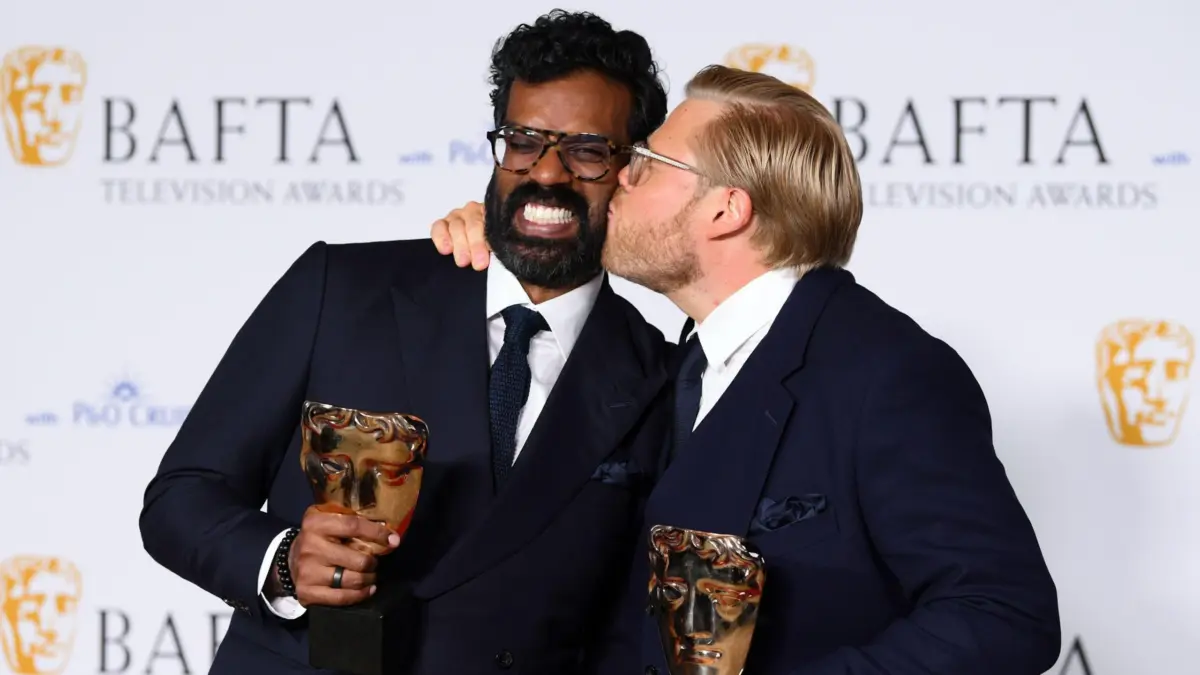
Right out of the gate, the opening episode established the bizarre baseline of this specific social experiment. Comedian Romesh Ranganathan set the thematic tone during his entrance, casually reminding viewers of his profound intimacy with fellow comic Rob Beckett by declaring, "I know Rob very, very well. I mean, I’ve sat next to him as he’s had a colonic."
Yet, this decade-long professional "bromance"—forged across relentless panel show appearances and their hit travelogue Rob & Romesh Vs.—immediately mutated into a weaponized liability. Ranganathan openly admitted that shared history guarantees nothing under the weight of the BBC’s psychological format, noting that Beckett is just as likely to plunge a dagger into his back as he is to share a tactical alliance.
Simultaneously, the foundational bricks of trust began to crack elsewhere in the castle. Broadcaster Amol Rajan—who brought an encyclopedic archive of pre-existing professional connections from his tenure at the BBC, having previously interviewed everyone from Romesh Ranganathan to Michael Sheen and Joe Lycett—became the historic first player to be murdered. Rajan’s swift elimination robbed viewers of what could have been an intricate geopolitical chessboard of media alliances, proving that the Traitors operating in the shadows had zero sentimentality regarding who they targeted first.
As the smoke cleared from the opening roundtable sessions, the narrative shifted toward James Acaster. Recruited swiftly into the clandestine ranks of the Traitors, Acaster immediately identified his greatest operational threats: his own close friends. Having shared professional spaces with Joe Lycett, Romesh Ranganathan, and Rob Beckett, Acaster openly agonized over the reality that these comics know his cognitive patterns, micro-expressions, and behavioral tics far too well for him to successfully maintain a long-term deception.
Supporting Context & Metrics: The Six Degrees of Celebrity Traitors
To fully grasp why The Celebrity Traitors operates so differently from its civilian predecessor, one must examine the dense overlapping taxonomy of the British entertainment industry. An audit of the cast reveals a staggering matrix of prior collaborations:
The Comedy Circuit Cartel: Beyond the Beckett-Ranganathan axis, Joe Lycett and James Acaster share a well-documented rapport, frequently joking about being mistaken for one another by the public and collaborating on programs like Travel Man. Lycett also featured alongside Beckett on Last One Laughing, while Joanne McNally and Romesh Ranganathan crossed paths on the game show Unacceptable. Acaster has appeared on Ranganathan’s hip-hop podcast, and McNally maintains a famously tight-knit friendship with Lycett, who has labeled her "one of my favourite people in the world."
The Broadcaster Network: Maya Jama and Amol Rajan represent the apex of media networking. Rajan has interviewed or hosted almost a third of the castle’s roster across Radio 2 and The One Show, while Jama has rubbed shoulders with everyone from James Blunt (co-presenting at the Brit Awards) to Leigh-Anne Pinnock (spotted front-row together at Milan Fashion Week) and members of the comedy contingent during recurring stints on The Big Fat Quiz of the Year.
Westeros Alumni: In a neat cross-generational crossover, younger cast members Bella Ramsey and Sebastian Croft share lineage in the HBO mega-franchise Game of Thrones, having both appeared in its sixth season. Ramsey’s wider network includes working alongside James Blunt on the film Sunny Dancer, being interviewed by James Acaster on his Off Menu podcast, and bantering about dietary choices with Romesh Ranganathan on The Jonathan Ross Show.
The Senior Statesmen: In perhaps the most charmingly domestic pre-existing alliance, American model Jerry Hall revealed that actor Richard E. Grant is not only her literal neighbor of 30 years but also a deeply trusted confidant. The pair starred together in the 2004 children’s film Tooth, attended the Chelsea Flower Show in tandem, were spotted at Hall’s 2016 wedding to Rupert Murdoch, and recently returned from a celebratory African holiday where they danced together until dawn—only to find themselves locked inside a psychological murder mystery game.
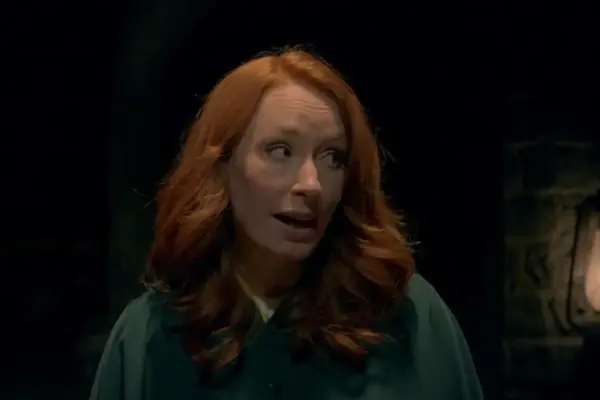
The Audio-Visual Links: Julie Hesmondhalgh—the distinct voiceover narrator of The Weakest Link—is bound directly to host Romesh Ranganathan through their shared quiz show ecosystem, alongside historical charity campaigns shared with Michael Sheen.
Official Statements & Perspectives: Friend or Foe?
Ahead of the show’s premiere, the cast made no secret of how these historical relationships would inevitably warp their gameplay tactics. The consensus among the heavy-hitting comedians was unanimous: shared history means nothing when a six-figure prize pool and ultimate psychological dominance are on the line.
Joanne McNally bluntly addressed the elephant in the room regarding the heavy contingent of stand-up comedians occupying the castle:
"We know that we’re more than willing to throw each other under the bus. We haven’t been in cahoots at all."
James Acaster echoed this sentiment from the perspective of an assigned Traitor, noting that his intimate personal history with his fellow comics is a double-edged sword:
"Romesh, Joe, [and] Rob know me really well. They all know that I don’t change my mind overnight."
Conversely, those with fewer institutional ties to the British comedy and television establishment view their outsider status as a strategic blessing. Leigh-Anne Pinnock of Little Mix fame argued that her relative detachment from the core industry clique provides a protective layer of anonymity:
"I think I’m at a slight advantage because people just know me as Leigh-Anne from Little Mix, and they don’t really know my personality that well."
Industry experts observing the format have noted that this dynamic transforms the viewing experience entirely. TV reporter Siobhan Synnot pointed out the supreme irony of the castle’s social ecosystem:
"Quite often in The Traitors, that familiarity becomes a disadvantage."
History supports this observation. In previous international or civilian iterations, players who lean too heavily on pre-existing bonds or assume they can read a close friend’s poker face often find themselves blind-sided by personal betrayals that cut far deeper than standard game mechanics.
Future Outlook: The Fallout and What Lies Ahead
As The Celebrity Traitors charges forward with its weekly broadcasts on BBC One and BBC iPlayer, the central narrative tension no longer relies strictly on who the Traitors are, but rather how long friendship can survive tactical execution.
With Amol Rajan already eliminated in the opening hours, the illusion of safety derived from professional prestige has been shattered. The remaining players—particularly the tightly wound network of comedians—face an escalating mathematical crisis. As the Traitors continue to pick off the faithful one by one under the cover of Scottish darkness, the pressure at the roundtable will test whether decades-long neighbors like Jerry Hall and Richard E. Grant can truly remain impartial when accusations start flying.
For viewers tuning in every Thursday and Friday at 8 PM, accompanied by the companion show The Celebrity Traitors: Uncloaked, the series has successfully redefined appointment-to-view reality television. It is no longer just a game of detection; it is an unvarnished, highly entertaining stress test of British pop-culture friendships. As the alliances inevitably fracture under the weight of paranoia, the ultimate question remains: will loyalty to a friend override the primal urge to survive, or will the castle floor be littered with the corpses of broken bromances?