Executive Overview
In an era where digital streaming algorithms and hyper-curated social media personas often homogenize the musical landscape, London-based MC Kibo has emerged as a striking anomaly. Operating at the intersection of grime, experimental rap, internet subcultures, and self-styled mythology, Kibo represents a new breed of independent British artist. His latest album, Kwengletaria: Ragamyff, released via APLCO, is not merely a collection of tracks; it is the sonic manifesto of a self-devised philosophical framework known as "Kwengletarianism."
Kwengletarianism—a term coined by Kibo and his inner circle—is described not as a religion or a cult, but as a practical philosophy for elevating the mundane. It is the act of filtering the unglamorous realities of suburban London through a lens of high-concept fantasy, anime, and digital-age escapism. From his origins at the outer edges of the London Underground network in Harrow, Kibo has constructed an intricate artistic universe. This universe is built on heavy, dance-oriented beats, razor-sharp cultural references, and a performance style heavily indebted to the theatrical world of professional wrestling.
With a headlining slot on The Canopy stage at the Reading + Leeds Festival on the horizon, Kibo is transitioning from an underground cult hero to a major force in the UK music scene. This investigative profile examines the chronological development of his career, the philosophical metrics of his worldview, the collaborative network behind Kwengletaria: Ragamyff, and his trajectory within the broader British musical landscape.
Detailed Chronology: The Road to Kwengletaria
[2022] Mixtape Release: "FBFR4" -> Copyright Dispute & Removal -> [Underground Gestation: Raves & Catalog Building] -> [Recording "Kwengletaria: Ragamyff" with the "HA-liens"] -> [Present Day] Album Release & Reading + Leeds HeadlinerThe Early Foundations and Harrow Origins
Kibo’s creative journey is deeply rooted in Harrow, a suburban area situated at the northwestern terminus of London’s Bakerloo line. Growing up far from the traditional epicenters of inner-city London grime, Kibo was forced to look inward and online for inspiration. This geographic isolation fostered a unique creative environment, allowing him to blend local UK rap influences with global internet culture.
2022: The FBFR4 Mixtape and the Copyright Crucible
In 2022, Kibo began formalizing his musical blueprint with the release of the mixtape FBFR4: Fuego Baby Furtardo Returns (Sorry 4 Da Longness). The project was a high-energy, chaotic rap record that quickly garnered attention within underground circles.
However, the mixtape’s lifespan on mainstream streaming platforms was short-lived. A complex copyright dispute involving fellow rapper YT forced the project’s removal from digital service providers (DSPs). Rather than stalling his momentum, this setback initiated a crucial period of artistic gestation.
The Period of Underground Gestation (2022–2024)
Following the removal of FBFR4, Kibo retreated from the traditional release cycle. He continued to write and record prolifically, building a vast archive of unreleased material without the immediate pressure of public consumption. To sustain himself financially, Kibo pivoted to booking and performing at underground raves across the UK. This period proved critical:
- Financial Independence: Live performances and rave bookings funded his ongoing studio time.
- Community Building: It solidified his connection to the physical, sweaty, high-bpm dance culture of the UK underground.
- Aesthetic Refinement: The rave environment influenced his musical direction, shifting his style toward dance-heavy, grime-adjacent tempos.
During this period, the concept of "Kwengletarianism"—originally an inside joke among friends who dubbed him "Kwengletaire"—evolved into a structured philosophy. Kibo began organizing his accumulated music into a cohesive "origin story," laying the groundwork for his definitive studio album.
Supporting Context & Philosophical Metrics
To fully comprehend Kibo’s artistic output, one must deconstruct the cultural, psychological, and geographical elements that inform his work. His creative process is a complex synthesis of seemingly disparate influences.
                  +---------------------------------------+
                  |       KIBO'S CREATIVE ENGINE          |
                  +---------------------------------------+
                                      |
       +------------------------------+------------------------------+
       |                              |                              |
+------v------+                +------v------+                +------v------+
| GEOGRAPHY   |                |  AESTHETICS |                | METAPHOR    |
| Harrow /    |                | Anime, Web  |                | Professional|
| Bakerloo    |                | 2.0 Culture |                | Wrestling   |
+-------------+                +-------------+                +-------------+
The Geography of Imagination: Harrow and Mamoru Hosoda
Harrow’s position at the end of the Bakerloo line represents a literal and figurative boundary. For Kibo, the gray, rain-slicked streets of North West London served as a blank canvas.
He found a conceptual escape in the films of Japanese animator Mamoru Hosoda—specifically The Girl Who Leapt Through Time and Summer Wars. Hosoda’s work frequently explores the intersection of quiet, rural/suburban reality and massive, vibrant digital worlds. Kibo adopted this contrast, using it to transform his immediate environment into a personal utopia.
"Everyone can have their own Kwengletaria," Kibo explains, framing the concept as a democratic tool for psychological survival in a grim urban landscape.
The Cognitive Architecture: "100 Tabs Open"
In conversation and on record, Kibo exhibits a rapid-fire, highly lateral cognitive style. He describes his mind as an overheated laptop running with "100 tabs open at once."
This digital saturation manifests in his lyricism, which is dense with hyper-specific references to early-2000s internet culture, cartoons, and obscure consumer goods. His humorous critique of Silicon Valley culture—specifically Meta CEO Mark Zuckerberg—highlights this worldview:
- The Zuckerberg Critique: Kibo joked about wanting to "donate some Kwengletarianism" to Zuckerberg after watching an interview where the billionaire confessed to drinking coffee "recreationally."
- The Kwengletarian Prescription: Kibo’s antidote to sterile, high-tech corporate optimization consists of:
- A packet of pickled onion Monster Munch.
- A four-pack of Red Stripe lager.
- The discography of Harlem rap legend Max B.
- Episodes of the surreal Cartoon Network series The Grim Adventures of Billy & Mandy.
This juxtaposition of high-tech alienation and low-fi, nostalgic British and American pop culture defines Kibo’s lyrical landscape.
Kayfabe and the Mic: The Wrestling Parallel
A defining visual and conceptual element of Kibo’s brand is his frequent appearance with a custom professional wrestling championship belt slung over his shoulder. Originally commissioned for a tour, the belt has become a central piece of his mythology, symbolizing "the first title reign of Kibo."
Kibo argues that professional wrestling and rap music share the exact same structural DNA:

| Metric / Attribute | Professional Wrestling | UK Rap / Grime Performance |
|---|---|---|
| Persona | Gimmick / Character Development | Stage Name / Lyrical Identity |
| Narrative | Feuds, Storylines, and Kayfabe | Beefs, Collaborations, and Mixtape Arcs |
| Crowd Connection | "Getting Over" with the Audience | Crowd Control / Hype Dynamics |
| Mic Work | Cutting Promos | Freestyling / Lyrical Delivery |
Kibo advises emerging musical artists to study the mechanics of professional wrestling, asserting that technical lyrical ability is secondary to the creation of a compelling, larger-than-life character.
Official Statements & Track-by-Track Analysis
With the release of Kwengletaria: Ragamyff, Kibo has sought to ground his complex philosophy in a concrete musical body of work. The album represents a collaborative effort involving his closest childhood associates and key figures from the UK grime scene.
The Collaborative Circle: The "HA-liens"
Rather than seeking out high-profile, industry-vetted producers, Kibo recorded the album alongside the "HA-liens"—a creative collective of friends from Harrow.
- HNRO: The producer who holds the majority of production credits on the album, crafting its signature grime-adjacent, bass-heavy template.
- Swurla: A long-time collaborator, photographer, and visual director who helped shape the aesthetic identity of the project.
- Novelist: The Lewisham-born grime heavyweight serves as the album’s sole guest feature. Kibo’s decision to limit features to Novelist was highly deliberate:
"He’s my favourite grime musician," Kibo states. "And for me, making this project, to have who I consider the greatest grime musician on it as the sole feature is a really cool thing."
Key Track Analyses
                    +-----------------------------+
                    |    KWENGLETARIA: RAGAMYFF   |
                    |       (Key Album Arc)       |
                    +--------------+--------------+
                                   |
                   +---------------+---------------+
                   |                               |
          +--------v--------+             +--------v--------+
          |  "Iridescence"  |   ------>   |  "Red Starz"    |
          |  The Lightning  | (Sequential |  The Resolution |
          |   Bolt Moment   |    Arc)     |  & Clarity      |
          +-----------------+             +-----------------+
1. "PXG" (Produced by Iglooghost)
A standout collaboration featuring production from electronic producer Iglooghost. The track highlights Kibo’s complex lyrical style. He addresses concerns that his dense reference points might be misunderstood as superficial "aesthetic flexing" rather than deep cultural commentary:
"I’ve gotta make Scott Pilgrim choices / Link with flowers or link with knives"
Kibo explains that this bar is an attempt to "recanonise" his childhood influences, turning nostalgic tropes into meaningful reflections on personal choice and conflict.
2. "Iridescence" & "Red Starz" (The Sequential Climax)
Kibo views these two tracks as the narrative and emotional peak of the album. They function as a two-part resolution to the record’s overarching journey:
- "Iridescence": Described by Kibo as "the lightning bolt moment at the end of the film," representing a sudden burst of clarity and realization.
- "Red Starz": The resolution. The track was conceived during a late-night walk in London. Looking up at the city’s smog-filled sky, Kibo observed the artificial red warning lights atop construction cranes and skyscrapers.
"I was looking over the bridge and saw the red stars, and I was just like, ‘This is what [Kwengletaria] is all about,’ building your own constellation from these fake stars, because we can’t see normal stars in this smoggy city," Kibo recalls.
He wrote the lyrics in a single, uninterrupted session in his Notes app, describing it as a "transcendental flow state."
Future Outlook: Festivals, Secret Projects, and Beyond
As Kwengletaria: Ragamyff circulates through the British underground and wider digital spaces, Kibo’s career is poised for significant expansion. His immediate and long-term plans indicate an artist focused on maintaining creative control while scaling his unique world.
Headlining Reading + Leeds Festival
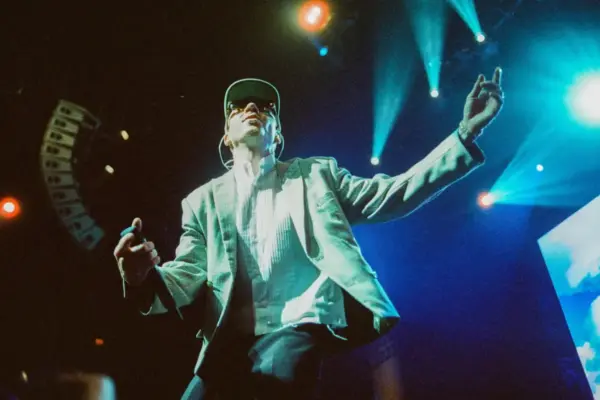
Kibo is set to headline The Canopy stage at the prestigious Reading + Leeds Festival. This performance represents a personal milestone. As a teenager, Kibo stubbornly refused to attend music festivals as a spectator, vowing only to step foot on festival grounds once he was booked to perform.
"I was like, ‘I ain’t going until they book me. Fuck that shit,’" Kibo laughs, reflecting on his younger self’s determination. "I’m gassed. It’s also gonna be some of my first performances post the project being out. So I’m excited to perform the songs, see what that set list looks like, and discover how people take that in."
"Now! That’s What I Call Kibo"
In addition to his core rap output, Kibo has confirmed the existence of a highly unconventional side project: a secret covers album titled Now! That’s What I Call Kibo.
The project features low-fi, karaoke-style reinterpretations of songs by indie singer-songwriter Ben Howard and pop artist Natasha Bedingfield. Though initially kept secret, Kibo has confirmed the project is real and slated for a future release, adding another layer of eccentricity to his growing catalog.
The Foundation for What Follows
Ultimately, Kibo views Kwengletaria: Ragamyff as a foundational release. Having spent years developing its mythology and sound, he designed the album to serve as a comprehensive entry point for new listeners.
By establishing his world-building style early on, Kibo has set up a flexible framework for his future work. Whether he continues to make grime-adjacent rap, experimental electronic music, or indie covers, his output will remain anchored in the philosophy of Kwengletarianism.