Executive Overview
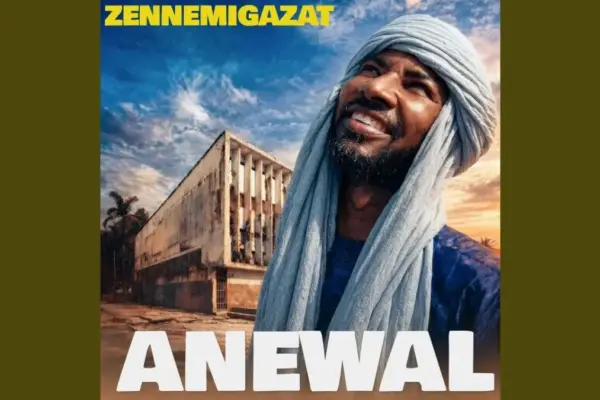
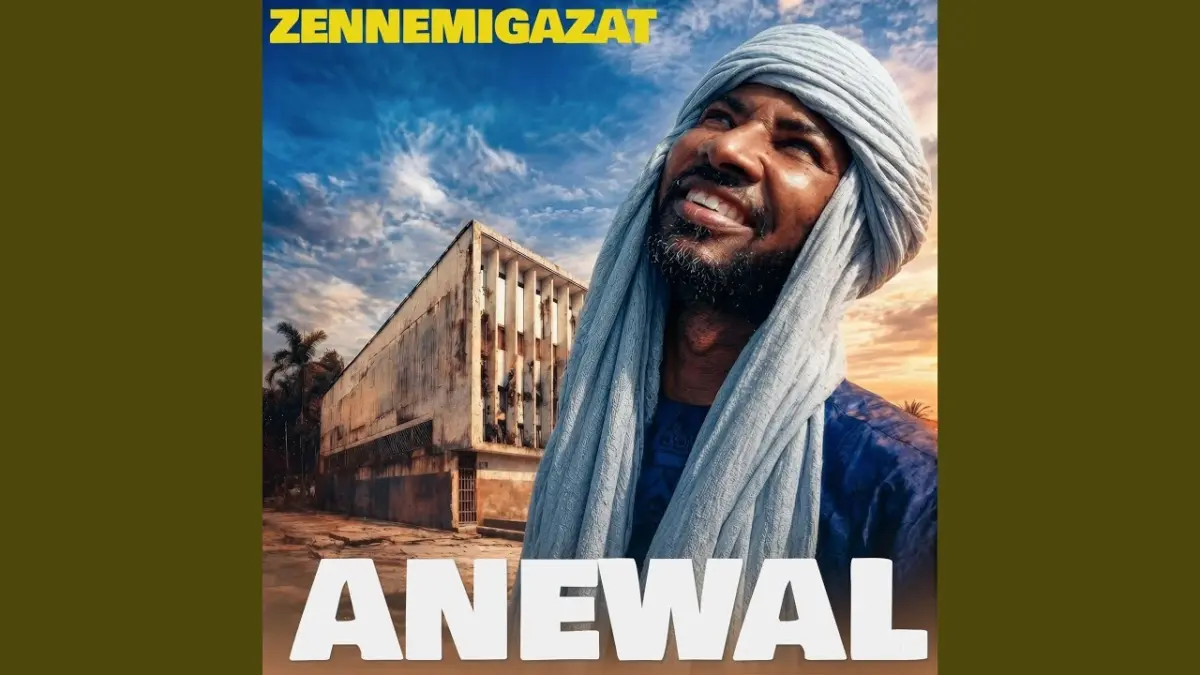
In the grand, interconnected tapestry of modern African popular music, rare is the collaboration that transcends not only vast geographical distances and linguistic borders, but entire stylistic ecosystems. The release of the single "Zennemigazat" in August, followed by the full-length album Timchar on October 10 via the prestigious World Music Network, represents precisely such a monumental convergence.
The project unites Alhousseini Mohamed Anivolla—internationally celebrated under his inherited moniker ANEWAL—a master of Tuareg desert blues from the arid expanses of Niger, with Cameroonian music legend Sam Fan Thomas, the architect behind the 1984 global dance-floor phenomenon "African Typic Collection."
This cross-continental masterwork fuses the mesmerizing, hypnotic cyclical guitar phrasing and rough-hewn vocal delivery of the Saharan nomad tradition with the vibrant, high-velocity pulse of makassi—Thomas’s accelerated, high-energy evolution of Cameroon’s classic makossa rhythm. Recorded in the bustling port city of Douala, Timchar (which translates from Tamashek to English as "things that have gone") serves as both a deeply personal lament dedicated to ANEWAL’s late mother and a sweeping pan-African testament to artistic reinvention.
This in-depth report explores the genesis of this historic collaboration, the rich biographical and cultural lineages of both artists, the sonic architecture of Timchar, and the broader implications of this trans-Saharan exchange for the global world music landscape.
Detailed Chronology: From Black-and-White Screens to the Studios of Douala
Act I: A Childhood in Niger and the Shadow of an Icon
The story of Timchar begins decades before a single microphone was plugged into a mixing console in Cameroon. It traces its roots back to the flickering, black-and-white television screens of Niger during the early 1980s. For a young Alhousseini Mohamed Anivolla, growing up amidst the traditional nomadic rhythms of the Tuareg people, the contemporary sounds of coastal West and Central Africa felt both wonderfully exotic and utterly irresistible.
It was on one such grainy broadcast that ANEWAL first laid eyes and ears on Sam Fan Thomas. The Cameroonian singer, outfitted in the vibrant performance aesthetics of the era, was captivating audiences with his dynamic stage presence and infectious grooves.
"We all wanted to dance like him," ANEWAL recalls, reflecting on the profound impact Thomas’s international smash hit, "African Typic Collection," had on his adolescent imagination across the Sahara.
Little did the young Nigerien viewer know that the Cameroonian star he sought to emulate on dusty village pathways would, decades later, become his direct collaborator, producer, and vocal partner.
Act II: The Nomadic Heritage and the Birth of Etran Finatawa
Before carving out his distinct solo identity under the name ANEWAL—which translates poetically from Tamashek as "walking man," a proud moniker inherited from his grandfather—Anivolla cemented his place in contemporary African music history as a founding member of Etran Finatawa.
Formed in 2004, Etran Finatawa broke groundbreaking cultural and musical ground. The ensemble deliberately united Tuareg musicians with members of the Wodaabe, their traditional pastoral neighbors and historical rivals for scarce Saharan pasturelands. By fusing their distinct vocal styles, percussion, and guitar work, the band forged a message of unity and resilience that resonated far beyond the borders of Niger.
Over two decades, Etran Finatawa took their powerful desert blues to all five inhabited continents, introducing international audiences to the complex sociopolitical realities and breathtaking artistry of Saharan nomads. The group’s global footprint expanded even further in 2020, when British electronic music production duo Disclosure sampled the band’s recordings to craft their acclaimed electronic track, "Etran."
Act III: The Douala Sessions and the Creation of Timchar
The realization of Timchar required a physical and artistic pilgrimage. ANEWAL traveled deep into the humid, coastal kinetic energy of Douala, Cameroon, setting up camp in Sam Fan Thomas’s private recording studio.
The resulting sessions were a masterclass in intercultural dialogue. ANEWAL brought the foundational aesthetics of desert blues: electric guitar phrases that loop, twist, and circle back upon themselves in hypnotic trances, underscored by his weathered, gravelly vocal laments. In turn, Thomas injected the sessions with his signature makassi groove—a faster, brass-laced, rhythmically complex iteration of traditional Cameroonian makossa.
The lead single, "Zennemigazat," dropped in August to widespread critical acclaim, serving as the official bridge between these two musical worlds. It set the stage for the full release of Timchar on October 10 through the World Music Network. More than just a collection of danceable tracks, the album acts as an emotional repository. Titled Timchar—"things that have gone"—the record is reverently dedicated to ANEWAL’s mother, weaving themes of loss, migration, memory, and endurance into every rhythm.
Supporting Context & Metrics: The Mechanics of Desert Blues and Makassi
To fully appreciate the weight of the ANEWAL and Sam Fan Thomas collaboration, one must analyze the two distinct musical lineages converging on Timchar.
1. The Saharan Guitar Tradition (Desert Blues / Ishumar)
Often categorized internationally as "desert blues" or ishumar music, the electric guitar styling of the Tuareg people emerged from decades of political marginalization, drought, and displacement across Mali, Niger, and Algeria. Artists like Tinariwen, Bombino, and ANEWAL transformed the electric guitar into a tool of political resistance, cultural preservation, and poetic expression.
- Sonic Characteristics: Characterized by modal pentatonic scales, cyclical guitar riffs that mimic the steady, undulating gait of a camel caravan (tichumarin), and call-and-response vocal arrangements.
- Cultural Significance: Serves as an oral history medium for nomadic communities navigating the transition from pastoral isolation to modern geopolitical pressures.
2. Cameroonian Makossa and Makassi
Originating in the urban centers of Douala among the Sawa ethnic groups, makossa became one of Africa’s dominant pop exports during the 1970s and 1980s, popularized globally by icons such as Manu Dibango and Sam Fan Thomas.
- Sonic Characteristics: Driven by prominent basslines, intricate brass sections, hand percussion, and an infectious, galloping 4/4 rhythm designed to dominate dance floors.
- Sam Fan Thomas’s Contribution (Makassi): Thomas accelerated the tempo, introduced brighter guitar leads, and layered high-energy choral refrains, creating makassi, a sub-genre tailored for maximum kinetic release.
Comparative Analytical Matrix
| Metric / Parameter | ANEWAL (Tuareg Desert Blues) | Sam Fan Thomas (Cameroonian Makassi) | The Timchar Synthesis |
|---|---|---|---|
| Geographic Origin | Agadez/Nomadic Sahara, Niger | Douala/Sanaga-Maritime, Cameroon | Bridging Central Africa and the Sahel |
| Primary Instrument | Electric Guitar (Cyclical, hypnotic) | Brass, Bass, and Percussion | Interlocking guitar lines over fast-paced grooves |
| Rhythmic Profile | Undulating, tranced-out 6/8 or slow 4/4 | High-velocity, galloping 4/4 dance beat | A high-energy dialogue between desert and coast |
| Thematic Focus | Nomadism, loss, ancestral memory, nature | Celebration, urban life, dance, social commentary | Grief (Timchar / "Things that have gone") meets joy |
Official Statements and Artistic Perspectives
The collaborative ethos behind Timchar is rooted in mutual respect across generational and regional divides. While reflecting on his journey from watching television in Niger to standing alongside his childhood idol in a Douala studio, ANEWAL has frequently emphasized the spiritual alignment of their respective cultures.
"Music does not recognize borders drawn on maps by colonial powers," ANEWAL noted during press interviews surrounding the release of "Zennemigazat." "When I was a boy watching Sam Fan Thomas on a black-and-white screen, I knew his music possessed a spirit of freedom. That same spirit guides the desert blues. Bringing makassi together with the soul of the Sahara is not a fusion; it is a family reunion of African rhythms."
Sam Fan Thomas, a seasoned veteran of the global music industry who navigated the golden age of African vinyl records and international touring, echoed this sentiment, praising ANEWAL’s uncompromising dedication to his nomadic heritage:
"Working with ANEWAL brought a fresh, grounding energy into my studio," Thomas stated. "The desert has its own heartbeat. When you combine the heavy, contemplative bends of his guitar with the explosive pulse of makassi, you create something entirely timeless. We are reminding the world that African music is an endless, breathing continuum."
Industry critics have similarly lauded the partnership. World Music Network representatives highlighted Timchar as a benchmark release for contemporary global roots music, praising its ability to honor traditional instrumentation while aggressively pushing sonic boundaries into uncharted territories.
Future Outlook: The Global Trajectory of Timchar
As Timchar continues to make waves across international radio charts, streaming platforms, and critical roundups following its October 10 release, the impact of this trans-Saharan collaboration is expected to resonate far beyond the immediate album cycle.
1. Re-mapping Pan-African Artistic Networks
For decades, African music markets have often been fractured along linguistic lines—anglophone, francophone, and lusophone—as well as geographical barriers like the Sahara Desert. Collaborations of this caliber actively dismantle these artificial silos, proving that contemporary African artists can look inward and across the continent for creative inspiration rather than relying solely on Western markets for validation.
2. Live Performance Prospects and Global Touring
With the critical success of "Zennemigazat" and the broader sonic tapestry of Timchar, promoters are increasingly eyeing potential live showcases that could bring ANEWAL and Sam Fan Thomas—alongside an ensemble of cross-cultural instrumentalists—to international festival stages. Such a production would offer a rare, visually and aurally stunning spectacle bridging the Sahelian desert aesthetics with Central African dance culture.
3. Preserving and Evolving Indigenous Traditions
Ultimately, Timchar establishes a vital blueprint for how ancient musical traditions can survive and thrive in the modern era. By refusing to treat desert blues or makassi as museum artifacts, ANEWAL and Sam Fan Thomas have injected both genres with contemporary vitality. As the "walking man" continues his artistic journey, Timchar stands as a monumental milestone—a bridge built across sands and rivers, dedicated to those who have passed, and engineered for those who are ready to dance.