EXECUTIVE OVERVIEW
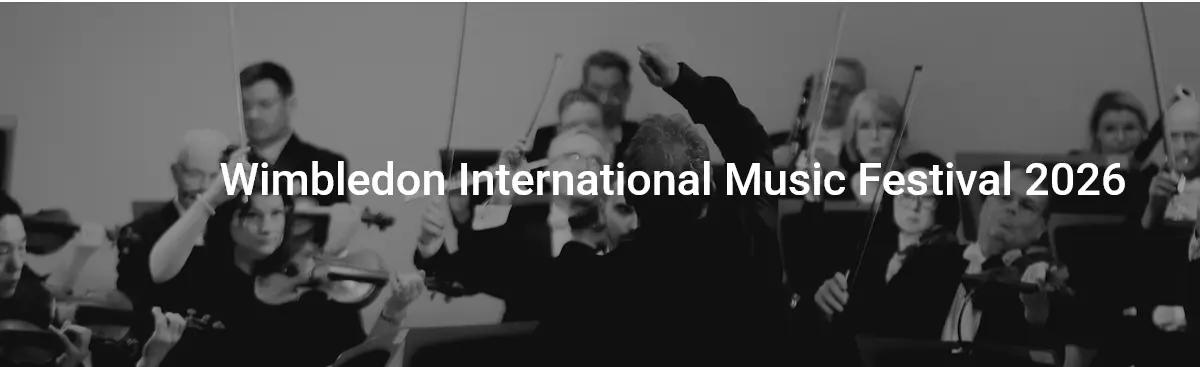
Next month, the London borough of Wimbledon will transform into a living, breathing tapestry of sound. The Wimbledon International Music Festival (WIMF) returns for its 18th annual edition, running from 7 to 29 November 2026. Featuring an ambitious slate of 26 distinct events, this year’s festival marks the second iteration under the artistic directorship of clarinettist Anthony Friend, who assumed the mantle from the festival’s founder, Anthony Wilkinson, in 2025.
While Wilkinson harbored a decades-long, foundational dream of establishing a dedicated, purpose-built concert hall in Wimbledon, Friend’s tenure has boldly redefined the boundaries of classical programming. Rather than being confined to traditional auditorium boxes, the 2026 festival leans heavily into the philosophy of "music in unexpected places." It merges elite, world-class performances with unorthodox, intimate venues that range from neighborhood pubs and subterranean wine bars to local libraries and specialized school auditoriums.
Balancing venerated masterworks of the classical and baroque canons with bold contemporary commissions, jazz crossovers, and multi-sensory experiences involving live painting and wine pairing, WIMF 2026 stands as a masterclass in modern cultural curation. This comprehensive preview explores the venues, artistic lineups, educational footprints, and structural philosophy driving one of the UK’s most dynamic autumn cultural fixtures.
VENUES AND GEOGRAPHY: REDEFINING THE CLASSICAL EXPERIENCE
The architectural footprint of the 2026 Wimbledon International Music Festival reflects a deliberate decentralization of classical music. While the iconic St John the Baptist church on Spencer Hill serves as the spiritual and acoustic anchor of the festival—hosting large-scale choral and orchestral works—the broader schedule invites audiences into the civic and social fabric of the community.
The Traditional Spaces
- St John the Baptist, Spencer Hill: The primary sanctuary for major choral and instrumental events, prized for its soaring acoustics and reverent atmosphere.
- Wimbledon High School (Auditorium): A versatile modern space accommodating medium-to-large chamber ensembles.
- Sacred Heart Church (Upper Hall): Offering an intimate acoustic environment well-suited for vocal and instrumental recitals.
- King’s College School, Wimbledon: A historic academic setting frequently utilized for chamber music and collaborative performances.
The Unconventional Stages
- Merton Arts Space (Wimbledon Library): Blurring the lines between public civic infrastructure and high art, providing accessible community engagement.
- The Rushmere (Ridgway): A traditional neighborhood pub transformed after hours into a vibrant cabaret and jazz club, hosting partnerships with legendary institutions like Ronnie Scott’s and the Orchestra of the Age of Enlightenment.
- Jeroboams (Wimbledon Village): An upscale wine merchant that hosts immersive, synesthetic events pairing regional classical repertoires with carefully selected international wines.
- New Wimbledon Theatre: Dedicated specifically to multi-generational outreach, hosting bespoke schools’ concerts designed to ignite a lifelong passion for music in young minds.
This diverse venue strategy not only democratizes access to high culture but also challenges performers to adapt their craft to radically different acoustic and social environments, heightening the intimacy between artist and audience.
DETAILED PROGRAMME CHRONOLOGY: HIGHLIGHTS OF WIMF 2026
Spanning three weeks in November, the 2026 calendar offers a breathtaking stylistic journey, moving seamlessly from Venetian polyphony to contemporary British concertos and Scandinavian folk fusions.
Opening Week: Sacred Splendour and Baroque Grandeur
The festival opens on a monumental scale with Sacred Splendour, a programme dedicated to the resplendent sacred repertoires of Venice and Madrid. The Academy Choir of Wimbledon takes center stage under the baton of George Inscoe—who also serves as Sub-Organist at St Paul’s Cathedral. They are joined by His Majesty’s Sagbutts and Cornetts, an ensemble renowned for their historically informed performances on period brass. This opening salvo establishes a high watermark for historical authenticity and vocal precision.
As the opening week progresses, audiences are treated to the return of Max Barley, Director of Music at Holy Trinity Sloane Square. Barley helms an immersive Bach programme featuring the cantata Gottes Zeit ist die allerbeste Zeit, the motet O Jesu Christ, meins Lebens Licht, and the soaring Magnificat.
Mid-Festival Masterworks: Chamber Music, Virtuosity, and Rising Stars
Chamber music aficionados will find a wealth of riches spread throughout the middle weekends. Festival Artistic Director Anthony Friend steps out of administrative duties and onto the stage to join the celebrated Quatuor Agate. Together, they will perform Mozart’s sublime Clarinet Quintet, alongside string quartets by Korngold and Schubert.
Spanish pianist Antonio Oyarzábal collaborates with the Solem Quartet for a formidable evening of piano quintets by Dvorak and Amy Beach, highlighting the festival’s commitment to unearthing overlooked gems of the late-Romantic and early-20th-century American canons. Meanwhile, Sinfonia Cymru members—led by Haim Choi—navigate a kaleidoscopic programme ranging from Mendelssohn’s effervescent Octet and Oli Mustonen’s Nonetto II to delicate, miniatures-focused configurations featuring works by Lili Boulanger, Louise Farrenc, and Jean Françaix.
The festival’s dedication to championing young virtuosi is embodied by violist Edgar Francis. Crowned winner of the prestigious Cecil Aronowitz International Viola Competition at just 22 years old, Francis partners with pianist Jâms Coleman for the annual Tertis Memorial Concert. Their programme traverses emotionally charged works by Clara and Robert Schumann, Rebecca Clarke, and Frank Bridge.
Sinfonia Smith Square, under the baton of conductor Charlotte Corderoy, delivers one of the orchestral highlights of the season. Their programme features Anna Clyne’s virtuosic, adrenaline-fueled orchestral showpiece Sound and fury, the world premiere of a new flugelhorn concerto titled Hargrove by Gabriel Jackson (written specifically for soloist Imogen Whitehead), and anchors itself with Mendelssohn’s evocative Scottish Symphony.
The Unorthodox and Immersive: Pubs, Wine Bars, and Candlelight
One of the most anticipated innovations of the 2026 festival is its residency at The Rushmere pub on Ridgway. Over two nights, the venue undergoes a dramatic sonic transformation. Jazz vocalist Natalie Williams and her band bring the sophisticated, smoky atmosphere of Soho’s Ronnie Scott’s Jazz Club to suburban Wimbledon. This is followed by a visit from the Orchestra of the Age of Enlightenment, who present their trademark, informal "Night Shift" format—stripping away classical formality to perform lively French Baroque music in an environment where audiences can enjoy a pint alongside Couperin and Rameau.
For those seeking contemplative serenity, the festival’s candlelit concerts offer a deeply atmospheric escape. The Lodestar Trio bridges centuries and geographies, blending rustic Nordic folk traditions with the timeless structural geometry of J.S. Bach. Similarly, soprano Ruby Hughes and lutenist Jonas Nordberg present an introspective evening dedicated entirely to the melancholic lute songs of John Dowland.

At Jeroboams wine bar in Wimbledon Village, the senses are engaged simultaneously. These events pair music directly with provenance: Neapolitan songs accompanied by southern Italian wines, and the sultry, rhythmic tangos of Astor Piazzolla paired with robust Argentinian varietals.
In an extraordinary display of synesthesia, cellist Jérémie Queyras and violinist Charlotte Spruit perform a live concert while painters create three large-scale canvases in real time on stage. These completed artworks will be made available for purchase immediately following the performance, bridging the visual and auditory arts in a single kinetic experience.
Grand Finale: Pianistic Mastery and Operatic Splendour
The festival closes on a high note with two distinct, crown-jewel events. Piano enthusiasts can look forward to a breathtaking recital by David Khrikuli—a laureate of the legendary Chopin International Piano Competition—who will tackle monumental works by Bach, Chopin, Ravel, and Rachmaninoff.
Additionally, the festival closes its official run with a glittering gala recital featuring rising opera stars from the English National Opera (ENO). Accompanied by piano, these emerging vocal powerhouses will belt out beloved arias, paired with English sparkling wine courtesy of Roebuck Estates, fusing high-end viticulture with world-class vocal art.
Finally, the festival secures its legendary status with the return of pianist Angela Hewitt. Making her third appearance at WIMF, Hewitt’s refined touch and scholarly interpretation provide a fittingly transcendent conclusion to the 18-day celebration.
COMMUNITY IMPACT AND EDUCATIONAL METRICS
While the public-facing concert schedule garners critical acclaim, the beating heart of the Wimbledon International Music Festival lies in its extensive educational outreach. Through a long-standing, robust partnership with the Merton Music Foundation (MMF), the festival reaches thousands of young people across the borough annually.
Rather than treating educational programming as an afterthought, WIMF embeds it directly into the festival architecture. The collaboration encompasses:
- Dedicated Schools’ Concerts: Hosted at the New Wimbledon Theatre, these tailored orchestral performances introduce primary and secondary students to live classical instrumentation in a grand theatrical setting.
- Instrumental Workshops and Masterclasses: Giving aspiring young musicians direct access to visiting international soloists and chamber musicians.
- Subsidized Ticketing Initiatives: Ensuring that economic barriers do not prevent local youth and lower-income families from experiencing world-class performances.
Through these concerted efforts, the festival acts not merely as a temporary showcase of elite talent, but as an active cultivator of the next generation of music lovers, performers, and patrons.
THE ANTHONY FRIEND ERA: STRATEGIC CONTINUITY AND EVOLUTION
The transition of artistic leadership in 2025 from founder Anthony Wilkinson to Anthony Friend was widely anticipated within British classical circles. Wilkinson steered WIMF from its infancy in 2009 through sixteen successful years, establishing its reputation for uncompromising artistic integrity.
However, Friend’s second year at the helm demonstrates a distinct strategic evolution. While retaining the core pillars of chamber music excellence, choral majesty, and solo recitals, Friend has injected a spirit of urban adventurousness into the programme. By moving classical music out of strictly ecclesiastical and academic domains and into pubs, wine bars, and libraries, Friend is actively combating the demographic stagnation that plagues much of the traditional classical sector.
This curatorial flexibility proves that high art and casual community spaces are not mutually exclusive. By pairing Bach with candlelight, tango with Argentine wine, and chamber music with local craft beer, WIMF is successfully cultivating a broader, younger, and more curious audience base without sacrificing an ounce of musical rigor.
FUTURE OUTLOOK AND CONCLUSION
As tickets go on sale and preparations finalize for the 18th edition, the Wimbledon International Music Festival stands in rude health. It occupies a unique space on the British cultural calendar: intimate enough to preserve a sense of community discovery, yet ambitious enough to attract artists of the caliber of Angela Hewitt, the Orchestra of the Age of Enlightenment, and the rising stars of the ENO.
The 2026 festival proves that classical music does not need to retreat into ivory towers to survive; rather, it thrives when brought into the light of neighborhood pubs, candlelit church pews, and bustling community hubs.
For full programmatic breakdowns, ticketing information, and venue accessibility details, audiences are encouraged to visit the official Wimbledon International Music Festival Website. Whether you are a lifelong aficionado of Baroque counterpoint or a curious newcomer looking to experience jazz in a local pub, WIMF 2026 promises an unforgettable autumnal journey through sound.