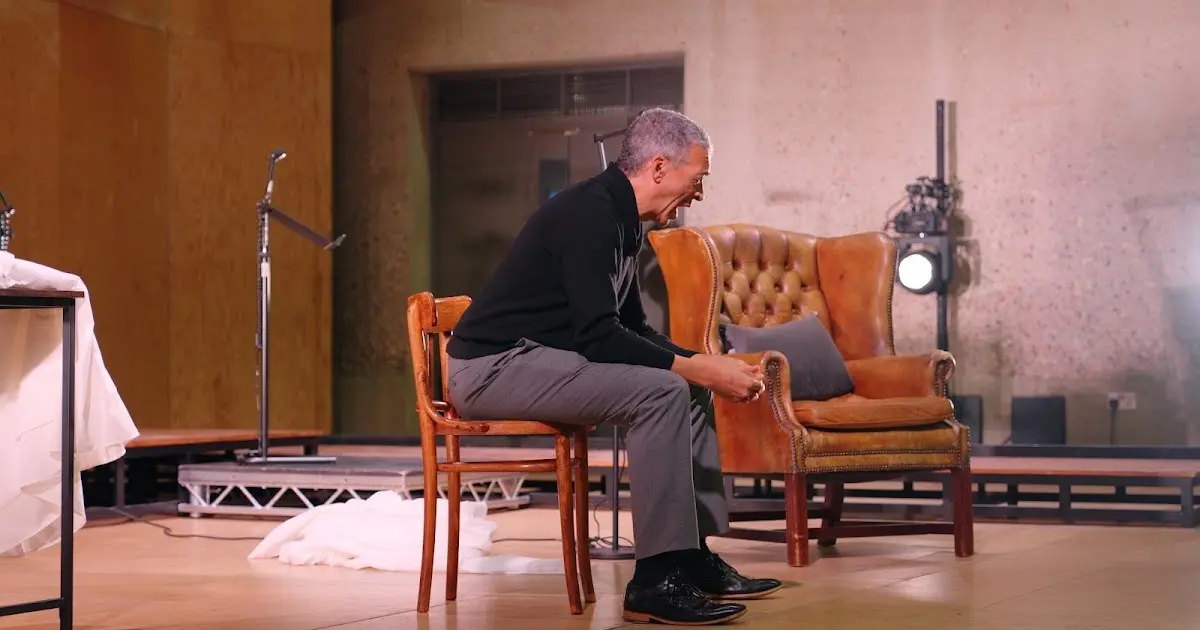
On October 24, the Britten Studio at Snape Maltings will bear witness to the world premiere of My Father Cannot Speak, a deeply personal and ambitious new 70-minute, one-act opera composed by Ben Parry with a libretto by Garth Bardsley. Featuring celebrated baritone Roderick Williams as its sole vocalist, the production is driven by an intimate six-piece instrumental ensemble—comprising flute, clarinet, violin, cello, double bass, and accordion—conducted by Parry and directed by Bardsley.
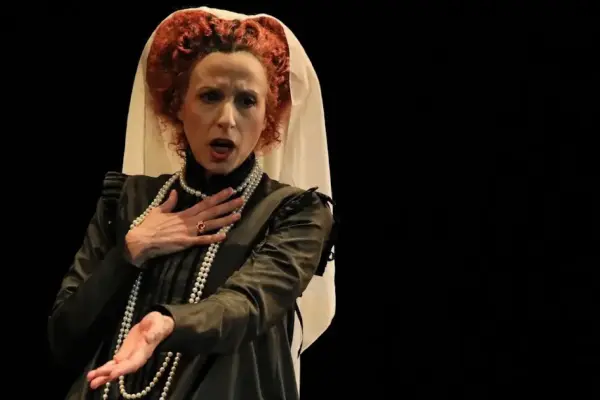
This landmark production represents the pinnacle of a 25-year creative partnership between Parry and Bardsley, scaling up their previous choral and vocal collaborations into a fully realized, theatrical operatic experience. The premiere evening at Snape Maltings will also feature their acclaimed song cycle Songs For Girls Of A Certain Age, performed by legendary mezzo-soprano Sarah Connolly and pianist Malcolm Martineau.
My Father Cannot Speak tackles universal yet rarely explored themes: male vulnerability, mid-life maturation, historical erasure, and the complex mechanics of generational inheritance. Inspired by the creators’ respective personal histories—Bardsley’s search for his adopted father’s lost lineage and Parry’s experiences caring for a father incapacitated by a stroke—the opera establishes a raw, unfiltered dialogue between a middle-aged man and his silent patriarch. Eschewing the conventional grandeur of grand opera in favor of a portable, chamber-scale format designed for festivals and smaller venues, the work proves that profound emotional resonance requires neither massive casts nor sprawling orchestras. Instead, it offers a masterclass in modern storytelling, questioning how we define our own identities when the historical bedrock of our families turns out to be unrecoverable.
Detailed Chronology: From University Sketches to Snape Maltings
The genesis of My Father Cannot Speak stretches back decades, rooted in a creative friendship forged during the composers’ university days. Initially collaborating on lighthearted student sketches and cabaret acts, Ben Parry and Garth Bardsley maintained a long-dormant creative partnership until a fateful family visit in 2002. At the time, Bardsley was developing a musical theater project and invited Parry to compose the score. Though that specific endeavor remains a work in progress, it successfully reignited a collaborative engine that has since yielded internationally performed choral works, song cycles, and now, a major opera.
The Evolution of a Partnership
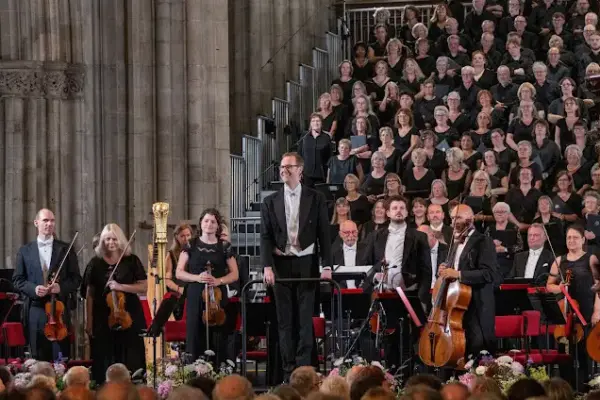
Throughout the 2000s and 2010s, Parry and Bardsley steadily built an impressive catalogue of vocal and choral music. Bardsley began writing poetry specifically tailored for musical settings, prioritizing natural speech rhythms and structural emotional spaces over antiquated poetic tropes. This refined collaborative dynamic produced milestones such as Spring Sonnets, commissioned for unaccompanied chorus and premiered by the BBC Singers in 2013, and the expansive 2015 choral piece Seven Goodly Reasons to Sing. Their work quickly transcended national borders, finding audiences at prestigious institutions including the BBC Proms and the Kennedy Center in Washington, D.C.
Parallel to these large-scale choral successes, the duo explored intimate vocal expression, notably with their 2012 cycle Songs For Girls Of A Certain Age. Informed by Bardsley’s experiences raising two daughters—including a poignant reflection on the passing of time and dying flowers that inspired the song "Flowers"—this cycle laid the structural and expressive groundwork for what would eventually become their operatic debut.
The Catalyst and Creation of My Father Cannot Speak
The spark for My Father Cannot Speak ignited when Bardsley penned a series of poems exploring male familial relationships from a mature perspective. One poem in particular—eponymous with the opera—struck an immediate, visceral chord with both creators.
The thematic weight of the piece draws directly from the duo’s real-life experiences with familial absence and medical trauma. Bardsley’s father was adopted, and a catastrophic fire destroyed all records of his biological lineage, leaving a permanent, haunting vacuum in the family’s ancestral history. Concurrently, Parry’s father suffered a debilitating stroke that reduced his verbal communication to binary confirmations of "yes" or "no," forcing all complex thoughts to be painstakingly transcribed onto paper.
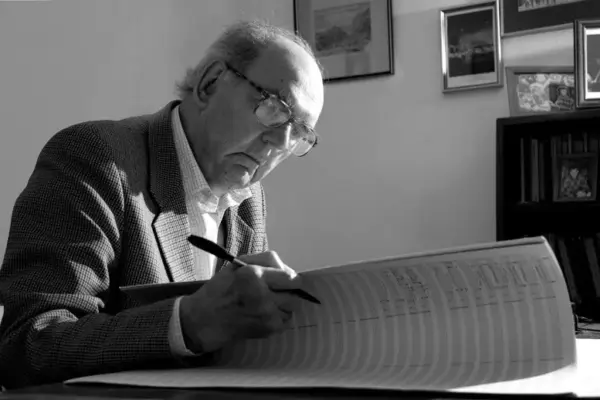
Armed with these raw, biographical truths, Parry retreated to Imogen Holst’s historic flat in Aldeburgh. Described by the composer as a "magical two weeks," this residency served as the crucible where the majority of the score was written. Bardsley refined the libretto to ensure it left ample room for the instrumental ensemble to carry the emotional subtext, particularly during moments when the father’s voice is entirely absent.
During rehearsal weeks at the Britten Studio, working closely with Roderick Williams and Britten Pears Arts, the creators transformed their intimate chamber piece into a physically and vocally demanding tour de force. The resulting production captures not only the specific anguish of their personal histories but also a universal meditation on identity, truth, and reconciliation.
Supporting Context & Metrics: The Anatomy of a Chamber Opera
My Father Cannot Speak breaks away from conventional operatic paradigms through its radical economy of scale and concentrated emotional focus. Designed to counter the modern economic contractions facing the performing arts, the production balances rigorous artistic ambition with practical portability.
Ben Parry (Composer/Conductor), Garth Bardsley (Librettist/Director)
Primary Setting
Britten Studio, Snape Maltings
Companion Work
Songs For Girls Of A Certain Age (Sarah Connolly & Malcolm Martineau)
Musical and Dramaturgical Architecture
The opera’s structure hinges on a psychological and narrative framing device: the protagonist begins the work with an incomplete aria that cannot be finished until the opera’s final moments. Using the powerful metaphor of a closed museum, the narrative explores the philosophical dilemma that an individual cannot truly understand who they are without knowing where they come from.
The work is a grueling test of endurance and theatricality for its sole performer. Roderick Williams bears the entirety of the vocal load, seamlessly shifting between direct storytelling, character narration, and direct engagement with the audience. With a stage footprint that relies on six portable instruments—featuring the wheezing, breath-like timbres of the accordion to evoke the labored respiration and silence of the stroke-stricken father—the piece offers a full-scale operatic experience without the prohibitive logistical overhead of a traditional orchestra and chorus.
Financial and Artistic Resilience
Funding for the production required significant self-reliance, with the creators playing an active role in assembling the financial backing. In an era marked by widespread funding cuts and economic anxiety across the cultural sector, Parry and Bardsley approached the project with an ethos of defiance. As they noted during rehearsals, creative expression cannot yield to financial adversity; rather, artists must "sing and play louder," trusting that truth and beauty remain enduring human necessities.
Official Statements & Creative Insights
The collaborative philosophy underpinning My Father Cannot Speak reflects decades of mutual respect, artistic experimentation, and a shared commitment to making opera accessible rather than elitist.
On the Emotional Core and Inspiration
Reflecting on the deeply personal nature of the work, librettist and director Garth Bardsley noted the profound impact of seeing the piece brought to life:
"My initial response to the work was simply ‘wow.’ It has come to fruition and it works on every level. We wanted to explore ideas of loss, the lack of historical footing, and the heavy burden of truth. The irony at the core of the piece is that by the end, the son puts words into his father’s mouth, effectively creating a helpful lie out of a desperate need for closure."
Composer Ben Parry emphasized the unique creative environment that shaped the score during his residency in Aldeburgh:
"Writing the majority of the opera while staying in Imogen Holst’s flat in Aldeburgh was a magical two weeks. We wanted to write something that was truly performable, listenable, and watchable—a piece that proves opera doesn’t need to be massive to be profound. We are deeply grateful to Britten Pears Arts for giving us the run of Snape for a week to refine this vision."
On the Realities of Modern Opera Production
Addressing the challenges of staging new work in the current economic climate, the duo emphasized that the arts must remain resilient. Bardsley observed:
"It is a worrying time when considering money and the arts, but you cannot simply give up. You need to sing and play louder. Truth and beauty will always endure, and the enthusiastic response from audiences proves that this story resonates deeply with people’s own lived experiences."
Furthermore, both creators rejected the notion that opera is an inherently exclusionary or elitist art form. By prioritizing narrative clarity, emotional accessibility, and a streamlined instrumental footprint, My Father Cannot Speak invites audiences into an intimate theatrical journey that defies traditional boundaries between high art and contemporary storytelling.
Future Outlook & Legacy
As the dust settles on the world premiere at Snape Maltings, the trajectory for My Father Cannot Speak points toward an active and expansive future. The October 24 performance has been captured in high-fidelity recordings for archival preservation, ensuring that this milestone production is documented for future study and retrospective analysis.
Expanding the Footprint: London and Beyond
Interest in subsequent stagings has been immediate and enthusiastic. Baritone Roderick Williams has expressed a strong commitment to championing the role in future runs, and Britten Pears Arts remains supportive of the work’s ongoing life. The immediate strategic priority for the creative team is securing a high-profile London premiere, allowing the production to reach metropolitan audiences and institutional programmers.
Because the opera was intentionally engineered for portability—requiring only six instrumentalists and a single versatile performer—it is uniquely positioned for the modern touring circuit. Festival directors and regional theater producers seeking ambitious, high-impact contemporary opera with minimal logistical friction have found an ideal template in Parry and Bardsley’s creation.
A Lasting Contribution to British Music Theater
For Ben Parry and Garth Bardsley, My Father Cannot Speak marks a definitive maturation of a 25-year artistic partnership. By bridging the gap between intimate song cycles and large-scale dramatic narrative, they have carved out a distinctive space within contemporary British music theater.
Whether the piece is classified formally as an opera or embraced as an expanded one-man music-theater show, its success at Snape Maltings signals that powerful storytelling requires neither excess nor artifice. As Bardsley remarked following the rehearsal process, the desire to do more work in the operatic medium is already taking root. With My Father Cannot Speak, Parry and Bardsley have not only given voice to the unsaid silences of their own family histories—they have delivered a vital, enduring addition to the contemporary operatic canon.