Executive Overview
For centuries, butterflies have basked in the bright light of human adoration, celebrated for their vibrant hues, predictable diurnal habits, and gentle symbolism of rebirth. Moths, by contrast, have been relegated to the gloomy margins of folklore, historically cast as harbingers of ruin, nocturnal pests, and spectral parasites. With their secretive habits, powdery wings, and eerie monikers—such as the Lunar Thorn, the Cloaked Carpet, and the notorious Death’s-head Hawk-moth—they appear custom-made for Halloween folklore.
Yet, beneath this shroud of cultural suspicion lies an extraordinary, ecologically vital, and visually breathtaking suborder of insects. As modern environmental pressures push native populations into sharp, alarming declines, a cultural and scientific reckoning is underway. Entomologists, ecologists, and artists are leading a charge to rehabilitate the reputation of the moth.
From backyard conservation initiatives in suburban England to cutting-edge public art installations and historical analyses of European printmaking, society is beginning to look past the old tropes. Far from being mere fabric-munching menaces, moths are sophisticated nocturnal pollinators, delicate ecological indicators, and muses for some of history’s most accomplished naturalists and artists. This comprehensive review examines the cultural history, scientific reality, artistic legacy, and fragile future of one of nature’s most misunderstood creatures.
Detailed Chronology: A History of Human-Moth Relations
The relationship between humanity and the lepidopteran suborder Heterocera (moths) is defined by an enduring tension: admiration for their metamorphic wizardry versus anxiety over their impact on agriculture and textiles.
Ancient and Linguistic Roots
The hostility humans harbor toward moths is deeply embedded in etymology. In Old English, the root words for "moth" signified a parasitic, destructive entity that nibbled away at the edges of human survival. Long before formal taxonomy existed, rural European communities recognized the caterpillar stage as an agrarian threat. Historical archives preserved at institutions like the Rijksmuseum in Amsterdam vividly illustrate this adversarial relationship.
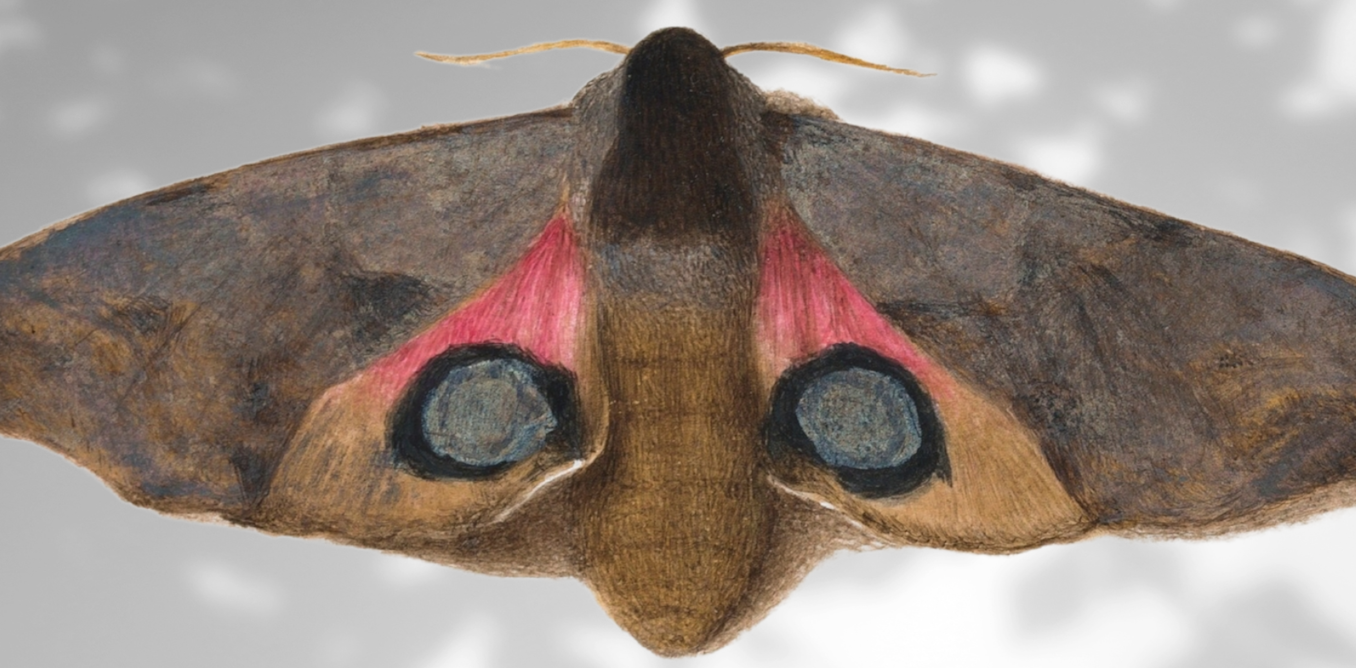
Works from the late 16th and early 17th centuries—such as printmaker C. Galle’s 1594 engraving Hunting for Moths—depict villagers venturing out with lanterns and branches to beat bushes and systematically destroy moths before they could oviposit upon and devastate vital crops. Similarly, domestic scenes by artists like Jan Luyken capture women anxiously inspecting household linens for the distinct, ragged holes left by larval infestations. This dual front of domestic annoyance and crop vulnerability forged a cultural baseline that painted moths as enemies of the hearth and harvest.
The Age of Natural History and Artistic Discovery
As European exploration expanded in the 17th and 18th centuries, naturalists began to document the staggering biodiversity of the insect world, elevating moths from mere pests to subjects of profound scientific and artistic inquiry.
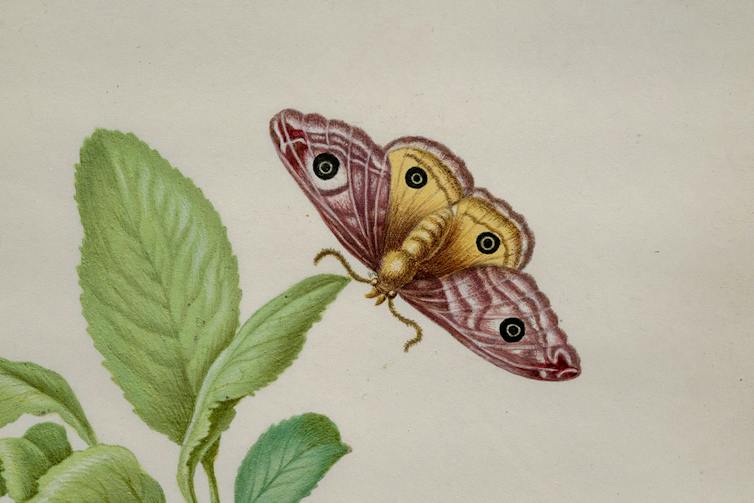
- 1647–1717: The pioneering German naturalist and scientific illustrator Maria Sibylla Merian revolutionized entomology. Publishing exhaustive studies on the metamorphosis of what she termed "summer-birds" and "moth-birds," Merian became the first artist to systematically contextualize moths within their natural habitats, meticulously pairing specific species with their preferred host plants.
- 1778: Indian master painter Shaikh Zain al–Din captured the cultural shift toward objective observation. His exquisite watercolour for the British administration in India depicted an Orange-Headed Ground Thrush alongside a Death’s-head Hawk-moth resting on a Purple Ebony Orchid branch. Rather than rendering the insect as a demonic omen, Zain al–Din portrayed it engaged in its natural, quiet ecological rhythm.
- Mid-20th Century: Modern artists began to abstract the mysterious aura of nocturnal insects. Scottish painter John Maxwell explored the nocturnal garden in 1959 with vibrant, abstracted works such as Night Flowers and Garden at Night (Moth), capturing the surreal atmosphere of dusk and darkness.
- Late 20th Century (1991): Pop culture cemented the moth’s eerie reputation with the release of the psychological thriller The Silence of the Lambs. The film prominently featured the Death’s-head Hawk-moth—complete with its skull-like thoracic marking and mouse-like squeak—as a chilling calling card, firmly embedding the insect into modern horror iconography.
- Contemporary Era (2024–Present): A new wave of creators is radically reframing the moth. Peruvian contemporary artist Lorena Solís Bravo explored queer ecology in the film myth, moth, mother, while printmaker Sarah Gillespie and public sculptor Alexandra Daisy Ginsberg have developed immersive installations (such as The Length of a Moment in Oxford) to visualize the unseen flight paths and sensory worlds of declining moth populations.
Supporting Context & Metrics: The Science and Diversity of Moths
To understand moths purely through the lens of household pests is to overlook a staggering biological empire. While public perception fixates on the few species that damage woolens, the reality of moth diversity is vast, complex, and vital to planetary health.
Diversity and Scale
- Species Richness: In the United Kingdom alone, there are approximately 2,500 distinct species of moths, dwarfing the country’s native butterfly count of around 60 species. Globally, estimates suggest there may be upwards of 160,000 to 500,000 moth species, with many yet to be scientifically described.
- The Clothes Moth Myth: Despite popular anxiety, out of thousands of species, only two—the Common Clothes Moth (Tineola bisselliella) and the Case-Bearing Clothes Moth (Tinea pellionella)—feed on animal-based fabrics like wool, fur, and feathers. The vast majority of adult moths possess specialized mouthparts tailored for sipping nectar, while others do not feed at all, living solely off energy reserves accumulated during their caterpillar stage.
Ecological Pillars: The Night Shift
While bees and butterflies dominate daytime pollination narratives, moths run the critical night shift. Ecological research demonstrates that nocturnal pollinators work just as hard—and in some ecosystems, harder—than daytime insects.
- Many heavy-scented, pale-colored nocturnal flowers rely exclusively on moths for reproduction.
- Moths act as a foundational trophic resource. Their eggs, caterpillars, and adult forms provide essential sustenance for myriad birds, bats, small mammals, and amphibians. Without the nocturnal insect biomass, avian populations would face catastrophic collapse.
Environmental Indicators and Threats
Moths are acutely sensitive to environmental shifts, making them premier bioindicators for habitat health and climate change. However, this sensitivity has placed them on the front lines of the global biodiversity crisis.
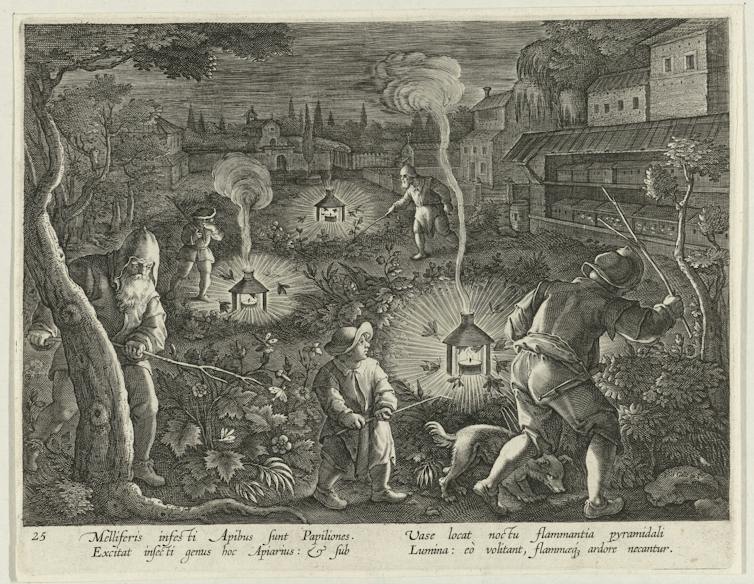
- Population Decline: Driven by intensive agriculture, the loss of wildflower-rich meadows, pesticide use, and artificial light pollution (which disorients nocturnal navigation), moth populations across Europe and North America are experiencing alarming, precipitous declines. According to organizations like Butterfly Conservation, many once-common species have seen their numbers drop by over 50% in recent decades.
- Climatic Shifts: While general trends point downward, warming temperatures are shifting ranges northward and favoring certain adaptable or day-flying species, such as the Hummingbird Hawk-moth, which has increasingly established residency in northern latitudes.
Official Statements and Expert Perspectives
As conservationists and researchers rally to protect these nocturnal invertebrates, leading voices are reshaping how the public perceives and interacts with moths.
"I wasn’t looking for moths when I started drawing them around ten years ago; they came and found me. Their numbers may be in appalling decline, but for me, their presence has become ever more insistent."
— Sarah Gillespie, Printmaker and Mezzotint Artist
Gillespie’s artistic journey mirrors a growing phenomenon among naturalists: amateur and professional engagement through citizen science. Backyard moth-trapping using specialized equipment like Skinner traps has surged in popularity across suburban gardens. Participants report discovering an astonishing variety of micro- and macro-moths right outside their back doors.
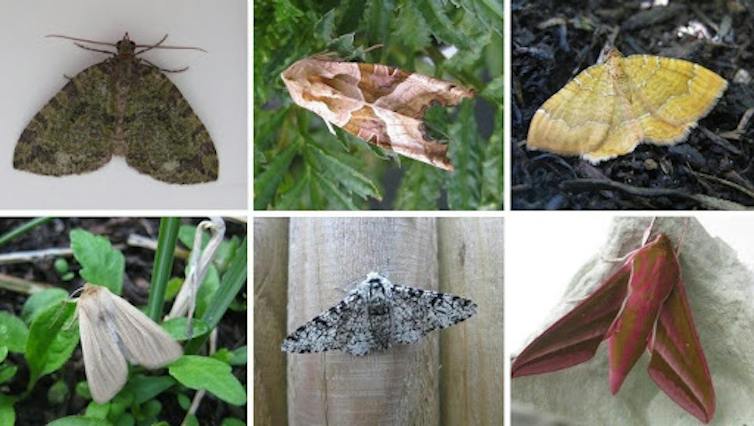
"Some of them—most famously, the luminously pink and green Elephant Hawk-moth—are disarmingly cute and docile and will happily sit on your hand."
— Walter Shaw, Naturalist and Environmental Writer
This tactile engagement helps dismantle decades of conditioned fear. When children and adults alike observe the iridescent sheen of a Peppered Moth, the intricate geometric camouflage of an Angle Shades, or the jewel-toned splendor of an Elephant Hawk-moth, the cultural narrative shifts from revulsion to wonder.
Conservation biologists emphasize that saving moths requires systemic changes in how we manage public spaces and private lands. Entomological bodies urge municipalities to reduce light pollution by modifying street lighting and encourage homeowners to leave wild corners in gardens to support overwintering caterpillars.
Future Outlook: Illuminating the Path Forward
The trajectory of human-moth relations stands at a critical crossroads. For generations, our primary interactions with these creatures were defensive—aimed at exterminating larvae or shielding wardrobes. Today, as ecological literacy deepens, our relationship is transitioning from adversarial management to active stewardship and aesthetic appreciation.
1. Technological Integration in Conservation
The future of moth monitoring relies heavily on technological innovation. Automated camera traps, AI-driven acoustic and visual identification apps, and environmental DNA (eDNA) sampling of foliage are allowing researchers to track nocturnal biodiversity with unprecedented precision. These tools enable conservationists to map declining species distribution rapidly and implement targeted habitat restoration.
2. Rewilding the Night
Urban and suburban planning is slowly waking up to the ecological necessity of "dark skies." Initiatives to curb light pollution—which traps moths in fatal circles of exhaustion around artificial lamps or draws them away from feeding and mating grounds—are gaining legislative traction in several European and North American municipalities. Planting nocturnal pollinator gardens featuring evening-primrose, honeysuckle, and night-scented stock is becoming a cornerstone of modern ecological landscaping.
3. Cultural Reimagining
As artists, scientists, and writers continue to spotlight the hidden beauty of the suborder, public perception will inevitably follow. The moth is shedding its cinematic role as a symbol of dread and reclaiming its rightful place as an essential thread in the ecological tapestry.
Ultimately, learning to love moths is an exercise in expanding our ecological empathy. It requires us to look beyond the sunlit meadows and appreciate the complex, shadowy machinery that keeps our natural world functioning after dark. By embracing the moth, humanity takes a vital step toward healing the fractured relationship between the built environment and the nocturnal wild.