Executive Overview
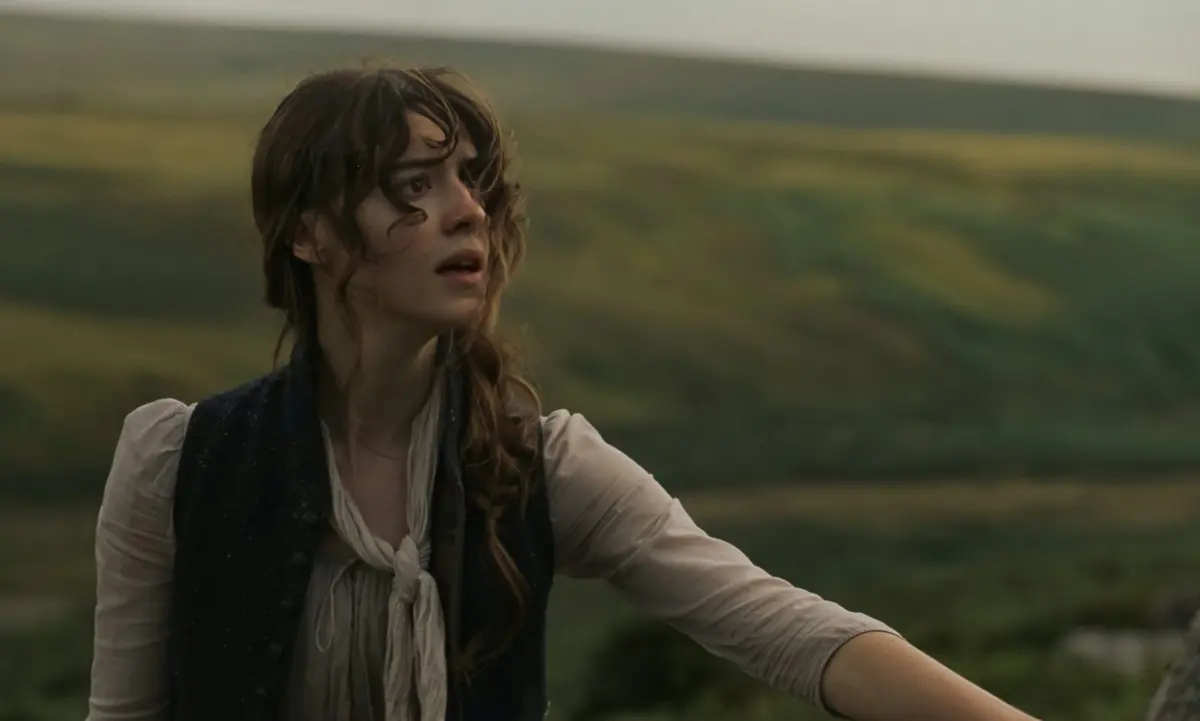
Georgia Oakley’s fresh cinematic adaptation of Jane Austen’s beloved 1811 novel, Sense and Sensibility, immediately entrances audiences with its stunning visual poetry. Featuring sweeping pastoral landscapes, dramatic rocky seascapes, and meticulously textured interior shots, the film succeeds brilliantly as a sensory artifact of the Georgian era. The production’s command of natural light, tactile fabrics, and resonant soundscapes breathes intoxicating life into the world of sisters Elinor and Marianne Dashwood—portrayed by Daisy Edgar-Jones and Esmée Creed-Miles, respectively.
However, beneath the picturesque veneer of Norland House Park and its wild, overgrown stone steps lies a distinct tension between contemporary cinematic aesthetic choices and the rigid social realities of the late 18th century. By prioritizing modern emotional expression over period-authentic social codes—particularly regarding personal grooming and the strict cultural mechanics of dance—the adaptation occasionally shatters its own illusion. In a society where physical deportment, posture, and spatial movement served as the ultimate currency of status, Oakley’s avant-garde choreography and loose character styling function more as modern theatrical spectacles than period-accurate reflections of Georgian sociability. This comprehensive review examines the friction between artistic license and historical fidelity within the new film, exploring how deviations in hair styling and dance choreography pull audiences out of the candlelit ballrooms of the 1790s and drop them firmly back into the 21st century.
Detailed Chronology: Translating Austen’s World to the Modern Screen
To understand the impact of Oakley’s creative choices, it is necessary to examine how the production constructs its fictional universe from the ground up, moving from the quiet intimacy of the Dashwood estate to the bustling public spaces of Regency-era social hubs.
Phase One: The Aesthetic Construction of Norland and Beyond
From the opening frames, the production establishes an immersive pastoral atmosphere. The cinematography revels in naturalism, capturing rugged coastlines and overgrown gardens that reflect the internal emotional turbulence of the characters. Every visual element—from the homespun wools and elegant silks to the flickering candlelight—is meticulously engineered to evoke the sensory landscape of the Georgian gentry.
Yet, this dedication to visual texture occasionally falters when it intersects with the sociological realities of the era. The Dashwood sisters, while grieving the loss of their home and navigating the precarious financial landscape forced upon them by primogeniture, are styled in ways that betray strict social norms. Most notably, Marianne’s unkempt, stringy locks and Elinor’s soft, flowing waves serve as immediate psychological shorthand for their distinct personalities—sensibility versus sense. Historically, however, such loose hair would have breached the fundamental codes of female respectability. Among the gentry and nobility, appearance and physical movement were outward manifestations of internal civility; hair was pinned up daily to signal membership in polite society, setting the upper classes visibly apart from their social inferiors.
Phase Two: The Introduction of the "Hop" and Country Revelries
The narrative’s historical friction reaches its zenith during the film’s central dance sequences. Dance was not merely a recreational pastime in Austen’s world; it was the primary theater of courtship, alliance-building, and social mobility. Young men and women underwent rigorous instruction from early childhood, mastering posture, footwork, and eye contact to demonstrate grace under pressure.
In the film, these sequences are broken into two distinct set-pieces: an informal "hop" in the park and a grand London ballroom dance. The inclusion of the "hop" is particularly noteworthy. In Austen’s original novel, formal country dances and assemblies form the backbone of social interaction, while informal hops were historically relegated to the "meaner sorts" of society. The action of hopping directly opposed the core tenets of Georgian decorum, politeness, and civility.
When Sir John Middleton (played by Turlough Convery) casually mentions to Marianne that her love interest, Mr. Willoughby (Frank Dillane), attended a "little hop in the park" where he danced from eight o’clock until four in the morning without sitting down, it serves in the novel as a subtle indicator of Willoughby’s reckless disregard for convention. In the film, however, this moment is translated into a vibrant, highly physical sequence that blends traditional steps with contemporary choreography, prioritizing raw emotional catharsis over historical plausibility.
Phase Three: The London Ballroom and Modern Choreography
The climax of this choreographic departure occurs in the London ballroom scene. Here, Elinor finds herself dancing with Edward Ferrars (George MacKay), the man she loves but cannot socially or financially afford to marry.
In both Austen’s text and actual Georgian society, the formal ball was the absolute epitome of embodied politeness. Serpentine lines, precise and measured footwork, and controlled eye contact were vital. They signaled not only a competent dance partner but a reliable, well-regulated marriage prospect.
In Oakley’s adaptation, the choreography abandons these rigid geometrical constraints. The dancers execute exaggerated sweeping arms, acrobatic lifts, and over-arched backbends that borrow heavily from contemporary musical theatre and modern dance lexicon. While these movements successfully visualize the soaring emotions and romantic anguish of the characters, they simultaneously rupture the historical continuity of the scene, leaving period-drama purists starkly aware of the 21st-century hand behind the camera.
Supporting Context & Metrics: The Sociological Weight of Georgian Dance
To fully appreciate the critique of the film’s choreography, one must analyze the deep historical and sociological weight attached to physical movement in late 18th-century Britain.
The Currency of Comportment
During the Georgian and Regency periods, class boundaries were strictly maintained through visual and behavioral markers. Taste, status, and wealth were publicly assessed via clothing, consumer goods, and bodily carriage. A lack of proper physical control—slouching, erratic movements, or ungraceful footwork—signified ineptitude, meekness, and social inferiority.
| Social Rank / Setting | Acceptable Dance Form | Societal Implication & Purpose |
|---|---|---|
| Upper Gentry & Nobility | Formal Country Dances & Assemblies | Demonstration of poise, civility, peer alignment, and elite courtship suitability. |
| Middling Sorts | Regulated Assembly Rooms | Display of upward mobility, moral restraint, and adherence to polite standards. |
| "Meaner Sorts" / Lower Classes | Informal "Hops" & Country Revels | Unregulated physical expression, localized festivity, devoid of elite marriage market utility. |
As outlined in historical dance literature, boys and girls were drilled in the art of the bow, the curtsey, and spatial awareness for years before entering the marriage market. The ballroom was an arena of surveillance; every misstep was noticed, judged, and integrated into a person’s social reputation.
The Evolution of Austen Adaptations
The inclusion of dance as a narrative crucible is a well-established tradition in Austen screen adaptations. Directors consistently use movement to chart emotional intimacy and social tension:
- Emma (2020): Emma Woodhouse and Mr. Knightley lock eyes and fingers in a charged, geometrically precise country dance that marks the realization of their mutual affection.
- The Other Bennet Sister: Mary Bennet is famously depicted meticulously counting her steps, highlighting her social anxiety and academic approach to romance.
- Bridgerton (Recent Seasons): Characters navigate elaborate balls where stepping on toes serves as a metaphor for social blunders and romantic missteps.
In each of these examples, dance remains fundamentally rooted in the nervous, high-stakes sociability of the period. By contrast, Oakley’s Sense and Sensibility treats dance as a canvas for internal psychological expression, divorcing it from its historical function as a rigid social filter.
Official Statements & Creative Rationales
The departure from historical accuracy in Sense and Sensibility was not an oversight, but a deliberate artistic choice championed by the film’s creative team.
Choreographer Holly Blakey, the creative mind behind the film’s avant-garde movement sequences, defended her approach in recent press statements and promotional materials. Explaining the rationale behind the modern dance vocabulary integrated into 1790s costumes, Blakey stated:
"It was vital that whatever we were doing inside the choreography… did feel like an expression of how the girls were feeling."
This sentiment underscores a fundamental philosophical divide in period-drama filmmaking: the choice between authenticity (replicating how people of the past actually behaved, dressed, and moved) and accessibility (translating historical narratives through a contemporary emotional lens so modern audiences can viscerally connect with the characters).
While the desire to externalize Marianne’s turbulent romantic idealism and Elinor’s suppressed grief through movement is dramatically sound, it creates a jarring stylistic paradox. The film constructs an otherwise meticulous 18th-century environment—complete with candlelit rooms, bespoke tailoring, and period-accurate architectural spaces—only to have actors in silk gowns and embroidered waistcoats execute movements belonging to the contemporary dance studio. As cultural critics have noted, had the film not been so remarkably effective at evoking the 1700s in its other departments, the modern infiltration of hair and choreography would likely have passed without notice.
Future Outlook: The Ongoing Evolution of the Period Drama
Georgia Oakley’s Sense and Sensibility sits at a fascinating crossroads in contemporary cinema. As streaming platforms and film studios continue to churn out adaptations of classic literature, creators face mounting pressure to reinvent tired formulas. The traditional, stiff-upper-lip heritage film has increasingly given way to revisionist, hyper-stylized interpretations that prioritize sensory immersion, diverse casting, and modern psychological framing—exemplified by phenomena like Bridgerton.
What This Means for Future Adaptations
- The Tension Between Realism and Emotion: Filmmakers will continue to grapple with whether to honor the restrictive social codes of the past or bend them to serve modern narrative pacing and emotional resonance. While purists may lament historical anachronisms, mainstream audiences often embrace heightened physical expression.
- Choreography as Character Arc: As choreographers like Holly Blakey bring contemporary dance training into historical settings, we are likely to see movement design become an increasingly dominant tool for character development, potentially overshadowing historical drill and dance manuals.
- The Rise of Hybrid Aesthetics: Future adaptations of Austen, Brontë, and other 19th-century authors will likely lean further into hybrid aesthetics—blending authentic material culture with progressive artistic license in hair, makeup, and staging.
Ultimately, Oakley’s Sense and Sensibility remains a triumphant visual achievement that will captivate general audiences and Austen fans alike. Yet, its choreographic choices serve as a potent reminder that bringing the past to life is an act of translation. When the grammar of modern dance bursts through the candlelit aristocracy of the 1790s, it offers viewers a brilliant, if disruptive, reflection of timeless human emotion—proving that while history may change its steps, the heart’s turbulence remains entirely modern.