Executive Overview
For decades, major European cultural institutions have faced an escalating reckoning regarding the colonial histories embedded within their galleries. In response, museums across the continent have pivoted toward a new rhetorical and curatorial strategy: radical transparency. Institutions are now more willing than ever to discuss, exhibit, and research the contested acquisitions of their collections, providing detailed provenance trails that map out the complex journeys of antiquities from their countries of origin to Western capitals.
However, a fundamental gap remains between acknowledging how an object entered a museum and questioning who should ultimately control it—or who gets to produce knowledge about the past. While historical explanation, provenance research, and scholarly transparency represent important milestones, they often function as convenient endpoints rather than pathways to structural reform. Once the circumstances of an acquisition are meticulously reconstructed and contextualized on a museum label, a contested object is treated as intellectually neutralized. The object remains safely inside its Western home, and the holding institution retains total authority over access, display, and research.
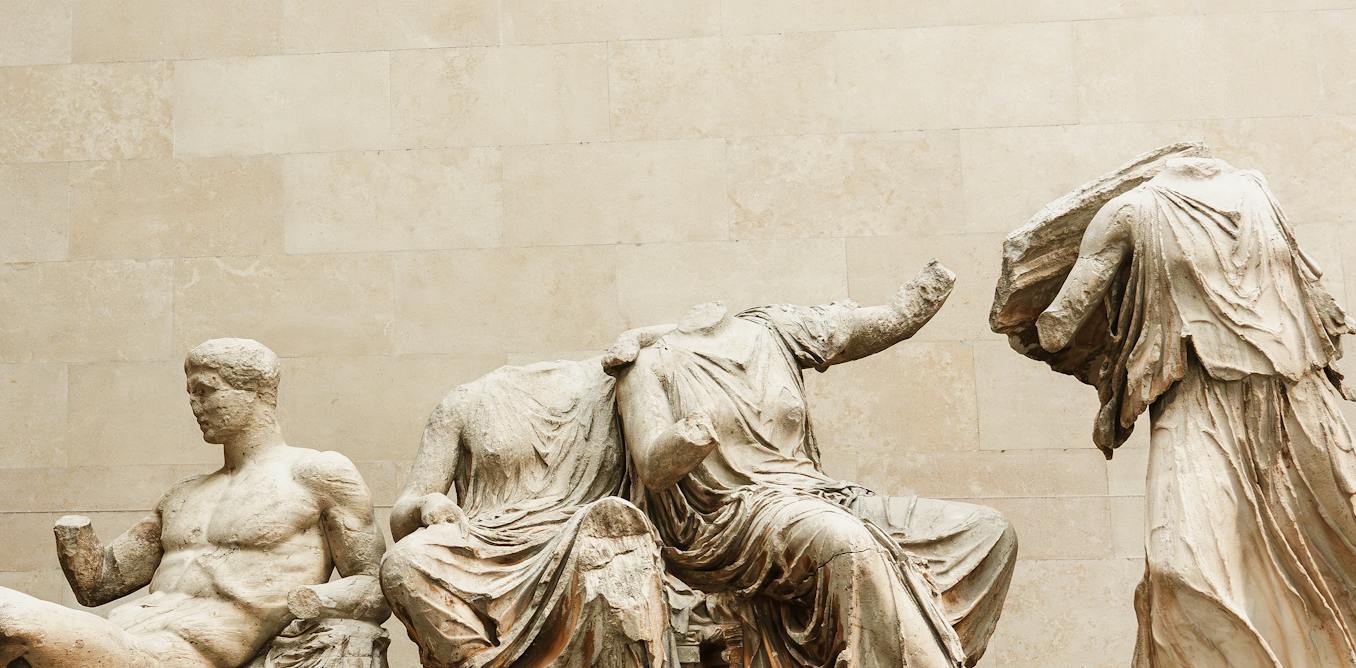
This dynamic is nowhere more evident than in the enduring disputes over cultural heritage icons such as the Parthenon Marbles in London, the Nefertiti Bust in Berlin, Troy’s Treasure of Priam in Moscow, and the dispersed artifacts of the Kingdom of Benin. As modern nation-states demand the return of their ancestral heritage, major institutions frequently retreat behind legalistic arguments and the concept of the "universal museum." Yet, as recent precedents demonstrate, sharing access does not require retaining ownership, and legal continuity across centuries of geopolitical upheaval does not automatically equate to moral legitimacy.
Detailed Chronology: A History of Disputed Acquisitions
To understand the current impasse in international cultural diplomacy, one must examine the specific timelines and disputed mechanisms through which these monumental antiquities were extracted from their homelands.
The Parthenon Marbles (447 BC – 432 BC)
- 1801–1812: Lord Elgin, the British ambassador to the Ottoman court, removes approximately half of the surviving sculptures from the Athenian Acropolis in Greece. The extraction is executed under the authority of a disputed Ottoman permit, which modern Greek historians argue was misinterpreted or exceeded.
- 1816: Following financial ruin, Lord Elgin sells the marbles to the British government, which subsequently houses them in the British Museum.
- 1983: Greece submits its first official, formal request for the permanent repatriation of the Parthenon Marbles to the British Museum, initiating a decades-long diplomatic standoff.
- 2023: The Vatican Museums break with traditional European museum policy by returning three Parthenon fragments directly and unconditionally to Greece as an outright gift, undercutting claims that universal access requires universal ownership.
- October 2026: George Osborne, chair of the British Museum, proposes an alternating display arrangement where the marbles would rotate between Athens and London. Greece swiftly rejects any loan agreement that requires them to implicitly recognize British ownership claims.
Troy’s Treasure of Priam (Third Millennium BC)
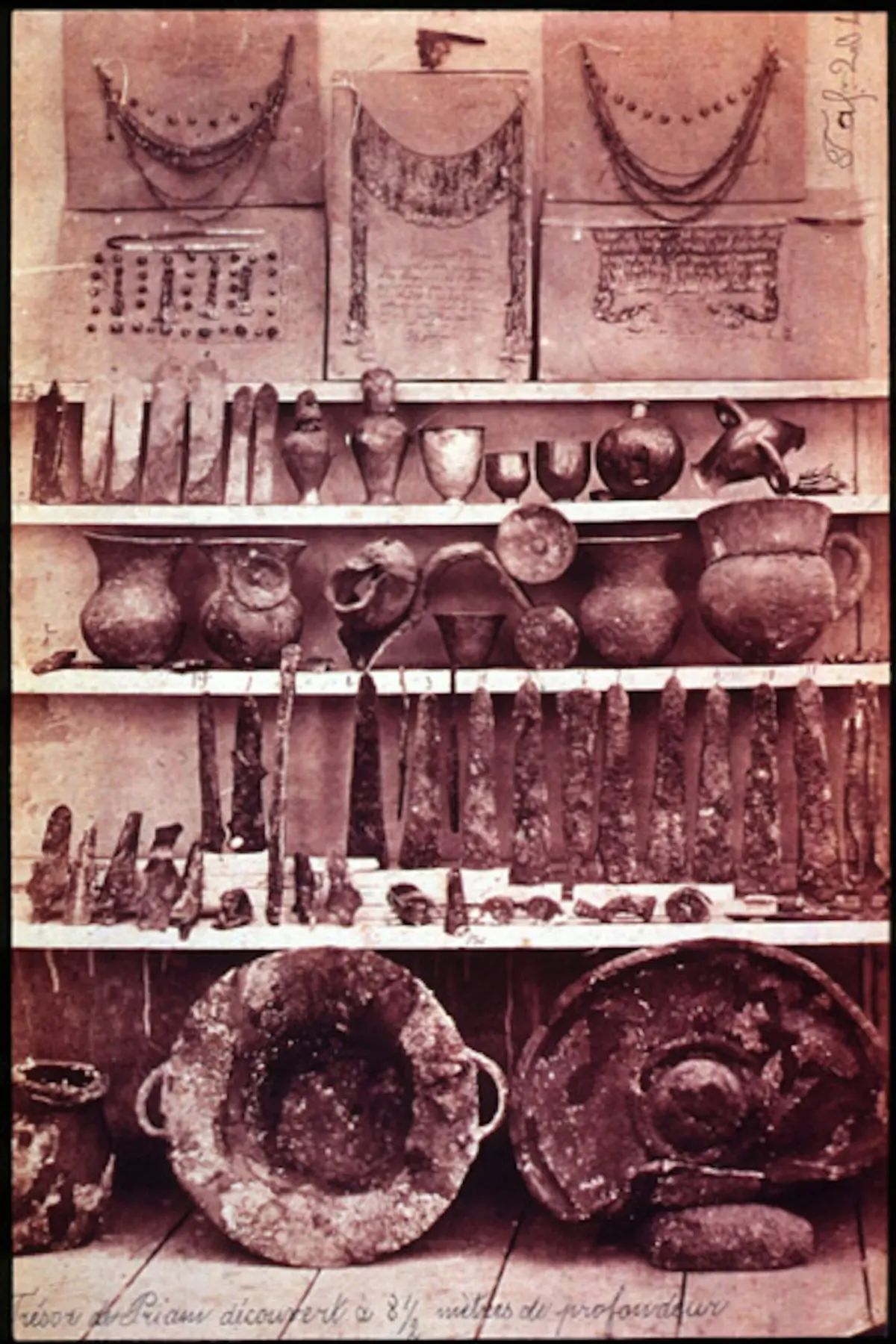
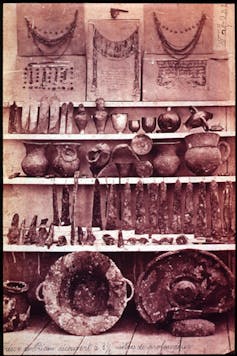
- 1873: German amateur archaeologist Heinrich Schliemann smuggles a vast collection of gold and bronze artifacts—believed to be the Homeric "Treasure of Priam"—out of the Ottoman Empire, violating local excavation laws.
- 1881: Schliemann donates the collection to the German nation, and the artifacts are eventually housed in Berlin’s museums.
- 1945: During the final stages of the Second World War, the Red Army loots the Treasure of Priam from a Berlin bunker and transports it to the Soviet Union as war reparations.
- Present Day: The artifacts reside in the Pushkin Museum in Moscow. Germany voices occasional, low-urgency claims for their return, while Turkey—where the objects were originally excavated—possesses virtually no diplomatic leverage to secure their repatriation, despite having constructed a dedicated, empty room in the new Troy Museum to symbolically welcome them home.
The Nefertiti Bust (1370 BC – 1330 BC)
- 1912: The limestone and stucco bust of Queen Nefertiti is discovered during German excavations at Amarna on the east bank of the Nile, led by Ludwig Borchardt.
- 1913: The finds are divided under the partage system—a colonial-era mechanism that allocated excavated antiquities between foreign archaeological teams and local authorities. Egypt later disputes the fairness and legality of the division, claiming the artifact was secured through deception.
- 1933: Formal negotiations between Egypt and Germany for the return of the bust break down completely.
- Present Day: The bust remains the crown jewel of Berlin’s Neues Museum, where curators frequently market it as an "ambassador of Egyptian art" to the world, maintaining institutional control while bypassing Egyptian sovereignty.
Supporting Context & Metrics: The Architecture of Retention
The debate over restitution is frequently framed as a simple binary between preservation and nationalism. However, beneath the surface lies a deeply entrenched imbalance in global research infrastructure.
+-------------------------------------------------------------------------+
│              THE IMBALANCE OF GLOBAL HERITAGE INFRASTRUCTURE            │
├──────────────────────────┬──────────────────────────────────────────────┤
│ Resource Domain          │ Western Holding Institutions vs. Global South│
├──────────────────────────┼──────────────────────────────────────────────┤
│ Provenance Archives      │ Digitized and centralized in London, Berlin, │
│                          │ and Paris; restricted physical access.       │
├──────────────────────────┼──────────────────────────────────────────────┤
│ Conservation Labs        │ State-of-the-art facilities backed by multi- │
│                          │ million-dollar endowments and grants.        │
├──────────────────────────┼──────────────────────────────────────────────┤
│ Academic Professorships  │ Concentrated in G7 nations, shaping global   │
│                          │ narratives and art historical canons.        │
+──────────────────────────┴──────────────────────────────────────────────+
When an institution highlights its historical explanation—such as publishing provenance reports or hosting academic symposia—it performs an act of self-correction that leaves the core power structures untouched. The institutions that accumulated collections, archives, financial endowments, conservation laboratories, and academic prestige under historic imperial arrangements continue to possess those resources today.
Furthermore, legal continuity across centuries of profound political transformation cannot be simply asserted; it must be rigorously argued. The assertion that an acquisition made during the height of the Ottoman Empire or under the colonial partage system remains legally sound in the 21st century relies on a specific, self-serving interpretation of international law. It ignores the fundamental birth of modern nation-states, the dissolution of empires, and the evolution of international human rights and cultural property norms codified by UNESCO.
Official Statements & Institutional Perspectives
The ideological battle lines between holding institutions and claimant nations are defined by contrasting philosophies regarding ownership, access, and stewardship.
-
George Osborne, Chair of the British Museum (October 2026):
"We are seeking a new partnership with Greece, one that allows these incredible sculptures to be seen and appreciated in both London and Athens through an alternating display arrangement. Our goal is to bridge the divide without compromising the integrity of our global collections."

-
Greek Ministry of Culture (Responding to proposed loan frameworks):
"Greece does not negotiate its stolen heritage. Any arrangement that requires the Hellenic Republic to acknowledge British ownership of monuments torn from the Parthenon is fundamentally unacceptable. Reunification cannot be achieved through conditional loans that validate colonial acquisition."
-
Stiftung Preußischer Kulturbesitz (Prussian Cultural Heritage Foundation, on the 2022 Benin Bronze transfer to Nigeria):
"By transferring full ownership of 512 Benin objects to Nigeria while maintaining a collaborative loan framework for a portion of the collection, we have proven that relinquishing legal title does not mean the end of research, cooperation, or public display."
These statements highlight the widening ideological chasm. While Western institutions increasingly recognize the utility of shared access and collaborative exhibitions, they continue to conflate physical possession with moral responsibility, resisting the absolute transfer of ownership demanded by claimant nations.
Future Outlook: Redefining the Next Era of Archaeology
The challenge facing the global heritage and museum sector in the coming decades is not merely to become more self-aware or critical of 19th-century imperial collectors. The true test lies in examining how the discipline’s institutional structures shape the questions it asks, the narratives it validates, and the authority it claims over human history.
Moving forward, sustainable reform requires three critical shifts:
- Dismantling Curated Distance: Historical explanation must not be used to manufacture comfortable distance between current institutions and past looting. Acknowledging that an object was acquired through imperial coercion must serve as the starting point for restitution discussions, not the final entry on an explanatory wall label.
- Decoupling Ownership from Access: The landmark 2022 transfer of 512 Benin bronzes by Germany’s Stiftung Preußischer Kulturbesitz to Nigeria—where a portion of the objects remained on a long-term collaborative loan—demonstrates that Western institutions can surrender legal ownership without closing down research partnerships or depriving global audiences of access.
- Transferring Epistemic Authority: Restitution that changes only the physical location of an object while leaving knowledge production, conservation budgets, and academic framing in Western hands falls short. True cultural equity requires empowering source communities to define their own histories, govern their own heritage, and dictate the terms under which their ancestral artifacts are displayed to the world.
Until international archaeology and museum governance confront the underlying assumption that certain Western institutions maintain an inherent right to curate the world on their own terms, the colonial past will remain precisely where it has been curated: safely explained, neatly categorized, and governed entirely on institutional conditions.