
Executive Overview
“How can I be Britain’s most evil mother?”
Lisa Hayden-Johnson poses this rhetorical question in the opening moments of Love You to Death, a haunting three-part documentary series broadcast on Channel 4. She is not genuinely searching for an answer or wrestling with accountability. Instead, she preemptively deflects the heavy mantle of her crimes with a chillingly casual dismissal: “I just did my best.”
Over its three-part run, directed by Sophie Robinson, Love You to Death unfurls a troubling, deeply uncomfortable narrative of control, psychological abuse, narcissism, delusion, and absolute denial. The series examines one of the United Kingdom’s most notorious cases of Fabricated or Induced Illness (FII)—formerly and more widely recognized as Munchausen syndrome by proxy. It chronicles how Lisa Hayden-Johnson meticulously manufactured severe medical conditions in her prematurely born son, Matthew, subjecting him to invasive, unnecessary medical procedures while basking in the glow of public sympathy, celebrity encounters, and national awards.
Yet, despite securing rare, extensive interviews with both the perpetrator and her victims—her son, Matthew, and daughter, Laura—the documentary struggles to find its footing within a saturated true-crime landscape. While true-crime media often sensationalizes violence driven by malice or hatred, FII inverts this dynamic. It operates under the terrifying guise of an abundance of love, care, and maternal devotion.
This article explores the chilling mechanics of the Hayden-Johnson case, evaluates Channel 4’s latest contribution to the true-crime genre, examines the systemic failures that allowed the abuse to persist for years, and questions whether giving a platform to an unrepentant abuser serves public interest or merely indulges a toxic craving for the limelight.
Detailed Chronology: The Rise and Fall of the "Buggy Boy"
The nightmare began shortly after Matthew Hayden-Johnson was born prematurely in 2001. Understandably concerned, as any new mother might be, Lisa Hayden-Johnson’s anxieties quickly warped into a systematic campaign of medical fabrication and child abuse.
The Illusion of Illness
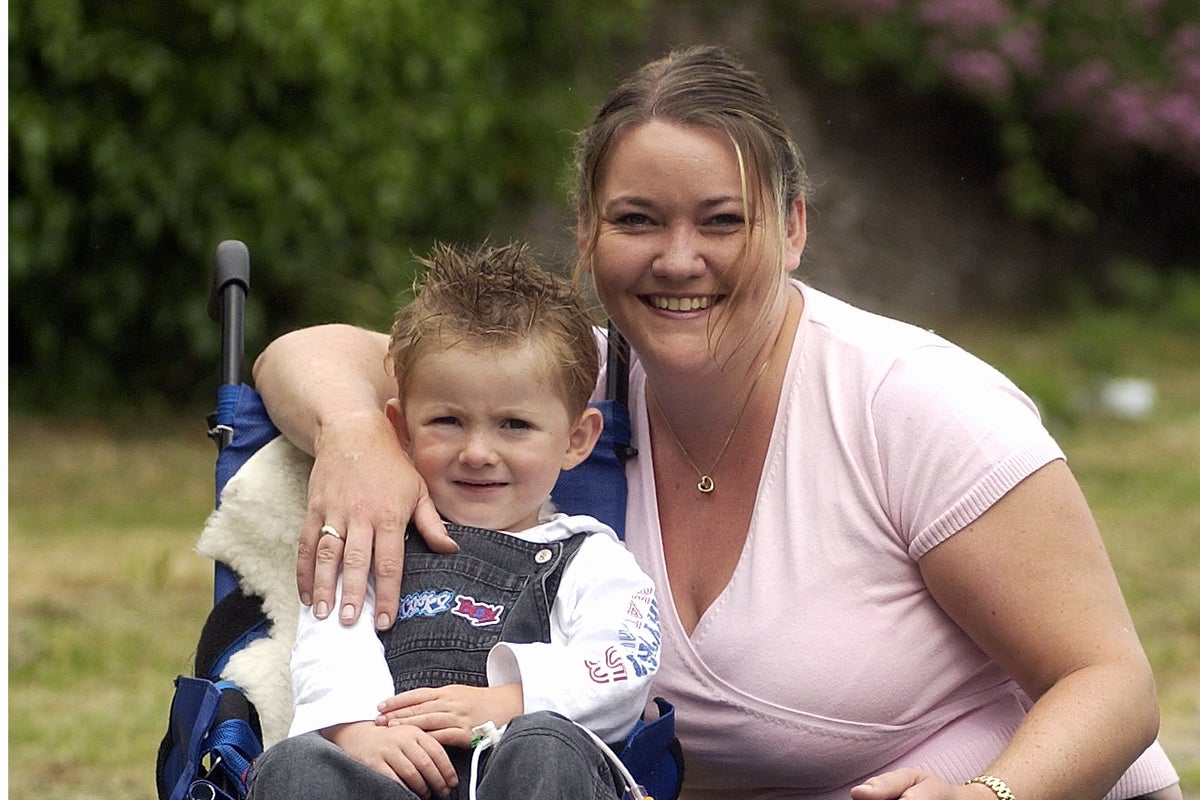
Within years, Lisa had convinced medical professionals, charity organizations, and the media that Matthew suffered from a staggering array of debilitating health issues. According to his mother, the young boy battled severe food intolerances, life-threatening diabetes, and cystic fibrosis. His condition was portrayed as so dire that he required a specialized stroller to help him navigate the world—an accessory that tragically earned him the moniker “buggy boy.”
Despite this catalog of catastrophic illnesses, Matthew’s supposed resilience captured the public imagination. He was framed as a beacon of courage, enduring unimaginable medical hardship with a smile. The narrative struck a chord nationally, culminating in Matthew winning a prestigious Pride of Britain award and securing a high-profile meeting with then-Prime Minister Tony Blair at 10 Downing Street.
Reflecting on those surreal years, Matthew’s sister, Laura, notes the strange dichotomy of their upbringing:
"We got to do so much that a normal family wouldn’t have got the opportunity to do."
However, behind the facade of VIP treatment, television appearances, free holidays, front-row tickets to The X Factor, and appearances on programs like Good Morning Britain, a sinister reality was unfolding. Matthew was being subjected to unnecessary, invasive medical interventions to sustain a falsehood manufactured by the very person sworn to protect him.
The Unravelling
The house of cards collapsed when medical professionals took a closer look at Matthew’s clinical history. Upon conducting rigorous, objective evaluations, doctors could find no clinical evidence to support the existence of any significant medical issues. The boy was fundamentally healthy.
As investigations deepened, the terrifying truth emerged: Lisa Hayden-Johnson had fabricated virtually every symptom, medical chart, and diagnosis. She had weaponized the healthcare system against her own son, exposing him to surgical procedures, dietary restrictions, and psychological trauma for reasons rooted entirely in her own pathological need for attention and validation.
Legal consequences swiftly followed. Lisa was prosecuted, convicted, and subsequently jailed for more than three years on charges of child cruelty and perverting the course of justice. But time behind bars did little to fracture her alternate reality. To this day, her conviction has done nothing to dent her conviction of innocence; the story of her martyrdom has simply calcified within her mind.
Supporting Context & Metrics: Understanding FII and the True-Crime Landscape
To fully grasp the gravity of Love You to Death, it is essential to examine the clinical, cultural, and psychological context surrounding Fabricated or Induced Illness (FII).
The Psychology of FII
Previously termed Munchausen syndrome by proxy, FII is a rare and deeply complex form of child abuse. Clinically, it occurs when a caregiver—most often a mother—fabricates, exaggerates, or deliberately induces physical or psychological illnesses in a dependent under their care.
In recent years, FII has become a subject of intense public fascination, particularly across internet communities and streaming platforms. This fascination largely stems from how FII inverts traditional dynamics of violent crime. Conventional crimes are typically fueled by anger, greed, or hatred. FII, conversely, is masked by hyper-vigilant caregiving, public self-sacrifice, and an apparent surplus of maternal love. It is a psychological trap that defies easy comprehension, making it both repulsive and intensely compelling to audiences.
Furthermore, because FII is overwhelmingly perpetrated by women, it offers a stark departure from the relentless media fixation on male serial killers and violent offenders. This dynamic has made FII a frequent plot device in contemporary fiction and drama, inspiring works such as Sharp Objects, Ma, Run, A Haunting in Venice, and the dramatized account of Gypsy-Rose Blanchard in the 2019 miniseries also titled Love You to Death.
A Crowded True-Crime Market
Channel 4’s Love You to Death enters a hyper-competitive, fast-evolving true-crime documentary market. Earlier this summer, the BBC released The Mother of All Cons, exploring a similarly harrowing FII case characterized by intricate webs of deception and dramatic legal twists.
Against this backdrop, Sophie Robinson’s three-part documentary attempts a unique structural approach: securing extensive interviews with both sides of the abuse. Having both the perpetrator—Lisa Hayden-Johnson—and her victims—Matthew and Laura—sit down for deep-dive interviews is a major journalistic coup.
Yet, the documentary stumbles in its execution. Lisa remains a profoundly unreliable narrator, utterly incapable of acknowledging the gravity of her actions. During her interviews (conducted away from the physical screen citing privacy concerns), she offers a chilling summation of her mindset:
"The only thing I was guilty of is putting my son first."
While she concedes minor points—such as admitting to fabricating an unrelated sexual assault allegation—her overarching narrative remains locked in self-preservation. Meanwhile, her daughter Laura offers a far more introspective perspective, expressing her deep-seated belief that she served as her mother’s psychological “test subject” before Matthew was ever born—a claim Lisa flatly denies and one the documentary leaves unverified.
Official Statements and Critical Reception
The release of Love You to Death has sparked intense debate among mental health professionals, criminologists, and television critics regarding the ethical boundaries of true-crime storytelling.
Professional and Clinical Insights
Child psychologists and safeguarding experts have raised critical questions about what value is gained by platforming an unrepentant abuser. Freda Gardner, a child psychologist interviewed regarding the psychological underpinnings of FII, noted the fragile nature of truth in such cases:
"The truth is really a social contract between us all."
When an individual operates entirely outside that social contract—constructing an alternate reality where child abuse is reframed as supreme maternal devotion—interviews risk descending into exercises in gaslighting rather than investigative journalism.
Critics have also pointed out notable narrative blind spots within the documentary. The series largely glosses over the institutional and systemic failures that allowed Lisa Hayden-Johnson to maintain her fiction for years within the UK healthcare system. A police officer interviewed in the series casually dismisses the father’s role with the remark, "He didn’t really know what was going on… some fathers have never changed a nappy," effectively letting systemic paternal absence and medical oversight off the hook.
Creative Choices Under Scrutiny
Director Sophie Robinson made several bold stylistic choices, including restaging scenes from Laura’s childhood with a spectral, present-day version of her younger self watching over the action. However, critics argue these artistic flourishes fail to elevate the material. Because the public has grown accustomed to extreme, highly complex FII cases—such as the Blanchard affair—the Hayden-Johnsons’ story can feel somewhat constrained by comparison.
The most poignant takeaway from the series is not its cinematic flair, but the stark resilience of Matthew Hayden-Johnson himself. Now a well-adjusted 25-year-old, his survival serves as both a profound relief and a sobering reminder that most victims of severe domestic and medical abuse are not nearly as fortunate. Yet, the central question of why the series is titled Love You to Death—a phrase that captures the lethal paradox of FII—is never fully interrogated or resolved.
Future Outlook: The Ethics of True Crime and Safeguarding Children
As Love You to Death continues to stream and generate public discussion, it leaves behind a legacy of difficult questions for both documentary filmmakers and society at large.
The Race to the Bottom in True Crime
The true-crime genre currently finds itself in a precarious race for escalation, constantly searching for wilder twists, more shocking pathologies, and unprecedented access. In the case of Love You to Death, this appetite for content brushes up against a dark ethical boundary.
Lisa Hayden-Johnson’s crimes were fundamentally self-serving. Her motivation was never simply an internal psychological compulsion; it was deeply transactional. She craved the spotlight: front-row tickets, television appearances, charity accolades, and validation from high-ranking political figures. By granting her a platform to air her unrepentant narrative under the guise of an investigative documentary, Channel 4 runs the very real risk of further indulging her lifelong desire for notoriety.
Strengthening Safeguarding Protocols
Beyond the media critique, the enduring value of examining cases like the Hayden-Johnsons lies in institutional reform. Fabricated or Induced Illness remains one of the hardest forms of child abuse to detect precisely because it mimics altruism and preys upon the trust inherent in the medical profession.
Moving forward, medical boards, social services, and educational institutions must continue to refine cross-agency communication and diagnostic protocols. Recognizing the early red flags of FII—such as inconsistencies between reported symptoms and clinical observations, or a caregiver’s obsessive pursuit of medical validation—is vital to ensuring that children like Matthew are protected before invasive procedures can cause irreversible physical and psychological harm.
Ultimately, Love You to Death functions less as a groundbreaking investigative triumph and more as a cautionary tale. It is a stark reminder of the devastating consequences when narcissism masquerades as care, and a challenge to a media landscape that must continually weigh the public’s right to know against the risk of rewarding those who inflict trauma in pursuit of fame.