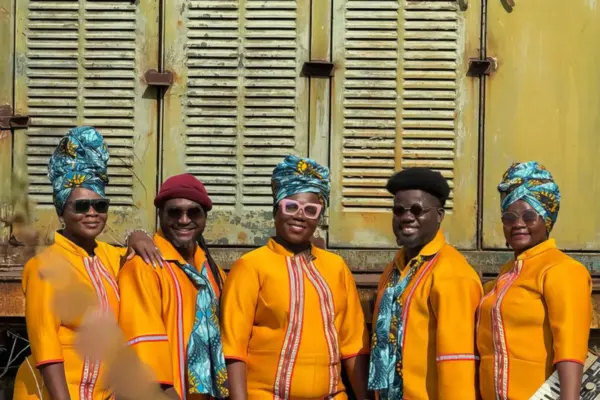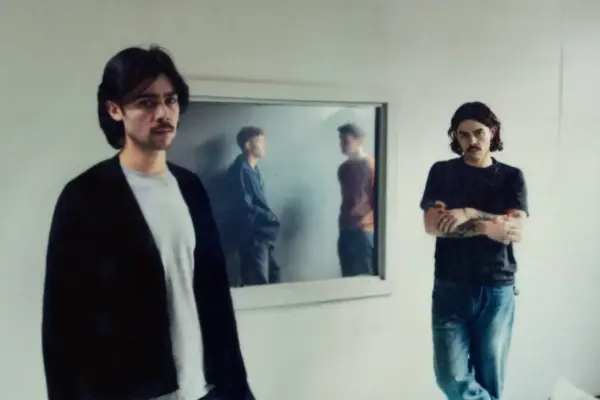
In the vibrant, cross-cultural crucible of Marseille, the Mediterranean sun meets the gritty, reverb-drenched aesthetic of modern garage rock to birth something entirely unexpected. Enter Deli Teli, a transnational musical collective bridging the gap between mid-century Greek popular music and contemporary European indie rock. Their latest single, "San Theo" (Σαν Θεό), serves as a masterclass in musical archeology, dusting off a 1960 classic and injecting it with a potent cocktail of surf-rock electricity, hypnotic synthesizer pads, and the relentless, driving pulse of the tsifteteli belly-dance rhythm.
Originally penned as a declaration of divine devotion—“I love you like a god”—by titans of Greek golden-age music Manolis Angelopoulos and Giota Lydia, with composition by Stratos Attalidis, the track has been thoroughly reimagined. Deli Teli’s version trades the acoustic melancholy of the past for an amplified, dancefloor-ready urgency. Led by the bright, piercing lines of the electric bouzouki and grounded by an impenetrable bass-and-drums groove, "San Theo" is the second offering from the band’s highly anticipated sophomore full-length album, Tsao Tsao. Released on October 16 via the Toulon-based independent imprint Hazard Records, this album marks a major milestone for a band that first turned heads during the isolation of the 2020 global lockdowns.
This feature-length investigative profile explores the cultural mechanics of Deli Teli’s sound, tracing their origins from an impromptu Marseille meetup to their position at the vanguard of the European laïko revival. We will examine the historical roots of the genre, dissect the creative architecture of Tsao Tsao, analyze the band’s unique cross-border chemistry, and project the trajectory of a musical movement proving that vintage Mediterranean sounds possess timeless, universal kinetic energy.
Detailed Chronology: From Marseille Jam Sessions to the Tsao Tsao Era
Genesis in the Canebière: The Formation of Deli Teli (2019)
The story of Deli Teli does not begin in the bustling recording studios of Athens or the historic bouzouki clubs of Piraeus, but rather in the sun-drenched, multicultural port city of Marseille in 2019. It was here that four musicians with wildly disparate backgrounds crossed paths, united by an eclectic taste for sonic transgression.
The lineup solidified with Tassos Tsitsivakos handling the electric bouzouki—infusing traditional Greek ornamentations with the raw power of rock amplification—alongside Arthur Bacon on keyboards, Christos Karypidis on bass, and François Rossi on drums. Half-Greek and half-French, the quartet represented a natural cultural synthesis, mirroring Marseille’s own history as a Mediterranean melting pot. Initially brought together by a shared appreciation for the margins of popular music history, they began sifting through dusty crates of 45-RPM singles from Greece’s golden eras, searching for hidden gems that defied easy categorization.
The Lockdown Crucible and Tsifteteli Club (2020–2021)
While the COVID-19 pandemic brought much of the global music industry to a screeching halt in 2020, it served as an unexpected creative incubator for Deli Teli. Confined to their quarters in the south of France, the members channeled their collective cabin fever into rigorous rehearsals, deep-dive musicological research, and the arrangement of a definitive live repertoire.
This period of intense isolation birthed their 2021 breakthrough EP, Tsifteteli Club. Released to critical underground acclaim, the record served as an explosive manifesto for the band’s mission statement: taking laïko—the working-class urban music of 1950s and 1960s Greece—and filtering it through the lenses of surf rock, garage psych, and Latin-infused dance rhythms. The EP established Deli Teli not merely as a cover band, but as stylistic innovators who treated vintage Hellenic vinyl with the same reverence and experimental fervor that psych-rock revivalists applied to 1960s garage comps like Nuggets.
The Road to Tsao Tsao and the "Tyropites" Prelude
Following the success of Tsifteteli Club, Deli Teli spent the intervening years touring, refining their sonic architecture, and meticulously crafting their first full-length album, Tsao Tsao. The five-year gap between their debut EP and their sophomore long-player speaks to an obsessive dedication to production value, arrangement, and conceptual cohesion.
In the lead-up to the album’s release, the band offered a taste of their expanding sonic palette with the single "Tyropites." An audacious, high-octane instrumental track, "Tyropites" featured an unexpected collaboration: a children’s choir from the conservatoire in La Seyne-sur-Mer singing along with infectious, chaotic joy. The move signaled that Tsao Tsao would not simply replicate the formula of their debut, but rather expand its narrative scope, incorporating choral textures, cinematic arrangements, and a heightened sense of theatricality.
The Arrival of "San Theo" and the Hazard Records Partnership (October 2024)
On October 16, the anticipation culminated with the release of Tsao Tsao via Hazard Records, an independent label based in Toulon. As the second single preceding and accompanying the album’s rollout, "San Theo" emerged as a microcosm of everything Deli Teli does best.
Releasing the single alongside a visually striking music video, the band effectively bridged past and present. By taking a track originally designed for smoky, twilight tavernas and reframing it with shimmering synthesizers and a cutting, surf-rock rhythmic backbone, Deli Teli proved that the emotional core of 1960s laïko remains fiercely vibrant, adaptable, and primed for the modern European indie dancefloor.
Supporting Context & Metrics: Decoding the Laïko Phenomenon
Understanding Laïko and the Tsifteteli Rhythm
To fully appreciate the artistic triumph of Deli Teli’s "San Theo," one must examine the socio-musical landscape of Greece during the mid-20th century. Laïko (meaning "popular" or "of the people") emerged as the dominant musical expression of the Greek urban working class following the turbulence of World War II and the subsequent Greek Civil War. It evolved from the outlawed, underground rebetiko genre into a more polished, orchestrated style that spoke to the realities of urbanization, migration, and romance in burgeoning cities like Athens and Thessaloniki.
At the beating heart of much mid-century laïko is the tsifteteli—a seductive, syncopated 4/4 rhythm traditionally associated with belly dancing. Characterized by its undulating percussion and playful, winding melodic lines, the tsifteteli invited physical release. During the 1950s and 60s, composers and arrangers freely integrated international influences into this indigenous framework, blending the Mediterranean bouzouki with Latin percussion, Western pop structures, and early rock ‘n’ roll attitude.
The Pioneers: Manolis Angelopoulos, Giota Lydia, and Stratos Attalidis
The lineage of "San Theo" is steeped in Greek recording royalty:
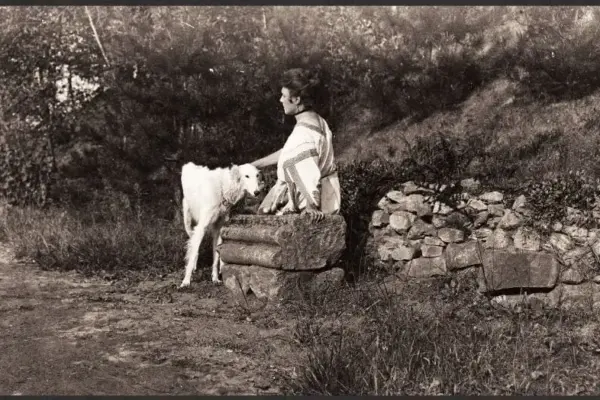
- Manolis Angelopoulos: Often celebrated as the undisputed king of Romani-Greek song, Angelopoulos possessed a soaring, deeply emotional voice that effortlessly communicated heartbreak, longing, and spiritual devotion. His career helped bridge traditional vocal styles with modern orchestration.
- Giota Lydia: A towering female figure in post-war laïko, Lydia’s powerful, gritty yet resonant voice defined the soundscape of an era. Her duets with Angelopoulos remain touchstones of mid-century Greek discography.
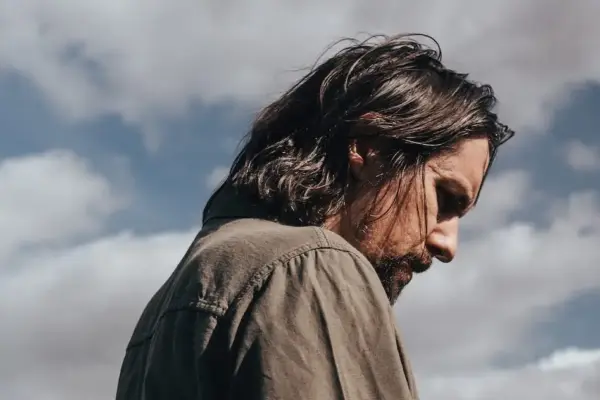
- Stratos Attalidis: A brilliant composer and bouzouki player, Attalidis provided the musical architecture for countless hits, shaping the harmonic language that later generations—like Deli Teli—would pull apart and reassemble with affection.
The Deli Teli Equation: Instrumentation and Genre Fusion
Deli Teli’s sonic signature relies on a precise alchemical balance of historic authenticity and contemporary distortion:
[Traditional Greek Laïko] + [Surf Rock Reverb] + [Psych Synths] = [The Deli Teli Sound]- The Electric Bouzouki: Played by Tassos Tsitsivakos, the instrument forsakes pure acoustic purity for amplification. This grants the lead lines a razor-sharp edge, allowing them to slice through dense mixes with the searing attitude of a vintage Fender Stratocaster.
- The Synth-Pad Atmosphere: Arthur Bacon’s keyboard work introduces an ethereal, sometimes cinematic dimension. Rather than merely mimicking brass or string sections of the 1960s, the synthesizers float high above the mix, lending the tracks a psychedelic, dream-pop sheen.
- The Rhythm Section: Christos Karypidis (bass) and François Rossi (drums) lock into an unyielding, hip-shaking groove. Drawing equally from Mediterranean dance traditions and the crisp, driving percussion of 1960s garage rock, their pocket transforms traditional folk rhythms into indie-club essentials.
Official Statements & Creative Vision
While the band operates with a DIY ethos rooted in the European underground, their artistic manifesto is anchored in deep musicological respect coupled with a healthy dose of irreverence. In interviews and promotional dispatches surrounding the rollout of Tsao Tsao, the members of Deli Teli have consistently emphasized that their work is not an academic exercise in preservation, but a living, breathing continuation of a dialogue started half a century ago.
"We aren’t trying to build a museum exhibit," the band notes regarding their approach to unearthing forgotten 45s. "The artists of the 1950s and 60s were innovators. They took folk traditions and collided them with whatever new sounds were washing ashore—whether that was Latin records from overseas or early rock and roll guitars. What we are doing with the electric bouzouki and our synths is simply the next logical step in that collision."
The partnership with Hazard Records further underscores this ethos. Operating out of Toulon, the independent label has carved out a reputation for championing artists who reject rigid genre boundaries in favor of regional authenticity paired with boundary-pushing production.
Regarding the creation of "San Theo" specifically, the band highlights the track’s duality: "When Manolis Angelopoulos and Giota Lydia sang ‘I love you like a god,’ it was heavy, dramatic, and intensely romantic. We wanted to capture that monumental emotional weight, but we wanted to make it move. We wanted someone standing in a sweaty club in Marseille or Athens to feel that exact same devotion, but through a bassline that forces their feet to the floor."
Future Outlook: The Global Trajectory of the Mediterranean Underground
As Tsao Tsao makes its way into the hands of critics, vinyl collectors, and dance music enthusiasts worldwide, Deli Teli stands at a fascinating crossroads. The contemporary global music landscape is experiencing an unprecedented appetite for retro-futuristic cross-pollination. From the global explosion of Turkish psych-Anatolian rock reissues to the continuous rediscovery of African funk and South American cumbia psych, audiences are increasingly rejecting homogenized pop in favor of culturally rich, geographically specific sonic histories that have been modernized for contemporary consumption.
Deli Teli is uniquely positioned within this ecosystem. By injecting Greek laïko with the universal, high-energy vocabulary of surf rock and psych-pop, they have effectively lowered the linguistic and cultural barrier to entry without sacrificing an ounce of authenticity. A listener does not need to speak Greek to understand the kinetic urgency of "San Theo"; the message is transmitted loud and clear through the wailing bouzouki, the driving percussion, and the infectious, hypnotic groove.
What Lies Ahead?
- Expanded Touring: Following the October 16 release of Tsao Tsao, the band is slated to bring their high-octane live show to stages across France, Greece, and broader European festival circuits throughout the upcoming year. Their reputation for transforming seated concert halls into raucous dance parties makes them a formidable live act.
- Cross-Disciplinary Collaborations: Following their successful experiment with the La Seyne-sur-Mer conservatory children’s choir on "Tyropites," industry insiders are watching closely to see what further orchestral, choral, or cross-cultural collaborations the band might pursue in future projects.
- Deepening the Archive: With decades of obscure Mediterranean 45-RPM singles still waiting to be excavated, Deli Teli’s well of inspiration is virtually bottomless. As they continue to bridge the gap between yesterday’s forgotten tavern anthems and tomorrow’s indie-club staples, Deli Teli is proving that the Mediterranean music underground is not just surviving—it is thriving, electrifying, and dancing boldly into the future.