Executive Overview
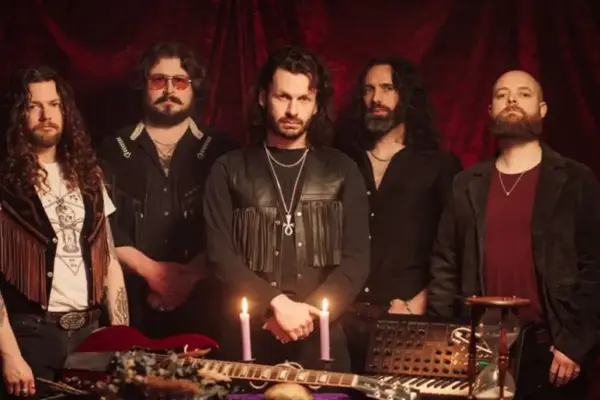
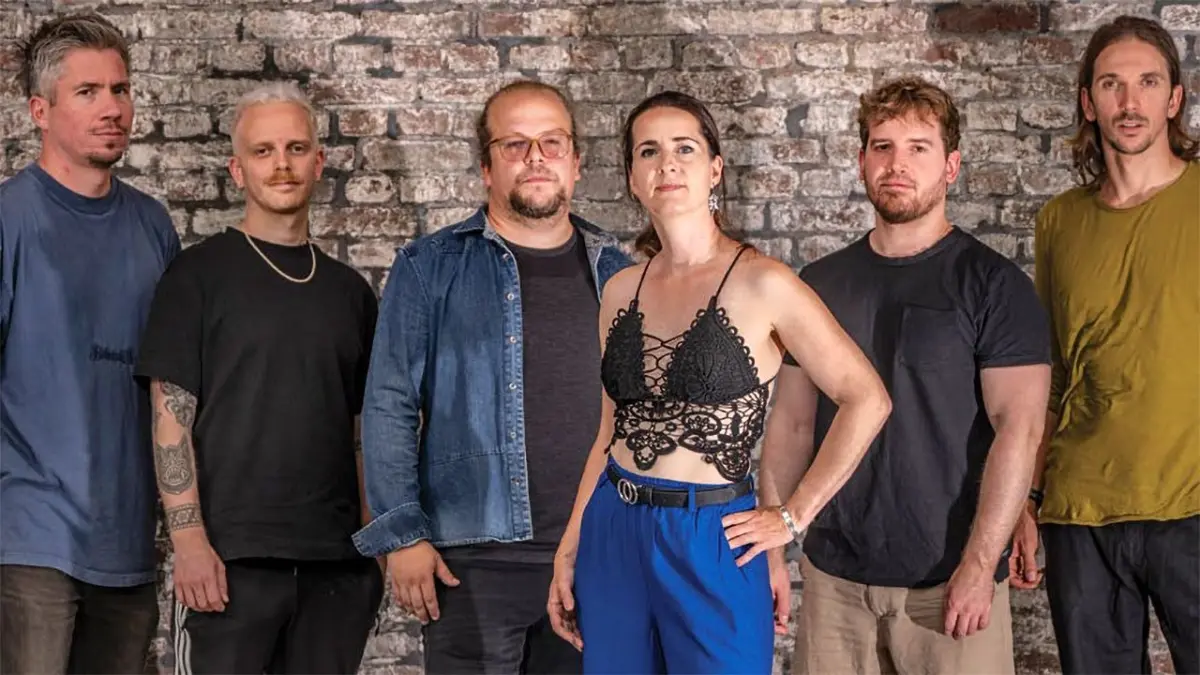
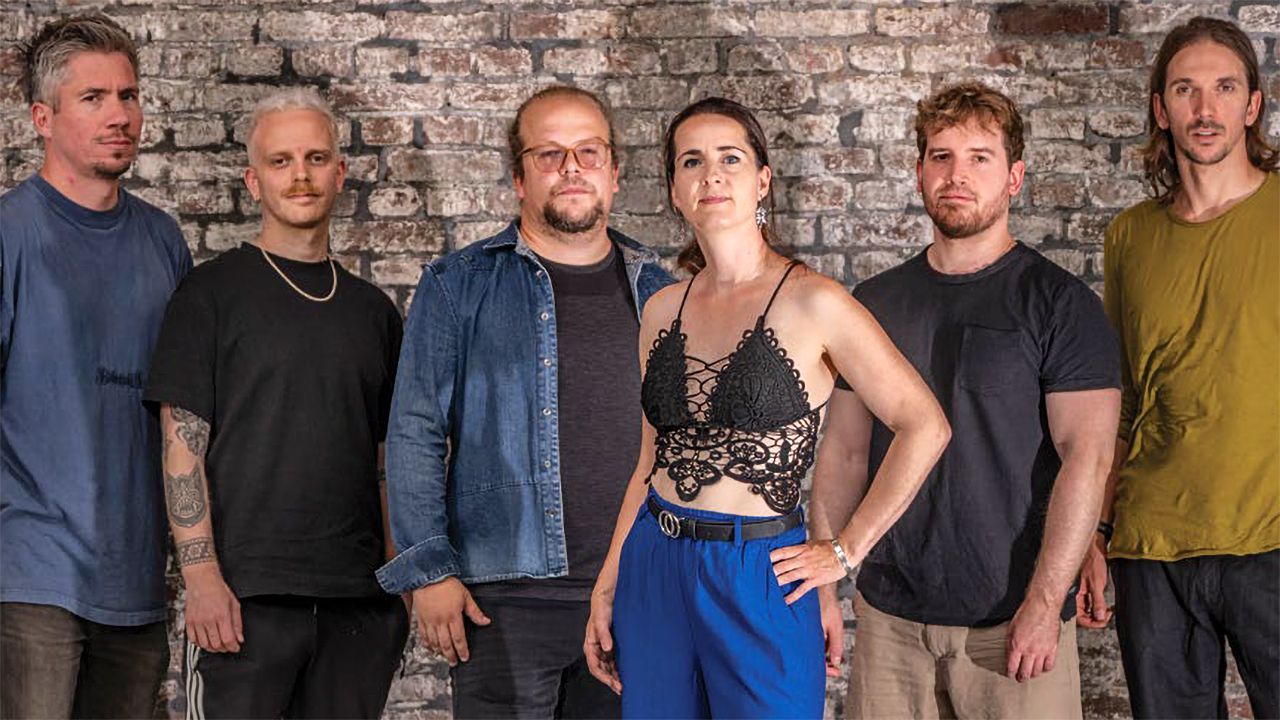
Dutch art-prog collective Lesoir has officially inaugurated a bold new era in their musical narrative with the release of their latest studio album, Tomorrow Is Now Today. Renowned for their atmospheric textures, genre-bending compositions, and refusing to tread the same artistic ground twice, the band’s newest record represents a conscious synthesis of their progressive history alongside a marked shift toward electronic, beat-driven rhythms.
Rather than adhering to the rigid boundaries of traditional rock production, Lesoir has once again teamed up with veteran producer John Cornfield—a collaboration that dates back to 2011—to fashion an expansive sonic canvas. By weaving multi-layered guitars, pedal steel, keys, and flute over contemporary electronic groove foundations, Tomorrow Is Now Today bridges the gap between atmospheric art-rock and modern rhythmic experimentation.
At the heart of the album lies an unyielding commitment to organic authenticity. Rejecting the modern industry trend of clinical, over-processed quantization, Lesoir utilized a "golden take" studio approach. The result is a deeply human, dynamic listening experience engineered to reveal intricate sub-layers upon repeated exposure, reinforcing Lesoir’s standing as one of the most intriguing and inventive acts in European progressive rock.
Detailed Chronology: Lesoir’s Stylistic Journey
To fully understand the artistic leap represented by Tomorrow Is Now Today, one must trace the chronological evolution of Lesoir’s discography, which reflects a continuous cycle of exploration, refinement, and stylistic reinventing.
+-----------------------------------------------------------------------------------+
|                            LESOIR'S SONIC EVOLUTION                               |
+-----------------------------------------------------------------------------------+
|  2011: TRANSIENCE              -- Initiated foundational partnership with John    |
|                                   Cornfield; established core art-rock identity.  |
|                                                                                   |
|  MOSAIC                        -- Shifted into classic progressive territory;     |
|                                   heavy Pink Floyd influence and wide textures.   |
|                                                                                   |
|  BABEL EP                      -- Scaled structural ambition; featured expansive, |
|                                   20-minute long-form conceptual compositions.    |
|                                                                                   |
|  2024: PUSH BACK THE HORIZON   -- Pivoted to a rock-focused paradigm; streamlined |
|                                   arrangements and direct songwriting.            |
|                                                                                   |
|  PRESENT: TOMORROW IS NOW TODAY-- Rhythmic evolution; blends progressive layers,   |
|                                   rock energy, and electronic beat-driven tracks. |
+-----------------------------------------------------------------------------------+
The Early Partnership and Atmospheric Foundations (Transience & Mosaic)
The foundation of Lesoir’s current identity was cemented in 2011 during the recording of Transience, an album that forged their enduring creative union with producer John Cornfield. Following this groundwork, the group crafted Mosaic, an album heavily steeped in progressive rock traditions. Mosaic was characterized by expansive arrangements, soaring melodies, and cinematic soundscapes that drew frequent comparisons to the atmospheric grandeur of Pink Floyd. This era defined Lesoir’s capability to build patient, immersive musical environments.
Ambition and Directness: The Babel Era to Push Back The Horizon
Following Mosaic, Lesoir challenged themselves structurally with the release of the Babel EP. Highlights of this release included a sprawling 20-minute title track that demonstrated their mastery of long-form progressive storytelling and complex thematic development.
Having proven their ability to construct complex, multi-movement epics, the band executed a total pivot for 2024’s Push Back The Horizon. This record saw Lesoir stripping away ambient excess in favor of a punchier, rock-forward energy. Direct, driving, and straightforward, Push Back The Horizon re-anchored the band’s sound around riff-driven urgency and song-oriented structural clarity.
Tomorrow Is Now Today: Synthesizing Past and Present
Tomorrow Is Now Today functions as the conceptual culmination of these previous chapters. Rather than abandoning their rock power or their progressive depth, the band engineered a hybrid model. The album integrates the progressive complexity of Mosaic, the structural ambition seen in Babel, and the rock immediacy of Push Back The Horizon, while placing a fresh emphasis on electronic beats and danceable, driving dynamics.
Supporting Context & Metrics: Sonic Architecture and Studio Methodology
Lesoir’s transition from conventional rock arrangements to a beat-centric framework required a deliberate restructuring of their recording process and tonal palette.
Instrumentation and Rhythmic Dynamics
While guitar textures remain central to Lesoir’s identity, Tomorrow Is Now Today re-contextualizes their presence. Intricate fretwork is layered alongside an eclectic array of instrumentation, including:
- Vintage Keyboards & Synthesizers: Providing ambient padding and bassline pulses.
- Flute: Offering melodic counterpoints that harken back to classic 1970s progressive rock while contrasting modern beats.
- Pedal Steel: Introducing swooping, tonal glissandos that add an unconventional, floating atmosphere to the music.
- Electronic Drum Patterns & Beats: Serving as the primary engine driving the new material, encouraging movement and physical engagement from the listener.
The integration of beat-driven foundations creates a distinct contrast against the organic, acoustic instruments, providing a multi-dimensional grid that demands careful mixing and arrangement.
+-----------------------------------------------------------------------------------+
|                        SONIC ARCHITECTURE COMPARISON                              |
+-----------------------------------------------------------------------------------+
|  ELEMENT               | PUSH BACK THE HORIZON (2024)| TOMORROW IS NOW TODAY      |
+------------------------+-----------------------------+----------------------------+
|  Primary Engine        | Straightforward Rock Drums  | Beat-Driven / Electronics  |
|  Structural Focus      | Direct Riffs & Chords       | Layered Rhythmic Grooves   |
|  Auxiliary Tones       | Standard Guitars/Keys       | Flute, Pedal Steel, Synths |
|  Production Philosophy | Streamlined Rock Mix        | "More is More" Multi-Layer |
+-----------------------------------------------------------------------------------+
The "Golden Take" Philosophy vs. Modern Over-Production
In an era dominated by digital pitch-correction, click-track alignment, and endless splice-editing, Lesoir deliberately embraced an analog ethos. The band tracks their rhythm sections—drums and bass—simultaneously live in the studio to capture organic groove variations before tracking guitars over the base foundation.
Crucially, the group rejects the impulse to edit out tiny human elements. Performance nuances—such as string squeaks, slight fret buzzes, background chuckles, or audible breathing—were intentionally left intact in the final master. This "golden take" methodology prioritizes raw emotional weight over clinical precision, ensuring the music feels alive and dynamic.
The John Cornfield Dynamic: "More is More"
A critical element in realizing this complex sonic tapestry is producer John Cornfield. Having worked with the band across multiple releases over more than a decade, Cornfield operates with an implicit understanding of Lesoir’s creative objectives.
Refusing a "keep-it-simple" constraint, Cornfield operates under a philosophy of textural density—famously summarized in his studio mantra, "More is more." By layering delicate acoustics, ambient synths, heavy electric guitars, and polyrhythmic embellishments, Cornfield builds dense sonic mixes designed to reward audiophile listening. The goal is simple: to ensure that upon a fourth or fifth spin, listeners discover subtle, previously unheard details beneath the lead mix.
Official Statements: Ingo Dassen on Craft, Collaboration, and Imperfection
Key insights into the conceptual mindset behind Tomorrow Is Now Today come directly from Lesoir guitarist Ingo Dassen, who articulated the band’s constant drive for evolutionary progress.
On Moving Beyond Past Records
Reflecting on the band’s discography and the decision to merge their past styles into a new framework, Dassen noted:
"We always want to do something different with each record – to try to evolve, and see if we can bring something new to the table."
Dassen expanded on how the reaction to their prior releases directly informed the composition of Tomorrow Is Now Today:
"[2024’s Push Back The Horizon was] more of a rocky record, more straightforward. Before that we released the Babel EP, and before that we did Mosaic, which was more progressive, with more Pink Floyd-ish influences.
People liked those records, so we had the idea of finding some combination between them – expanding with extra instruments and extra dimensions. We always try to create, record and write a song that the fourth or fifth time you listen to it, you discover a new detail. I think we’ve succeeded."
On the Shift to Beat-Driven Rhythms
Highlighting the stylistic departure from their previous rock-centric album, Dassen pointed out the new rhythmic focus:
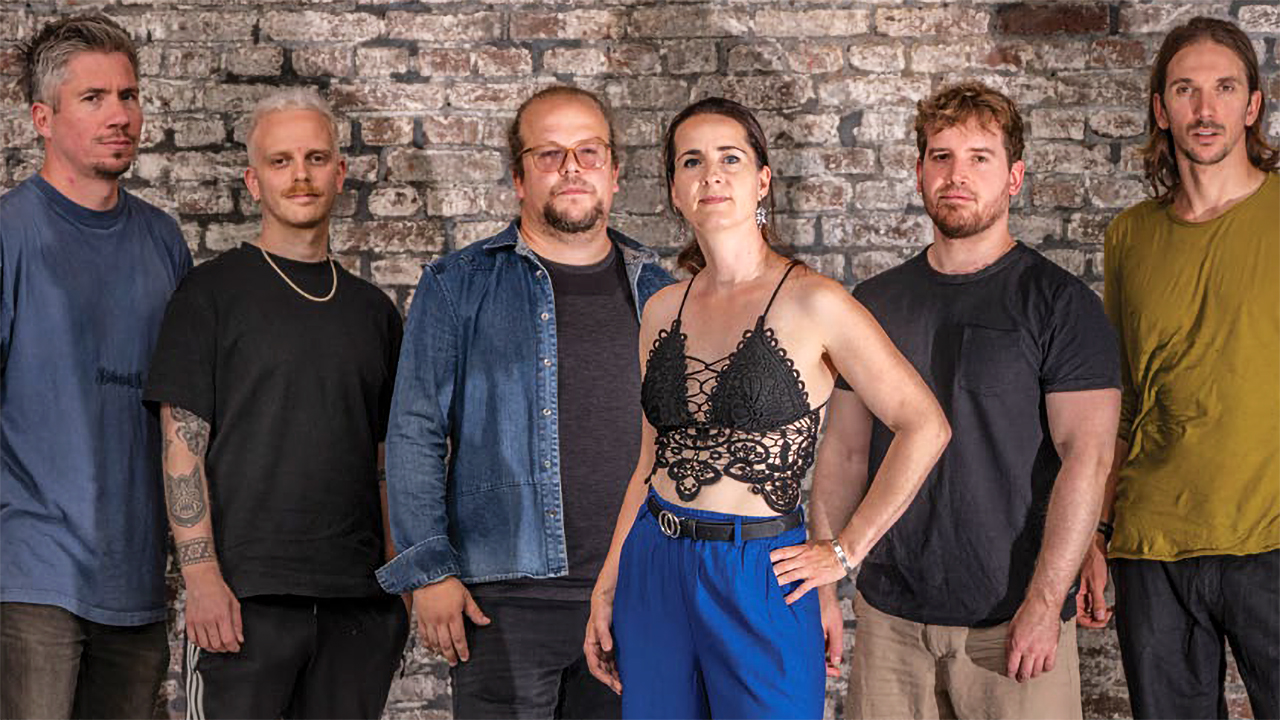
"Now we’re more into an electronic, beat-driven phase… [The sound is] more focused on the rhythms this time, which is cool; it gets you moving."
On Their Creative Partnership with Producer John Cornfield
Addressing the longstanding dynamic between the band and their producer, Dassen emphasized the mutual trust built since 2011:
"John is a dear friend. He always says, ‘More is more’ – which in fact is the case. He’s just a legend. After all these years, we don’t really have to discuss it. He knows what we want."
On Preserving Human Warmth in the Studio
Detailing their refusal to hyper-correct their studio performances, Dassen explained the band’s preference for raw emotion over mechanical perfection:
"We don’t do much by way of repairs. We always go for the golden take, and for us that take is not necessarily perfectly played.
It’s the take that has the most emotion and gives the best vibe to the song. You hear us laugh, you hear us coughing, and sometimes you’ll hear us slip up on a string. It makes it human.
We like to have a record that you really hear us playing, not over-produced or over-processed."
Future Outlook: Translating Art-Prog into a New Era
The release of Tomorrow Is Now Today marks an exciting inflection point for Lesoir. By striking a delicate balance between high-concept art-prog complexity and accessible, beat-driven accessibility, the group opens up new avenues for audience engagement.
+-----------------------------------------------------------------------------------+
|                           FUTURE TRAJECTORY & IMPACT                              |
+-----------------------------------------------------------------------------------+
|  LIVE TRANSLATION      -- Re-imagining electronic rhythm grids alongside live     |
|                           flute, pedal steel, and dual-guitar setups on stage.    |
|                                                                                   |
|  AUDIENCE DYNAMICS     -- Bridging classic progressive rock listeners with        |
|                           fans of modern, groove-oriented art-rock.               |
|                                                                                   |
|  PRODUCTION BENCHMARK  -- Championing the "Golden Take" methodology in an era      |
|                           increasingly dominated by digital hyper-polishing.      |
+-----------------------------------------------------------------------------------+
Live Performance Evolution
Translating Tomorrow Is Now Today to the live stage presents a unique, exciting challenge for the Dutch collective. Recreating the dense, multi-layered textures—where live drum kits merge with electronic beats, and flute melodies weave through pedal steel swells—requires an elaborate live sound architecture. The band’s emphasis on groove promises to turn their live shows into higher-energy, highly dynamic experiences.
Broadening the Art-Prog Horizon
As progressive rock continues to expand its boundaries in the 2020s, Lesoir stands out as an act pushing against genre stagnation. By demonstrating that technical depth, progressive arrangements, and physical groove can coexist without sacrificing warmth, Lesoir reaffirms that art-rock can be both intellectually engaging and physically moving.
Tomorrow Is Now Today is available now across physical formats and digital streaming platforms, accompanied by lead visual releases including the official lyric video for "Is It Nothing?".