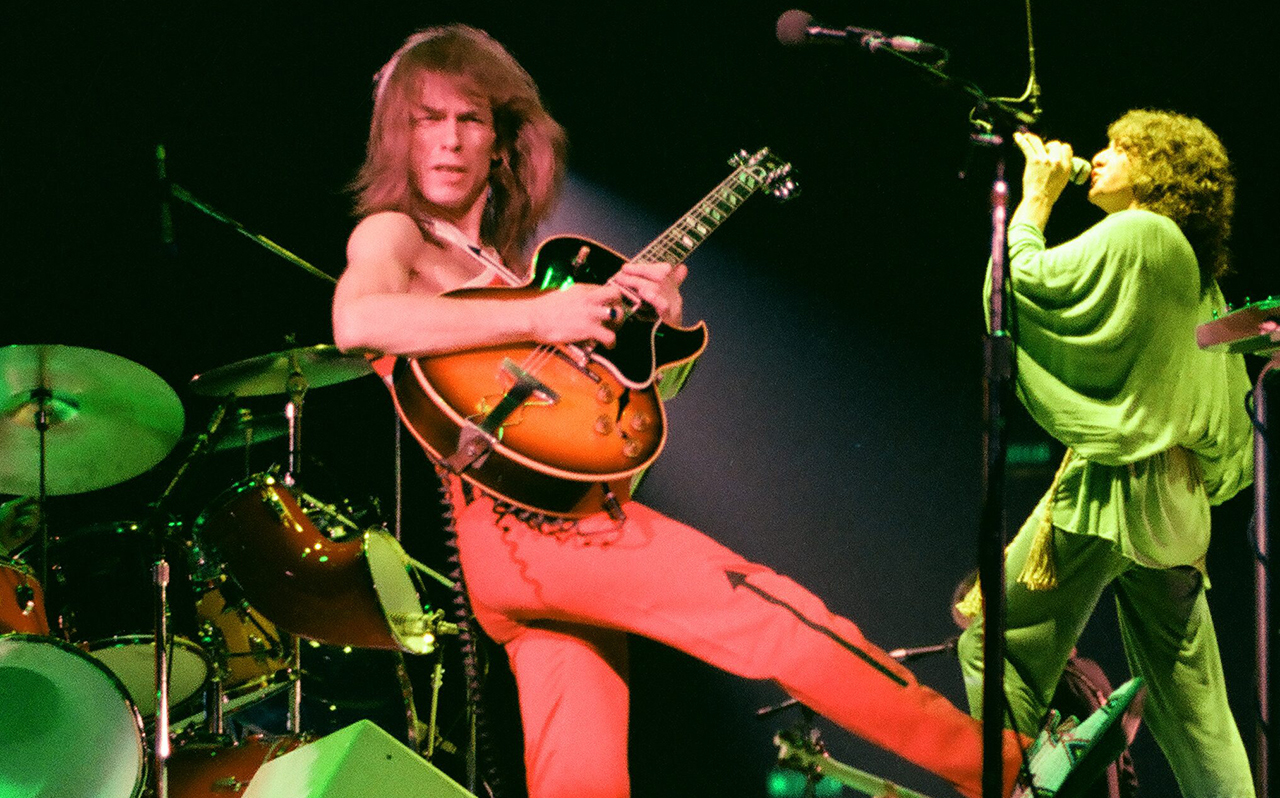
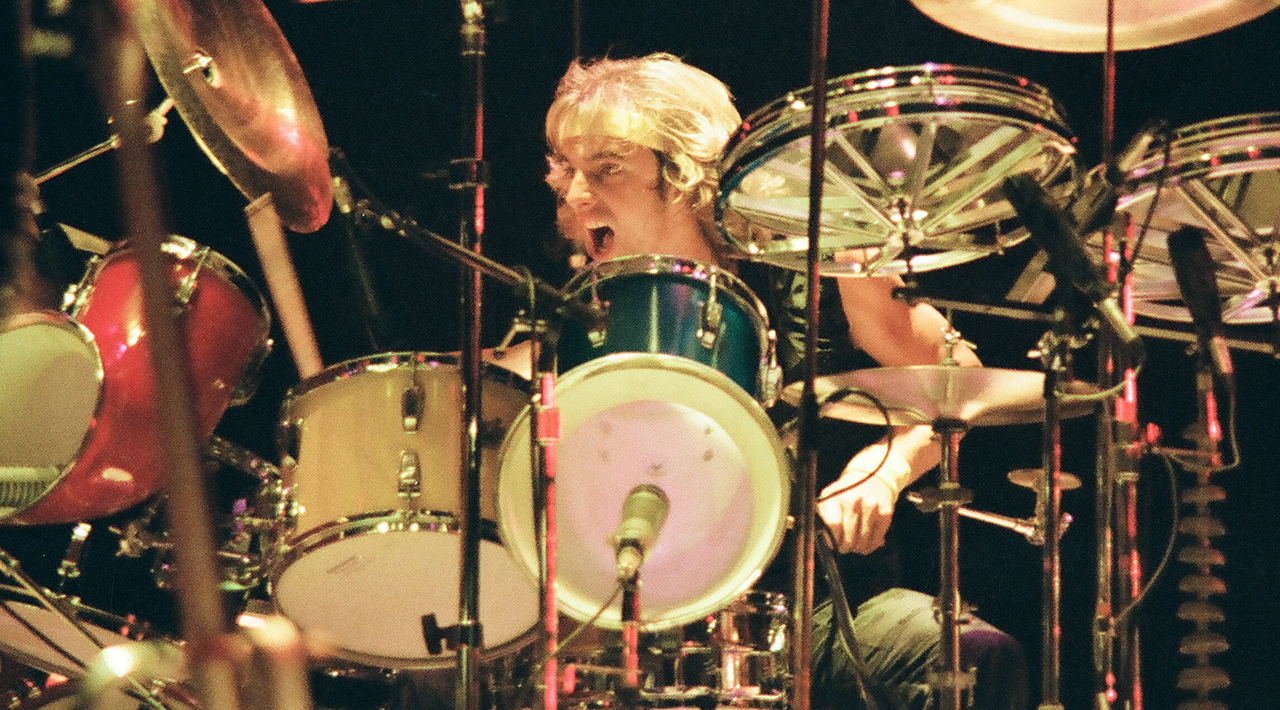
In late 1979, the classic lineup of progressive rock giants Yes—vocalist Jon Anderson, guitarist Steve Howe, bassist Chris Squire, keyboardist Rick Wakeman, and drummer Alan White—convened in a studio outside Paris to record the follow-up to their commercially successful yet creatively polarizing 1978 album, Tormato. Enlisting high-profile producer Roy Thomas Baker, famed for his multi-platinum work with Queen, Journey, and The Cars, Atlantic Records hoped to steer the band toward a unified, radio-friendly future amidst a rapidly changing musical landscape.
Instead, the sessions dissolved into creative factionalism, personal friction, and organizational apathy. Divided into two opposing musical camps and burdened by external industry pressures, the band failed to complete a single finished track for a new album. A series of absurd yet pivotal events—ranging from studio peanut-throwing to a broken foot caused by a roller skate—culminated in a late-night summit over a bottle of Calvados, where Anderson and Wakeman realized their tenure with the group had reached its end.
The collapse of the Paris sessions marked the end of Yes’s golden decade, triggering the departure of their iconic frontman and keyboard virtuoso. Yet from the ashes of these aborted recordings emerged one of the most surprising reinventions in rock history: the recruitment of synth-pop duo The Buggles (Trevor Horn and Geoff Downes) and the creation of the aggressive, heavy-edged 1980 masterpiece, Drama.
Detailed Chronology: From Tormato to the French Fracture
[1977-1978]  Success of 'Going for the One' followed by troubled 'Tormato' sessions
      │
[Late 1979]  Yes convenes at Studio de la Grande Armée in Paris with producer Roy Thomas Baker
      │
[Dec 1979]   Internal division deepens: Anderson/Wakeman (acoustic/pop) vs. Howe/Squire/White (heavy rock)
      │
[Mid-Dec]    Atlantic Records head Ahmet Ertegun flies to Paris for emergency intervention
      │
[Late Dec]   Alan White breaks his foot; Anderson and Wakeman resign over Calvados
      │
[Early 1980] Anderson and Wakeman formally depart; Buggles (Horn/Downes) join to record 'Drama'
1. The Prelude: Aftermath of Tormato (1977–1978)
Following the success of 1977’s Going for the One, recorded in the serene surroundings of Montreux, Switzerland, Yes entered a period of internal fatigue during the production of 1978’s Tormato. Despite reaching top-ten status in both the UK and the US, Tormato suffered from self-production disputes, compressed audio mixes, and a noticeable lack of shared artistic direction.
By the time the band finished their extensive 10th-anniversary tour in late 1978, internal cohesion was severely frayed. To break the deadlock for their next project, the band agreed to hire an outside producer for the first time in years, selecting Roy Thomas Baker.
2. Arrival in Paris (Late 1979)
Seeking a tax-friendly environment and fresh creative inspiration, the quintet relocated to Paris in late 1979. However, the geographic and atmospheric choice immediately created friction. Unlike the relaxed, picturesque environment of Montreux, the studio setup outside central Paris required long, stressful commutes through heavy city traffic.
Steve Howe noted that Paris offered no space for relaxation or fantasy, forcing the musicians into a harsh environment that exposed their deepening ideological rift.
3. Factionalism and Musical Polarization
As recording began, the band fractured into two distinct creative camps:
┌───────────────────────────────────────┐      ┌───────────────────────────────────────┐
│     CAMP 1: Anderson & Wakeman        │      │    CAMP 2: Howe, Squire & White       │
├───────────────────────────────────────┤      ├───────────────────────────────────────┤
│ • Lighter, acoustic, melodic focus    │  VS  │ • Heavy, aggressive, riff-driven      │
│ • Use of harp, folk, and synth pop    │      │ • Technical complexity and drive      │
│ • Favored accessible, concise themes  │      │ • Seeking a punchier, harder edge     │
└───────────────────────────────────────┘      └───────────────────────────────────────┘
The Anderson–Wakeman Camp: Jon Anderson, playing harp and acoustic instruments rather than guitar, bonded with Rick Wakeman to write lighter, melodic, and occasionally folk- and pop-infused compositions.
The Howe–Squire–White Camp: Steve Howe, Chris Squire, and Alan White wanted to push Yes toward a punchier, heavier rock sound. Howe and Squire struggled to arrange guitar and bass parts for Anderson and Wakeman’s bouncy, keyboard-led compositions.
Communication deteriorated rapidly. Frustration mounted to the point where Wakeman resort to throwing peanuts at Alan White’s drum kit during takes to express his displeasure with the studio arrangements. Roy Thomas Baker found himself acting less like a record producer and more like a boxing referee, attempting to mediate between musicians who refused to compromise.
4. The Ertegun Intervention and Final Breakup (December 1979)
Recognizing that hundreds of thousands of dollars were being spent with zero completed tracks to show for it, Atlantic Records co-founder and president Ahmet Ertegun flew from New York to Paris for an emergency crisis summit. Ertegun’s attempts to force a compromise failed; the band members could barely sit in the same room, let alone agree on a song list.
The final catalyst occurred just before Christmas 1979. Drummer Alan White broke his foot during an off-studio outing involving roller skates, bringing all recording to a halt.
Faced with an incapacitated drummer and an unsalvageable studio atmosphere, Jon Anderson and Rick Wakeman met at a local bistro to assess their future. Over a bottle of Calvados, both musicians agreed that the creative essence of Yes had vanished. They officially resigned from the group shortly thereafter, leaving Howe, Squire, and White without a singer or keyboardist.
Supporting Context & Industry Metrics: Progressive Rock in Transition
The collapse of the 1979 Paris sessions was not merely a story of clashing egos; it reflected a major shift across the wider music industry at the end of the 1970s.
       1970s PROGRESSIVE ROCK MODEL              1980s NEW WAVE / POST-PUNK MODEL
┌────────────────────────────────────────┐     ┌────────────────────────────────────────┐
│ • Extended 15-20 minute compositions   │     │ • Concise 3-4 minute arrangements      │
│ • Complex time signatures & solos      │ VS  │ • Rhythmic drive and synth hooks       │
│ • Fantasy, mystical, lyrical themes    │     │ • Angular guitars and social realism   │
│ • Multi-month luxury studio budgets    │     │ • Lean production and quick turnarounds│
└────────────────────────────────────────┘     └────────────────────────────────────────┘
The 1979 Industry Shift
By 1979, the music industry was undergoing a rapid realignment. The rise of punk rock, new wave, disco, and synth-pop disrupted the dominance of classic 1970s progressive rock acts. Bands that had routinely sold out stadiums on extended, multi-suite conceptual epics found themselves facing critical hostility and shifting consumer tastes.
Metric / Dimension
The Progressive Peak (1972–1977)
The Transition Era (1978–1980)
Dominant Formats
Vinyl LPs, Concept Albums
Radio Singles, Cassettes, Music Videos
Studio Culture
Unlimited budgets, overseas residential studios
Strict budget oversight, hit-driven production
Yes Album Sales Target
Multi-Platinum (RIAA 2M+ units guaranteed)
Declining baseline; high financial risk
Mainstream Airplay
Album-Oriented Rock (AOR) deep cuts
Top 40 Single edits, concise hooks
Record labels like Atlantic were no longer willing to underwrite open-ended, expensive recording sessions in European capitals without a clear commercial single. Wakeman’s assessment—that Yes had lost its guarantee of selling hundreds of thousands of records automatically—accurately summarized the commercial reality facing legacy art-rock groups.
Archival Fate of the "Paris Tapes"
The material recorded during the late-1979 Paris sessions was shelved for decades, becoming legendary among collectors. While an official "Paris Sessions" album was never issued, portions of the material eventually surfaced across various archival projects:
Solo Albums: Jon Anderson reworked several melodic ideas from Paris for his 1980 solo album, Song of Seven.
Expanded Reissues: Demos such as "Golden Age,""In the Tower," and "Never Done Before" were officially released as bonus tracks on Rhino Records’ expanded reissues of Tormato and Drama.
Box Sets: Key multi-track backing tracks and rough mixes were mastered and included on the 2002 five-disc retrospective box set, In A Word: Yes (1969–2001).
Official Statements & Reflections
The primary figures involved in the Paris sessions have offered frank assessments of why the project collapsed, detailing the ideological divide that separated the band.
Rick Wakeman (Keyboards)
"In 1979, the world of music was going through serious changes and Yes was not embracing them… It was completely the opposite to the feelings of the band a few years earlier when we recorded Going For The One, where everybody was driving down the same musical road. In Paris, not only were we not on the same road, but we were not even heading in the same direction!
"Jon and I had put some songs together during the previous tour and we felt they had great potential. Sadly, that was not felt by Steve, Chris, and Alan… Jon and I met for a drink—well, actually, it was a whole bottle of Calvados. We both agreed this wasn’t the Yes we loved and believed in.
"I always refer to ‘Yes’ as the music. I always felt we were guardians of Yes’s music and should be treated with respect. Jon and I both felt it was slipping away, and so it was time for us to slip away, too. Not even Henry Kissinger could have resolved that mess."
Steve Howe (Guitar)
"Paris was a whole different reality—’reality’ being the operative word. It wasn’t beautiful like Montreux. There was no fantasy here—it was not a place we could sit back and relax… Jon and Rick had done some music together that Chris and I were not that clear how to treat guitaristically.
"They were very bouncy and very Rick in musical style, and a bit new; a new kind of thinking about Yes… We had a drummer who couldn’t play after breaking his foot. That was the catastrophic moment when we said: ‘Let’s stop.’ I think there was a feeling we all wanted to stop anyway, because the session was going nowhere.
"We weren’t challenging Yes to go forward—we were finding a party line, a kind of music that was easy for us to do: sprightly and mellow, and nothing like Drama would be. We didn’t have any attitude in Paris, apart from, ‘Where’s the next bottle of wine?’ or ‘Should we drive a Rolls-Royce or a Bentley?’ All decisions that had fuck-all to do with music."
Roy Thomas Baker (Producer)
"There was some great stuff presented initially, but there were definitely issues in terms of communication within the band. There were two distinct camps. Trying to pull the whole thing together, I felt more like a referee than a producer. They were banging heads among themselves."
Future Outlook & Historical Legacy
The failure in Paris forced a fundamental restructuring of Yes, setting off a chain reaction that reshaped progressive music for the 1980s.
 PARIS SESSIONS COLLAPSE (Dec 1979)
  │
  ├─► Exit: Jon Anderson & Rick Wakeman
  │
  └─► Remaining Trio: Howe, Squire, White
        │
        ├─► Management introducing: Trevor Horn & Geoff Downes (The Buggles)
        │
        ├─► Release of 'DRAMA' (1980): Heavier, synth-driven, hard-rock edge
        │
        └─► Evolution into '90125' (1983): Global pop-rock dominance via "Owner of a Lonely Heart"
The Drama Reinvention (1980)
Left as a trio, Steve Howe, Chris Squire, and Alan White regrouped at London’s Townhouse Studios in early 1980. Sharing management with the pop duo The Buggles—vocalist/producer Trevor Horn and keyboardist Geoff Downes, who had recently scored an international No. 1 hit with "Video Killed the Radio Star"—the two groups began sharing rehearsal space.
Recognizing Horn’s vocal range and Downes’s modern synthesizer setup, Squire invited the pair to join Yes. The resulting album, 1980’s Drama, delivered a hard-edged, aggressive fusion of progressive complexity and new wave punch. Tracks like "Machine Messiah" and "Tempus Fugit" proved that the remaining members could flourish by embracing a modern, muscular rock aesthetic.
The Paris collapse served as the catalyst for Yes’s ultimate survival in the modern arena-rock era:
The Commercial Peak of 90125 (1983): The heavier musical direction established on Drama laid the groundwork for the band’s 1983 global comeback. Re-joined by Jon Anderson alongside guitarist Trevor Rabin, Yes released 90125, yielding the US Billboard No. 1 single "Owner of a Lonely Heart"—produced by Trevor Horn using the modern production techniques forged during the post-Paris era.
The 1996 Classic Lineup Reunion: The classic 1970s lineup (Anderson, Howe, Squire, Wakeman, White) would not record together again in a studio setting until 1996’s Keys to Ascension projects, making the 1979 Paris sessions the final, tragic chapter of their uninterrupted golden era.
Critical Re-evaluation: Modern rock historians view the aborted 1979 sessions not as a failure of talent, but as an essential evolutionary crisis. Without the breakdown in Paris, Yes might have faded away with uninspired, middle-of-the-road releases. Instead, the split forced the creative reset required to navigate the 1980s music industry landscape.