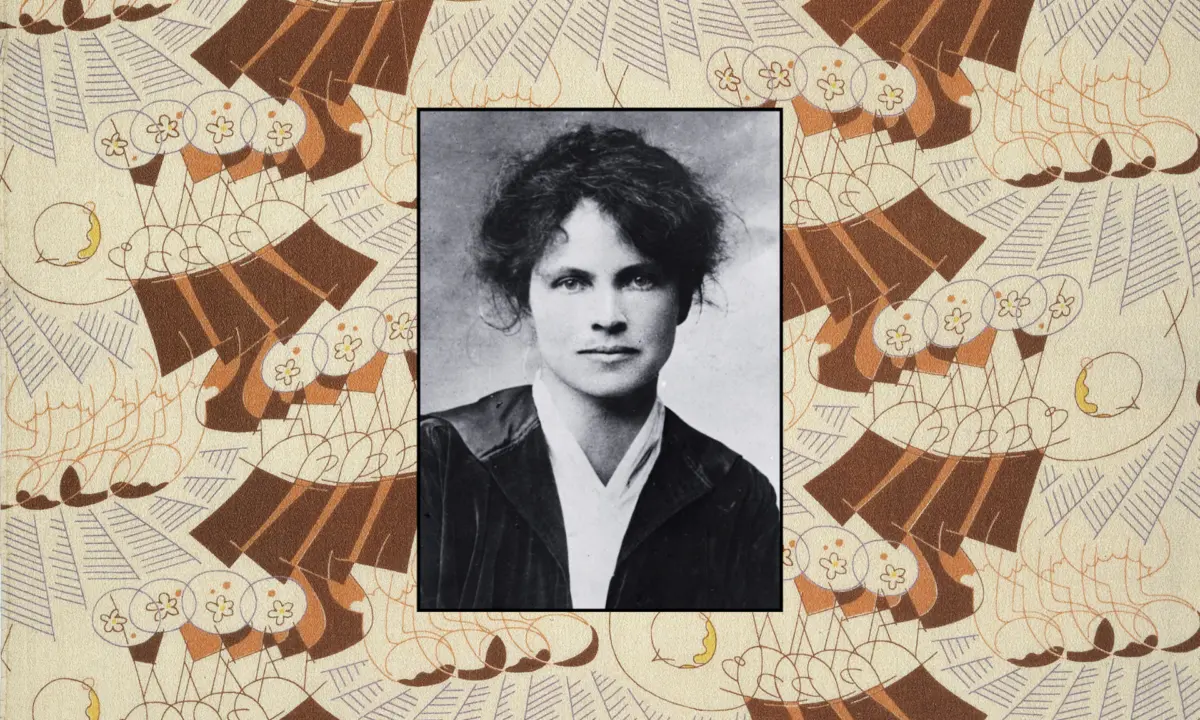
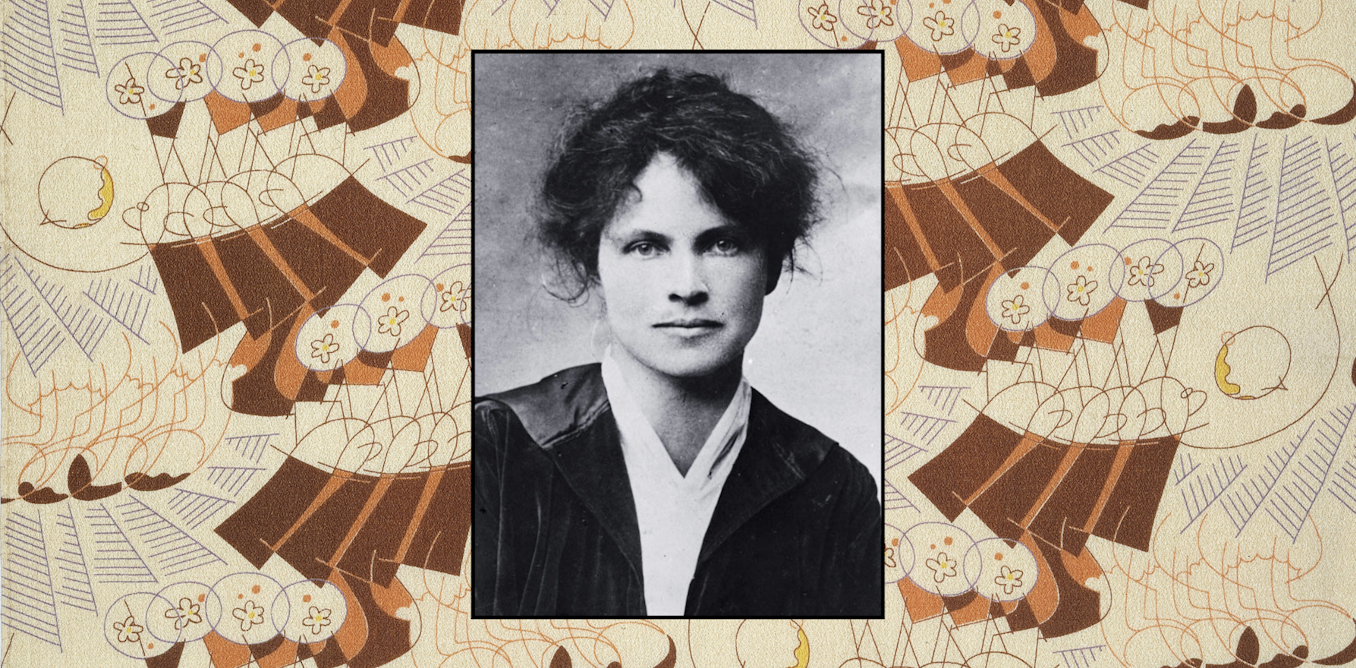
In an era dominated by rapid-fire digital content and hyper-accelerated media cycles, independent UK publisher Persephone Books is offering a radical antidote: the celebration of "the drama of the undramatic." For decades, the independent publishing house has dedicated itself to exhuming and reissuing "lost" 20th-century novels written by women, injecting forgotten masterpieces back into the 21st-century literary bloodstream. Central to this mission is a concept coined by Persephone founder Nicola Beauman: "domestic feminism."
Domestic feminism acknowledges the profound significance of the home as a crucible of human life while forcefully rejecting the Victorian assumption that domesticity should entirely define or exhaust a woman’s existence. Persephone’s latest major revival, Dorothy Canfield Fisher’s 1926 masterpiece Her Son’s Wife (republished in 2026), serves as a quintessential expression of this philosophy. Once tipped for a Pulitzer Prize, Canfield Fisher’s searing portrait of middle-age upheaval, domestic friction, and psychological repression has spent decades languishing out of print.
This piece explores the resurrection of Her Son’s Wife, examining the remarkable life and cultural clout of its author, the psycho-spiritual undercurrents of her prose, and the broader resurgence of early-to-mid 20th-century women’s writing that continues to challenge our contemporary assumptions about gender, labor, and the domestic sphere.
Detailed Chronology
1924–1925: The Genesis of a Masterpiece
Writing at the height of her creative powers, American author Dorothy Canfield Fisher spent the years 1924 and 1925 composing Her Son’s Wife. She was 45 years old at the time—coincidentally the exact age of her novel’s protagonist, Mrs. Mary Bascomb. Canfield Fisher later noted that the central conceit of the narrative revolves around the terrifying moment "a woman of 45 meets calamity," shattering the societal illusion that by middle age, human lives are permanently "set for life." The writing process proved intensely grueling, taking a heavy psychological toll on the author. In correspondence with her publishers, Canfield Fisher confessed that working on the novel felt akin to experiencing a terrifying "hallucination," a testament to the deep emotional excavation required to map Mary Bascomb’s repressed psyche.
1926: A Literary Sensation and the Book-of-the-Month Club
In 1926, Her Son’s Wife was officially published by Harcourt, Brace and Company, alongside a major serialization in the high-circulation American periodical Woman’s Home Companion. The novel became an immediate commercial and critical success, earning rave reviews and entering heavy contention for the Pulitzer Prize.
Concurrently, 1926 marked a major milestone in American literary history: the founding of the Book-of-the-Month Club. Canfield Fisher was handpicked as the sole female member of its original selection committee—a prestigious post she would hold for 25 grueling yet influential years. By 1950, the subscription service had ballooned to over one million members, cementing Canfield Fisher as a titan who single-handedly shaped the literary tastes of the American reading public.
1983: Naming the Movement
Decades after Canfield Fisher’s mid-century peak, British literary culture began reckoning with the systemic oversight of women’s domestic fiction. In 1983, Nicola Beauman published A Very Great Profession: The Woman’s Novel 1914-39. Within its pages, Beauman famously articulated how these overlooked texts chronicled "the steadfast dailiness of a life that brings its own rewards," establishing the critical framework that would eventually give birth to Persephone Books.
1999–2021: The Persephone Revival Begins
Founded on the principles laid out in Beauman’s 1983 study, Persephone Books initiated a long-term project to restore forgotten women writers to library shelves. Recognizing Canfield Fisher’s immense talent, Persephone republished her poignant 1924 novel The Home-Maker in 1999, followed by her sweeping 1930 epic The Deepening Stream in 2021. Both releases received critical acclaim, laying the groundwork for the modern reissue of Her Son’s Wife.
2026: A Centennial Reintroduction
One hundred years after its initial publication and near-miss with the Pulitzer, Her Son’s Wife returns to bookstores worldwide via Persephone Books. The 2026 reissue brings Canfield Fisher back into contemporary discourse, offering modern readers a chance to grapple with the timeless friction of generational cohabitation, maternal grief, and the preservation of personal autonomy within shared spaces.
Supporting Context & Metrics
The Mechanics of Domestic Realism
To understand the cultural importance of Persephone’s catalog, one must interrogate the term "domestic feminism." Coined by Nicola Beauman, the framework corrects a historical blind spot in literary criticism. For generations, novels dealing primarily with household management, child-rearing, and local community dynamics were dismissed as "trivial" or "sentimental"—pejorative labels historically reserved for art created by and for women.
Domestic feminism flips this hierarchy. It insists that the domestic sphere is not a trivial backwater, but a complex theater of power, emotional regulation, and existential struggle. In Her Son’s Wife, protagonist Mary Bascomb has spent years meticulously ordering her home, maintaining a spotless, predictable environment following the death of her husband. When her son Ralph abruptly returns from college married to Lottie—a chaotic, superficial young woman who views housekeeping as an afterthought—Mary’s meticulously defended perimeter is breached.
Canfield Fisher’s narrative avoids easy moralizing. Instead, it exposes the claustrophobia of domestic order and the disruptive, painful necessity of human compromise. As modern research into Canfield Fisher’s personal life reveals, these domestic scenarios were frequently underpinned by profound spiritual inquiries. Influenced deeply by Quaker traditions, silent worship, and her integration into a Quaker family by marriage in 1907 (culminating in her membership in an informal Vermont Quaker Meeting by 1949), Canfield Fisher used the humdrum mechanics of daily chores to probe the infinite, often terrifying depths of the human soul.
Publishing Metrics and Readership Reach
- Book-of-the-Month Club Milestone: By 1950, the selection committee upon which Canfield Fisher served for a quarter-century boasted an unprecedented 1 million dues-paying members, making it the single most powerful engine of middle-class literary consumption in the United States.
- Persephone’s Reissue Timeline: Over the last two decades, Persephone Books has steadily restored out-of-print titles, with Canfield Fisher anchoring their American imports alongside canonical British authors. The Home-Maker (reissued 1999), The Deepening Stream (reissued 2021), and Her Son’s Wife (reissued 2026) represent a major transatlantic bridge in mid-century feminist literature.
- Literary Networks: During her peak active years, Canfield Fisher maintained robust professional and personal correspondences with some of the 20th century’s most iconic literary figures, including Willa Cather and Robert Frost, cementing her status as an intellectual powerhouse of her era.
Official Statements & Critical Perspectives
Literary scholars and critics have increasingly turned their attention to the spiritual and psychological dimensions of Canfield Fisher’s prose. Dr. Katie Harling-Lee, whose academic research investigates the intersections of religion, Quaker silence, and spiritualism in Canfield Fisher’s work, notes that the author’s domestic scenes frequently double as existential landscapes.
Highlighting a pivotal early scene in Her Son’s Wife where Mary steps out of her house to check the mail, Harling-Lee points to Canfield Fisher’s masterly ability to bridge the mundane and the cosmic:
"Mary goes to check her mailbox and steps out ‘from the box-like walls of her house into infinity. Over her head the sky rose, boundless and black.’ A few lines later, the scene is rendered as simply ‘a dark night in April,’ but the mystical and unnerving glimpse of infinite blackness remains. Scenes like these are examples of how she wrote novels about domestic daily life to dive into the profound experiences of human existence."
This duality defines the emotional landscape of the novel. Readers are constantly pulled between competing sympathies. On one hand, Mary is a figure of tragic restraint—a grieving widow who uses domestic labor as a psychological shield against overwhelming sorrow. As Canfield Fisher writes of Mary’s internal panic:
“…she was terrified by it as a timid swimmer is panic-struck to feel deep water under him. To what, away from her traditional moorings, would it sweep her, if she let it have its way with her? By long practice she had learnt how to escape from it, filling her mind and hands with little material processes.”
Conversely, the entrance of Lottie introduces a frustrating, heartbreaking counter-narrative. Lottie’s obsession with physical appearance, combined with her total disregard for Mary’s domestic sacrifices, sparks justifiable reader outrage. Yet, Canfield Fisher masterfully undercuts this hostility by exposing Lottie’s vulnerability. In a moment of raw emotional defense, Lottie breaks down, sobbing:
“It’s too mean. I don’t want anything bad. I just want to have things nice, the way anybody does. And you jump on me for it.”
Through such nuanced characterizations, Canfield Fisher refuses to provide easy heroes or villains. Instead, she presents an unflinching look at the friction of domestic coexistence, mental health struggles, and generational divides.
Future Outlook
The commercial and critical re-emergence of Dorothy Canfield Fisher points toward a broader, permanent shift in how contemporary publishing evaluates early-to-mid 20th-century literature. As modern readers increasingly reject the false dichotomy between "high-art" male-centric epics and "trivial" female domestic writing, independent presses like Persephone Books are proving that the emotional architecture of the home is fertile ground for timeless art.
Looking ahead, the success of the 2026 centennial edition of Her Son’s Wife signals robust consumer appetite for sophisticated psychological fiction that addresses the realities of caregiving, grief, and generational friction. Literary historians anticipate that renewed academic focus on Canfield Fisher’s spiritual practices—particularly her engagement with Quaker quietism—will unlock further critical readings of her extensive bibliography.
Ultimately, Canfield Fisher’s work demonstrates that human anxieties regarding autonomy, space, and emotional survival do not age out. By unearthing these texts, Persephone Books ensures that the "drama of the undramatic" continues to resonate, challenging twenty-first-century readers to find infinite horizons within the four walls of the domestic sphere.