Executive Overview
In the ever-evolving landscape of contemporary folk music, few artists balance reverence for the past with a ruthless, modern artistic critique quite like Josienne Clarke. Following a string of critically acclaimed releases—most notably her 2025 triumph Far From Nowhere, which pushed her songwriting into grand, uncompromised territory—Clarke has officially announced her next major project. Titled Regenerene MMXXVI (pronounced ree-jen-er-reen twenty-twenty-six), the 12-track album is set for release on November 20th via her independent imprint, Corduroy Punk.
The album’s title is deeply rooted in etymology, derived from the Middle English word regeneren—meaning "to make new flesh"—while the Roman numerals anchor the ancient concept firmly in the contemporary present. Far from being a standard collection of acoustic covers, Regenerene MMXXVI marks a conscious, thematic return to the traditional music that originally shaped Clarke’s career. However, true to her uncompromising ethos, she treats these centuries-old compositions not as museum pieces to be preserved under glass, but as living, breathing organisms capable of absorbing modern anxieties, alienation, and psychological intensity.
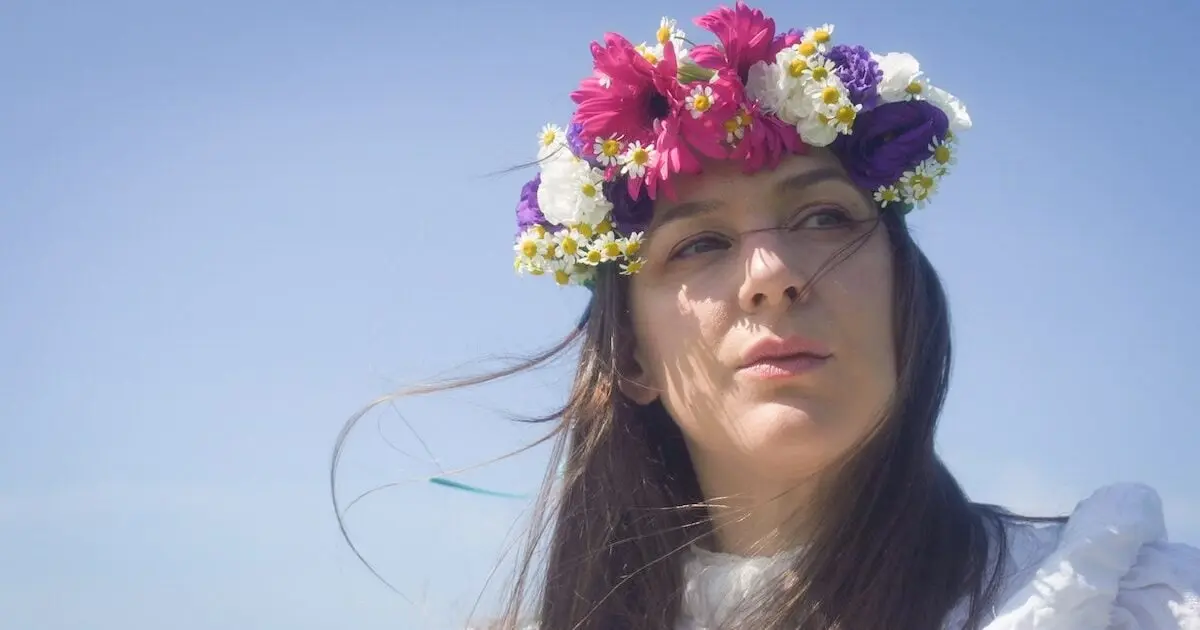
Alongside the album announcement, audiences have been treated to the exclusive premiere of a brand-new single and music video: "Green Grow the Laurels." Directed by frequent collaborator Alec Bowman_Clarke, the video strips away the cozy tropes of pastoral nostalgia—replacing twilight and candlelight with an obliterating, sun-bleached summer landscape reminiscent of folk-horror cinema.
With guest contributions from harpist Mary Ann Kennedy and pianist Matt Robinson, alongside Clarke’s own multi-instrumental arrangements on voice, field organ, guitar, and recorders, Regenerene MMXXVI shapes up to be one of the most intellectually and emotionally demanding folk releases of the decade.
Detailed Chronology: From Standalone Singles to a Unified Vision
To fully understand the weight of Regenerene MMXXVI, one must trace the breadcrumbs Clarke has deliberately laid out over recent months. Earlier, listeners were introduced to two startlingly reimagined traditional songs:
- "Katie Cruel": A stark exploration of estrangement, public alienation, and the grueling realities of maintaining an uncompromising artistic life in a commercialized world.
- "Banks of the Sweet Primroses": A psychological portrait of an individual desperately attempting to retain their sense of self without disappearing entirely inside the blinding act of being seen.
At the time, these tracks were experienced as brilliant, standalone offerings. However, it is now clear they were vanguard pieces for a much grander, cohesive artistic statement. They form the foundational emotional architecture of the upcoming 12-track LP.
The Evolution of a Tradition
Clarke’s philosophy on folk music is central to understanding the chronology of this release. Far from viewing traditional songs as static historical artifacts, she treats them as dynamic cultural technology.
"The folk tradition is, or at least should be, a living organism," Clarke reflects. "Expanding, contracting, evolving, and adapting to an ever-changing landscape, but remaining constant in its ability to process change."
This perspective bridges her recent catalog with her deep-seated reverence for folk royalty. In 2025, Clarke captured the music world’s attention with her specialized live tribute show, Josienne Clarke Sings Sandy Denny. While casual listeners often draw easy comparisons between Clarke’s soaring, pristine vocals and those of the late Sandy Denny, critics quickly realized that the connection runs much deeper. As Danny Neill noted in his live review for Cambridge Junction, the synergy lies in a shared emotional intelligence and a fearless approach to vocal vulnerability. Those who fell under the spell of that live tour will find a permanent artifact on Regenerene MMXXVI, which features Clarke’s haunting, definitive studio version of Denny’s classic composition, Fotheringay.
Supporting Context & Metrics: The Critical Triumph of Far From Nowhere
To contextualize the ambition driving Regenerene MMXXVI, one must look at the critical momentum Clarke built throughout 2025. Her previous studio album, Far From Nowhere, served as a watershed moment in her career, forcing both critics and fans to re-evaluate the boundaries of her artistry.
In his comprehensive album review for Far From Nowhere, critic Danny Neill encapsulated the record’s profound impact:
"Every facet is unifying, evolving as one, and thriving on the very act of being, in a way that makes this Josienne’s grandest effort to date."
The album showcased an artist stepping entirely into her own power, utilizing expansive arrangements, lyrical maturity, and a refusal to pander to genre expectations. Rather than resting on the laurels of that success, Clarke has chosen to pivot backward into the traditional folk canon—not out of regression, but as a deliberate tactical move. By applying the elevated, cinematic songwriting maturity she developed on Far From Nowhere to centuries-old folk roots, Regenerene MMXXVI bridges her original compositions with the ancestral lineage of British and Celtic songcraft.
Furthermore, the production metrics of the new album reflect an intimate, hand-crafted approach. Played and arranged primarily by Clarke herself—utilizing a sparse palette of her own voice, field organ, guitar, and recorders—the record resists the urge toward over-production. Instead, it invites external textures sparingly, relying on the master-class contributions of Mary Ann Kennedy on harp and Matt Robinson on additional piano and keyboards. This skeletal orchestration leaves nowhere for the performer or the listener to hide, placing raw emotional contradiction front and center.

Official Statements & Visual Analysis: "Green Grow the Laurels"
The release of Regenerene MMXXVI is accompanied by the official video premiere for "Green Grow the Laurels," releasing tomorrow. Directed by Alec Bowman_Clarke, the visual component is nothing short of a cinematic masterclass in discomfort, subverting every pastoral cliché associated with traditional folk music.
Alec Bowman_Clarke’s Director’s Notes
In his official notes for the film, Alec Bowman_Clarke articulates a brilliant, unsettling vision for how traditional music should be framed in the modern era:
"In this film for Josienne Clarke’s stark modern rendering of the traditional song Green Grow the Laurels, director Alec Bowman_Clarke removes folk music from the shelter of dusk, candlelight, and haunted interiors, placing it instead beneath an obliterating summer sun.
Drawing on the exposed ceremonial unease of Ari Aster’s ‘Midsommar’ and its cinematic descendants, the film offers nowhere for its subject—or its audience—to hide. There are no shadows deep enough to contain a ghost. No ruined house. No visible pursuer. Only Clarke, the landscape, and an empty wooden chair with which she appears unable to establish a stable relationship.
The chair begins as furniture, becomes an obstacle, then a partner, witness, and then, possibly, a ritual sacrifice. Clarke leans through it, folds herself around it, and submits to positions that seem less performed than inherited. Her smile is beautiful, deliberate, and faintly intolerable. Her movements drift between courtship, possession, and the physical memory of something repeated long before the camera arrived.
A reflected Josienne intermittently echoes the living one. Not as a supernatural double, but as another version held inside the song. The two figures never fully meet. Instead, image and reflection suggest the central violence of oral tradition: a voice may belong completely to the singer while remaining crowded with everyone who has sung before her.
Bowman_Clarke treats the folk song not as an antique to be preserved, but as a structure capable of entering the body. Clarke’s sparse arrangement strips away decorative nostalgia, leaving melody, repetition, and emotional contradiction exposed. Desire becomes warning. Beauty becomes pressure. The pastoral landscape, bleached by excessive light, refuses innocence.
Nothing haunts Green Grow the Laurels. Nothing needs to. The song is already there."
This striking visual metaphor encapsulates the ethos of the entire project. The traditional song is treated as an inherited physical memory—something that possesses the singer rather than merely being performed by them.
Future Outlook: A Defining Moment for Independent Folk
As the music community counts down to the November 20th release date, Regenerene MMXXVI is poised to be a landmark release in modern folk music. By releasing the album through her own imprint, Corduroy Punk, Clarke retains total creative sovereignty, ensuring that her uncompromising artistic vision remains entirely uncompromised by corporate pressures.
With 12 tracks exploring the deep fissures of human experience—bridging her acclaimed interpretations of "Katie Cruel," "Banks of the Sweet Primroses," Sandy Denny’s "Fotheringay," and the newly minted "Green Grow the Laurels"—Clarke is rewriting the rules of how traditional music interacts with the modern psyche.
For followers of intelligent, raw, and intellectually challenging music, November 20th cannot come soon enough. Regenerene MMXXVI promises to be more than just an album; it is an act of cultural re-fleshing, proving that the ghosts of our musical past are still entirely capable of walking under the midday sun.
For more information, tour updates, and pre-order details, visit the official Josienne Clarke Website.