Executive Overview
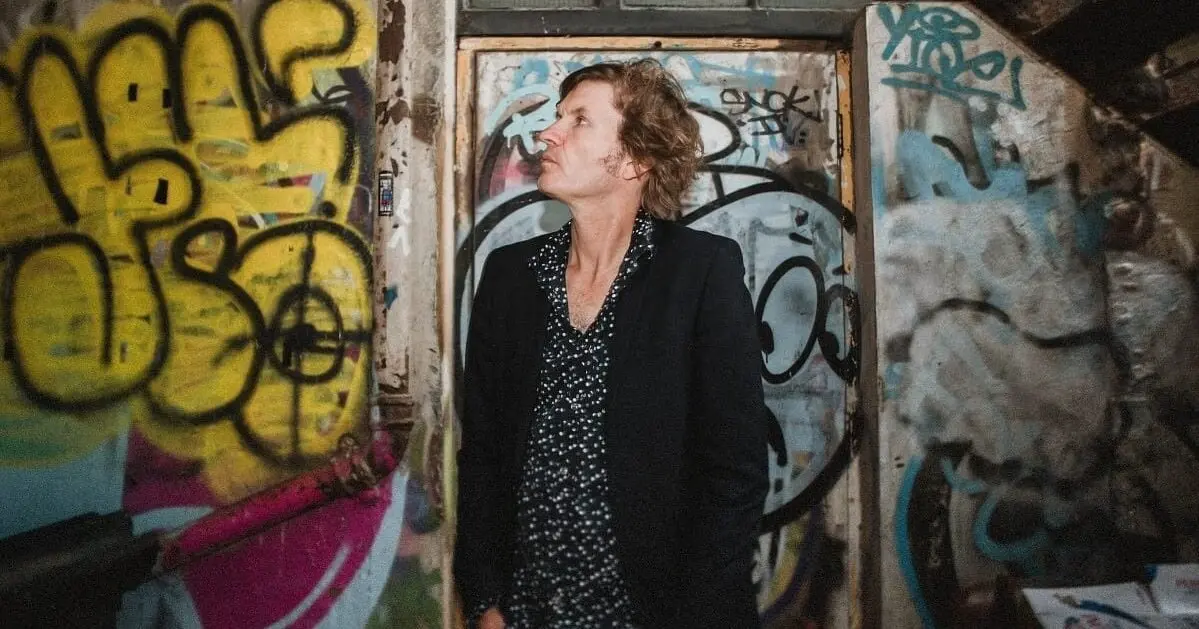
In an era dominated by algorithmic streaming metrics, hyper-produced pop loops, and fleeting viral moments, the traditional working musician occupies a rare, almost mythical space. Enter Jason McNiff, a cornerstone of the British indie-folk landscape whose career exemplifies an unwavering, decades-long commitment to his craft. McNiff’s latest full-length release, Ten Blue Songs, arrives not merely as another album in a prolific discography, but as a deliberate celebration of a life lived on the road, in intimate venues, and behind the microphone.
Despite its melancholic title, Ten Blue Songs is a vibrant testament to the community, resilience, and creative vitality McNiff has cultivated over the past twenty-four years. Produced and recorded live in the studio by Trevor Moss (of Trevor Moss & Hannah-Lou), the record captures the immediate, breathing energy of a live ensemble. Featuring delicate, atmospheric accompaniments on double bass, clarinet, piano, and violin, the album serves as a masterclass in acoustic storytelling.
Drawing thematic inspiration from literary heavyweights like Italo Calvino, Ernest Hemingway, and Raymond Carver, alongside a subtle nod to fingerstyle guitar luminary Davy Graham, McNiff refuses to chase modern commercial trends. Instead, he anchors his music in the realities of working-class performance life—a rigorous schedule of weekly residencies, sold-out theatre shows, and deep community engagement along the southern coast of England. This retrospective analysis explores the anatomy of Ten Blue Songs, examining McNiff’s trajectory from a quiet indie-folk secret to an essential pillar of modern British acoustic music.
Detailed Chronology: From Hidden Gem to Coastal Troubadour
To understand the weight and significance of Ten Blue Songs, one must retrace the trajectory that brought McNiff to this creative milestone. Back in April 2017, critic Thomas Blake, reviewing McNiff’s acclaimed anthology Rain Dries Your Eyes, described him as a "hidden gem in the British indie-folk scene." At that juncture, McNiff had already spent seventeen years quietly and confidently constructing a formidable body of consistently exceptional work.
Blake famously observed that McNiff possessed "a clarity of purpose that is rarely found, let alone maintained throughout a decade or so of music-making." Nearly another decade has elapsed since that appraisal, marked not by commercial compromise, but by an intensified dedication to the physical, unmediated act of live performance. McNiff has transformed himself from a traditional touring singer-songwriter into a localized cultural anchor in Hastings, East Sussex.
Over the past year alone, McNiff achieved the impressive feat of selling out two major music theatres in Hastings: The Stables and the Kino. These milestones are the fruits of a relentless working schedule. McNiff curates and hosts local live series such as "Sundowner" and "Folk Blues and Beyond." These events see him performing solo or with his full band, joined by a rotating cast of esteemed guest artists hailing from across the UK, Europe, and the United States.
Furthermore, his weekly Saturday "Coffee House Sessions"—an intentional homage to legendary London folk clubs of yesteryear like Bunjies and Les Cousins—solidify his status as a modern-day musical custodian. Backed by Matt Armstrong on double bass and enriched by local virtuosos such as Richard Moore on violin and Bjorn Dahlberg on clarinet, McNiff’s musical life is rooted in the physical soil of his community.
Ten Blue Songs is the direct audio artifact of this intense, grinding, and deeply rewarding performance schedule. As McNiff notes, the album’s existence is inextricably tied to the sweat and resonance of the stage.
Supporting Context & Metrics: The Anatomy of a Working Life
The production philosophy behind Ten Blue Songs marks a deliberate rejection of modern digital over-editing. Recorded live under the stewardship of Trevor Moss, the record preserves the spontaneous chemistry of McNiff’s ensemble. The instrumentation—stretching across warm double bass lines, smoky clarinet motifs, evocative piano chords, and weeping violin passages—creates a cinematic expanse that mirrors the rugged beauty of the English coastline.
Artistically, McNiff looks outward for inspiration, channeling the minimalist ethos of mid-century literature. The economy of words found in Ernest Hemingway’s prose and the structural surprises of Italo Calvino’s short stories heavily inform the lyrical architecture of the tracks. This literary influence meets the technical legacy of British guitar pioneer Davy Graham, whose shadow looms large over the record’s intricate fingerpicking.
Geographically and culturally, the album is anchored in Hastings. McNiff has consciously modeled his career on the steadfast dedication of historical artists who prioritized the consistency of performance over Hollywood pageantry.
"I always loved how Woody Allen would play his clarinet every Monday night for 50 years, missing the Oscars, but never missing a show," McNiff reflects. "Now, I have three well-attended nights a week in Hastings, and I never miss a show! This album is evidence of our working life and couldn’t exist without the gigs."
Official Statements: Track-by-Track Breakdown with Jason McNiff
In his own words, Jason McNiff guides listeners through the intimate details, literary inspirations, and studio mechanics behind each of the ten tracks on Ten Blue Songs.
1. Morning’s Come
"This is really the introduction to the record. It sets the scene: slow, brooding, with a kind of tango feel to it. It has also become a very natural way for us to open gigs, so it made sense for it to do the same job here. Trevor Moss, who produced the record, added a few little flourishes, which really help create the atmosphere. He’s doing all the back vocals at the end, which sound like a Gregorian chant. Clever chap."
2. Nightshift Blues
"One of the key tracks on the record for me. It has that mixture of folk and jazz which is really at the heart of what this band does, and this is where Bjorn Dahlberg’s clarinet really comes into its own. The song was inspired by a short story by Italo Calvino, about a married couple whose lives and working hours barely allow them to meet. We recorded it live in the studio, and of all the tracks on the album, this is one of the ones that most closely captures what we actually sound like onstage. Matt Armstrong plays a mean Double Bass part."
3. Lost My Way
"I found the lyrics to this at the bottom of a drawer while moving house. It’s an older song that I’d forgotten about. It has a slightly unusual structure—the second verse is much longer than the first—which I like because it gives the song the feeling of wandering off somewhere rather than behaving itself. There are images of Poland in it, and of standing at my grandad’s grave. By the end, it opens out into a kind of lads’ singalong chorus, while Bjorn’s clarinet smokes the whole thing up beautifully."
4. Whoever I Am
"One of the most recently written songs on the album, and one I really like. It’s set in Hastings and walks ‘over the hill’—the same hill John Martyn used to walk over when he lived here. Not very much happens in the song, which is part of what I like about it. It’s mostly real-world details: people and places, things noticed along the way. I suppose I was after something a little like a Hemingway story, where the ordinary details are allowed to carry whatever else is going on underneath. Richard Moore plays violin on this one and gets right inside that atmosphere."
5. Dreams Coming Home
"You might recognise the guitar introduction here from Davy Graham’s ‘Anji’. It’s a little nod to one of the great English guitar geniuses, and to a piece I’ve been playing for twenty years, actually probably longer. The song itself is another very recent one. The idea is that my dreams are like prodigal sons: they’ve gone off into the world, got themselves into trouble, and now they’re coming home. I particularly like the bit about their mum: ‘Can’t conceal my happiness / I’ll forgive before they confess / They can tell me about their mum.’ There’s something about treating your own dreams as errant children that amused me, but there’s some truth in it too."
6. Folsom Prison Blues
"This has become another live favourite. A reviewer said that my voice lacked the gravitas of Johnny Cash, which is very rude, but I’m not really trying to impersonate Johnny Cash. What interested me was the prison story itself and trying to get inside the head of the person telling it. Maybe he didn’t have a voice full of gravitas either. We changed the song quite a bit, putting it into a minor key, and it seems to reveal something different that way. It feels less like a rock ’n’ roll hit and more like an old folk ballad—a dark story that might have been passed around for years before anybody knew who wrote it."
7. Scared to Love
"I nearly threw this one away. I felt slightly embarrassed singing it and was reluctant to play it to anybody. The basic idea had been around for a while in different forms, with other melodies and bits of music attached to it, but nothing ever seemed quite right. Eventually I realised it needed to be very stripped back and vulnerable. We needed another song for the record, so I brought it in, still feeling rather unsure about it. Trevor said he loved it and that it absolutely had to be on the album. I’m still not entirely sure. Maybe that’s appropriate for the song."
8. One More Goodbye
"An English road song, really. I’m driving around the Weald with my girl when, quite unexpectedly, we pass the house of an old flame and everything comes flooding back. I liked the idea of that sudden collision between the life you’re living now and another life that once seemed just as real. Lyle Zimmerman, a multi-instrumentalist originally from Washington, D.C., and now living in Hastings, helped me with the lyrics. It feels very rooted in this part of the world to me—the roads, the landscape, the way memory can suddenly attach itself to a completely ordinary place."
9. Gatling Gun
"This came from the funeral of an old friend of mine. He was only my age, and his death was completely unexpected. I remember the arrival of the coffin, standing there in the chapel, and the overwhelming feeling that the whole thing was wrong and strange. There are some experiences you don’t really understand while they’re happening, and perhaps never understand afterwards either. This song came out of that feeling more than any attempt to explain it."
10. 3pm Home Alone
"This is a song about getting ChatGPT to interpret a dream. I had a lyric that made that completely explicit, but quite a few friends and family members protested that you can’t have a song about ChatGPT. Eventually I yielded and changed it. Maybe they were right. I’m still not completely convinced. I need to ask ChatGPT."
Future Outlook
As Ten Blue Songs makes its way into the hands of music lovers and critics alike, Jason McNiff’s trajectory points firmly toward a continuation of his grassroots ethos. In an industry constantly scrambling to reinvent itself via technological disruption—a theme humorously touched upon in his closing track—McNiff proves that enduring artistic relevance is achieved through authenticity, consistency, and an unbreakable bond with a live audience.
With his weekly residencies firmly established, sold-out theatre shows cementing his regional status, and a critically praised record capturing his band at the absolute peak of their powers, McNiff stands as a beacon for independent artistry. Ten Blue Songs is not an endpoint, but a milestone marker on a lifelong musical journey—one that will undoubtedly see McNiff taking the stage week after week, letting the stories, the roads, and the blues guide his way.
Order & Live Dates Information
- Digital Orders: Available now via Bandcamp
- CD Orders: Available via Norman Records
- Live Dates & Tour Schedule: Visit the official Jason McNiff Website