Executive Overview
The opening months of 2026 heralded an unpredictable sonic mutation within the outer bounds of independent music. Brian Weitz—internationally celebrated as Geologist, a foundational pillar and atmospheric architect of the experimental pop collective Animal Collective—unveiled his inaugural full-length solo record. Titled Can I Get a Pack of Camel Lights? and released via the venerated avant-garde imprint Drag City, the album immediately disrupted expectations. Rather than leaning into the lush, maximalist psychedelic pop or organic pastoralism often associated with his parent band, Weitz carved out a jagged, nocturnal niche. The record synthesizes a blistering post-post-punk ethos, the abrasive, droning overtones of an overdriven medieval hurdy-gurdy, and the visceral, pulse-pounding resonance of throbbing analog synthesizers.
The result is a work of uncompromising audio architecture that lodges itself deep within the listener’s cerebellum, demanding active, disorienting engagement. Building on the momentum of this winter release, Weitz has announced an extensive live itinerary slated for November 2026. He will bring his rippling, hypnotic songscapes across the stages of the United Kingdom and the Iberian Peninsula, translating the dense studio alchemy of Can I Get a Pack of Camel Lights? into an immersive live experience.
Coinciding with this tour announcement, Weitz has collaborated with visionary visual artist Nick Ciontea—hailed for his masterclasses in psychedelic aesthetics, notably his previous work with Bitchin Bajas—to construct an accompanying official music video for the album’s towering closing track, "Sonora." This piece serves as a visual wormhole, translating the record’s textural grit and expansive spatial dynamics into a hallucinatory cinematic journey. As Weitz prepares to take these compositions on the road, this milestone marks a critical chapter in his storied career, signaling a daring evolution for one of contemporary experimental music’s most restless minds.
Detailed Chronology: From Concept to Live Realization
To understand the trajectory that led to Can I Get a Pack of Camel Lights?, one must retrace a methodical, decades-long evolution of sound design and electronic experimentation. Within Animal Collective, Brian Weitz has long operated as the sonic chemist, manipulating modular synthesizers, field recordings, and vocal processors to create the dense, humid ecosystems that defined seminal records like Sung Tongs, Merriweather Post Pavilion, and Painting With. However, the germination of a dedicated solo release required a deliberate pivot away from collective consensus toward an uncompromised personal idiom.
The project began to take shape during periods of intermittent downtime amidst Animal Collective’s relentless touring and recording schedules. Weitz gravitated toward instruments and textures that offered tactile, unpredictable physical resistance. Where software allows for infinite polish, the deployment of vintage analog hardware, coupled with the abrasive physical resonance of a hurdy-gurdy pushed far beyond its traditional acoustic boundaries, introduced a raw, unmitigated friction. Drag City, a label renowned for championing uncompromising iconoclasts, recognized the singular vision of the material and slated the record for a high-profile release to kick off the 2026 calendar year.
Upon its January drop, Can I Get a Pack of Camel Lights? challenged critics and fans alike. It discarded easy melodic resolutions in favor of rhythmic drive and sonic abrasion. The record’s journey into the public consciousness reached a vital inflection point with the release of the "Sonora" music video. Directed by Nick Ciontea, the visual companion piece anchors the album’s ambient and industrial tensions in a hyper-vivid, shifting sensory landscape. Ciontea’s history of crafting immersive psych-visuals—honed through hypnotic collaborations with Bitchin Bajas—proves to be the ideal match for Weitz’s sonic aesthetic, utilizing optical feedback loops and digital distortions that mirror the track’s slow-burn intensity.
Now, the timeline shifts from the isolation of the studio to the kinetic energy of the stage. The newly announced November 2026 tour represents the live manifestation of these complex studio experiments. Kicking off on November 3rd at Radar Estudios in Vigo, Spain, the routing cuts a deliberate path through Portugal—stopping in Porto, Coimbra, and Lisbon—before vaulting across the English Channel for a formidable UK leg. The British dates, featuring collaborative performances with drone-rock titans Water Damage, will touch down in Liverpool, Manchester, and Newcastle-upon-Tyne, before culminating in an intimate, high-fidelity headlining performance at London’s Iklectik on November 10th. The tour will then loop back to Spain for a marquee appearance at the Moments Festival in Malaga on November 13th.
Supporting Context & Metrics: The Anatomy of a Sonic Shift
The release of Can I Get a Pack of Camel Lights? and the subsequent tour do not exist in a vacuum; they reflect a broader cultural shift within contemporary underground music toward hybrid genres that marry analog warmth with industrial coldness. To contextualize Geologist’s solo venture, it is instructive to examine the technical and stylistic pillars that support the album’s reception and production.
The Instrumentation: Bridging Centuries and Circuits
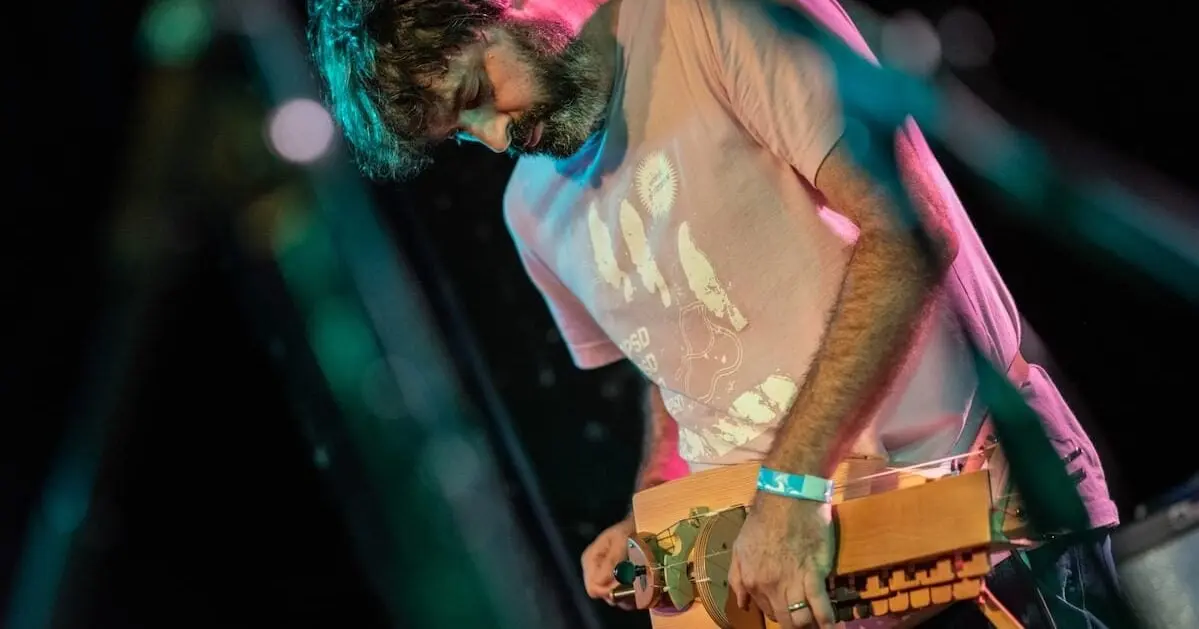
The most striking element of Weitz’s solo output is the deliberate juxtaposition of ancient and modern technologies. The hurdy-gurdy—a stringed instrument that produces sound by a hand-cranked rosined wheel rubbing against the strings—has roots stretching back to the 10th century. By running this instrument through modern overdriven amplifiers and distortion pedals, Weitz strips away its traditional European folk associations, transforming it into a buzzing, drone-heavy generator of avant-garde texture.
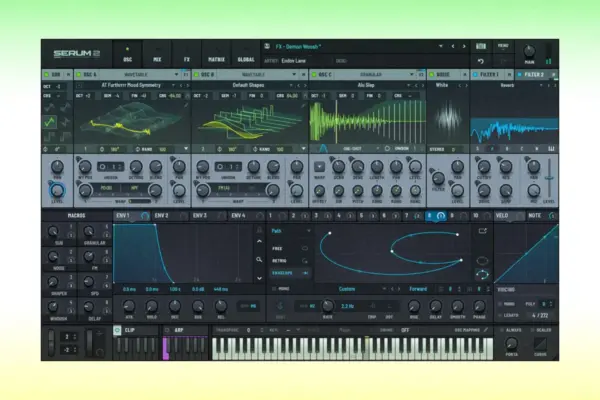
This acoustic grit is juxtaposed against the clinical precision and organic warmth of analog synthesizers. Unlike the soft synths ubiquitous in modern pop production, the hardware utilized by Geologist introduces a degree of thermal drift and voltage instability. This means every performance, whether tracked in the studio or projected live, carries a living, breathing volatility.
Tour Logistics and Collaborative Ecosystems
The live routing for the November 2026 tour has been meticulously curated to pair Geologist with spaces and artists that complement his aesthetic. Venues like London’s Iklectik—an organization dedicated to experimental art, spatial sound, and exploratory music—provide an ideal acoustic laboratory for Weitz’s multi-channel synth setups. Furthermore, the inclusion of Austin, Texas psych-drone heavyweights Water Damage for the northern UK dates (Liverpool, Manchester, and Newcastle) underscores the monolithic, hypnotic gravity of the live show. Water Damage, known for their massive, repetitive minimalism and dual-drummer onslaught, shares a philosophical kinship with Weitz’s exploration of sustained, trance-inducing frequencies.
| Date | City, Country | Venue | Collaborative Act / Notes |
|---|---|---|---|
| Nov. 3, 2026 | Vigo, ES | Radar Estudios | Headlining performance |
| Nov. 4, 2026 | Porto, PT | Lovers and Lollypops | Presented by local cultural powerhouse |
| Nov. 5, 2026 | Coimbra, PT | Fundação Bissaya Barreto | Intimate architectural setting |
| Nov. 6, 2026 | Lisbon, PT | B.Leza | Riverside venue showcase |
| Nov. 7, 2026 | Liverpool, UK | St. Bride’s | w/ Water Damage |
| Nov. 8, 2026 | Manchester, UK | The White Hotel | w/ Water Damage (Industrial/Underground space) |
| Nov. 9, 2026 | Newcastle-Upon-Tyne, UK | The Lubber Fiend | w/ Water Damage |
| Nov. 10, 2026 | London, UK | Iklectik | Spatial audio / Ambient showcase |
| Nov. 13, 2026 | Malaga, ES | Moments Festival | Festival appearance |
Official Statements and Artistic Intent
While Brian Weitz has historically maintained an analytical and understated approach to public relations—often favoring the abstract language of sound over direct media soundbites—the rollout of Can I Get a Pack of Camel Lights? has offered rare insight into his creative psychology.
In statements surrounding the album’s announcement and the subsequent rollout of the "Sonora" visualizer, Weitz emphasized the necessity of exploring creative territories entirely distinct from his work with Animal Collective. Where Animal Collective operates as a democratic hive mind requiring constant negotiation between disparate artistic impulses, his solo work serves as an unfiltered monologue. The album title itself—colloquial, casual, yet strangely evocative of late-night urban isolation—acts as a counterweight to the often heady, mystical vocabulary frequently attached to experimental music.
Visual collaborator Nick Ciontea addressed the creative alignment required to bring "Sonora" to life, noting:
"Working within the sonic world that Brian has constructed on this record requires a complete surrender to texture. The music doesn’t move in straight lines; it pulses, it decays, and it breathes. The goal with the visualizer wasn’t to tell a literal narrative, but to build a parallel optical space where the viewer feels just as disoriented and exhilarated as they do listening to the heavy drone of the analog synths."
Drag City representatives have likewise framed the release as a vital recalibration of what an established artist can achieve when stripping away commercial expectations. By positioning the record within their storied catalog of uncompromising avant-garde releases, the label has signaled that Can I Get a Pack of Camel Lights? is not merely a side project or a temporary diversion, but a substantial artistic statement in its own right.
Future Outlook: The Horizon for Geologist and Beyond
As the music community looks toward the latter half of 2026, the implications of Geologist’s solo venture extend far beyond a single album cycle and a modest international tour. For decades, members of Animal Collective have pursued solo and collaborative side projects—from Panda Bear’s critically acclaimed electronic pop explorations to Avey Tare’s idiosyncratic acoustic-psych releases—yet Geologist’s entry into the solo arena fills a distinct stylistic void.
By embracing a sound that bridges the gap between post-post-punk austerity, noise-drone, and rhythmic analog electronica, Weitz has proven that his creative palette is expanding rather than contracting as his career matures. The November tour through the UK and Iberian Peninsula will serve as a crucial crucible for these tracks. Live performance often acts as a catalyst for electronic musicians, forcing static studio compositions to mutate, stretch, and adapt to the physical dimensions of real-world rooms.
Furthermore, the successful marriage of sight and sound demonstrated in the "Sonora" video collaboration with Nick Ciontea hints at a burgeoning multi-media dimension to Geologist’s future endeavors. As experimental music continues to find receptive audiences in specialized underground venues—from the industrial concrete of Manchester’s White Hotel to the sonic laboratories of London’s Iklectik—artists who refuse to rest on their laurels remain essential cultural wayfinders.
For devoted followers of Animal Collective and adventurous listeners navigating the broader currents of contemporary independent music, Can I Get a Pack of Camel Lights? stands as a definitive early-year masterwork. As Brian Weitz packs his modular gear, his overdriven hurdy-gurdy, and his crate of Camel Lights for the road ahead, the autumn itinerary promises to be one of the most intellectually stimulating and sonically immersive live experiences of the year. Tickets for the tour are currently available through official ticketing channels, and the album remains in rotation across physical and digital platforms via Drag City.