Executive Overview
For decades, the historical geography of jazz has been mapped through a series of iconic rooms—venues like the Village Vanguard in New York, the Bimhuis in Amsterdam, or the Jazzhus Montmartre in Copenhagen. It was within the latter of these storied spaces that a profound chapter of transatlantic and cross-continental jazz history was written in the autumn of 1972. In June of that year, South African pianist and composer Dollar Brand (later known as Abdullah Ibrahim) sat alone at the piano inside the Montmartre. Engineer Lars Vester Petersen rolled tape, capturing a singular, meditative solo performance that would eventually be released to critical acclaim as Ancient Africa.
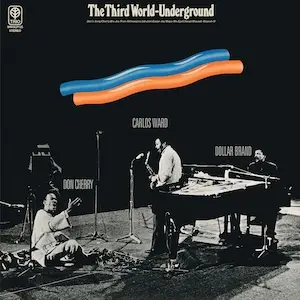
Just five months later, on November 14, 1972, Brand returned to the very same room, sitting before the same engineer’s desk. Yet this time, he was far from alone. Flanked by visionary American trumpeter Don Cherry and Panamanian-American alto saxophonist Carlos Ward, Brand expanded his intimate, cyclical solo piano architecture into a dynamic, three-way dialogue.
For the first time outside of its original, highly limited Japanese pressing, this historic Copenhagen performance is now available globally via a meticulous reissue campaign spearheaded by the boutique label Wewantsounds. Utilizing the original Japanese artwork, an authentic OBI strip, newly commissioned bilingual liner notes, and expert remastering from Paris’s Colorsound studio, the release brings long-overdue light to a crucial pivot point in modern creative music.
However, this vinyl release arrives under a heavy, poignant cloud. With the passing of Don Cherry in 1995, followed by the deaths of Carlos Ward in January and Abdullah Ibrahim in June, this long-awaited reissue serves as an unprompted memorial. It captures three generational titans at the absolute peak of their powers, operating in a liminal space between avant-garde exploration, post-bop structural rigor, and deep, ancestral South African roots.
Detailed Chronology: From Johannesburg to Copenhagen and the Genesis of Universal Silence
To understand the weight of the November 14, 1972 Copenhagen session, one must trace a transatlantic web of relationships, political displacements, and artistic convergences that had been unfolding for over a year.
The Montmartre Trilogy and the Evolution of Themes
The session occupies a middle ground in both time and space between two monumental solo documents: Ancient Africa, recorded in June 1972, and Sangoma, cut for the Sackville label in February 1973. Yet, it also looks backward to African Piano, recorded at the same Montmartre venue in 1969.
This sequence represents a fascinating compositional experiment: one pianist, one room, one city, and a tightly curated handful of foundational themes subjected to progressively more crowded, interactive settings. Tunes like "Bra Joe From Kilimanjaro" and "Jabulani-Easter Joy," which originated as private, meditative architecture on Brand’s earlier solo outings, are suddenly handed over to other musicians. The left-hand vamps that once held the floor alone are now contested, stretched, and answered by horns.
The Intercontinental Orbit
The formation of this trio was anything but a hasty pick-up gig; it was a meeting eighteen months in the making. Brand had not recorded in a trio format since Peace, which was cut in Johannesburg in 1971 before his permanent political exile cemented his status as a global citizen of sound.
The artistic kinship between Brand and Don Cherry had already been publicly consecrated in June 1971. During the inaugural Organic Music Society sessions in Sweden, Cherry dedicated a stirring performance of "Bra Joe From Kilimanjaro" to Brand, long before either artist knew what structural shape their eventual collaboration would assume. Cherry’s nomadic aesthetic—rooted in free jazz, world music traditions, and pocket-trumpet lyricism—found an ideal foil in Brand’s cyclical, Ellington-infused modal vamps.
Nomenclature and the Myth of "The Third World-Underground"
A significant point of historical correction surrounds the moniker attached to this group. While subsequent collectors and reissue catalogs have frequently labeled the ensemble The Third World-Underground—owing to the title of the original Japanese LP release—this designation is a misnomer born of a record sleeve rather than the artists’ intent.
When asked in a 1973 interview how he came to form a group with Cherry, Brand explicitly named the ensemble Universal Silence. Brand’s philosophy behind the name was deeply spiritual and aesthetic: music is silence, and the true listener perceives sounds through an inner ear. In Brand’s view, the act of listening is itself a performance executed by the audience, and the physical group existed merely as a transducer, amplifying the silence latent within sound.
This conceptual framework explains why the Berliner Jazztage billed them as Universal Silence just eleven days prior to the Copenhagen concert. Furthermore, the Berlin tape—subsequently recovered from the WDR Köln archives—preserves the name as its rightful an unbroken suite in six parts, whereas the Copenhagen performance parses the same overarching ideas into seven distinct tracks. To label the trio The Third World-Underground is to prioritize commercial packaging over the creator’s philosophical framework.
Supporting Context & Metrics: Sociopolitical Tensions and Vinyl Architecture
The original Japanese release of this material was far from a neutral commercial transaction; it was a deeply politicized cultural artifact situated within the global currents of decolonization, non-aligned political positioning, and avant-garde jazz exchange.
Fanon, Decolonization, and the Export of South African Jazz
In 1974, Japanese critic Toshihiko Shimizu analyzed Dollar Brand’s work through the lens of Frantz Fanon’s writings, specifically interpreting the circular, hypnotic action of rhythm in The Wretched of the Earth as a direct form of resistance against colonial alienation. Shimizu situated Brand alongside contemporary expatriate pianist Chris McGregor and The Brotherhood of Breath as the two vital halves of a culturally rich, politically fractured nation’s artistic export.

For a Japanese record label to issue music by an exiled South African piano master under politically charged paradigms was an intentional act. It positioned the music not merely as entertainment, but as a "third way"—a non-aligned cultural platform where decolonization was enacted as a musical premise.
The Vinyl Split: Structural Arguments of Sides 1 and 2
The physical sequencing of the original LP sides functions as a structural argument, with each side behaving almost like a separate, self-contained record.
- Side 1 (The Portraiture): Side 1 spans nearly twenty minutes across just two tracks: Don Cherry’s "Don’s Song" and Dollar Brand’s "Cherry." This layout constitutes an act of mutual portraiture. Cherry wrote the first piece; Brand penned the second, explicitly naming it for his collaborator (a tune Brand had previously recorded solo in the very same room five months prior). Here, two master improvisers trade formal courtesies and stylistic blueprints across the vinyl groove in real time.
- Side 2 (The Suite and Contraction): Side 2 runs to a similar length but compresses five distinct tracks into its span, honoring the suite form Brand habitually favored.
- “Bra Joe From Kilimanjaro” opens the side, transforming a familiar solo vamp into a dynamic group negotiation.
- “Jabulani-Easter Joy” holds the structural middle ground at five and a half minutes.
- “Waya-Wa-Egoli” contracts the timeline further. Referring to eGoli—the vernacular Zulu name for Johannesburg, the "place of gold" and the ultimate destination of South Africa’s migrant labor force—this traditional song breezes past in just over three minutes.
- “Swazi” lasts a mere ninety-seven seconds.
- “Wayeah-Wayeah-O” unites all three voices in a climactic unison vocalization and instrumental flourish.
By opening with an extended, expansive seven-minute piece and concluding with three brief fragments totaling under seven minutes, the side presents an argument centered on structural contraction. If the trio’s expansive improvisations represent macro-level freedom, their ability to distill immense emotional weight into a minute and a half reveals micro-level mastery.
The Anchor of Carlos Ward
While Cherry and Brand often dominate historical narratives of the session, alto saxophonist and flutist Carlos Ward provided the indispensable rhythmic and harmonic anchor that made the group’s elasticity possible.
Ward’s storied career included sitting in with John Coltrane in Seattle in 1965—an association that survives primarily through oral testimony, as that octet never entered a recording studio—as well as extensive tenure inside Abdullah Ibrahim’s various ensembles. (Though his brief stint in the funk-fusion outfit B.T. Express is frequently omitted from high-brow jazz retrospectives, it underscores his staggering stylistic versatility).
Ward earned his place in this avant-garde lineage through his searing solo work on Cherry’s Relativity Suite and Brand’s selection of him for the ambitious African Space Program orchestra. In the trio format, Ward’s approach contrasted brilliantly with Cherry’s. While Cherry drifted freely through Brand’s modal fields like an ethereal wind instrument, Ward’s alto saxophone planted its feet firmly in the earth, leaning aggressively into the beat. The friction generated between Cherry’s weightless lyricism and Ward’s grounded, blues-infused attack is the secret engine that sustains the sprawling improvisations of Side 1.
Official Statements & Critical Reassessment
The release of Live at Jazzhus Montmartre 1972 by Wewantsounds has been accompanied by critical acclaim, yet it has also laid bare lingering oversights in jazz journalism and historical archiving.
In the newly commissioned liner notes, critic Jacques Denis offers a warm, evocative assessment of the session, praising Don Cherry’s wandering nomadism and Dollar Brand’s deep Ellingtonian inheritance. However, the text was evidently penned prior to the recent passings of both Ibrahim and Ward, lending the essay the poignant feel of a dispatch from a slightly earlier, less grieving era.
Furthermore, the initial promotional materials for the reissue noted Abdullah Ibrahim’s passing and framed the release as a posthumous tribute to his towering legacy. Yet, Carlos Ward—who died just months prior in January—was once again omitted from the primary framing. This oversight mirrors a regrettable pattern that shadowed Ward throughout his career: the sideman brilliance that grounds historic sessions is routinely overshadowed by the marquee headliners.
Despite these archival oversights, the physical product itself stands as a masterclass in boutique vinyl production. Remastered at Paris’s Colorsound studio from pristine source tapes, the album offers forty minutes of urgent, timeless music. The packaging honors the original Trio Records / Nadja Japanese pressing (a sub-label now perhaps best remembered for its association with Ryo Fukui masterworks), complete with faithful artwork and bilingual documentation.
Yet, perhaps the most fitting statement on the music comes not from the publicists or the liner-note writers, but from Brand himself. Reflecting on what he demanded of his audiences, Brand’s directive was characteristically blunt and democratic: Whoever you are, wherever you come from, this is your music.
Future Outlook: Preserving the Avant-Garde Archives
The successful global reissue of Live at Jazzhus Montmartre 1972 signals a growing, vital appetite among contemporary listeners for deep archival excavations from the golden age of spiritual and free jazz. As physical labels like Wewantsounds, Elemental Music, and Resonance continue to scour European broadcast vaults and private collections, several broader implications emerge for the future of jazz preservation:
- The Reclamation of Broadcast Archives: Much of the unreleased master-tape goldmine from this era—such as the WDR Köln vaults that preserved the Universal Silence Berlin session—remists in European radio archives. Future projects must prioritize securing and officially releasing these pristine radio transcriptions, which frequently sound superior to club-date cassette bootlegs.
- Holistic Sideman Historiography: The oversight regarding Carlos Ward in contemporary reissue marketing highlights an ongoing industry flaw. As the generation of 1960s and 1970s jazz innovators passes on, future reissue campaigns must adopt a more holistic historiography—ensuring that sidemen, co-conspirators, and rhythm-section anchors receive equal billing and critical analysis in liner notes and press releases.
- Globalized Jazz Geographies: Reissues of this caliber challenge Eurocentric and Americocentric narratives of jazz history. By tracing the music from Johannesburg to Stockholm, Copenhagen, Berlin, and Tokyo, modern archival work reinforces the reality that jazz was never bound by national borders. It was—and remains—a borderless, diasporic conversation centered on liberation, identity, and universal human connection.
Ultimately, Live at Jazzhus Montmartre 1972 is far more than a historical artifact dusting off the shelves of a Japanese collector’s market. It is a living, breathing testament to three artists operating at the nexus of freedom and tradition—reminding us that true sonic exploration is, and always has been, an exercise in shared silence.