Executive Overview
The intersection of horror and popular music has long been dominated by the distortion pedals, corpse paint, and theatrical pyrotechnics of rock and metal. Icons such as Alice Cooper, Marilyn Manson, and Rob Zombie have successfully carved out profitable, terrifying niches that treat the macabre as a permanent aesthetic home. Outside of these heavy genres, the pickings grow slimmer, though cultural touchstones do exist. Michael Jackson’s cinematic tour de force "Thriller" and Ray Parker Jr.’s infectious, synth-driven "Ghostbusters" theme remain rare, monumental proofs that horror imagery can capture the mainstream pop imagination.
Yet, an intriguing sonic question has largely remained unexplored by the broader musical community: What does the supernatural actually sound like through the sophisticated, improvisational lens of jazz?
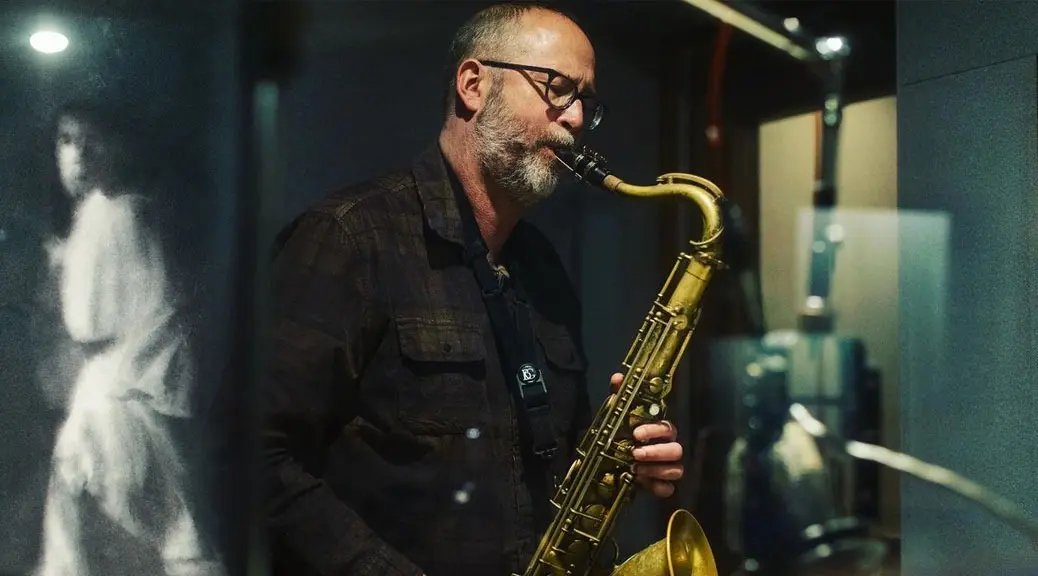
Enter esteemed saxophonist and composer Michael Blake. Arriving a month ahead of the spooky season, Blake’s latest studio release, Halloween Tales, confronts this question head-on. Merging his signature post-bop sensibilities with the restless exploration of avant-garde jazz, Blake reinterprets some of his personal cinematic and television favorites. Backed by a stellar ensemble of long-standing creative partners—pianist Gary Versace, bassist Ben Allison, and drummer Michael Sarin—Blake sidesteps predictable tropes to deliver an album that is as intellectually stimulating as it is playfully chilling.
Rather than leaning on exhausted sonic clichés, Halloween Tales positions the language of modern jazz as a remarkably natural vehicle for tension, mystery, and shadow play. In doing so, Blake demonstrates that the sophisticated harmonic architecture of jazz and the unsettling atmospheres of horror share a profound, uncharted kinship.
Detailed Chronology: A Career Forged in Avant-Garde Landscapes
To understand the fearless creative choices driving Halloween Tales, one must examine the rich, multifaceted trajectory of Michael Blake himself. Born in Montreal and currently based in the crucible of New York City’s creative music scene, Blake’s career is a masterclass in artistic reinvention. For decades, he has sought out projects that afford him the freedom to deconstruct musical narratives, translating cinematic and emotional landscapes into bold sonic statements.
Early Foundations and the Lounge Lizards Era
Blake’s professional recording career traces back to the vibrant late-1980s downtown New York scene. It was during this era that he secured a defining role as a core member of John Lurie’s legendary avant-jazz ensemble, The Lounge Lizards. Performing alongside Lurie for a decade, Blake honed his distinct tonal voice amid the group’s theatrical, film-noir-inspired compositions. This formative tenure instilled in him a deep appreciation for music that tells a story, blending sharp jazz improvisation with atmospheric tension—a foundational blueprint that directly informs Halloween Tales.
Cinematic Scores and Eclectic Collaborations
Following his years with the Lounge Lizards, Blake emerged as a formidable bandleader and a universally respected collaborator. His discography spans an astonishing stylistic breadth, reflecting an insatiable curiosity. He composed the original score for John Rubino’s satirical comedy and retro camp film Vodka Rocks, crafting a soundtrack as eccentric and deconstructed as the movie itself.
His deep ties to Brooklyn manifested in the critically acclaimed Ropeadope Records release Red Hook Soul, a warm, groove-laden homage to the borough’s working-class pulse. Conversely, Blake’s artistic output has also navigated profound personal grief; his moving album Dance of the Mystic Bliss was conceived in memory of his late mother, transforming bleak, personal tragedy into transcendent sonic art.
Over a decorated career spanning more than three decades, Blake has recorded and performed with a staggering roster of diverse artists. His CV includes collaborations with genre-crossing heavyweights such as:
- Tommaso Cappellato
- Ben E. King
- Stereo MCs
- Charlie Hunter
- Tricky
- Gil Evans
- Jack McDuff
This eclectic background uniquely positioned Blake to tackle a thematic project centered around horror. His ability to navigate soul, avant-garde, post-bop, and cinematic scoring ensures that Halloween Tales is not a novelty record, but a deeply considered artistic exploration.
Supporting Context & Metrics: Deconstructing Halloween Tales
When artists approach seasonal or holiday-themed albums, the temptation to pander to commercial expectations is often overwhelming. Standard holiday jazz records routinely cycle through the same ten public-domain or heavily commercialized compositions. However, Halloween Tales deliberately avoids the path of least resistance.
Breaking Away from Horror’s Cinematic Heavyweights
Blake consciously sidestepped the most obvious, well-trodden cinematic horror themes. Listeners seeking jazz reinterpretations of the sweeping orchestral terror of The Exorcist (Mike Oldfield’s "Tubular Bells"), the unnerving piano ostinatos of The Oror / Rosemary’s Baby, or Bernard Herrmann’s shrieking string arrangements from Psycho will not find them here.

Instead, Blake curated a tracklist driven by personal resonance, eccentricity, and character-driven charm:
- "The Great Pumpkin Waltz": Pulled directly from the animated television classic It’s the Great Pumpkin, Charlie Brown, this piece is given a high-class jazz strut. It captures the bittersweet, windswept melancholy of childhood innocence mixed with autumn chill.
- "Sally’s Song": A deliciously sweet, emotionally resonant rendition of the poignant classic from Tim Burton’s The Nightmare Before Christmas. Blake’s arrangement honors the fragile, haunting vocal melody of the original while allowing the ensemble to stretch out harmonically.
- The Title Track / Opening Number: Horror purists are immediately rewarded with a vibrant, charming reimagining of the iconic Halloween film theme. Blake manages the delicate balancing act of retaining the original composition’s eerie, pulse-pounding piano motif while filtering it through an organic, improvisational jazz ensemble.
The Ensemble: A Masterclass in Telepathic Interaction
A project as nuanced as Halloween Tales requires an ensemble capable of shifting on a dime from playful whimsy to stark, unsettling avant-garde abstraction. Blake surrounded himself with long-standing collaborators whose collective chemistry forms the beating heart of the record:
- Gary Versace (Piano): Versace provides the harmonic bedrock and the sparkling, often unsettling keyboard textures that evoke the flickering shadows of classic horror cinema.
- Ben Allison (Bass): Allison anchors the rhythm section with a muscular, upright warmth that grounds Blake’s soaring saxophone lines, supplying the necessary tension and release.
- Michael Sarin (Drums): Sarin’s dynamic, texturally rich percussion work avoids heavy-handed rock beats, opting instead for a nimble, impressionistic approach to suspense and momentum.
Official Statements and Artistic Philosophy
In interviews surrounding the rollout of Halloween Tales, Blake has articulated a clear artistic philosophy regarding the intersection of jazz and the macabre. Rather than treating horror as an ironic costume to be worn for the month of October, Blake views the genre through the lens of pure musical wonder.
"Horror and suspense have their own internal logic, a narrative structure built on anticipation, dissonance, and sudden resolution," notes Blake’s production notes. "When you strip away the visual terror of the screen, what remains is pure atmosphere. Jazz is uniquely equipped to explore that atmosphere because improvisation thrives in the unknown."
Blake’s collaborators have similarly echoed the joy of diving into atypical thematic material. By avoiding the campy trapdoors that ensnare many novelty releases, the quartet treats each piece with the same analytical rigor and emotional gravity applied to the American Songbook or modal jazz standards.
Furthermore, industry critics have noted that Halloween Tales arrives at a time when listeners are increasingly hungry for cross-genre experimentation. The blurring lines between cinematic scoring and contemporary jazz—championed by labels like International Anthem and artists like Kamasi Washington—have prepared audiences for conceptual projects that do not neatly fit into traditional marketing bins.
Future Outlook: The Legacy of Halloween Tales and Modern Jazz Experimentation
As Halloween Tales makes its way to record store shelves and digital streaming platforms, its long-term implications for Michael Blake’s career—and the broader contemporary jazz landscape—warrant close observation.
Redefining Seasonal Releases
Too often, holiday-themed albums are dismissed by critics as contractual obligations or fleeting cash grabs. By injecting high-art post-bop and avant-garde sensibilities into Halloween iconography, Blake has set a new benchmark for conceptual seasonal releases. He proves that a thematic album can honor its source material while remaining an uncompromising work of serious musical art.
Expanding the Jazz Audience
Projects like Halloween Tales serve a vital secondary function: audience bridge-building. By anchoring the avant-garde in familiar cultural artifacts—such as Charles Schulz’s television specials and John Carpenter’s legendary slasher themes—Blake creates an accessible entry point for casual music fans who might otherwise feel intimidated by modern jazz improvisation. A listener drawn in by a playful jazz take on The Nightmare Before Christmas may well stay for the sophisticated harmonic interplay and thrilling saxophone detours.
What Lies Ahead for Michael Blake?
Following the release of Halloween Tales, Blake is slated to take the ensemble on a selective live touring schedule, bringing the album’s eerie, swinging aesthetic to intimate club venues and jazz festivals. Given his relentless creative output—which has historically oscillated between cinematic scores, socio-cultural homages, and deeply personal memoirs—fans can only speculate where Blake’s adventurous muse will wander next.
One thing, however, is certain: whether he is unearthing the soul of Brooklyn, mourning a lost parent, or swinging through the haunted landscapes of classic cinema, Michael Blake treats music as an endless frontier. With Halloween Tales, he has successfully proven that even the darkest corners of human imagination can be illuminated by the brilliant, warm glow of a jazz saxophone.