In the realm of contemporary improvised music, the concept of a "vintage" implies a snapshot—a singular moment captured in amber, sealed by date and circumstance. Yet, pianist, composer, and sound artist Sebastian Andreu Bergström rejects this temporal limitation on his latest recording. Titled Solera, the album takes its name from the fractional blending system used in sherry bodegas, where the oldest barrels are never entirely emptied, ensuring that every glass poured carries an unbroken trace of every preceding year.
Built across a rigorous two-year compositional and recording window spanning from 2024 into 2025 at Telefonvägen in Stockholm, Solera is an artifact of patience. It is music that was played, revisited, dismantled, and allowed to settle until it solidified into something profound, atmospheric, and quietly transfixing.
The physical journey of the record is as fascinating as its internal architecture. Initially released in April on compact disc via Amorfon—the Tokyo-based independent label founded in 2004 by composer and steelpan player Yoshio Machida—the album established an immediate cross-continental dialogue. That a contemporary Swedish avant-garde record found its first home in Japan is more than a geographic curiosity; it serves as a conceptual key. Tracks like "Hakone" and "Funabashi" point unmistakably toward the East, framing the listening experience not merely as a sequence of free-jazz compositions, but as a contemplative, unhurried walk through a traditional Japanese woodland.
Now, this sonic journey has manifested in a physical vinyl pressing limited to a scarce 200 copies, championed by Djungel & Jazz, the beloved Stockholm record shop nestled amidst a small forest of greenery at Hökens gata 10, near Slussen and Mosebacke. For collectors and connoisseurs of deep, modern improvised music, Solera represents an essential acquisition, bridging the gap between Nordic free jazz, ambient soundscape design, and Japanese elemental philosophy.
Detailed Chronology: From Stockholm Studios to Tokyo Soundscapes
The genesis of Solera is rooted in a meticulous, unhurried timeline. Over the course of 2024 and 2025, Bergström gathered a stellar octet of Stockholm’s finest improvisers at Telefonvägen. Rather than entering the studio with rigid charts and a strict recording schedule, the ensemble treated the sessions as a living ecosystem. Material was recorded, shelved, evaluated, and returned to repeatedly. This recursive method mirrors the solera aging process: ideas were layered, topped up with fresh improvisational impulses, and cross-pollinated until the boundaries between composition and spontaneous invention dissolved entirely.
The international trajectory of the project accelerated when Yoshio Machida’s Amorfon label picked up the master tapes for a Japanese CD release in the spring. This unexpected alignment with a Tokyo-based avant-garde imprint brought out the subterranean thematic currents already present in Bergström’s writing. The composer’s extensive background in scoring for theater, radio dramas, and cinematic soundscapes ensured that the music possessed an inherent narrative trajectory—a cinematic pacing where silence and texture hold equal weight to harmonic motion.
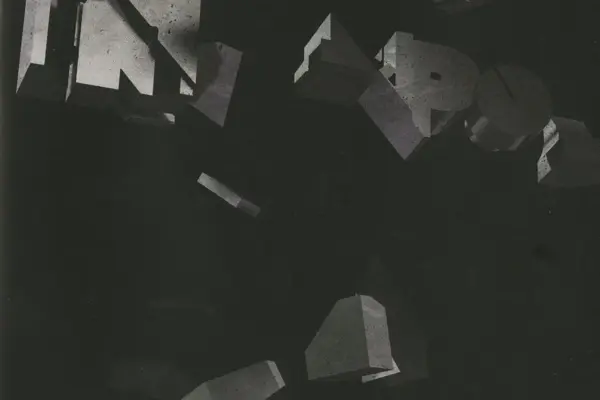
Following its Japanese debut, the project looped back to its Scandinavian roots through a partnership with Djungel & Jazz. The resulting 200-copy vinyl edition transforms the digital and CD iterations into a tangible collector’s item, complete with striking cover art featuring Sebastian Andreu Bergström. The physical pressing acts as a bridge between the Nordic forest floor and the neon-lit serenity of Tokyo Bay, offering listeners an immersive physical medium for an album designed to be absorbed in a single, uninterrupted sitting.
Supporting Context & Metrics: The Evolution of Sebastian Andreu Bergström
To fully appreciate the architectural brilliance of Solera, one must contextualize the polymathic career of its creator. Long-term observers of the Scandinavian creative music scene will remember him simply as Sebastian Bergström, the virtuosic pianist of the free-leaning trio Correction. Alongside bassist Joacim Nyberg and drummer Emil Åstrand-Melin, Bergström released two celebrated albums on the Ayler label and famously collaborated with legendary baritone saxophonist Mats Gustafsson on the acclaimed NoBusiness LP Shift. His footprint could also be felt in the rhythmic and harmonic intricacies of the Oya Sextett.
However, Bergström’s creative palette extends far beyond the parameters of the jazz club. Over the past decade, he has cultivated a stealthy, highly influential career in institutional and narrative sound design. His credits include intricate scores for Sveriges Radio’s P1 serialized dramas—most notably Rebecca and Ola Larsmo’s harrowing historical epic Swede Hollow. He has provided tense, atmospheric scoring for the critically acclaimed documentary podcast Spår, contributed to boundary-pushing short films, and spearheaded Ljudskogen (Sound Forest), a multidisciplinary research project executed in collaboration with academics at KTH Royal Institute of Technology and the Scenkonstmuseet (Performing Arts Museum).

This extensive history of writing to picture, narrative, and spoken word fundamentally informs the DNA of Solera. A composer who has spent years mapping out the acoustic properties of a synthesized sound forest naturally possesses an infallible internal compass when navigating the dense arrangements of an avant-garde octet. Nothing on the record feels rushed; every frequency, breath, and percussive strike is placed with surgical precision.
The Ensemble Architecture
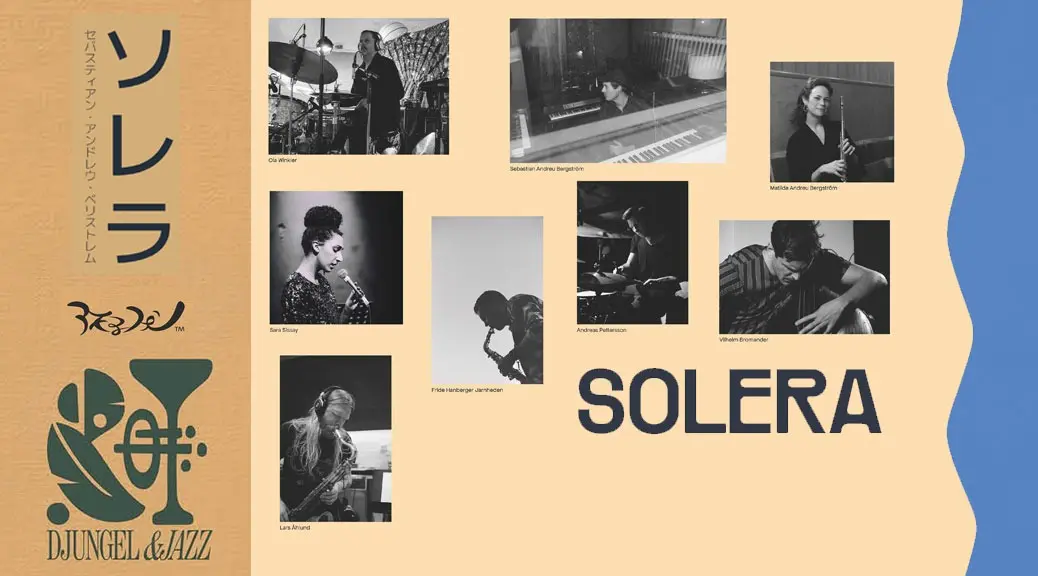
While Bergström serves as the conceptual architect—handling piano, synthesizer, and sampler—the heartbeat of Solera relies on a synergistic ensemble of kindred spirits. Crucial to the album’s emotional resonance is bassist Vilhelm Bromander, an artist whose solo work and collaborative efforts have established him as one of the most vital voices in contemporary European improvised music. Bromander and Bergström’s long-standing creative partnership, forged in the fires of the Oya Sextett, provides a telepathic anchor for the sprawling arrangements.
The frontline and textural palette are brilliantly populated by:
- Lars Enok Åhlund on saxophones
- Fride Hanberger Jarnheden on alto saxophone
- Matilda Andreu Bergström on flutes
- Sara Sissay on voice and vocal sampling
Driving the rhythmic undercurrent are two distinct drummers, Andreas Pettersson and Ola Winkler, with the latter deftly doubling on auxiliary percussion. This dual-drummer configuration allows the rhythm section to oscillate seamlessly between rolling, organic propulsion and pointillistic, ambient texturing.
Official Track-by-Track Breakdown: Elemental Jazz
The conceptual framework of Solera deepens when viewed through the lens of traditional Japanese cosmology, where the planets are named after the fundamental elements (Gogyō). Bergström maps these elemental associations onto the physical landscape of the record, creating a sequence that moves fluidly from deep-forest immersion to cosmic reflection.
Side A: Beneath the Canopy
- "Dala" opens the album with a slow-burn introduction of sampled voice before keys and saxophone gently materialize. The listener is cast directly beneath a dense forest canopy, finding their footing amidst shifting shadows. Synthesizer tones hang suspended between the sonic trunks like morning mist clinging to the ancient cedar avenues above Lake Ashi. It is simultaneously mesmerizing, uncompromisingly modern, and utterly unique.
- "Mercur" (Suisei / The Water Star) represents the element of water. As the shortest piece on the record, it acts as an energetic jolt—an improvising band bursting forth from the undergrowth like an awakening forest creature, serving as a dynamic warm-up for the long path ahead.
- "Saturn" (Dosei / The Earth Star) grounds the listener in soil and stone. Opening with a dialogue between piano and reeds, the piece quickly expands as synthesizer and sampler coax out imaginary woodland fauna. The improvisation gradually widens into a sunlit clearing flooded with komorebi—the Japanese term for sunlight filtering through trembling leaves—inviting the ensemble to stretch out and explore. This is deep, meditative jazz at its finest.
- "Farfar" (Swedish for a paternal grandfather) juxtaposes familial warmth with kinetic energy. Weaving together percussion, saxophone, piano, voice, and environmental samples, the synthesizer reigns supreme. It evokes the sudden alertness of a hound catching a scent, pulling the listener off the beaten track to chase imaginary squirrels through the bracken.
- "Hakone" brings Side A to a majestic close. As the longest composition on the album, it unfurls as a slow, hypnotic tide of flutes, saxophones, synthesizers, and ambient electronics. The arduous path has finally led to our destination; absolute calm settles over the arrangement, underpinned by a subtle, thrilling undercurrent—akin to sitting down for a peaceful hanami cherry-blossom viewing party beneath blooming branches.
Side B: Cosmic Clearings
- "Jupi" (Mokusei / The Wood Star) marks the commencement of Side B. The ensemble returns refreshed and intensely energized. Anchored by a glowing Wurlitzer at its core, this synth-led piece radiates warmth across every instrumental voice. While the surface mood remains steady and luminous, the underlying playing is hyper-alive and bristling with detail, standing out as Bergström’s signature compositional statement on the LP.
- "Funabashi"—named after the bustling commuter city on the edge of Tokyo Bay—delivers the most transcendent music on the entire album. Vilhelm Bromander anchors the groove with characteristic mastery, while flutes, synthesizers, and horns lock into a hypnotic, cyclical groove. For many listeners, this standout composition makes Solera an essential acquisition across any format, easily contending for track-of-the-year honors.
- "Neptu|Alba" pairs Kaiseisei (the Sea-King Star) with an archaic linguistic root for dawn. Here, however, the expected morning light falters, plunging the atmosphere into a sublime, shadowy ambiguity. Thick with eerie vocal samples and anchored by the subterranean resonance of the baritone saxophone, it questions whether the jazz gods themselves are stirring in the gloom.
- "Solera" brings the physical and conceptual journey full circle. Drums patter gently like kirisame—the fine, misty drizzle characteristic of mountain forests—guiding the listener safely back to the trailhead where the journey began.
Future Outlook & Collector Availability
As modern improvised music continues to fracture into increasingly narrow stylistic niches, Solera stands as a triumphant exercise in synthesis. It proves that free jazz, ambient sound design, environmental field recording, and compositional discipline can coexist within a single, cohesive ecosystem. By channeling Japanese elemental philosophy through a distinctly Swedish lens, Sebastian Andreu Bergström and his ensemble have crafted a timeless recorded statement.
For institutional archives, contemporary music scholars, and vinyl enthusiasts alike, the album represents a high-water mark for 2025 releases. However, the realities of physical manufacturing dictate scarcity. With the vinyl edition strictly capped at an elite run of 200 copies, stock through Stockholm’s Djungel & Jazz is expected to deplete rapidly.
For those who miss out on the physical wax, the sonic integrity of the project remains fully accessible via Amorfon’s digital and compact disc distribution channels. Whether experienced through the rich warmth of a turntable stylus or the pristine clarity of a CD transport, Solera remains an essential, enduring testament to the power of patience in music.
- Acquire the vinyl edition via Djungel & Jazz: Order Here
- Secure the CD/Digital edition via Amorfon: Order Here