Executive Overview
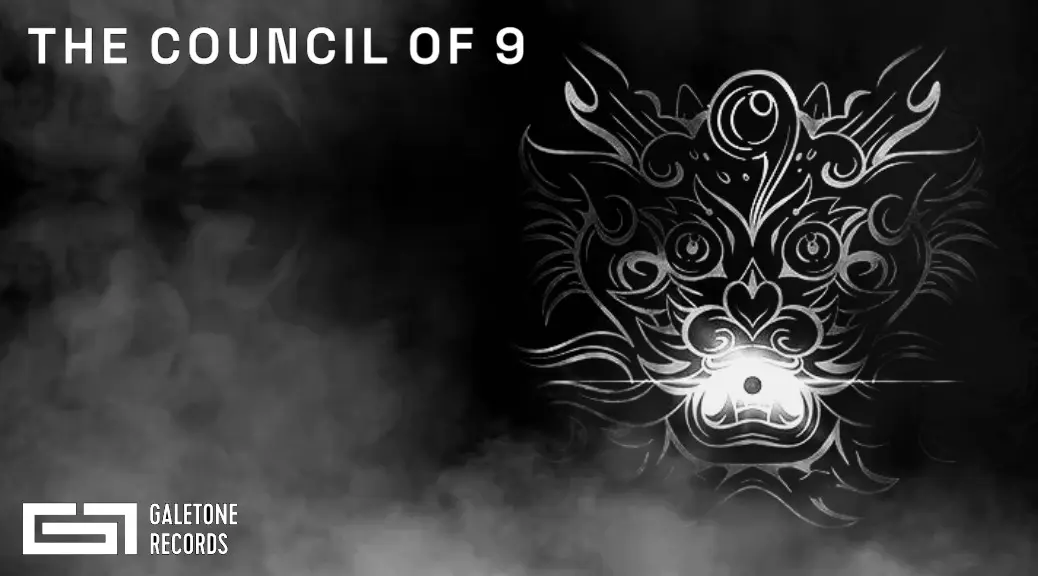
In an era saturated with algorithmically generated playlists, hyper-compressed digital masters, and genre-agnostic bedroom pop, the arrival of a genuinely organic, cross-pollinated acoustic ensemble stands as a rare and vital corrective. Enter The Council of 9, a collective whose very moniker hints at a sophisticated, democratic architecture of sound. Their latest long-form offering, Times 9, arrives not merely as an album, but as an immersive sonic installation—a monolithic journey that defies easy categorization while honoring the deepest traditions of global improvised music.
Initially approached with guarded skepticism—fueled by cryptic promotional artwork and an unfamiliar roster—critic Steve Williams quickly discovered that preconceptions dissolve within the first sixty seconds of playback. Times 9 is not a standard modern jazz session; nor is it a dance-floor club diversion or an ambient electronic experiment. Instead, it is a masterclass in honest, unvarnished musicianship performed by seasoned improvisers who demand a singular, uninterrupted listening experience: a continuous voyage from track one through nine.
Recorded live at Peter Gabriel’s legendary Real World Studios by engineer Katie May, mixed by Chris Lewis, and given its warm, tactile analog sheen through mastering by Caspar Sutton-Jones at Gearbox Records, Times 9 is unapologetically designed for the vinyl medium. It is an album that rewards active, intentional listening, unfolding with a structural rigor wherein each of the nine pieces employs a distinct time signature. As the record progresses, the ensemble physically and sonically swells, beginning with intimate solo percussion and ultimately blooming into a ten-piece powerhouse. For discerning audiophiles and lovers of boundary-pushing contemporary music, Times 9 is an essential addition to the physical archive.
Detailed Chronology: A Track-by-Track Sonic Journey
To truly appreciate Times 9, one must surrender to the band’s explicit request: experience it in one sitting. The album operates as a cinematic script, unfolding across distinct acts and movements that balance cerebral composition with visceral, rhythm-driven ecstasy.
Act I: Intimate Openings and the Cape Jazz Convergence
The journey commences with an atmosphere of brooding anticipation. Clarinet and bass establish a shadowy, contemplative perimeter, setting a theatrical mood reminiscent of an audience settling into velvet seats as the house lights dim. Soon, the rhythmic foundation steps forward: Chris Gale’s drums and Gabriel Keen’s piano enter the fray, gracefully avoiding the heavy-handed clichés often found in contemporary jazz openers.
Here, the core rhythm section—bolstered by Richard Sadler on bass—delivers an enchanting melodic architecture. As the movement evolves, the pace shifts subtly, introducing a modern twist. Aldevis Tibaldi’s tenor saxophone steps boldly to the fore, yet Keen anchors the harmonic theme tightly to its close, steering the overall aesthetic toward the vibrant, harmonically rich territories of Cape Jazz.
Act II: Afro-Cuban Ceremonies and Rhythmic Ascendance
The subsequent horn-led movement represents one of the album’s towering artistic peaks. Led by trumpet virtuoso Sid Gauld, the brass section gently shepherds the ensemble toward Tibaldi’s next searing improvisational highlight.
Abruptly, the horns fade into the shimmering wash of rolling cymbals, making way for the infectious pulse of Afro-Cuban congas. Over this foundation, a traditional ceremonial vocal chant is voiced briefly, instantly grounding the modern arrangements in ancestral weight. As the congas step back, the rhythm accelerates dynamically, inviting every instrument in the collective to state its case. Brushing up against Afrobeat while remaining fundamentally anchored in an expansive, timbale-laced Afro-Cuban jam, this movement stands out as an irresistible, magnetic high-water mark that demands immediate, undivided attention.
Act III: The Funk-Infused Pivot and Side B
As the album announces its physical side split, the atmosphere pivots decisively toward the dancefloor. Infused with deep, club-friendly funk grooves, this segment features standout work from Charlie Allen, whose performance serves as the ultimate 12-inch maxi-single candidate on the set. The horn section works overtime to maintain the visceral energy, before Keen steps back into the spotlight to deliver cascading keyboard flourishes.
This particular sequence tests the band’s "one-sitting" edict, as the natural breaks native to Side B offer organic moments for breath and reflection. A traditional, swaggering shuffle follows, featuring trumpet and guitar loafing inventively in the wings. Evoking the ambiance of a specialized celebratory gathering, the track builds steadily into a magnificent, swelling crescendo before cutting to a deliberate, thoughtful silence.
Act IV: Coastal Atmospheres and the Cinematic Finale
Following a final structural break, the album’s closing piece unfurls. Initiated by the delicate rustle of Gale’s drum brushes and the subtle shaking of percussion shells, the track quickly finds its emotional anchor in Michael Pinsky’s soaring violin lead.
The resulting sonic landscape is unmistakably cinematic—evoking a sweeping, windswept coastal panorama complete with the phantom sensation of credits rolling across an expansive sky. It is a breathtaking, tranquil resolution to an album that has traversed continents, genres, and emotional extremes.

Supporting Context & Metrics: The Anatomy of Times 9
Understanding the brilliance of Times 9 requires a closer examination of the compositional framework and the elite personnel assembled under The Council of 9 banner.
Compositional Mathematics and Ensemble Evolution
One of the most remarkable structural achievements of the album is its mathematical blueprint: each of the nine pieces is written in a different time signature. This constraint transforms the record into a masterclass in dynamic meter change, preventing listener fatigue while maintaining a rigorous intellectual spine.
Furthermore, the ensemble’s composition undergoes a deliberate acoustic expansion:
- The Micro-Level: The album opens with isolated, minimalist textures—solo drums and sparse foundational pairings.
- The Macro-Level: As the tracks progress, guest contributors and additional horns are integrated, culminating in a massive, ten-piece sonic orchestration where shared credits reflect a true collective democracy.
The Creative Pedigree
The seamless interplay heard throughout the record is no accident. Key architects of the sound—Aldevis Tibaldi, Chris Gale, Richard Sadler, and Gabriel Keen—share a deep collaborative history, having previously crossed paths on earlier projects under Tibaldi’s name. This pre-existing musical chemistry allows the ensemble to navigate complex shifts in genre, meter, and mood without ever sounding disjointed or academic.
Production and Engineering Excellence
In an era dominated by hyper-compressed digital files and streaming-optimized masters, Times 9 is an unabashed love letter to high-fidelity analog traditions.
- Live Recording: The sessions were captured completely live at Peter Gabriel’s world-renowned Real World Studios by engineer Katie May, preserving the natural acoustic resonance and spatial depth of the room.
- The Mix: Chris Lewis balanced the dense multi-instrumental arrangements, ensuring that delicate violin passages and roaring horn sections maintain absolute clarity.
- Mastering & Pressing: The album was mastered by Caspar Sutton-Jones at Gearbox Records, an analog-focused, vinyl-led mastering facility. The resulting limited-edition single LP is not merely a distribution format; it is the definitive vehicle through which this music demands to be experienced.
Official Statements & Critical Reception
While full-scale promotional tours and official press statements from boutique jazz collectives are often shrouded in artistic mystique, the underlying ethos of The Council of 9 speaks volumes through its creative output.
In liner notes and band communications, the collective has emphasized the importance of immersive, ritualistic listening—explicitly asking their audience to commit to a single, uninterrupted sitting. This philosophy pushes back against the modern consumption habits of track-skipping and passive background streaming.
Critical consensus, spearheaded by early reviews from specialized tastemakers such as UK Vibe, has universally praised the album’s defiant refusal to stay in one lane. Reviewers have highlighted how a record that begins with the cerebral introspection of contemporary European jazz can organically morph into an Afro-Cuban celebration and conclude with coastal, violin-led Americana without ever losing its core identity. The overarching sentiment among critics is clear: Times 9 represents a triumph of organic musicianship over digital artifice.
Future Outlook: What Lies Ahead for The Council of 9
The rapturous reception of Times 9 has sparked intense speculation regarding the future of the ensemble. Because the project operates more as a flexible creative collective than a rigid touring band, the possibilities for future iterations are vast and deeply enticing.
As music critic Steve Williams playfully noted in his appraisal, the experience of listening to Times 9 feels akin to attending a captivating theatrical matinee—one that immediately leaves the audience demanding a ticket for the evening performance. Should the collective decide to take this material on the road, or return to Real World Studios to capture a hypothetical Times 10, the live execution of these shifting time signatures will undoubtedly present a thrilling spectacle for contemporary jazz and world music enthusiasts alike.
Furthermore, the standout contributions of individual members—from Michael Pinsky’s evocative violin work to Charlie Allen’s funk-driven basslines—open up exciting avenues for side projects and stylistic expansions. One thing remains certain: The Council of 9 has established a high benchmark for contemporary cross-genre improvisation. For those eager to secure a physical piece of this sonic journey, the limited-edition vinyl pressing is currently available directly via The Council of 9’s Bandcamp page.
Hold your calls, grab your popcorn, and prepare to step back into the auditory theater—Act Two cannot arrive soon enough.