Executive Overview
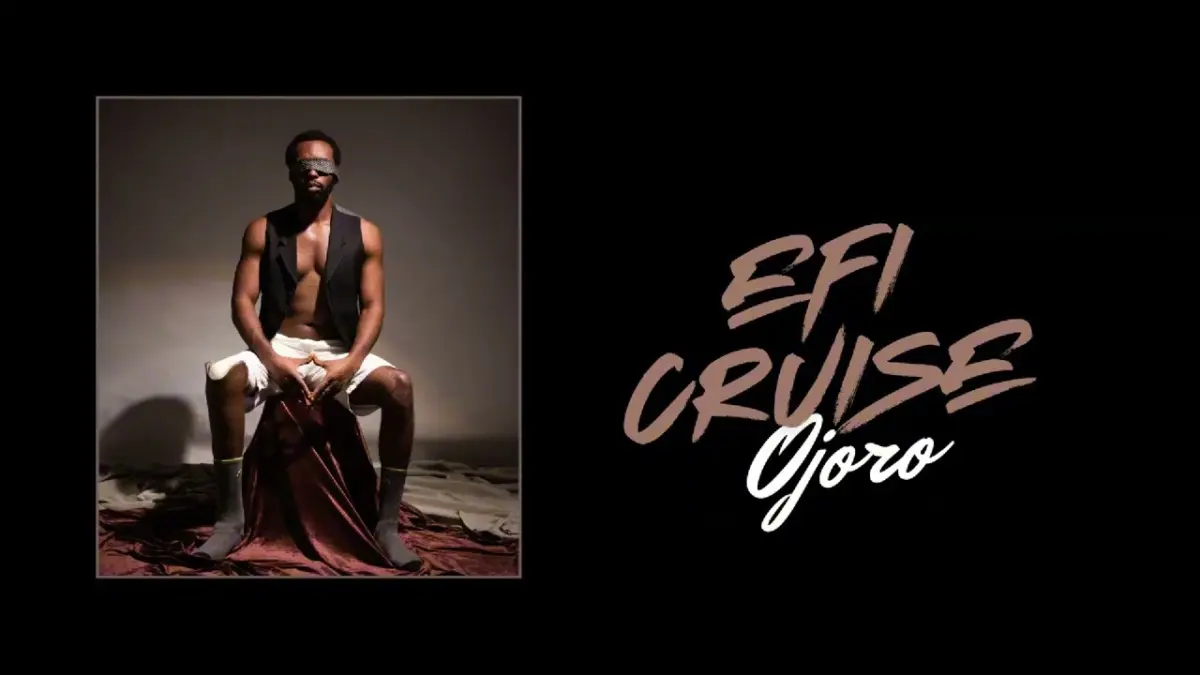
On October 1, as Nigeria marked its sixty-sixth anniversary of independence, the traditional fanfare of national pride was met with a scathing, rhythm-driven reality check. While state broadcasters beamed images of politicians celebrating the milestone, Nigerian-born, UK-educated artist Efi Cruise dropped his latest musical protest: a blistering critique titled “Ojoro.” Released under the Bayside Records banner, the track bypasses polite diplomatic discourse, tearing down the romanticized facades of contemporary Nigerian governance and exposing what Cruise terms an "oyocracy"—a system defined by self-preservation, systemic corruption, and institutionalized neglect.
At its core, “Ojoro” (a Nigerian street slang term roughly translating to cheating, foul play, or a rigged game) acts as both a cultural mirror and a political indictment. Cruise masterfully weaponizes Pidgin English and the rebellious spirit of classic Afrobeat to interrogate the disconnect between a bloated political class and an impoverished, increasingly isolated citizenry. The song’s release on Independence Day was no accident; it served as a deliberate challenge to the hollow rhetoric of democracy that has defined Nigeria’s post-independence era.
This feature-length investigative review unpacks the genesis of “Ojoro,” tracing Efi Cruise’s unique artistic journey from the bustling streets of Lagos and academic halls of Plymouth to the vanguard of modern Nigerian protest music. We examine the socio-economic metrics framing the song, analyze the linguistic and structural brilliance of Cruise’s "Southern Afro-Jazz" evolution into political afrobeat, and explore what this track signifies for the future of musical dissent in West Africa.
Detailed Chronology: From Lagos Roots to the Birth of "Ojoro"
The Genesis of an Iconoclast: Efiom Ita’s Formative Years
Born Efiom Ita in the sprawling metropolis of Lagos, with deep ancestral roots anchored in the southern coastal city of Calabar, Efi Cruise’s relationship with music began early. Like many contemporary African artists, his initial formal exposure to vocal performance came through the structured discipline of the school choir. Here, he developed an ear for harmony, pitch, and vocal dynamics—elements that would later separate his work from the predictable autotuned formulas dominating contemporary pop radio.
However, the path to a professional music career was neither linear nor encouraged by conventional societal expectations. Driven by family ambitions and the pragmatic pursuit of economic security, Ita relocated to the United Kingdom, where he pursued and completed business studies in Plymouth.
The Defiant Return and Musical Metamorphosis
While a degree in business offered a predictable corporate trajectory, Ita’s creative ambitions proved incompatible with the British corporate landscape. In 2018, defying the collective wisdom and direct warnings of family, friends, and peers, he made a pivotal decision: he packed his bags, returned to Nigeria, and committed his life entirely to music under the moniker Efi Cruise.
Upon returning to the Nigerian musical ecosystem, Cruise did not simply adopt the prevailing Afrobeats template. Instead, he forged a distinctive hybrid sub-genre he calls Southern Afro-Jazz. This unique sonic palette merges highlife rhythms and funk grooves with the improvisational, scat-singing sensibilities of American bebop jazz.
His early output established his artistic credibility without compromising his avant-garde inclinations:
- 2023: Released his debut studio album, Mirrors, showcasing his intricate vocal improvisations and genre-bending arrangements.
- 2024: Followed up with his sophomore project, If You Were Me You Would Be Dead, solidifying his reputation as a cerebral lyricist unconcerned with commercial radio constraints.
- October 1, 2025 (Independence Day): Unveiled “Ojoro,” produced in collaboration with Onil, David Knauf, and the Bayside Records team. With this track, Cruise shifted from introspective jazz-fusion to direct sociopolitical confrontation, stepping directly into the lineage of musical agitators like Fela Kuti.
Supporting Context & Metrics: The Anatomy of an "Oyocracy"
To truly appreciate the weight of Efi Cruise’s lyrical barbs in “Ojoro,” one must understand the socio-economic realities plaguing modern Nigeria—metrics that transform his metaphors into stark, undeniable truths.
Decoding the "OYO" Syndrome and "Oyocracy"
Cruise’s coinage of the term "oyocracy" is a masterclass in socio-political satire. Built upon the acronym OYO—widely recognized across Nigeria as shorthand for "On Your Own"—the term describes a society where the social contract has fundamentally fractured. When citizens fall victim to economic inflation, infrastructural collapse, insecurity, or administrative failure, the state’s implicit message is simple: You are on your own.
In “Ojoro,” Cruise defines the system with surgical precision: "Government for yourself, government by yourself." Rather than serving as instruments of public welfare, government offices have transformed into private enterprise vehicles for patronage and resource extraction.
The Bloated Belly and Misplaced Mandates
Cruise’s lyrical imagery does not pull punches. He targets politicians who dominate television screens, describing them memorably with the Pidgin phrase: "bigi belle like who want born twins"—possessing a belly large enough to be carrying twins. This grotesque physical manifestation serves as a visual metaphor for insatiable greed, public embezzlement, and systemic theft while the broader population starves.
Furthermore, Cruise condemns the catastrophic incompetence defining political appointments in Nigeria:
- Misallocation of Expertise: He points out the absurdity of administrative systems where qualified professionals are sidelined in favor of political loyalists—where a trained farmer is assigned to inspect oil reserves, and a lawyer is tasked with engineering public infrastructure.
- Unaccountable Public Expenditures: Billions of naira vanish into unaccountable budget lines while public hospitals lack basic medicines and educational institutions crumble.
When Cruise poses the rhetorical question in Pidgin, “Wetin we go call them oh?” (What shall we call these people?), he supplies the title of the track as the definitive verdict. Ojoro is the sharp cry heard across Nigerian street football pitches when a referee takes a bribe or a player commits a blatant foul that the authorities refuse to penalize. It is the sound of a game that has been rigged from the start.
The Decay of Communal Solidarity
Crucially, Cruise’s critique is not exclusively vertical; it is also horizontal. He trains his lens on ordinary citizens, mourning the erosion of communal empathy and collective responsibility. In a striking lyrical moment, he sings: "Even in congregations people are lonely." This observation cuts to the heart of modern Nigerian life—a society where religious spaces and community gatherings are packed to capacity, yet individuals remain profoundly isolated, spiritually depleted, and hyper-individualistic in their survival strategies.
Official Statements & Artistic Vision
The release of “Ojoro” has sparked conversations across the Nigerian music landscape, bridging the gap between underground jazz aficionados and mainstream political commentators.
Speaking on the conceptualization of the track, production partners and representatives from Bayside Records noted that the single represents a deliberate convergence of historical protest music and contemporary digital-age frustration.
"We didn’t want to release just another party track for Independence Day," shared a Bayside production insider. "Sixty-six years of independence should be a time of national reflection, not empty political grandstanding. Efi Cruise took the frustration of an entire generation—young Nigerians trapped in an ‘oyocracy’—and gave it a beat that makes you both move your feet and examine your conscience."
Cruise himself has consistently maintained that music must serve as an active participant in societal healing rather than mere escapist entertainment. In interviews surrounding his transition into politically charged afrobeat, he has emphasized that the traditions established by musical revolutionaries in the 1970s must be adapted to address the polished, civilian autocracies of the twenty-first century.
Rather than letting politicians off the hook, the song concludes with a direct address to the political class. Using the respectful yet ironic title "Oga" (Pidgin for boss or master), Cruise issues a final, urgent demand: he tells the political elite to drop their self-serving agendas and "show love to your brother-man."
Future Outlook: The Resurgence of Nigerian Protest Music
The release of “Ojoro” arrives at a critical juncture in African cultural and political history. As digital streaming platforms democratize music distribution, independent artists are finding new ways to bypass traditional gatekeepers and state censorship. Efi Cruise’s unique positioning—blending the intellectual sophistication of Southern Afro-Jazz with the populist bite of Pidgin-laced Afrobeat—places him at the vanguard of a new wave of socio-political troubadours.
What Lies Ahead for Efi Cruise?
- Expanded International Tour Circuits: Following the critical acclaim of Mirrors and If You Were Me You Would Be Dead, the release of “Ojoro” broadens Cruise’s appeal to diaspora communities across Europe and North America who resonate with anti-corruption messaging and sophisticated jazz-fusion arrangements.
- Collaborative Cross-Border Projects: With producers like Onil and David Knauf lending their expertise, Cruise is actively bridging the gap between African rhythmic traditions and global contemporary jazz sensibilities.
- Catalyzing Youth Civic Engagement: As Nigeria barrels toward future electoral cycles, protest anthems like “Ojoro” are expected to serve as cultural touchstones for youth mobilization, encouraging accountability beyond the ballot box.
Conclusion: A Rigged Game That Must Change
Efi Cruise’s “Ojoro” is much more than a three-minute track dropped for a holiday; it is an audit of a nation’s soul. By converting street slang into political theory and jazz improvisation into revolutionary fervor, Cruise has crafted a timeless artifact of resistance.
As long as the "oyocracy" persists—leaving citizens to navigate life on their own while political elites nurse their oversized bellies—anthems like “Ojoro” will remain essential listening. They remind us that until the rules of the game are rewritten for the benefit of all, the Nigerian people will continue to shout what every street footballer knows when the whistle blows unfairly: Ojoro!
To experience the sonic critique firsthand, stream or download Efi Cruise’s "Ojoro" across all major digital platforms via Bayside Records.