Executive Overview
For decades, major European cultural institutions have undergone a profound reckoning regarding the imperial architectures of their foundational collections. Provenance research—once a niche academic pursuit—has become a central pillar of museum operations, and institutions are increasingly willing to publish the often turbulent, violent, or ethically ambiguous colonial histories attached to their holdings.
Yet, acknowledging how an object entered a museum is not the same as questioning who should control it or who retains the ultimate authority to produce knowledge about the past.
While transparency and historical contextualization have advanced, they have frequently been weaponized as substitutes for structural change. By thoroughly documenting an acquisition’s contested origins, institutions can create an intellectual sleight of hand: the artifact is presented as "dealt with" conceptually, while the museum retains physical possession, legal ownership, and absolute governance over access, display, and academic interpretation.
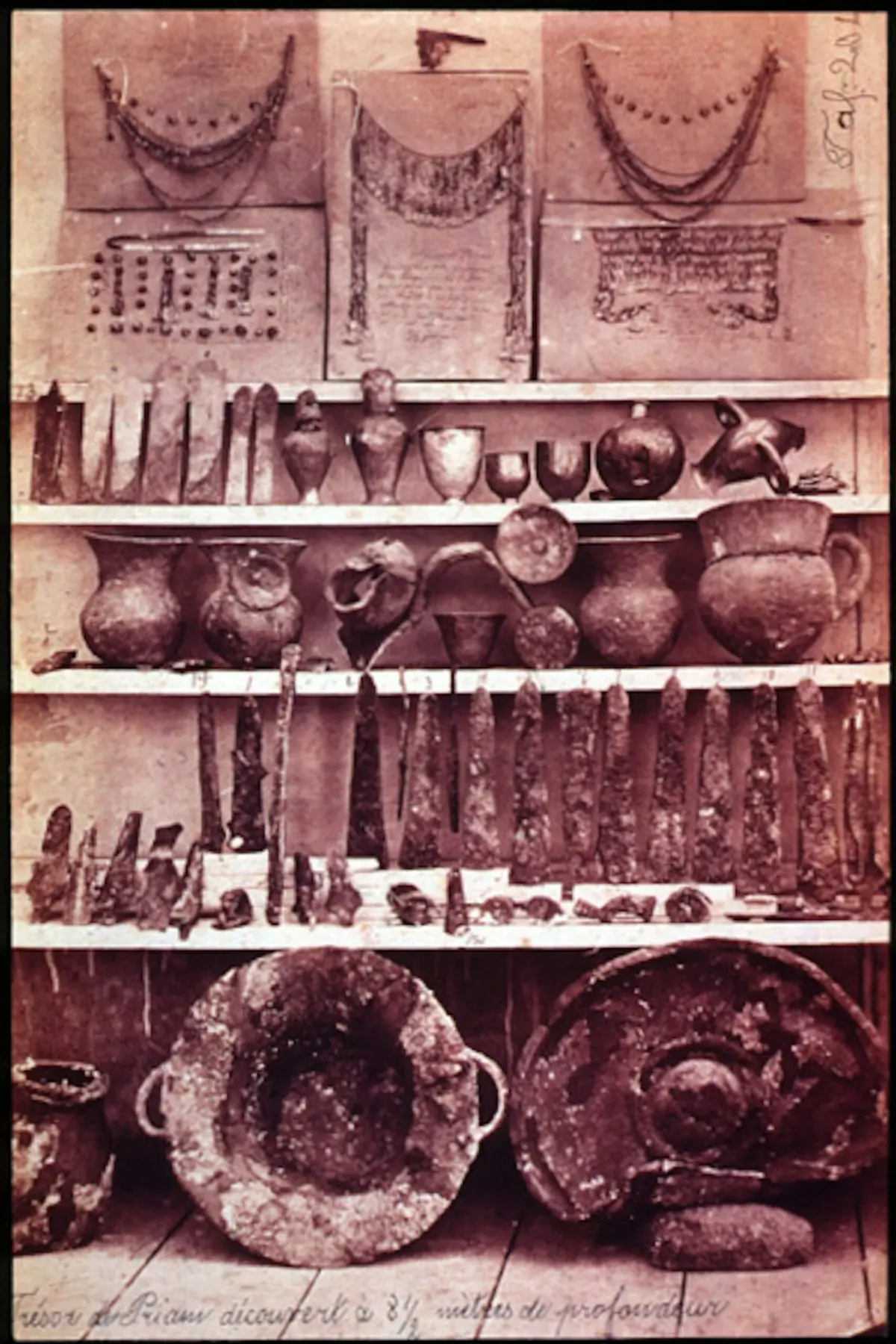
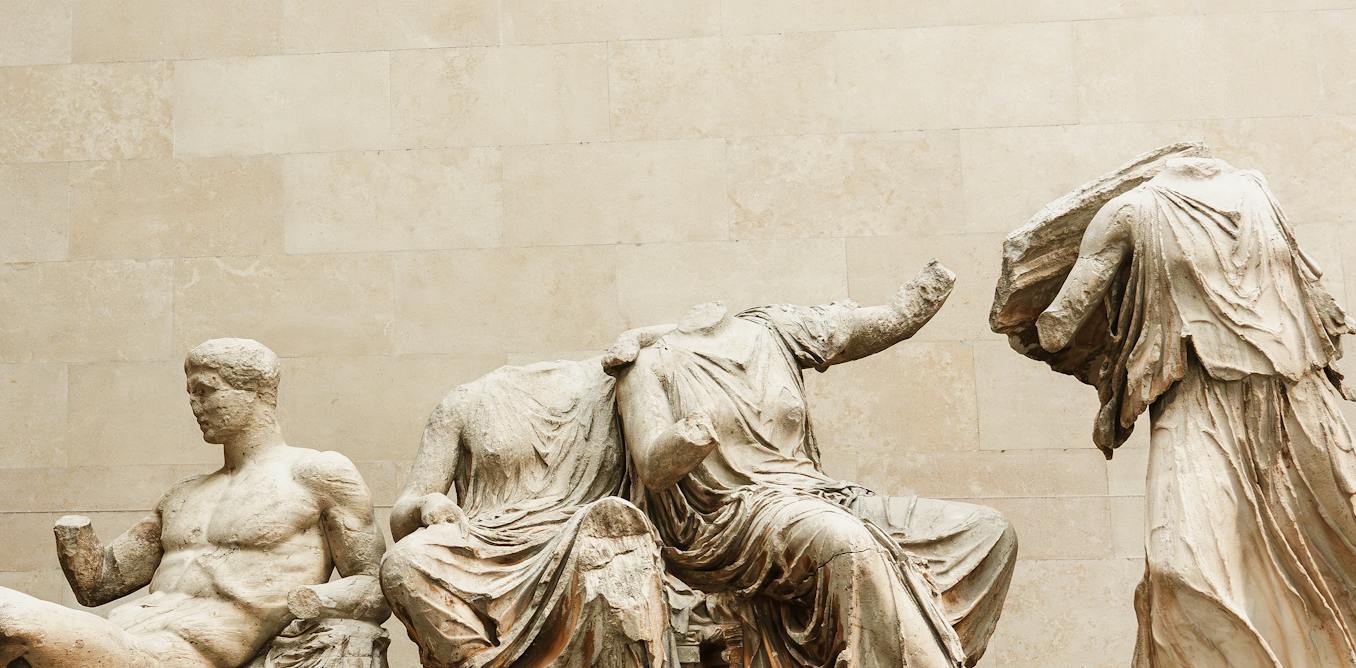
This dynamic is sharply visible in enduring global disputes, from the Parthenon Marbles in London to the Nefertiti Bust in Berlin and the Treasure of Priam in Moscow. As European institutions experiment with compromise models—such as alternating displays, long-term loans, and diplomatic loan frameworks—source nations increasingly reject arrangements that maintain colonial ownership structures under the guise of cosmopolitan sharing.
This report investigates the current state of cultural restitution, evaluating the legal versus ethical frameworks governing global heritage, the weaponization of "universalism," and the urgent need to look beyond mere provenance research to address the persistent legacies of imperial knowledge production.
Detailed Chronology: Key Milestones in Contested Cultural Heritage
The debates surrounding major antiquities are anchored in a complex timeline of imperial acquisition, shifting geopolitical borders, and twentieth-century conflict. Below is a chronological framework of the major disputes shaping modern restitution discourse:
- 447 BC – 432 BC: The construction and sculptural embellishment of the Parthenon on the Athenian Acropolis under the supervision of Phidias.
- 1370 BC – 1330 BC: The creation of the limestone and stucco bust of Egyptian Queen Nefertiti in the workshop of the sculptor Thutmose in Amarna.
- 1801 – 1812: Thomas Bruce, 7th Earl of Elgin and British ambassador to the Ottoman court, removes approximately half of the surviving Parthenon sculptures from Athens under a disputed Ottoman permit.
- 1816: The British Parliament purchases the Parthenon Marbles from Lord Elgin for £35,000, depositing them into the permanent collection of the British Museum.
- 1873: German archaeologist Heinrich Schliemann smuggles the "Treasure of Priam" out of the Ottoman Empire during excavations at Troy, subsequently donating the artifacts to Berlin.
- 1897: British military forces launch a punitive expedition against the Kingdom of Benin (in modern-day Nigeria), looting thousands of royal court artifacts, bronzes, and ivories.
- 1912: The Nefertiti Bust is discovered during German excavations at Amarna on the east bank of the Nile and allocated to Germany under the partage (division of finds) system.
- 1933: Formal negotiations between Egypt and Germany regarding the return of the Nefertiti Bust definitively break down; the object remains in Berlin.
- 1939 – 1945: During World War II, the Red Army loots the Treasure of Priam from Berlin, relocating the artifacts to the Soviet Union. They remain housed in Moscow.
- 1983: The government of Greece submits its first official request for the permanent repatriation of the Parthenon Marbles directly to the British Museum.
- 2003: The Declaration on the Importance and Value of Universal Museums is published by a consortium of international institutions, defending the retentionist model of major Western repositories.
- 2022: The Prussian Cultural Heritage Foundation (Stiftung Preußischer Kulturbesitz) formally transfers ownership of 512 Benin Bronze objects back to Nigeria, retaining a portion on a ten-year loan agreement.
- 2023: The Vatican Museums unconditionally return three Parthenon fragments to Greece as an outright gift, bypassing traditional loan frameworks.
- October 2026: British Museum Chair George Osborne proposes an alternating display model where the Parthenon Marbles would rotate between London and Athens, a proposal promptly rejected by Greek leadership.
Supporting Context & Metrics: Legal Realities vs. Ethical Legitimacy
To understand why restitution negotiations routinely stall, one must examine the divergence between legal compliance and moral legitimacy. Western institutions frequently defend their holdings through two primary arguments: that acquisitions complied with the legal frameworks of the time, and that "universal museums" serve as stewards for all of humanity.
The Fallacy of Historical Legality
The British Museum argues that Lord Elgin’s acquisition of the Parthenon Marbles was lawful under the sovereign authority of the Ottoman Empire, which ruled Greece during the early nineteenth century. Similarly, the owners of the Nefertiti Bust cite the partage agreements overseen by Egyptian authorities in 1912.
However, critics and legal scholars emphasize that legal continuity across two centuries of profound political transformation—such as the collapse of the Ottoman Empire, the birth of modern nation-states, and the radical evolution of international human rights and cultural property law—cannot simply be asserted; it must be rigorously argued. A permit issued under conditions of military or imperial hegemony does not automatically confer enduring moral legitimacy in a post-colonial era.
Universal Access vs. Universal Ownership
The argument that universal museums require universal ownership is systematically undermined by recent precedents. When the Vatican returned three Parthenon fragments to Athens in 2023 without conditions or loans, it demonstrated that geographical dispersal is not a prerequisite for global cultural appreciation.

Furthermore, proposed loan arrangements often function as asymmetrical diplomatic tools. If a loan agreement requires a source nation—such as Greece—to officially acknowledge British ownership of the Parthenon Marbles, it forces the claimant to capitulate to the very legal framework it seeks to overturn. One party retains physical control and dictates the terms of movement, while the other is forced to negotiate within a system it rejects. Sharing access is fundamentally distinct from sharing authority.
Official Statements and Institutional Positions
The friction between source countries and holding institutions is starkly highlighted by recent public declarations from key cultural figures and government officials:
- George Osborne, Chair of the British Museum (October 2026): Proposing an alternating display model for the Parthenon Marbles, Osborne suggested a compromise arrangement where the sculptures could spend shared periods in both Athens and London, framing it as a pragmatic solution to decades of diplomatic gridlock.
- Greek Prime Ministerial Office (September–October 2026): Consistently rejecting proposals that leave British ownership claims intact, Greek leadership rebuffed comparisons to other cultural exchanges—such as the suggested use of the Bayeux Tapestry template—stating that the physical and conceptual reunification of the Parthenon sculptures cannot be subordinated to retentionist loan conditions.
- The Prussian Cultural Heritage Foundation (August 2022): Announcing the historic transfer of 512 Benin Bronzes to Nigeria, the foundation noted: "This proves that an institution can relinquish ownership without ending display or research collaboration." This milestone set a new benchmark for European restitution politics, proving that provenance deaccessioning does not necessitate institutional impoverishment.
Future Outlook: Beyond Provenance and into Knowledge Production
The contemporary restitution debate frequently concentrates exclusively on the artifacts themselves—marbles, busts, bronzes, and golden treasures. Yet, this focus ignores the broader structural ecosystem of archaeology and museology.
True structural equity requires interrogating who controls the supporting architecture of the discipline:
- Archives and Laboratories: Where are primary field notes, excavation registries, and scientific samples housed?
- Economic Capital: Which institutions control the endowments, conservation budgets, and professorships dedicated to studying these cultures?
- Hermeneutic Authority: Whose interpretations, historical narratives, and academic frameworks dominate global scholarship?
Restitution that merely swaps objects while leaving the centers of academic power untouched changes less than it promises. The example of the Benin Bronzes transfer to Nigeria offers a viable roadmap: full legal repatriation coupled with long-term collaborative research agreements.
The Path Forward for Global Heritage
For archaeology and the museum sector to evolve beyond superficial self-reflection, they must adopt three foundational commitments:
- Transparent and Radical Provenance Research: Going beyond corporate compliance to openly trace the structural violences embedded in collection histories.
- Equitable Institutional Partnerships: Engaging in genuine, co-equal collaboration with source communities, ensuring that local scholars lead the interpretation and curation of their own ancestral heritage.
- A Willingness to Relinquish Ownership: Recognizing that where historical evidence points to systemic looting, coercive power imbalances, or profound ethical breaches, retention of ownership is indefensible.
Until European and international institutions are willing to question not just how an artifact arrived in their galleries, but why they retain the absolute right to curate, govern, and distribute global culture on their own terms, the colonial past will remain safely managed. It will continue to be curated, explained away in exhibition texts, and governed by the terms of the colonizer—leaving the underlying asymmetries of global power entirely undisturbed.