Executive Overview
Embroidery—the delicate and deliberate art of embellishing textiles by stitching intricate patterns, images, and textures onto fabrics with thread and yarn—stands as one of humanity’s oldest and most enduring creative mediums. Spanning millennia and crossing every inhabited continent, this craft has evolved from an ancient survival skill and marker of status into a sophisticated global art form. Far more than a mere domestic pastime, embroidery has historically served as an economic engine, a political statement, a spiritual offering, and a strict moral metric.
In contemporary society, as burnout and digital fatigue drive millions to seek tactile hobbies that foster mindfulness and well-being, hand embroidery is experiencing a profound renaissance. Replacing endless digital scrolling with needlework offers a tangible connection to history while delivering cognitive and mental health benefits. However, for the modern beginner, the sheer breadth of historical styles and technical variations can prove daunting.
This comprehensive report examines the deep history of embroidery across diverse cultures and gender paradigms, explores four foundational techniques accessible to modern novices, highlights advanced global traditions, and provides a strategic roadmap for sourcing legitimate materials while avoiding the burgeoning market of counterfeit kits.
Detailed Chronology: A History of Stitch and Society
The origins of embroidery are lost to antiquity, with the earliest surviving fragments buried deep within the archaeological record, preserved by arid climates or exceptional burial conditions. From these ancient roots, embroidery diverged into myriad regional forms, adapting to the materials, beliefs, and social structures of disparate civilizations.
The Medieval Era and the Gendered Needle
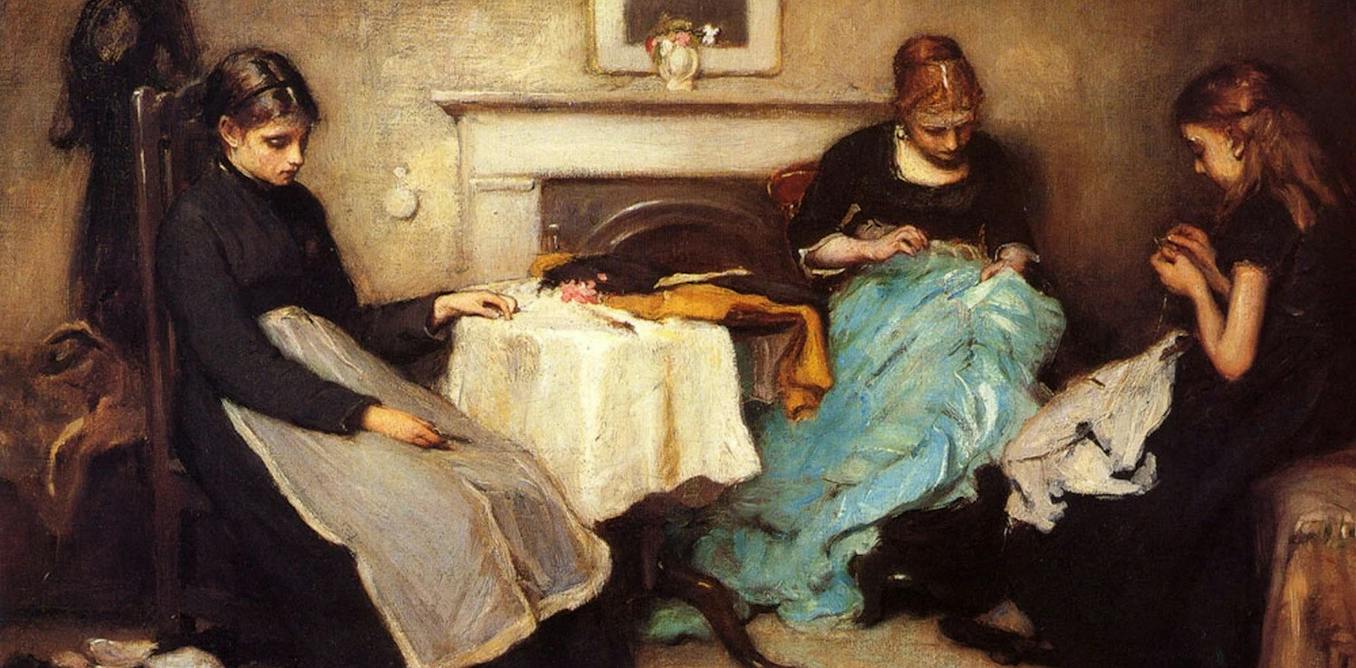
The social history of embroidery is uniquely intertwined with gender politics, labor economics, and class stratification. During the early medieval period in Europe, embroidery was predominantly recognized as a female occupation. Within monastic foundations and aristocratic households alike, stitching was codified as a fundamental feminine virtue—a pursuit that cultivated patience, modesty, and industry.
However, this gender binary was far from universal. Contemporaneously, in the ancient Greek city of Byzantium, professional embroiderers operating in urban workshops included both men and women, signaling a more fluid division of labor driven by commercial demand for ecclesiastical and imperial luxury goods.
The Rise of Guilds and the Commercialization of Craft
As European urban centers grew during the 12th century, the organizational structure of craft labor shifted dramatically. In cities such as London, powerful trade guilds known as livery companies were established to regulate commerce, training, and production. These guilds exerted strict control over who could train and legally work as an embroiderer within city boundaries.
This institutionalization inadvertently shifted the demographics of the trade. Because guild membership and formal apprenticeships were largely restricted to men, male artisans began to dominate professional embroidery workshops. These master craftsmen served elite clientele, producing lavish liturgical vestments for the Church and opulent heraldic garments for the nobility.
By the 17th and 18th centuries, as production methods decentralized and embroidery retreated into domestic spaces, the craft largely reverted to being viewed as a female artistic pursuit. Despite this domestic re-centering, men continued to participate in professional and artistic embroidery, maintaining a thread of continuity in male needlework.
Global Variations: The African Context
While European embroidery traditions frequently fluctuated along gender lines, other parts of the world developed entirely different social frameworks. Across various regions of Africa, for instance, men traditionally formed the core of the embroidery workforce, operating complex looms and hand-stitching ceremonial robes, tunics, and regalia. It is only in more recent contemporary contexts that women have integrated into these traditional male-dominated textile spaces, creating a dynamic cross-pollination of technique and design.
Supporting Context & Metrics: The Anatomy of Modern Embroidery
For the modern hobbyist looking to step away from the screen, understanding the foundational mechanics of embroidery is vital. Modern hand embroidery is generally categorized into two primary approaches: counted work, where stitches are meticulously measured against the physical grid of an open-weave foundation fabric, and free-form embroidery, where designs are traced or drawn onto solid fabric and stitched without rigid mathematical constraints.
The Four Beginner-Friendly Techniques
To help novices navigate the vast landscape of needlework, textile experts frequently recommend starting with four distinct traditional techniques. Each offers a unique tactile experience and can be seamlessly adapted with modern twists.
1. Canvas Work (Needlepoint)
Canvas work is executed on a stiff, open-weave foundation fabric. Most canvas work stitches are counted, meaning the stitcher brings the thread to the front of the canvas, counts a precise number of holes, and takes the yarn back through the reverse side in set numerical sequences.
- Materials: Utilizes stranded cottons, wool, and metallic yarns.
- Texture & Form: Produces varied textures and can range from flat geometric designs to complex 3D forms.
- Historical Styles: Includes Berlin wool work, a 19th-century style utilizing brightly colored wools sewn onto canvas using tent stitch, traditionally copied from color-printed paper grids.
2. Crewel Work
Originating prominently in the 17th century, crewel work is a free-form embroidery technique traditionally used for heavy furnishings, bed hangings, and upholstery.
- Materials: Stitched on a robust linen twill fabric using specialized two-ply wool yarn known as crewel yarn.
- Stitches: Employs a diverse vocabulary of stitches to build rich fillings and motifs, including satin stitch, stem stitch, and laid-and-couched work (the foundational technique famously observed on the Bayeux Tapestry).
3. Blackwork
First immortalized in English literature within Geoffrey Chaucer’s The Miller’s Tale (c. 1380s–1390s), blackwork gained widespread popularity in Tudor England when Catherine of Aragon introduced Spanish styles upon her marriage to King Henry VIII.
- Materials: Traditionally worked with black silk or wool thread on an even-weave linen foundation.
- Evolution: While historical blackwork utilized uniform thread thicknesses to create geometric diaper patterns, modern blackwork introduces "blended" thread weights to achieve subtle tonal shading, resulting in striking, lifelike portraits and pictorial art.
4. Silk Shading (Thread Painting)
Often poetically described as "painting with a needle," silk shading originated in China between the 10th and 13th centuries.
- Materials: Historically stitched with fine silk threads on a silk fabric ground, though modern practitioners frequently substitute stranded cottons on cotton or linen bases.
- Technique: Relies primarily on two stitches—stem stitch to establish clean outlines, followed by meticulously layered rows of long and short stitch. By staggering the length of the stitches and blending adjacent color values, artists achieve a hyper-realistic, painterly effect.
Advanced Global Traditions
Beyond these four pillars lies a rich ecosystem of specialized global needle arts:
- Whitework: Employs white thread on white fabric, frequently incorporating techniques where foundation threads are deliberately pulled or cut away to create delicate lace-like apertures (e.g., Broderie Anglaise, Hedebo).
- Coronation Goldwork: An exceptionally complex three-dimensional metal embroidery technique utilizing gold-wrapped threads, purl, and bullion, historically reserved for British royal coronation robes and ecclesiastical vestments.
- Aari Embroidery: Originating in India, this technique utilizes a specialized fine hooked needle (an aari) to rapidly produce continuous chains of looped stitches, heavily utilized in high-fashion couture.
Official Statements and Industry Insights
As the craft community expands through digital tutorials, books, and maker spaces, industry leaders and textile historians have issued guidance on the ethical consumption of craft supplies and the preservation of traditional methods.
Educational Standards and Resource Verification
Textile historians and master artisans emphasize the importance of structured learning for beginners. Dr. Elizabeth Vance, a textile arts curator, notes:
"Embroidery is not merely a mechanical application of thread to cloth; it is a physical archive of human culture. When a beginner picks up a needle to learn crewel work or canvas work, they are participating in an unbroken lineage of human expression that stretches back over a thousand years. Proper instruction ensures that this technical vocabulary is preserved accurately."
The War on Counterfeit Craft Kits
A major concern facing the modern needlework community is the proliferation of design theft and counterfeit products. Industry watchdogs and independent designers have raised alarms regarding overseas manufacturers illegally copying original hand-embroidery patterns and selling inferior knock-off kits via online marketplaces.
Sarah Jenkins, founder of an independent needlecraft guild, issued a stark warning to consumers entering the hobby:
"The market is currently being flooded by bad-faith counterfeiters who steal digital charts and physical designs from independent artists. These cheap kits almost invariably feature low-grade, fraying threads, incorrectly printed instructions, and stolen artwork. We urge all beginners to verify their retail sources, purchase directly from recognized designers or reputable publishers like Search Press, and support the living artists who sustain this craft."
Future Outlook: The Resurgence of the Needle in a Digital Age
The trajectory of embroidery points toward a vibrant, hybrid future. On one hand, traditional guilds, historical societies, and museum archives are utilizing high-resolution digital imaging, open-access databases (such as the Royal School of Needlework Stitch Bank), and online masterclasses to make centuries-old techniques globally accessible. On the other hand, contemporary fiber artists are pushing the boundaries of the medium, utilizing traditional stitches like silk shading and blackwork to address modern political, environmental, and psychological themes.
For the individual practitioner, embroidery offers an essential sanctuary from the hyper-accelerated pace of modern digital life. As public health initiatives increasingly recognize the cognitive benefits of tactile hobbies—such as reduced cortisol levels, improved fine motor control, and enhanced mental focus—the humble needle and thread are being re-evaluated not as antiquated relics of domestic confinement, but as powerful tools for modern self-care and creative autonomy.
Whether picking up an introductory canvas work kit, enrolling in a local community class, or studying the complex geometry of blackwork, the modern embroiderer joins a global community of makers stretching across centuries. As long as humans seek to mark their identities, comfort their bodies, and beautify their surroundings, the needle will continue to move—pulling the past into the present, one stitch at a time.