Executive Overview
Pop music history is written in moments of unexpected convergence—eras colliding, generations bridging, and sonic architects redefining the boundaries of the genre. The latest chapter in this ongoing evolution arrives courtesy of an unexpected yet profoundly natural pairing: the undisputed Queen of Pop, Madonna, and the architect of the modern hyperpop and club renaissance, Charli XCX. Together, they have delivered a reimagined, high-octane version of Madonna’s Confessions II standout track, "Danceteria."
Titled "Danceteria Afterhours," the release is far more than a standard digital remix. It is a calculated, high-concept cultural crossover that arrives hot on the heels of the duo’s exclusive "CLUB CONFESSIONS" party with luxury fashion house Saint Laurent during Paris Fashion Week. Produced by an elite roster of hitmakers—including Madonna herself, alongside Andrew Watt, Cirkut, and Stuart Price—the track features blistering new verses and additional vocal contributions from Charli XCX, injecting the track with the sweat, grit, and hedonistic energy of the BRAT era.
For fans of electronic dance music and pop royalty alike, this collaboration represents a masterclass in cross-generational synergy. It bridges the gap between the sleek, disco-infused dance-pop of Madonna’s legendary 2000s output and the abrasive, confessional, and fiercely independent club culture championed by Charli XCX today.
As the single drops across digital platforms alongside highly coveted limited-edition physical formats, and as Madonna prepares for a monumental return to the MTV Video Music Awards stage after a 23-year absence, "Danceteria Afterhours" stands as a towering achievement in contemporary pop craftsmanship. This comprehensive report explores the genesis of the collaboration, the production mechanics behind the track, the deep mutual admiration shared by both artists, and the broader commercial implications for two of music’s most influential provocateurs.
Detailed Chronology: From Paris Fashion Week to the Afterhours Drop
To understand the magnitude of "Danceteria Afterhours," one must trace the timeline of events that catalyzed this unlikely yet explosive creative partnership.
The Spark: Paris Fashion Week and "CLUB CONFESSIONS"
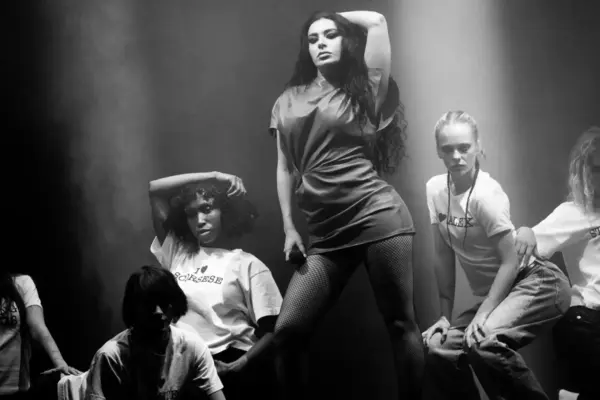
The seeds of the collaboration were planted against the glittering, high-stakes backdrop of Paris Fashion Week. Amidst the haute couture presentations and exclusive celebrity galas, Madonna and Charli XCX converged under the banner of Saint Laurent to host an underground-style happening dubbed CLUB CONFESSIONS.
The pop icons turned the fashion capital upside down with an impromptu, highly intimate DJ and performance event that immediately set social media ablaze. Rather than engaging in superficial celebrity mingling, the two artists found themselves locked in intense creative dialogue. The energy of Paris Fashion Week provided the ideal crucible for their shared sensibilities: a mutual obsession with nocturnal hedonism, high-fashion aesthetics, and the liberating sanctuary of the dancefloor.
Speaking about the genesis of their creative bond in a subsequent interview with BBC Radio 6 Music, Charli XCX recalled the electric atmosphere of their time together in France:
"We went to Paris and we just couldn’t stop hanging out with each other. And it was fab! She is so interested in really talking about the music that she makes, and how and why, and I found it very inspiring to hang out with her."
The Studio Sessions and Production Mastery
Following their Parisian convergence, the artistic mutual admiration quickly manifested into concrete studio work. "Danceteria," originally a fan-favorite cut from Madonna’s critically acclaimed Confessions II project, was selected as the canvas for their joint vision.
The production lineup alone signaled that this was no mere vanity remix. Returning to the controls was electronic mastermind Stuart Price, whose work on Madonna’s seminal Confessions on a Dance Floor album defined an entire era of club music. Price was joined by modern hitmaking titan Andrew Watt and master producer Cirkut, with Madonna herself taking a hands-on executive production role to ensure her artistic vision remained uncompromised.
Instead of simply layering vocals over an existing instrumental, the team constructed a revamped sonic landscape. The track was infused with sharper synthesizer lines, a heavier, more driving four-on-the-floor beat reminiscent of warehouse techno, and bespoke vocal arrangements tailored to Charli XCX’s signature cadence. Charli’s newly penned verses effortlessly weave into Madonna’s original vocal takes, creating a seamless dialogue across the generations of club music history.
The Commercial Rollout: Digital Domination and Physical Collectibles
Capitalizing on the immediate viral momentum generated by their Parisian appearances, the artists executed a multi-tiered release strategy designed to satisfy both the streaming masses and physical collectors.
- The Digital Release: "Danceteria Afterhours" dropped globally across all major streaming platforms, instantly capturing editorial playlist prime real estate and driving massive engagement across Spotify, Apple Music, and YouTube.
- Limited-Edition CD Singles: In an era where physical media has largely been sidelined by streaming algorithms, Madonna and Charli XCX leaned into nostalgia and collector culture by releasing three distinct limited-edition physical CD single formats via Madonna’s official webstore. These physical releases have become instant collector’s items, driving fervent engagement among superfans (hardcore Madonna stans and angels alike).
- Chart Trajectory: The momentum builds upon the initial commercial success of Confessions II, which saw the parent track "Danceteria" debut impressively within the UK Top 40 at No. 38. Industry analysts anticipate the "Afterhours" remix will reinvigorate chart performance across global territories.
Supporting Context & Metrics: Analyzing the Cultural and Commercial Impact
The BRAT Phenomenon Meets the Queen of Pop
To fully appreciate "Danceteria Afterhours," one must examine the distinct cultural forces each artist brings to the table. Charli XCX enters this collaboration at the absolute apex of her career, fresh off the era-defining, internet-breaking cultural earthquake that was her sixth studio album, BRAT. Characterized by its iconic lime-green minimalist aesthetic, abrasive club production, and brutally honest lyricism, BRAT transformed Charli from an avant-pop critical darling into a generation-defining pop deity.
Madonna, meanwhile, remains the undisputed blueprint for modern pop superstardom. With a career spanning over four decades, she has continually reinvented the visual, sonic, and thematic parameters of popular culture. Her willingness to embrace cutting-edge younger talent has been a hallmark of her longevity—from her collaborations with Britney Spears and Justin Timberlake to her mentorship of modern avant-pop creators.
By merging the raw, sweaty, nihilistic euphoria of BRAT with the polished, disco-techno grandeur of Madonna’s Confessions lineage, "Danceteria Afterhours" creates a fascinating pastiche of modern club history. It validates Charli’s ethos by placing her alongside the woman who practically invented modern dance-pop infrastructure, while simultaneously revitalizing Madonna’s catalog with the frantic, Internet-speed energy of 2020s hyperpop.
By the Numbers: Chart Metrics and Accolades
- UK Chart Debut: Upon the initial release of Confessions II, the original version of "Danceteria" proved its commercial viability by entering the UK Top 40 at No. 38.
- VMAs Dominance: The release of the remix directly precedes one of the most anticipated moments in modern award-show history: Madonna’s return to the MTV Video Music Awards (VMAs) stage. Marking her first performance at the ceremony in 23 years, Madonna arrives at the VMAs riding a wave of historic commercial and critical recognition, having secured a staggering 13 career-high nominations for the upcoming broadcast.
- Format Diversity: The physical campaign features three distinct limited-edition CD single variants, proving that tactile, physical music packaging remains a powerful tool for driving fan engagement and merchandise revenue in the streaming age.
Official Statements and Industry Reception
The critical and industry reception to "Danceteria Afterhours" has been overwhelmingly positive, hailed by music journalists and insiders as a masterclass in collaborative pop curation.
Charli XCX on the Inspiration of Madonna
In her interview with BBC Radio 6 Music, Charli elaborated on what she learned from spending time in the studio and social spaces with Madonna:
"She is so interested in really talking about the music that she makes, and how and why, and I found it very inspiring to hang out with her. It’s not just about the aesthetic; it’s about the obsessive detail of songwriting and production."
This sentiment resonates deeply with music critics, who have long noted that Madonna’s endurance is rooted in her obsessive control over her sonic landscape. For Charli XCX—an artist who equally oversees every aspect of her visual branding, production choices, and conceptual rollouts—finding a peer in Madonna was nothing short of a revelation.
Producer Perspectives: Crafting the Sound
While Stuart Price and Andrew Watt have largely let the music speak for itself, industry insiders close to the production sessions have noted that the track was designed with a specific mandate: to destroy contemporary dancefloors.
By combining Price’s legendary ear for disco-infused house basslines with Watt’s organic, rock-infused pop precision and Cirkut’s razor-sharp modern mixing, "Danceteria Afterhours" achieves a rare sonic density. It sounds massive on high-end club sound systems, yet retains the intimacy of a late-night whispered confession between two icons hiding in the VIP corner of a dimly lit Manhattan discothèque.
Future Outlook: What "Danceteria Afterhours" Signals for the Future of Pop
As the dust settles on Paris Fashion Week and the music world turns its collective gaze toward the upcoming MTV Video Music Awards, the release of "Danceteria Afterhours" acts as a bellwether for where pop music is heading.
1. The Death of Generational Silos in Pop
For years, the music industry was obsessed with strict generational boundaries—legacy acts were expected to remain in retirement or rely purely on nostalgia tours, while younger artists operated in entirely separate digital ecosystems. Madonna’s recent artistic choices decisively shatter this false dichotomy. By actively collaborating with the vanguard of contemporary alternative pop (ranging from collaborations with Arca and Swae Lee to her current creative kinship with Charli XCX), Madonna proves that true pop royalty is not bound by chronological age, but by an unwavering commitment to sonic innovation.
2. The Resurgence of the Maxi-Single and Collector Culture
The strategic deployment of three limited-edition CD singles alongside the digital streaming release signals a growing industry trend: the weaponization of physical product design to reward hyper-engaged superfan communities. As streaming revenues plateau and algorithms dictate passive listening habits, artists like Madonna and Charli XCX are proving that physical collectibility—vinyl, cassette, and limited-edition CD formats—creates tangible emotional touchpoints that deepen fan loyalty.
3. The Road to the VMAs and Beyond
All eyes are now locked on the upcoming MTV Video Music Awards, where Madonna’s historic return to the performance stage after more than two decades promises to be a watershed television event. With 13 nominations validating her enduring creative relevance, and with fresh club anthems like "Danceteria Afterhours" currently dominating global playlists, the Queen of Pop is demonstrating that she is not merely resting on her legendary laurels. She is actively shaping the future of the dancefloor.
In an era defined by fleeting viral moments and disposable content, "Danceteria Afterhours" stands as a towering monument to artistic longevity, cross-generational mentorship, and unadulterated club-land euphoria. Whether experienced through the hiss of a limited-edition CD single or the bass-heavy rattle of a warehouse sound system, Madonna and Charli XCX have delivered a masterwork that will echo through the underground long after the lights come up.