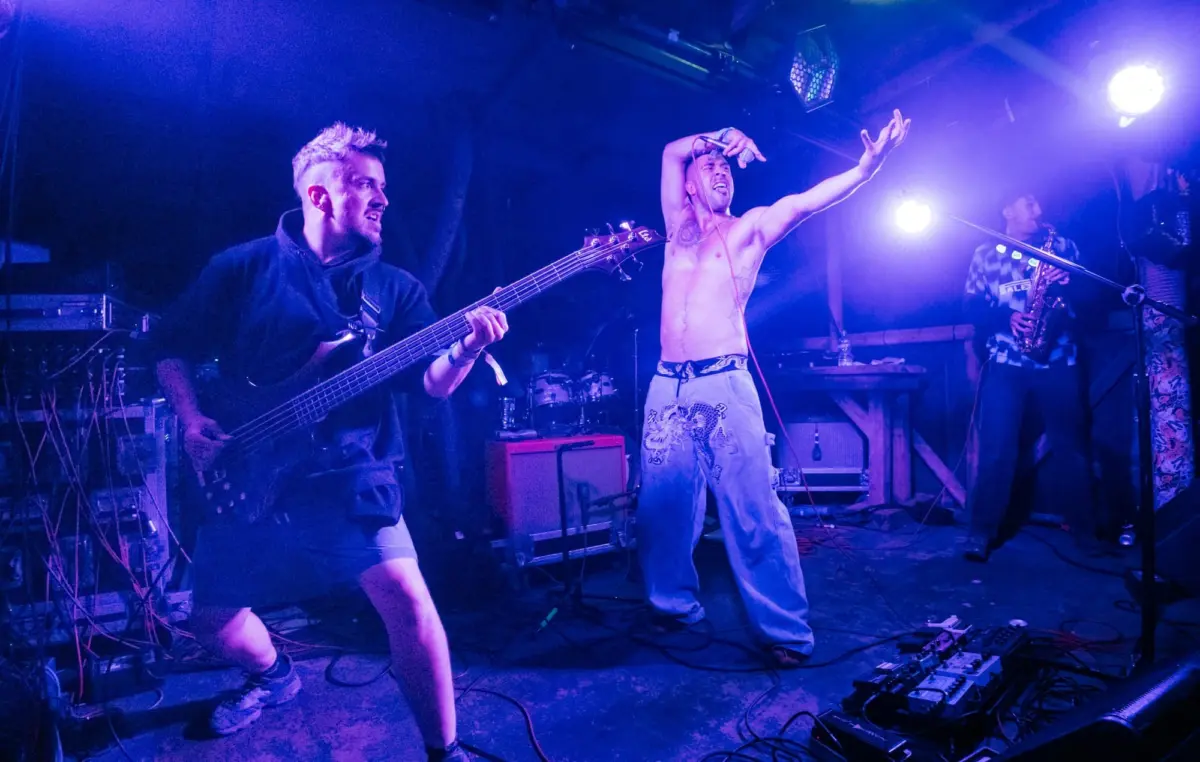
In an era where the global live music sector is increasingly consolidated under corporate monopolies, private equity firms, and billionaire venue developers, London’s historic 100 Club remains a rare ideological sanctuary. On the evening of September 21, 2026, the Oxford Street basement venue hosted the second night of its landmark "50 Years of Punk Special." The two-day event serves as both a historical commemoration of the legendary 1976 festival—which catalyzed the British punk explosion—and a contemporary evaluation of the genre’s sociopolitical utility in the 21st century.
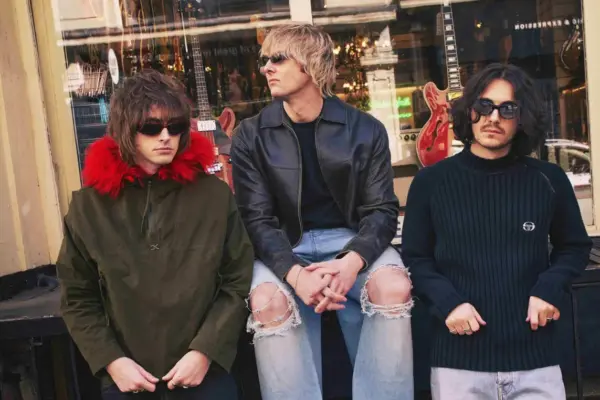
Headlining the second evening is the Manchester-based post-punk outfit Maruja. Over the past year, the group has transitioned from underground provocateurs to one of the most critically acclaimed live acts in Europe, propelled by the release of their debut album, Pain To Power.
In an exclusive, wide-ranging dialogue with NME, Maruja’s vocalist and saxophonist, Joe Carroll, dissected the modern mechanics of artistic protest. The conversation took place against the backdrop of a major industry controversy: the abrupt removal of Seattle rapper Macklemore from pop superstar Ed Sheeran’s stadium tour.
Macklemore’s dismissal—prompted by a "Free Palestine" speech at Gillette Stadium and subsequent financial pressure from billionaire venue owner Robert Kraft—has reignited a fierce debate regarding corporate censorship, artistic complicity, and the financial structures that govern mainstream music. For Carroll, the controversy highlights a stark divide between artists who view music as a medium of moral resistance and those who treat it purely as a corporate commodity.
Detailed Chronology
The 1976 Catalyst and the 2026 Commemoration
To understand the significance of Maruja’s headlining set, one must trace the lineage of The 100 Club’s Punk Special. On September 20 and 21, 1976, the venue hosted a showcase that effectively introduced punk rock to the British public. The lineup featured the Sex Pistols, The Clash, Siouxsie and the Banshees, The Damned, and the Buzzcocks. It was a chaotic, confrontational weekend that stripped rock music of its self-indulgent stadium excesses and returned it to the hands of disenfranchised youth.
Fifty years later, the venue has honored that legacy by staging a two-day anniversary event with ticket prices set at the original 1976 rate of £1.50.
Night One (September 20): Headlined by the Dublin-based garage-punk band Sprints, who delivered a blistering set reflecting modern Irish anxieties and feminist rage.
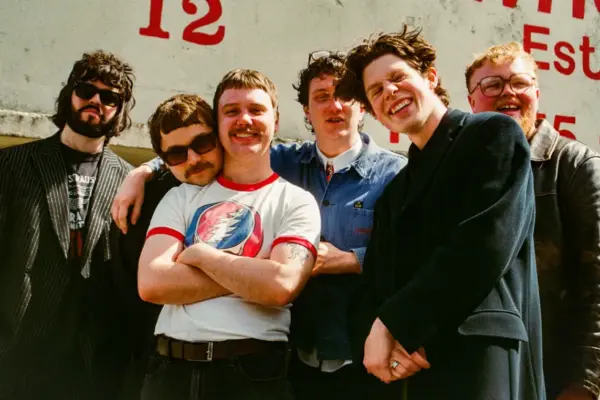
Night Two (September 21): Headlined by Maruja, with support from London post-punk sextet Opus Kink, garage-rock outfit Wax Head, and a guest DJ set from Jehnny Beth (former frontwoman of Savages).
The Rise of Maruja: From Pain To Power to the "Tattoo Epidemic"
Maruja’s road to Oxford Street has been defined by rapid, grassroots momentum. Following the release of two highly praised EPs, the band released their debut full-length album, Pain To Power, in late 2025. The record’s fusion of jazz-influenced saxophone improvisation, abrasive noise-rock guitars, and spoken-word lyricism established them as a potent force in the contemporary post-punk revival.
Maruja's 12-Month Trajectory:
[Late 2025: Debut Album 'Pain To Power' Released]
       │
       ▼
[Early 2026: European & UK Headline Tours]
       │
       ▼
[Summer 2026: Critical Festival Showcases (Glastonbury, Green Man)]
       │
       ▼
[September 21, 2026: Headlining The 100 Club's 50th Anniversary of Punk]
Over the past year, the band has witnessed a profound physical connection with their audience, characterized by Carroll as a "tattoo epidemic." Across Europe, fans have begun permanently inking the band’s artwork and lyrics onto their bodies—most notably the second verse of their rallying cry, "Look Down On Us."
The Macklemore-Sheeran-Kraft Friction
The immediate context of Carroll’s interview, however, was dominated by the geopolitical friction fracturing mainstream touring. During a performance at Gillette Stadium in Foxborough, Massachusetts, opening act Macklemore delivered an impassioned speech advocating for Palestinian human rights and calling for a ceasefire in Gaza.
The stadium is owned by Robert Kraft, the billionaire chairman of the Kraft Group and founder of the Foundation to Combat Antisemitism. Following the performance, Kraft reportedly threatened to bar Ed Sheeran from performing at any of his properties—including major US sporting arenas—should Macklemore remain on the tour. Facing immense financial pressure and potential venue blacklisting, Sheeran’s management capitulated, removing Macklemore from the stadium lineup.
Supporting Context & Metrics
The Economics of Stadium Silence
The dispute involving Sheeran, Macklemore, and Kraft exposes the highly consolidated nature of modern stadium touring, where political speech is directly policed by real estate owners and multinational promoters.
For a stadium-level artist, a single venue cancellation can result in millions of dollars in lost revenue, contract breach penalties, and severe logistical disruptions. This economic reality creates a strong disincentive for mainstream artists to take public stances on controversial human rights issues.
The Grassroots Counter-Model
In stark contrast to the stadium economy, Maruja and their peers operate within a grassroots model that prioritizes ideological alignment over corporate synergy. Carroll revealed that Maruja enforces a strict ethical rider: if a venue or festival refuses to allow the band to display the Palestinian flag on stage, they refuse to perform.
This policy shifts political activism from a lyrical pose to a practical, contractually binding commitment. While this stance risks alienating certain corporate booking agents and commercial sponsors, it has solidified Maruja’s standing among a highly loyal, politically conscious fanbase.
Official Statements
Joe Carroll on the Ed Sheeran Controversy and "Fuck You" Money
In his conversation with NME, Joe Carroll expressed deep frustration with mainstream artists who choose commercial preservation over ethical responsibility, pointing directly to Ed Sheeran’s public neutrality:
"What’s the point in having ‘fuck you’ money if, in a situation where children are getting murdered, you’re not gonna say ‘fuck you’? It really does show which side his bread’s buttered."
Carroll argued that Sheeran’s history reveals a pattern of cultural extraction without civic reciprocity, citing previous controversies where the pop star was accused of exploiting underground subcultures:
"Looking back at his history, you could expect it all along. There’s the history of him and grime—Wiley accused him of being a culture vulture—and even Irish culture. Then, when it’s come to actually taking action or showing support, he’s bottled it and never shown that strength that you need from huge artists. When he’s playing in front of hundreds of thousands of people a night, and they’re people that worship and idolise him, for him to not stand up for them shows a real lack of backbone."
Carroll concluded that the severe public backlash against Sheeran’s decision could serve as a necessary turning point:
"With this level of backlash, it looks like the tour’s gonna get cancelled anyway. I mean, it probably should. He can use this as an opportunity to look at himself, look at where he’s gone wrong, take a stance and go, ‘I’ve made a mistake’ and be willing to change his mind for the best."
On the Real Meaning of Punk in 2026
Addressing the 50th anniversary of the Punk Special, Carroll sought to reclaim the term "punk" from its aesthetic caricatures, framing it as an active, empathetic practice:
"It’s definitely come at a very fitting time to platform what the punk movement has always been about and is about today. Although it’s aggressive, it’s always fundamentally been about love and being able to say, ‘fuck you: this is what we believe in, and we’re not gonna be quiet about it.’ It’s always been inherently political and strong-willed and not willing to sell your soul in any way."
The Ideological Spectrum of Modern Performance:
┌────────────────────────────────────────┐
│ CORPORATE NEUTRALITY                   │
│ - Financial preservation               │
│ - Compliance with venue stakeholders   │
│ - Audience maximization                │
└───────────────────┬────────────────────┘
                    │
                    ▼
┌────────────────────────────────────────┐
│ PUNK SOLIDARITY (Maruja)               │
│ - Strict ethical riders (e.g. flags)   │
│ - Community-driven, direct action      │
│ - Financial sacrifice for principles   │
└────────────────────────────────────────┘
On Community, Camaraderie, and the Opus Kink "Duel"
Despite the serious political focus of their work, Carroll emphasized that the underground post-punk scene is sustained by a deep sense of community and eccentric humor. He shared an anecdote involving support act Opus Kink during a past appearance at the Green Man Festival:
"We actually go way back with Opus Kink—they challenged us to a duel at Green Man. There was a guy going round with letters, like on Valentine’s Day in primary school, and he was like, ‘Are you Joe?’ And then he handed me a letter. I opened it up and there was a fork that had been used to eat curry, and there was a letter inside that said, ‘Opus Kink challenges Maruja to a duel. Meet us here at this time.’ We never actually did it because we were all partying… but yeah, they had a huge sonic and aesthetic influence on us, in terms of the stage presence and the swagger and the energy that they play with."
Future Outlook
As Maruja concludes their historic performance at The 100 Club, the band finds itself at a critical juncture. The success of Pain To Power has proven that uncompromising, politically charged music can still find a viable global market without relying on corporate sanitization.
Emerging Alliances and Subversive Subcultures
The band’s trajectory is closely aligned with a broader network of independent, highly political artists across the UK and Ireland. Carroll highlighted several peers who are currently redefining the punk ethos:
Lambrini Girls: The Brighton duo consistently uses their platform to advocate for LGBTQ+ safety, trans rights, and localized community support during their tours.
Enola Gay: Hailing from Belfast, this group infuses their industrial-tinged noise-punk with the harsh political realities of post-conflict Northern Ireland.
Gilla Band: The Dublin pioneers continue to push the sonic boundaries of the genre, with a highly anticipated new album rumored to challenge conventional song structures entirely.
What Lies Ahead for Maruja
While Carroll remained tight-lipped about the specifics of their upcoming material, he confirmed that the band is actively writing and preparing for a series of major announcements in late 2026.
The enduring legacy of the 1976 Punk Special was not its specific musical style, but its proof that artists can bypass established industry gatekeepers to build their own cultural infrastructure. As the corporate consolidation of the music industry continues to police political expression, bands like Maruja are proving that the underground remains a vital space for genuine, unfiltered dissent.