Executive Overview
In the fast-evolving landscape of digital DJ technology, software reliability, precision tracking, and seamless workflow integration dictate the tools professionals choose to rely on. For years, digital DJs have grappled with the nuances of automated beatgrid generation, particularly when tackling complex genres characterized by fluctuating tempos—such as live-recorded jazz, funk, classic disco, afrobeat, and unquantized hip-hop.
Answering the long-standing community demand for more accurate and sophisticated grid analysis, Serato has officially launched the public beta for Serato DJ 5.0. Headlined by an entirely rebuilt analysis engine known as Lucid Beatgrids, this major software revision represents one of the most significant algorithmic overhauls in the company’s history.
Beyond grid precision, Serato DJ 5.0 introduces "Open Streaming," a revolutionary feature that breaks down traditional software boundaries by allowing users to log into and mix across multiple streaming services concurrently. Coupled with advanced workflow enhancements—such as Cue Loops exclusively for Serato DJ Pro users and heightened visibility tools for track preparation—version 5.0 aims to bridge the persistent gap between legacy vinyl performance techniques and modern digital capabilities.
This comprehensive report examines the structural components of the Serato DJ 5.0 public beta, breaking down the mechanics of Lucid Beatgrids, the operational mechanics of Open Streaming, the utility of new workflow shortcuts, and what this release signals for the broader ecosystem of DJ technology.
Detailed Chronology: The Evolution Leading to Version 5.0
To fully understand the gravity of the Serato DJ 5.0 release, one must contextualize the historical trajectory of DJ software analysis engines. When digital DJ software first moved away from purely manual beat-matching, the primary challenge was developing algorithms capable of finding the downbeat and maintaining a steady tempo map.
The Legacy Grid Era
For well over a decade, fixed beatgrids served as the industry standard. While adequate for electronic dance music (EDM), house, and techno—genres built around a rigid, drum-machine-derived metronome—these fixed grids routinely faltered when applied to human-played music. Drummers naturally push and pull against the tempo; live bands exhibit macro-tempo fluctuations over the course of a five-minute track; and vintage vinyl rips often feature wow and flutter that causes grid drift.
DJs playing open-format sets or historical genres were forced to spend valuable preparation time manually dropping markers, setting multiple anchors, or riding pitch faders exclusively by ear. While subsequent minor updates introduced localized grid editing tools, the underlying engine remained fundamentally tied to the concept of a static, unyielding tempo grid.
The Shift Toward Adaptive Analysis
As competitors began experimenting with dynamic tempo mapping, Serato’s user base grew increasingly vocal about the need for a modern architectural overhaul. The limitations of the older analysis framework became a frequent topic of discussion across industry forums, beta feedback channels, and creator communities.
The development of Serato DJ 5.0 represents a direct response to this feedback loop. Rather than patching the legacy engine, Serato’s engineering team went back to the drawing board to construct a system that could dynamically interpret complex rhythmic structures without breaking user control. The result of this multi-year R&D effort is the public beta rollout of version 5.0, signaling a generational leap in how Serato processes and displays audio data.

Technical Deep-Dive: Lucid Beatgrids and Workflow Innovations
At the heart of the Serato DJ 5.0 public beta is a fundamental re-imagining of how software interprets rhythm. The new features span internal analysis, multi-platform cloud integration, and hardware-software performance shortcuts.
1. Lucid Beatgrids: Precision Meets Adaptability
Lucid Beatgrids are touted by Serato as their most accurate and intuitive beatgrid technology to date. Built upon a completely rebuilt analysis engine, the system is designed to deliver greater precision and reliability across a much wider stylistic spectrum of music.
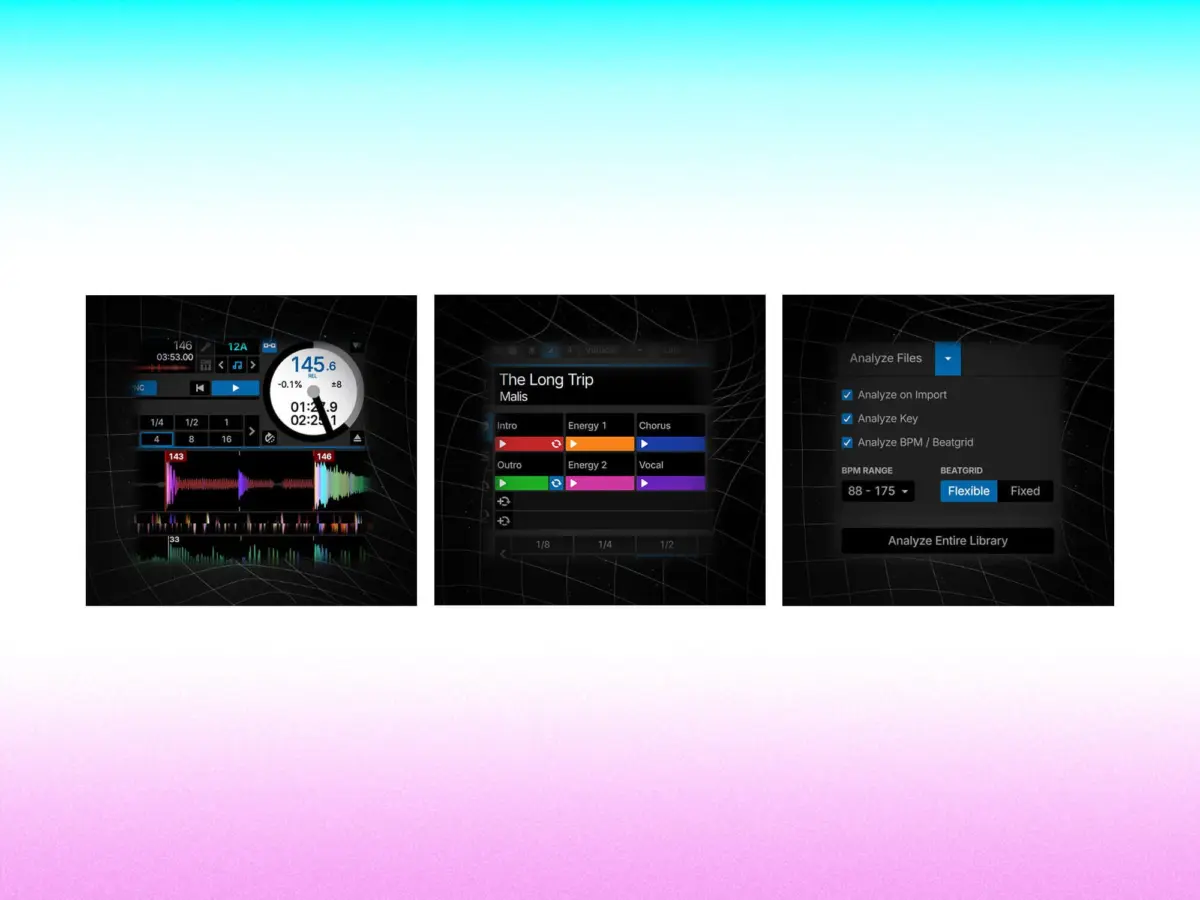
- Automatic Fluctuating BPM Detection: Unlike legacy systems that force a single tempo onto a track, Lucid Beatgrids can automatically detect and map fluctuating BPMs during the initial track analysis phase. This means older disco edits, live rock tracks, and world music with natural tempo variations can now be accurately gridded by the software in seconds.
- Flexible vs. Fixed Analysis Modes: DJs are given granular control over how tracks are analyzed through two distinct modes. The new Flexible mode accommodates dynamic tempo changes, while the improved Fixed mode caters to electronic and metronomic tracks.
- Streamlined Activation: Users can transition to the new engine simply by right-clicking a track within their library and selecting the updated "Analyse" command from the context menu.
- Enhanced Editing and Visual Feedback: Alongside the algorithmic changes, Serato has introduced refined beatgrid editing controls and prominent waveform BPM labels. These additions provide greater visual confirmation during high-pressure live sets, allowing DJs to verify track timing at a glance.
2. Open Streaming: Breaking Down Platform Silos
One of the most structurally disruptive features in Serato DJ 5.0 is Open Streaming. Historically, digital DJs utilizing cloud-based streaming catalogues were frequently locked into a single provider ecosystem during a performance session.
- Multi-Provider Integration: Open Streaming allows users to log into multiple streaming services simultaneously. This capability enables seamless mixing between tracks sourced from entirely different digital platforms within the same set.
- Crate & Search Integration: To prevent UI clutter, streaming providers now populate natively as individual crates within the software environment. Furthermore, a newly integrated provider search dropdown tool expedites track discovery across all active subscriptions.
- Pre-Analysis Metadata: Recognizing that time is of the essence when digging through cloud catalogues, Serato DJ 5.0 now displays BPM and key data for streaming tracks before full local analysis takes place.
- Platform Support: At launch, Open Streaming supports industry giants including Beatport, SoundCloud, Tidal, and Spotify. Note: Apple Music integration is not yet supported in the current beta phase.
3. Cue Loops: Advanced Performance Shortcuts for DJ Pro
Exclusively available in the flagship Serato DJ Pro tier, version 5.0 introduces the Cue Loop function. This utility bridges the gap between improvised looping and pre-determined cue management.
- Instant Activation: DJs can now transform any active Loop directly into a Hot Cue. By saving a loop to a designated Hot Cue slot, pressing that single hardware or software button simultaneously jumps the playhead to the cue point and instantly engages the loop.
- Workflow Efficiency: This eliminates the multi-step gymnastics previously required to set a cue point and subsequently engage a loop pad, tightening up live-remixing capabilities and live mashup transitions.
Supporting Context & Metrics: The DJ Software Landscape
To understand the strategic significance of Serato DJ 5.0, one must analyze the broader ecosystem of DJ software and the shifting demands of modern performers.
| Feature / Capability | Legacy Serato Architecture | Serato DJ 5.0 (Public Beta) | Industry Impact |
|---|---|---|---|
| Tempo Mapping | Fixed, static grids; manual editing required for fluctuating tempos. | Lucid Beatgrids with automated Flexible & Fixed analysis modes. | Drastically reduces preparation time for open-format and live-instrument DJs. |
| Cloud Streaming | Single-provider active login restriction. | Open Streaming (simultaneous multi-provider login). | Eliminates platform switching friction during live sets. |
| Metadata Display | Post-analysis requirement for advanced metadata on cloud tracks. | Pre-analysis BPM and Key visibility for instant sorting. | Streamlines track selection speed in high-pressure environments. |
| Loop Management | Separate workflows for Hot Cues and saved loops. | Cue Loops (save loops directly to Hot Cues for single-button activation). | Enhances live remixing fluidity and creative performance depth. |
The Open-Format Imperative
Modern audiences increasingly expect DJs to traverse multiple genres, decades, and tempos within a single set. A professional open-format DJ might transition from a 1970s funk record with a live, drifting drummer into a modern, quantized techno track, and subsequently into an unquantized hip-hop acapella.
Software that struggles to maintain accurate grid markers across these stylistic chasms forces the artist to abandon software sync features and rely entirely on manual adjustments. By introducing Lucid Beatgrids, Serato is directly targeting this demographic—reclaiming ground among open-format, wedding, festival, and mobile DJs who require adaptive software intelligence.
The Streaming Revolution
Cloud-based music streaming has transformed from a casual discovery tool into a legitimate professional performance medium. However, fragmentation among streaming rights holders has historically created logistical hurdles for DJs. By enabling concurrent multi-service logging via Open Streaming, Serato is acknowledging that professional DJs do not source all their music from a single digital warehouse. Allowing side-by-side access to Beatport, SoundCloud, Tidal, and Spotify within a unified crate structure removes major friction points from modern set preparation.
Official Statements and Industry Reception
While public beta software naturally undergoes rigorous community testing before a commercial deployment, initial reactions from early adopters and beta testers have highlighted the profound impact of these updates.

Industry observers have noted that the introduction of Lucid Beatgrids represents a cultural shift for a brand traditionally associated with the rock-solid, predictable stability of fixed electronic music grids. By addressing the edge cases—such as acoustic drum timing variations—Serato is signaling a maturation of its underlying DSP and algorithmic capabilities.
Furthermore, community forums on platforms such as Reddit and the official Serato portal have expressed overwhelming enthusiasm for Open Streaming. Mobile and club DJs who rely on niche tracks not found in their local hard drives view multi-provider access as a vital safety net and creative catalyst.
Serato representatives have emphasized that version 5.0 is not merely a cosmetic update, but a foundational step toward bridging the gap between legacy vinyl performance techniques and the limitless possibilities of modern digital DJing.
Future Outlook: What Serato DJ 5.0 Portends for the Industry
As the public beta phase of Serato DJ 5.0 progresses, several key questions and projections emerge regarding the future of the platform and the competitive landscape of DJ technology as a whole.
1. Refinement and Full Commercial Release
During the beta period, Serato’s engineering teams will closely monitor telemetry and user feedback regarding Lucid Beatgrids’ performance across millions of unique audio files. Edge cases involving extreme tempo shifts, polyrhythms, and poor-quality audio rips will stress-test the new analysis engine. Once stability is verified, a commercial rollout of Serato DJ 5.0 will follow, likely bringing additional hardware integrations and potential expansions to the Open Streaming partner list (with industry watchers keeping a close eye on any future Apple Music developments).
2. The Competitive Response
The release of Serato DJ 5.0 raises the bar for competing software ecosystems, including Pioneer DJ’s rekordbox, Native Instruments’ Traktor Pro, and Algoriddim’s djay Pro. Algoriddim has long praised its neural-network-based stem separation and flexible grid capabilities, while rekordbox has continuously updated its own algorithmic analysis tools. Serato’s aggressive moves in both dynamic grid analysis and multi-service streaming integration ensure that the race for software supremacy remains fierce, ultimately benefiting consumers through rapid feature innovation.
3. The Human Element in Digital Performance
Ultimately, technology like Lucid Beatgrids and Cue Loops does not replace the ear and intuition of a skilled DJ; rather, it removes computational friction, allowing artists to focus entirely on crowd reading, creative track selection, and spontaneous mixing choices. By automating the tedious aspects of track preparation and expanding cloud accessibility, Serato DJ 5.0 empowers performers to take greater creative risks behind the decks.
For those interested in participating in the development process, the Serato DJ 5.0 Public Beta is currently accessible via Serato’s official user portal, with detailed documentation and community support hosted on "The Drop" announcements page.