Executive Overview
In a landmark development for the electronic music technology landscape, Berlin-based software innovator Bitwig has announced a strategic partnership with AlphaTheta Corporation, the global powerhouse behind the Pioneer DJ brand and the ubiquitous rekordbox ecosystem. This collaboration officially bridges the long-standing divide between live performance DJing and in-studio music production.
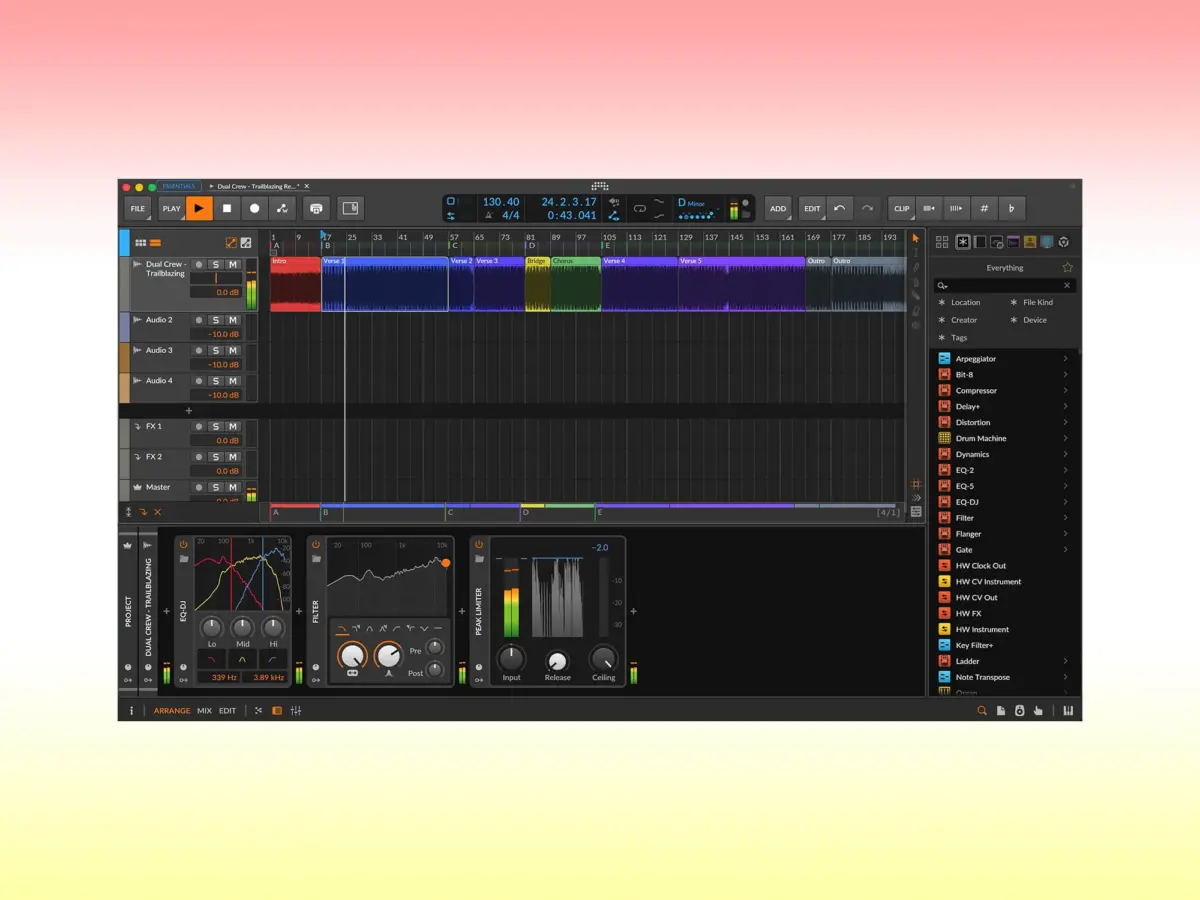
At the center of this alliance is a powerful new integration introduced in Bitwig Studio version 6.1.4. For the first time, producers and DJs can seamlessly access, browse, and import their entire rekordbox music libraries and detailed track analysis data directly inside the Digital Audio Workstation (DAW). This means performance-ready tracks—complete with pre-analyzed BPMs, musical keys, hot cues, structural markers, and vocal positions—can be dragged straight from a DJ collection into a production timeline for remixing, editing, or creative inspiration.
To support this cross-platform synergy, AlphaTheta has launched a dedicated Studio Plan. This subscription offering bundles Bitwig Studio Essentials at an accessible price point ($7 per month or $72 annually), explicitly designed to lower the barrier to entry for DJs looking to transition into music production. Furthermore, the partnership promises even deeper creative capabilities on the horizon, with native stem separation slated for release in Bitwig Studio later this winter.
This comprehensive report examines the mechanics of the new integration, the broader industry context surrounding the Bitwig-AlphaTheta partnership, the financial and structural details of the Studio Plan, and what this convergence means for the future of electronic music creation.
Detailed Chronology: The Road to Convergence
The convergence of DJ software and music production environments has been a holy grail for software developers for over a decade. Historically, DJs and producers lived in two distinct parallel universes. DJs relied on performance software like rekordbox, Serato, or Traktor to manage cue points, loops, and harmonic mixing, while producers used DAWs like Ableton Live, Logic Pro, FL Studio, and Bitwig Studio to build tracks from scratch using MIDI, VSTs, and multi-track audio.
While tools like Ableton’s Link protocol and various third-party bridging scripts attempted to connect performance setups with live sequencing, a truly unified workflow between a primary DJ library database and a full-featured DAW remained elusive.
The Evolution of Bitwig Studio
Founded in Berlin in 2009 by a team of former core developers from another prominent German music software company, Bitwig officially launched its flagship product, Bitwig Studio, in 2014. From its inception, Bitwig carved out a reputation for deep modular flexibility, introducing innovative environments like The Grid (a modular sound-design playground) alongside robust support for cutting-edge open standards such as the CLAP (CLEAN Audio Plug-in) format and the DAWproject file format.
The Rise of AlphaTheta
On the other side of the equation, AlphaTheta Corporation has a storied heritage rooted in Japanese audio engineering. Beginning as the DJ division of the Pioneer Corporation in 1994, the company pioneered legendary club hardware like the CDJ-1000 and the DJM-900 mixer series. The division became an independent entity as Pioneer DJ Corporation in 2015 before rebranding globally as AlphaTheta Corporation in 2020. Today, alongside its hardware dominance, AlphaTheta’s rekordbox software serves as the central database and library management system for the vast majority of professional DJs worldwide.
The 2026 Partnership Announcement
The formal partnership between Bitwig and AlphaTheta represents a coming-together of these two distinct philosophies. Released in late 2026, Bitwig Studio 6.1.4 marks the initial fruit of this collaboration. By making rekordbox libraries natively accessible within the Bitwig browser, the companies have dismantled the technical walls that previously forced DJs to manually bounce audio files, re-analyze tempos, and guess key signatures when bringing live edits into the studio.
Technical Deep-Dive: How the Integration Works
The technical execution of the Bitwig-AlphaTheta integration is designed to be frictionless, relying on deep database reading rather than cumbersome file conversion processes.
Library Browsing and Filtering
Upon updating to Bitwig Studio 6.1.4 (compatible with macOS and Windows for users running rekordbox version 6.x or later with an active Bitwig upgrade plan), users find their existing rekordbox collections directly integrated into the Bitwig browser. Producers can search, sort, and filter tracks using the exact same metadata parameters they rely on in the DJ booth—including artist names, file types, custom playlists, genres, and ratings.

Intelligent Project Generation
The true innovation of the integration lies in what happens when a track is dragged from the browser into the Bitwig arrangement window. Opening a rekordbox track automatically generates a specialized Bitwig project pre-configured to match the source file’s specifications:
- Tempo and Key Synchronization: The DAW session automatically adopts the exact BPM and musical key detected by rekordbox.
- Structural Mapping: Song structures, vocal positions, and breakdown markers are automatically translated into timeline locators.
- Hot Cues: Critical performance trigger points set during DJ preparation appear as project markers or cue points, allowing producers to instantly jump to drops, intros, or vocal hooks.
Creative Applications
By preserving the structural analysis of the DJ library, the integration empowers artists to approach production from a performance-oriented perspective. Producers can immediately begin editing a track’s arrangement, rebuilding its percussion rhythm with BPM-matched loops, or laying down fresh synthesizer leads and basslines locked precisely to the original key of the song.
Supporting Context, Metrics, and the Studio Plan
To ensure the partnership translates into widespread adoption, AlphaTheta has introduced a commercial framework specifically tailored to bridge the demographic gap between club DJs and bedroom producers.
The AlphaTheta Studio Plan
Recognizing that many professional and aspiring DJs find full-scale DAWs intimidating or financially prohibitive, AlphaTheta has launched the Studio Plan.
- Pricing: Available for a subscription fee of $7 per month or $72 annually.
- Inclusions: The plan grants users access to Bitwig Studio Essentials, a streamlined yet powerful tier of the DAW designed to provide a gentle learning curve.
- Risk-Free Evaluation: AlphaTheta and Bitwig are offering a 30-day free trial of the Studio Plan, allowing DJs to test the waters of music production without immediate financial commitment.
Bitwig describes Studio Essentials as the ideal environment for DJs to "quickly adapt and remix songs, build new material with audio and MIDI clips, and dive into advanced production." It strips away the overwhelming complexity of ultra-advanced modular routing while retaining the core creative engines that make Bitwig a favorite among electronic music purists.
Official Statements and Industry Impact
Industry analysts view the partnership as a shrewd strategic move for both companies. For AlphaTheta, tying rekordbox to a world-class production DAW enhances the software’s stickiness, keeping users within an AlphaTheta-adjacent ecosystem even when they leave the DJ booth. For Bitwig, aligning with the dominant force in DJ hardware and software opens the door to a massive, highly engaged demographic of DJs who have historically hesitated to learn traditional production software.
While official press releases emphasize the user-centric benefits—focusing on a "smooth transition between DJing and music-making, and a production experience that’s uniquely tailored to DJs"—the underlying market implication is clear: the boundary lines separating performance gear and production software are rapidly dissolving.
Furthermore, both companies have confirmed that the partnership extends beyond the initial rekordbox browser integration. Bitwig has officially announced that built-in stem separation is arriving in Bitwig Studio this winter. When combined with rekordbox library integration, stem separation will allow DJs to extract acapellas, instrumentals, and individual drum elements directly from their performance libraries within the DAW, exponentially increasing the creative scope of live edits and bootlegs.
Future Outlook: The Blurring Lines of Electronic Music Creation
The collaboration between Bitwig and AlphaTheta points toward a future where the roles of DJ, remixer, and producer are entirely fluid. For decades, the creative workflow was linear: a producer finished a track in a DAW, exported a stereo master file, and handed it to a DJ to play out live.
Today, that workflow is increasingly circular. DJs are expected to produce their own edits, play live live-hybrid sets featuring multi-track stem manipulation, and turn impromptu club mashups into official studio releases on the fly. By integrating rekordbox directly into Bitwig Studio, AlphaTheta and Bitwig have provided the technological infrastructure to support this modern, hybrid creator.
As the winter release of native stem separation approaches, and as more DJs take advantage of the Studio Plan to test the waters of production, this partnership may well be remembered as the moment the DJ booth and the studio workbench finally became one and the same.