Executive Overview
The boundary separating factual nonfiction from creative storytelling has long been a site of intense literary friction, but recent years have witnessed an unprecedented escalation in high-profile controversies. At the heart of this storm is a fundamental philosophical and psychological question: What do readers actually owe to a memoir, and what does an author owe to the truth?
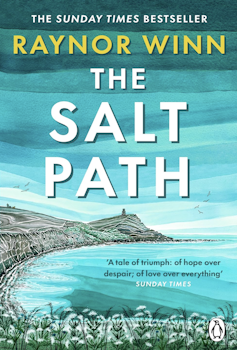
This tension broke into public view in July 2025, when The Observer journalist Chloe Hadjimatheou published an explosive investigative piece challenging the foundational veracity of Raynor Winn’s multi-award-winning bestseller, The Salt Path. The memoir—a beloved chronicle of healing, destitution, and resilience detailing a grueling coastal trek undertaken by Winn and her terminally ill husband after losing their home—was abruptly thrust from the pedestal of inspirational nonfiction into the searing heat of a literary scandal.
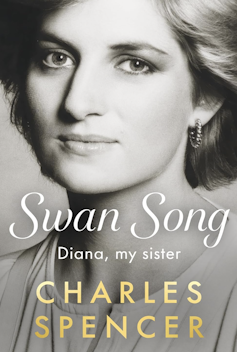
The repercussions extended far beyond a single book, triggering a broader cultural reckoning over the ethics of life-writing. Across the literary landscape, from Charles Spencer’s royal reflections in Swan Song to the complex socio-political tapestries of Scottish care-system literature, the definition of "truth" in memoir is being aggressively re-examined. Neuroscientific insights into the reconstructive, malleable nature of human memory suggest that total objectivity is a neurological impossibility. Yet, readers continue to hold memoirs to a standard of unvarnished historical accuracy. This article explores the anatomy of the Salt Path controversy, examines the fluid mechanics of human memory, and investigates how contemporary authors navigate the perilous territory between fact, fiction, and lived experience.
Detailed Chronology: The Rise and Fall (and Defense) of The Salt Path
To understand the current crisis of authenticity, one must trace the trajectory of Raynor Winn’s literary phenomenon and the investigative dismantling that followed it.
- The Catalyst (Pre-2018): Raynor Winn and her husband, Moth, face financial ruin and the immediate loss of their home following a disastrous business investment and lawsuit. Concurrently, Moth is diagnosed with a terminal degenerative brain condition, corticobasal degeneration. Faced with homelessness and a terminal prognosis, the couple decides to walk the 630-mile South West Coast Path, carrying only the bare essentials.
- The Publication and Triumph (2018–2024): Published by Penguin Books, The Salt Path became a runaway commercial and critical success. It was shortlisted for the prestigious Duff Cooper Prize and the Costa Book Award, selling hundreds of thousands of copies globally. To millions of readers, it served as a poignant testament to the healing power of nature and the indomitable human spirit. The memoir’s cultural footprint expanded further when it was adapted into a major feature film.
- The Investigative Bombshell (July 2025): Investigative journalist Chloe Hadjimatheou, writing for The Observer, published a meticulous exposé claiming that significant factual pillars of The Salt Path had been fabricated or severely distorted. Hadjimatheou’s reporting challenged the timeline and circumstances surrounding the couple’s eviction, as well as the medical framing of Moth’s terminal diagnosis. The publishing world reeled; booksellers and literary critics were forced to confront uncomfortable questions regarding editorial oversight in the non-fiction genre.
- The Author’s Retaliation (July 2025): Responding swiftly to the mounting pressure, Winn published a robust 2,300-word defense on her official website. She categorically rejected Hadjimatheou’s findings, denouncing the claims as "grotesquely unfair" and "highly misleading." Winn maintained that her book captured the emotional, experiential truth of their trauma and survival, arguing that a memoir cannot—and should not—be read as a rigid, forensic transcript of events.
- The Wider Aftermath (Late 2025–Present): The scandal ignited a chain reaction across the literary community. Reviewers, legal analysts, and academics began dissecting the unspoken contract between memoirists and their audiences, asking whether emotional resonance can ever excuse factual bending in works categorized as non-fiction.
Supporting Context & Metrics: Memoir vs. Autobiography
The Salt Path controversy laid bare a widespread public confusion regarding the definitions and expectations governing life-writing. While terms like "autobiography" and "memoir" are frequently used interchangeably in marketing copy, they occupy distinctly different literary categories with divergent structural rules.
Taxonomical Distinctions in Life-Writing
| Literary Genre | Primary Focus | Narrative Scope | Reader Expectation |
|---|---|---|---|
| Autobiography | The entirety of a public figure’s life, career, and societal contributions. | Comprehensive; chronological or thematic sweep across decades. | High degree of verifiable historical accuracy and objective public record. |
| Memoir | Specific formative experiences, emotional milestones, or relational intersections. | Focused; episodic slices of life bound by a thematic core. | Emotional authenticity, psychological insight, and subjective perspective. |
The word memoir traces its etymology directly to the French mémoire, meaning "memory." By definition, a memoir is built upon the architecture of human recollection. However, this etymological root is precisely where the modern literary dilemma begins.
In the era of hyper-fact-checking and digital verification, readers increasingly demand journalistic accountability from works that sit on the nonfiction shelf. When an author presents a narrative as a literal recounting of real-world events, any divergence—whether intentional fabrication or the natural drift of human memory—is treated as a betrayal of trust. Yet, scholars of life-writing argue that demanding objective journalistic truth from a psychological memoir fundamentally misunderstands the medium. A memoirist is not an impartial historian; they are an artist shaping raw, chaotic memories into a coherent narrative arc.
Official Statements and Institutional Responses
The debate over the subjectivity of memory extends far beyond Raynor Winn’s coastal trek, intersecting with high-profile royal memoirs and institutional research.
When Charles Spencer published Swan Song—a deeply personal memoir recounting his upbringing and his relationship with his late sister, Princess Diana—it was met with intense public scrutiny and allegations from royal observers that key historical details had been misremembered or misconstrued.
Buckingham Palace offered a measured yet telling response to Spencer’s claims regarding the royal family:
"His Majesty is mindful that the pain of fraternal grief can cloud reason, affect judgement and colour memory in ways others do not recognise."
This official statement inadvertently touches upon a core consensus in contemporary neuroscience and psychology: human memory is not a pristine video recording stored on a hard drive. Rather, it is a reconstructive, dynamic faculty. Every time an individual recalls a past event, the brain actively reconstructs the memory, influenced by subsequent experiences, emotional states, current beliefs, and external narratives.
Academic research centers, such as the University of Glasgow’s life-writing initiative, have spent years studying this exact phenomenon. Researchers examining life-writing by Scottish authors—particularly those with backgrounds in the institutional care system—have found that the line between truth and fiction is perpetually fraught.
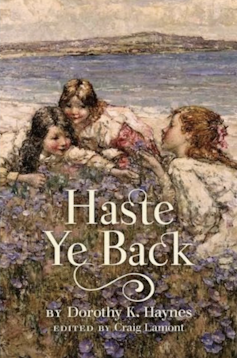
Consider the case of Dorothy K. Haynes, whose memoir Haste Ye Back painted a largely idyllic picture of her childhood at the Aberlour Orphanage between 1929 and 1933. Decades later, a comprehensive 2019 report for the Scottish Child Abuse Inquiry uncovered harrowing testimonies of physical, psychological, and sexual abuse from former residents spanning the 1930s to the 1990s. Haynes’s glowing personal recollections stood in stark contrast to the systemic trauma uncovered by official investigators. Does Haynes’s vastly different personal experience make her account "untrue"? Or does it illustrate that individual memory is strictly bounded by perspective, circumstance, and psychological survival mechanisms?
Blurring the Lines: Fiction, Memoir, and the "Anti-Memoir"
For many authors, the constraints of the traditional memoir format are too restrictive, leading them to experiment across the porous boundary dividing fiction from non-fiction.
Scottish writer Jenni Fagan brilliantly exploited this fluid dynamic over the course of her career. Her critically acclaimed 2012 novel, The Panopticon, chronicled the life of a fierce teenage girl navigating the bureaucratic violence of the Scottish care system. Ten years later, Fagan published her raw memoir, Ootlin, which laid bare the harrowing reality that much of her fictional protagonist’s harrowing journey had been drawn directly from Fagan’s own childhood. By releasing the novel first and the memoir later, Fagan challenged readers to question where invention ends and lived reality begins.
Similarly, Jessie Kesson’s classic novel The White Bird Passes closely mirrored her own poverty-stricken upbringing and subsequent placement in a Scottish orphanage. When interviewed later in life, Kesson openly admitted that the book was "mostly autobiographical," noting that she chose the fiction section because she did not want to repeat herself or bore readers by writing a strict memoir.
At the most radical end of the spectrum are writers like Janice Galloway, who deliberately subverted the genre by penning what she termed "anti-memoirs"—This Is Not About Me and All Made Up. Chronicling an Ayrshire upbringing that closely mirrors her own life, Galloway utilizes the sharp characterization and stylistic techniques of fiction. Her titles serve as a deliberate warning to the reader: Do not trust that what you are reading is the unembellished truth. Galloway’s genius lies in exposing the artifice inherent in all life-writing, reminding audiences that even the most honest autobiography is still an artistic construct shaped by language, selection, and ego.
Future Outlook: The Enduring Allure of the Unverifiable
As the publishing industry navigates the fallout from the Salt Path scandal and subsequent memoir controversies, the existential debate over truth in nonfiction is unlikely to subside.
Future literary landscapes will undoubtedly grapple with tighter ethical guidelines, clearer distinctions between creative nonfiction and investigative memoir, and perhaps a more sophisticated readership that understands the cognitive limitations of memory. Researchers studying life-writing will continue to map the complex interplay between trauma, neurobiology, and narrative construction, proving that human recollection is inherently subjective, non-linear, and emotionally charged.
Yet, despite the scandals, the investigations, and the philosophical hand-wringing, the genre of the memoir remains remarkably resilient. Readers do not turn to memoirs seeking legal affidavits or academic documentation; they seek intimacy, empathy, and a window into another human consciousness. We read memoirs precisely because we can never truly step inside another person’s mind or experience the world through their eyes. As long as readers retain that profound desire for alternate perspectives and shared human vulnerability, the imperfect, beautifully constructed art of the memoir will continue to thrive—truth, fiction, and everything in between.