Executive Overview
In a biting, high-profile cold open that quickly ignited social media discourse and political circles alike, Saturday Night Live (SNL) returned to television screens with a satirical assault targeting two of the most controversial figures in contemporary American governance: Defense Secretary Pete Hegseth and Health and Human Services (HHS) Secretary Robert F. Kennedy Jr.
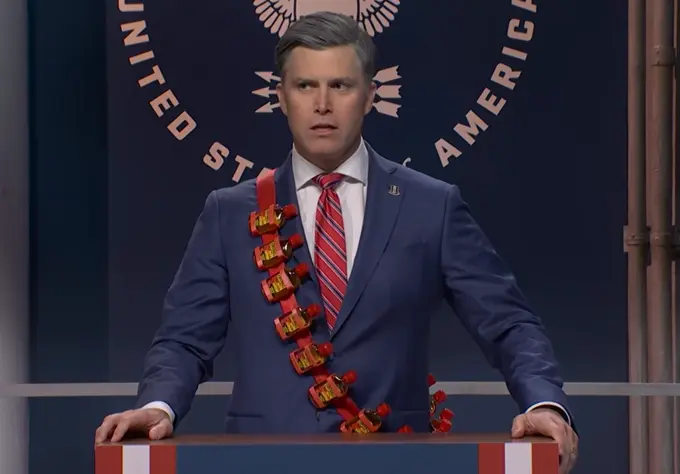
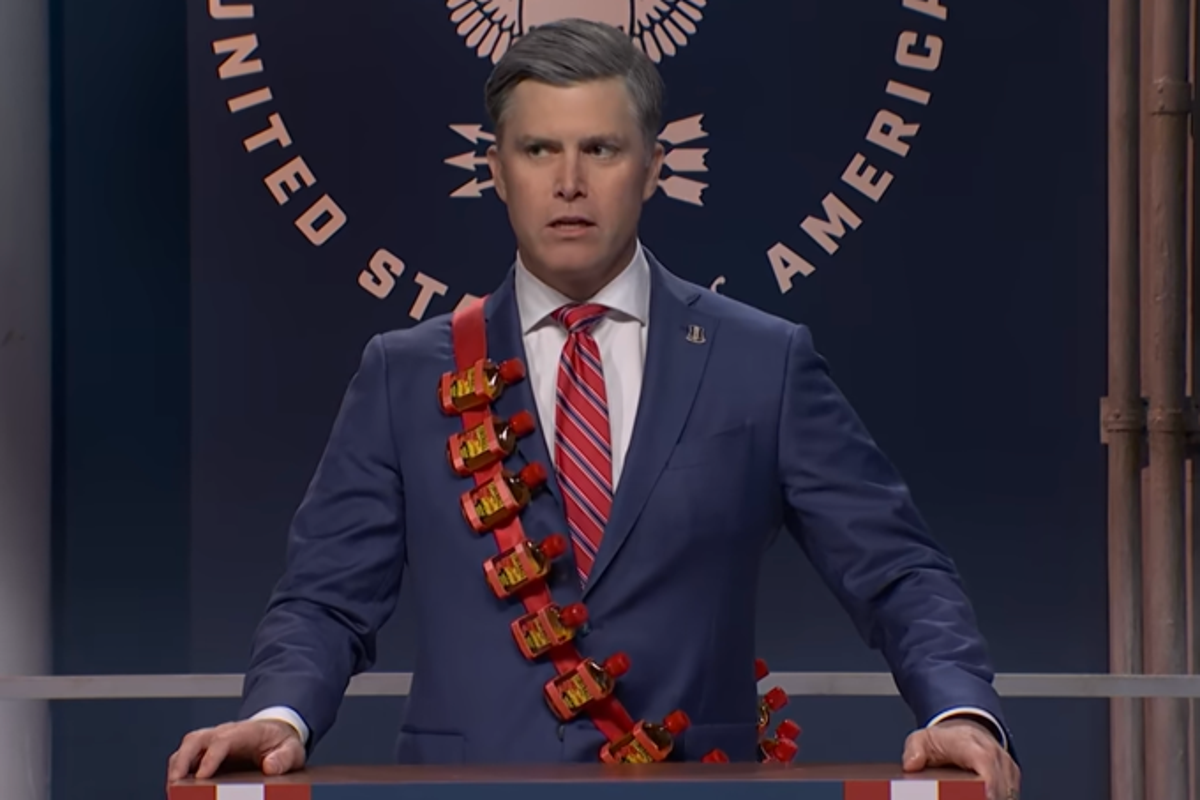
Anchored by Weekend Update co-host Colin Jost—who reprised his recurring, hard-drinking, chaotic caricature of Hegseth—the sketch utilized the backdrop of the USS Abraham Lincoln’s long-anticipated return to San Diego to skewer a litany of recent administrative controversies. Complete with a belt lined with mini bottles of Fireball Cinnamon Whiskey, Jost’s Hegseth delivered a satirical briefing to returning sailors that touched upon everything from contentious military tribunals and questionable Department of War iconography to explosive foreign policy remarks.
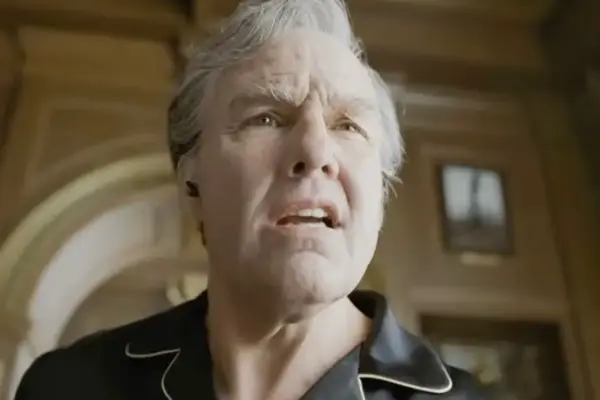
The sketch reached a crescendo of absurdity with the introduction of James Austin Johnson’s uncanny impersonation of Robert F. Kennedy Jr. In his trademark strained, raspy vocal cadence, Johnson’s RFK Jr. mocked the nation’s shifting health directives, ongoing food safety recalls, and the administration’s unconventional public health messaging.
By blending real-world headlines—ranging from the Pentagon’s plans to livestream a high-profile execution to sweeping federal food safety investigations—with surreal comedic hyperbole, Saturday Night Live underscored the growing tension between modern political theatre and late-night satire. This comprehensive report examines the anatomy of the sketch, the real-world policy controversies inspiring the humor, public and official reactions, and the broader cultural implications of SNL’s continued foray into sharp political commentary.
Detailed Chronology of the Sketch
The latest episode of Saturday Night Live wasted no time diving into political controversy, opening with a meticulously crafted cold open designed to disorient and entertain viewers by juxtaposing naval homecoming traditions with dystopian bureaucratic absurdity.
The Return of the USS Abraham Lincoln and Secretary Hegseth
The sketch opened on the deck of the USS Abraham Lincoln, recently docked in sunny San Diego following an extended deployment. Stepping up to the microphone, Colin Jost’s Pete Hegseth—decked out in tactical gear accessorized with miniature bottles of Fireball Cinnamon Whiskey—welcomed the exhausted sailors back to domestic soil with a jarring greeting.
"You’re back home safe in sunny San Diego, which the president just asked Iran to blow up," Jost’s Hegseth deadpanned, instantly setting a tone of reckless administrative candor. He explained that his goal was to "catch the sailors up to speed" on domestic and military developments they had missed while at sea, wryly offering them the option "if you immediately want to head back to sea."
Public Executions and Combat Sports
Hegseth’s briefing quickly escalated into surreal territory when he turned to upcoming penal reforms within the military justice system. Referencing the Pentagon’s heavily scrutinized scheduling of the execution of former Army Major Nidal Malik Hasan, Jost announced: "In December, as we get into the Christmas spirit, we’re going to execute a guy in a wheelchair on live TV."
"That’s right, public executions are back, kind of like Scrubs," Jost quipped, adding a bizarre athletic caveat: if any condemned prisoner manages to survive the execution process, they would be immediately booked to fight social-media-star-turned-boxer Jake Paul in a pay-per-view match.
Transitioning to the visual identity of the armed forces, Hegseth casually addressed the Department of War’s newly unveiled emblem, which has drawn widespread public comparisons to mid-century authoritarian iconography. With a shrug, Jost’s character conceded that the new seal undeniably carried a "Nazi vibe," brushing off the public outcry with bureaucratic indifference.
RFK Jr. and the Redefining of Public Health
The comedic spotlight then shifted as Hegseth introduced his colleague, Health and Human Services Secretary Robert F. Kennedy Jr., played with meticulous precision by James Austin Johnson. Introducing Kennedy as "the only guy who snorts more rhino horn than me," Hegseth yielded the floor to the nation’s top health official.
Channeling RFK Jr.’s signature raspy and strained vocal delivery, Johnson’s character stepped up to deliver a glowing assessment of domestic wellness: "I’m happy to report that America is healthier than ever."
However, this optimistic declaration was immediately undermined by Kennedy’s proposed seasonal updates. "That’s why I would officially like to rename cold and flu season to cold and flu and listeria and measles and trench brain season," Johnson stated.
The health secretary then addressed a wave of recent federal food safety recalls and outbreaks, pivoting to praise the sailors for their unwitting sacrifice. Informing the crew that unconventional protein sources—including catfish, pony, and cricket meat—had been quietly tested on them during their deployment, Johnson declared, "The research you provided on Operation Hell Cruise will be vital for years to come."
A Musical Finale
To cap off the bizarre assembly, Hegseth returned to the podium to offer a farewell address to the troops. Quoting the melancholic lyrics of Linkin Park’s seminal 2000 nu-metal track "In the End," Jost sang: "You tried so hard and got so far, but in the end it doesn’t even matter."
He concluded his remarks by thanking the crew for their unwavering commitment and willingness to "go down with the ship," before undermining the sentiment with a crass final punchline regarding his own "personal rule of never going down on anyone." Jost then officially kicked off the rest of the broadcast, which featured guest host Shane Gillis and musical guest Rosalía.
Supporting Context & Metrics: Reality vs. Satire
While Saturday Night Live relies heavily on exaggeration for comedic effect, the cold open was deeply anchored in actual policy announcements, bureaucratic restructurings, and ongoing national debates that have dominated headlines throughout late 2025 and 2026.
The Pentagon, the Department of War, and Military Justice
The satirical references to Secretary Hegseth’s leadership style stem from a series of high-profile policy shifts and administrative decisions within the executive branch.
- Livestreamed Executions: The sketch’s most jarring premise—the planned livestreamed execution of former Army Major Nidal Malik Hasan, the perpetrator of the 2009 Fort Hood shooting—mirrors genuine controversies surrounding transparency, punitive justice, and the intersection of media and capital punishment. Civil liberties groups and military legal experts have voiced intense opposition to the Pentagon’s announcements regarding public executions.
- Insignia Controversy: The Department of War’s redesign of military emblems and seals has faced intense scrutiny from historians and civic organizations. Social media critics and vexillologists have frequently pointed out stylistic similarities between newly introduced bureaucratic seals and historical authoritarian aesthetics, a critique that Jost’s Hegseth leaned into directly.
Public Health, Food Safety, and RFK Jr.’s Mandate
James Austin Johnson’s portrayal of Robert F. Kennedy Jr. highlights the ongoing cultural and political friction surrounding the HHS secretary’s unconventional approach to American dietary guidelines, pharmaceutical oversight, and infectious disease management.
- Food Safety and Recalls: Recent federal investigations into persistent outbreaks of foodborne illnesses—including Cyclospora and various listeria contaminations linked to imported and processed foods—have put the spotlight on federal oversight bodies. RFK Jr.’s public health campaigns, which frequently target ultra-processed foods, artificial dyes, and industrial farming practices, have frequently drawn polarized reactions from agricultural lobbies and public health advocates alike.
- Vaccine and Disease Messaging: Kennedy’s long-standing skepticism toward traditional pharmaceutical interventions and public health mandates served as the foundation for Johnson’s jokes regarding "trench brain" and expanded seasonal health risks.
Official Statements & Public Reaction
As has become standard for high-stakes political satire in the modern era, the reactions to SNL’s latest cold open were swift, highly polarized, and reflective of a deeply divided media ecosystem.
Social Media Amplification and Viewer Response
Within hours of the broadcast, clips of Colin Jost and James Austin Johnson dominating the cold open began trending across major social media platforms, including X (formerly Twitter), TikTok, and YouTube.
- Praise for Performances: Fans and media critics lauded Jost’s commitment to the physically demanding and chaotic portrayal of Hegseth, noting that his recurring appearances have become a reliable comedic anchor for the show’s political coverage. Johnson’s vocal impersonation of RFK Jr. similarly earned widespread acclaim for its uncanny precision and deadpan delivery.
- Political Polarization: Predictably, the response broke sharply along ideological lines. Progressive viewers and critics of the current administration praised the sketch for its fearless lampooning of controversial governance strategies. Conversely, conservative commentators and supporters of Hegseth and Kennedy condemned the segment as partisan hit-jobbery, arguing that late-night comedy has abandoned its historical role of punching up in favor of institutional gatekeeping.
Lack of Formal Administration Rebuttal
As of publication, neither the Department of War, the Department of Health and Human Services, nor the White House press office has issued an official statement regarding the Saturday Night Live sketch. Historically, political figures targeted by the long-running NBC institution have either ignored the parodies entirely or utilized social media to deflect criticism with counter-humor.
Future Outlook: The Intersection of Comedy and Governance
The success and cultural footprint of this latest SNL cold open highlight a broader, ongoing transformation in how political figures interact with—and are shaped by—pop culture satire.
As political rhetoric becomes increasingly performative and media-saturated, sketch comedy faces a unique challenge: out-satirizing reality itself. When real-world policy proposals involve livestreamed military executions, unprecedented bureaucratic rebranding, and radical overhauls of federal health guidelines, the traditional boundaries of political parody are continually tested.
For Saturday Night Live, characters like Colin Jost’s Pete Hegseth and James Austin Johnson’s RFK Jr. have cemented themselves as essential fixtures of the current cultural zeitgeist. As the political calendar marches forward toward future legislative battles and administrative milestones, audiences can undoubtedly expect the late-night institution to continue holding a mirror up to Washington—distorting, amplifying, and dissecting the actions of the nation’s most powerful figures with unyielding comedic scrutiny.