Executive Overview
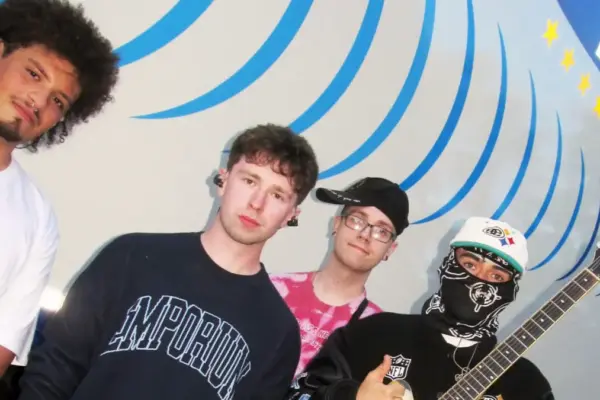
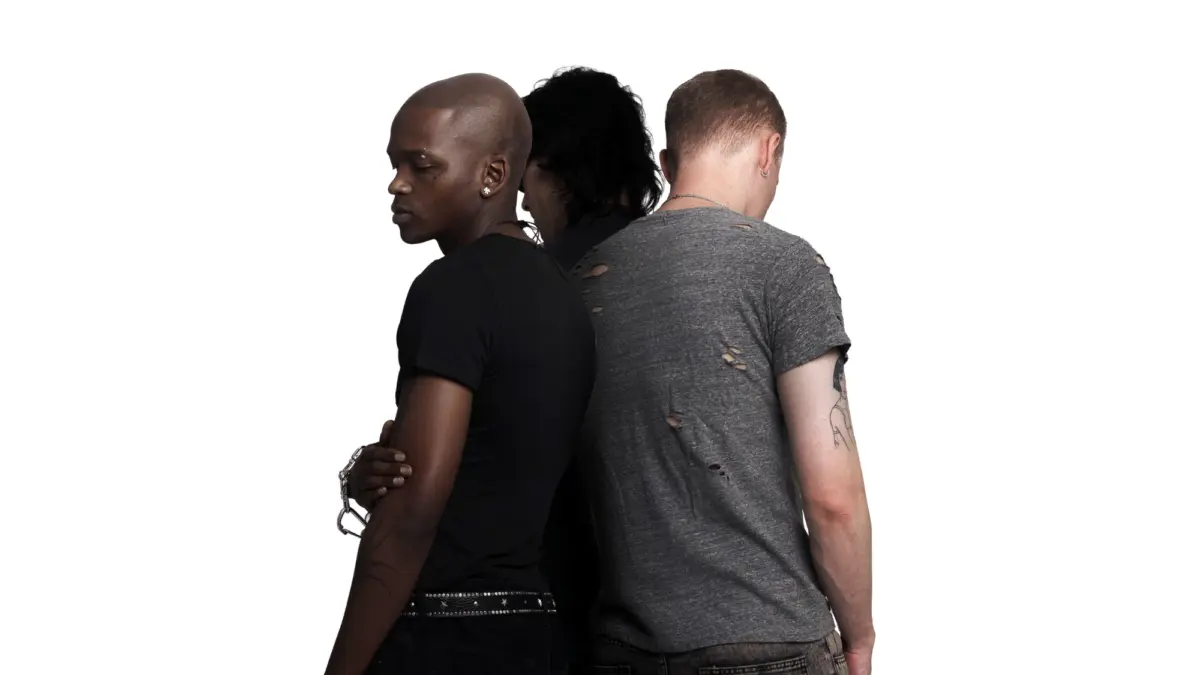
In the contemporary landscape of popular music, traditional genre boundaries have effectively collapsed, replaced by a hyper-connected, digital-first approach to sound design and culture creation. At the vanguard of this borderless movement sits Internet Girl, a visionary trio hailing from Cape Town, South Africa. Refusing to adhere to the rigid categorization of standard industry formulas, the group functions as a new kind of boy band—one forged not in the sterile, corporate incubator of traditional talent agencies, but in the chaotic, boundless ecosystem of internet music culture.
Drawing heavily from the disparate sonic threads of alternative rap, hyperpop, punk rock, and indie sleaze, Internet Girl bridges the gap between the raw, unpredictable energy of a live guitar-driven band and the pristine, forward-thinking mechanics of modern digital production. What began in 2019 as an insular bedroom project has rapidly metastasized into an international success story, capturing the attention of heavyweights across gaming, fashion, and hip-hop.
With major milestones already under their belt—including a coveted placement on the NBA 2K27 soundtrack, high-profile playlisting by rap auteur Vince Staples, a landmark performance at Boiler Room Soweto, and co-headlining duties alongside electronic music royalty Basement Jaxx—the trio is operating at a blistering momentum. As they prepare for the release of their highly anticipated debut studio album, YES, this November, and an upcoming live showcase at London’s The Lower Third on December 6, Internet Girl stands poised to redefine what it means to be a global musical export from the African continent.
Detailed Chronology: From Bedroom DAWs to Global Stages
To truly understand the trajectory of Internet Girl, one must trace their evolution from localized obscurity to international acclaim. The group’s journey is a masterclass in digital-age persistence, characterized by organic growth, technological ingenuity, and a refusal to compromise their distinct aesthetic vision.
2019–2021: The Genesis and Digital Incubation
Formed in Cape Town in 2019, Internet Girl emerged during a period of profound global shifts in how music was consumed and created. Immersed in the digital underground—forums, SoundCloud rabbit holes, and cross-genre Discord communities—the founding members began experimenting with sounds that defied regional expectations. South Africa has long boasted a rich, globally recognized musical infrastructure, particularly regarding house, amapiano, and gqom. However, Internet Girl looked outward toward the global internet subcultures of hyperpop, SoundCloud rap, and early-2000s indie rock nostalgia, synthesizing these influences into something entirely their own.
In these formative years, the group operated with minimal resources. Financial constraints and a lack of access to high-end studio spaces forced them to rely on ingenuity. This DIY ethos became a core pillar of their identity. Vocals were recorded on budget equipment, mixed and mastered through trial and error, and distributed directly to online platforms. This period of quiet cultivation allowed them to hone a signature sound defined by heavy distortion, dynamic rhythmic shifts, and an unvarnished emotional honesty.
2022–2023: Breaking the Local Ceiling
By 2022, the digital buzz surrounding Internet Girl began translating into tangible, real-world traction. Their localized success in Cape Town’s underground gig circuits expanded as algorithms pushed their tracks across international borders. The band’s ability to combine the aggressive, cathartic energy of a live punk band with the sleek, polished beats of modern alternative hip-hop struck a chord with a generation of listeners suffering from genre fatigue.
During this window, industry gatekeepers began to take notice. The band’s online-first approach proved advantageous in a post-pandemic music industry that heavily favored artists capable of building organic, self-sustaining digital communities. Their tracks began circulating among tastemakers, setting the stage for a series of high-profile breakthroughs that would validate their unorthodox methods.
2024–Present: The Breakthrough and Global Expansion
The past year has marked a definitive turning point for Internet Girl, transforming them from underground internet darlings into an internationally recognized force. Their momentum reached critical mass through a series of major cultural touchpoints:
- Gaming Culture Integration: Securing a placement on the NBA 2K27 soundtrack with their track "PULL UP" introduced the trio to millions of gamers worldwide, a demographic renowned for its voracious appetite for boundary-pushing alternative hip-hop and electronic hybrids.
- Critical Validation: Hip-hop innovator Vince Staples personally championed the group, playlisting their track "DA BUSINESS" and cementing their credibility within broader, more traditional rap circles.
- Live Supremacy: Performances at major cultural institutions, including a blistering set at Boiler Room Soweto and co-headlining alongside British electronic pioneers Basement Jaxx, proved that Internet Girl’s chaotic digital aesthetic translates seamlessly into high-energy, physical live environments.
Now, with their debut full-length album, YES, slated for a November release, the band is stepping into their most ambitious chapter yet.
Supporting Context & Metrics: The Anatomy of a Modern Hit
To examine Internet Girl’s latest single, "HIGH AS HEAVEN," is to dissect the modern alternative playbook. The track serves as a microcosm of the band’s production philosophy: fearless, nostalgic yet futuristic, and structurally unpredictable.
Sonic Architecture of "HIGH AS HEAVEN"
"HIGH AS HEAVEN" opens with deceptive sparseness. Listeners are immediately greeted by a synth riff that bears an undeniable spiritual kinship to the iconic, euphoric hooks of Klaxons’ mid-2000s indie-rave anthem, "It’s Not Over Yet." This deliberate nod to indie sleaze acts as a Trojan horse, immediately hooking millennial and Gen Z listeners alike with a wave of nostalgic electricity.
However, the track quickly subverts expectations. Rather than maintaining a steady, comfortable groove, the song drops into a torrential rush of distorted textures. The production utilizes abrupt, jarring beat cutouts—sudton silences that suck the air out of the room—only to give way to explosive, wall-of-sound returns.
Lyrically and structurally, the song is engineered for maximum crowd interaction. The chorus functions as a rowdy call-and-response mechanism designed to whip mosh pits into a frenzy. Yet, true to their dynamic range, Internet Girl refuses to leave the listener stranded in the noise. The song’s closing stretch softens the landing entirely, dissolving into a hazy, dreamlike web of harmonies that provides a moment of meditative catharsis after the preceding sonic storm.
The BandLab Origin Story: Authenticity in the Age of Perfection
In an era where major-label releases are subjected to endless rounds of sterile, high-budget polish, Internet Girl’s production process remains refreshingly grounded in accidental art.
Vocalist TK initially recorded his vocals for "HIGH AS HEAVEN" using a basic setup on BandLab—a mobile-accessible digital audio workstation—while wearing standard headphones. When the time came to re-record the vocals in a professional studio setting, the band encountered an unexpected hurdle: they could not recreate the exact, serendipitous vocal effects chain achieved in that initial mobile session.
Faced with a choice between pristine studio clarity and raw, irreplaceable character, Internet Girl chose authenticity. Portions of those original, lo-fi BandLab headphone recordings were kept in the finished master. This decision highlights the band’s core ethos: emotional resonance and sonic character always trump clinical perfection.
Official Statements & Industry Perspectives
The rise of Internet Girl has sparked considerable discourse among music critics, cultural commentators, and industry executives regarding the shifting geography of modern music production.
Industry analysts point to the group as proof that geographic location is no longer a barrier to global relevance. Operating out of South Africa, Internet Girl has bypassed traditional Anglo-American industry pipelines by leveraging the globalized nature of internet subcultures. By speaking the universal language of internet-native aesthetics—meme culture, hyper-compressed audio, cross-genre fluidity, and DIY visual identities—they have bypassed the bureaucratic gatekeeping of traditional A&R.
Cultural critics have similarly praised the group for dismantling outdated notions of the "boy band." Historically, the term conjures images of synchronized choreography, interchangeable vocalists, and manufactured pop perfection designed by committee. Internet Girl subverts every single one of these tropes. They are self-contained, self-produced, instrument-wielding anarchists who happen to possess the pop sensibilities and magnetic charisma traditionally associated with boy band stardom.
As Vince Staples’ recent endorsement demonstrates, the traditional boundaries separating underground alternative acts from mainstream hip-hop royalty are dissolving, and Internet Girl sits comfortably at the epicenter of this convergence.
Future Outlook: The Road to YES and Beyond
As the calendar turns toward the final quarter of the year, all eyes are locked on Internet Girl’s next moves. The impending release of their debut studio album, YES, in November represents the definitive statement of their artistic identity thus far. Industry insiders anticipate that the record will consolidate the various disparate threads of their early singles—blending hyperpop sheen, punk aggression, and alt-rap cadence into a cohesive long-form statement.
Following the album’s release, the trio will take their chaotic live show across international waters. On December 6, Internet Girl is scheduled to perform live in London at The Lower Third, an iconic subterranean venue renowned for hosting the world’s most vital, cutting-edge emerging talent. For UK fans and international tastemakers, this performance will serve as the ultimate litmus test for whether the band’s explosive studio energy can be successfully exported to physical European stages.
Key Milestones on the Horizon:
- November: Release of the debut album, YES.
- December 6: Live headline performance at The Lower Third in London, UK.
- Ongoing: Continued global expansion via gaming soundtracks, high-profile collaborations, and festival circuits.
In an industry perpetually searching for the "next big thing," Internet Girl offers something far more valuable: a glimpse into the future of music itself. By refusing to stay in their lane, they have carved out an entirely new highway—one where genre is irrelevant, authenticity is king, and the boy band blueprint is rewritten on their own terms.